
No products in the cart.

What to Eat in Vienna: Schnitzel, Tafelspitz and the Wine Taverns
The Viennese dishes worth ordering, how to tell veal schnitzel from the cheaper versions, where to eat away from the busy streets, and how to read the branch hanging over a wine tavern.
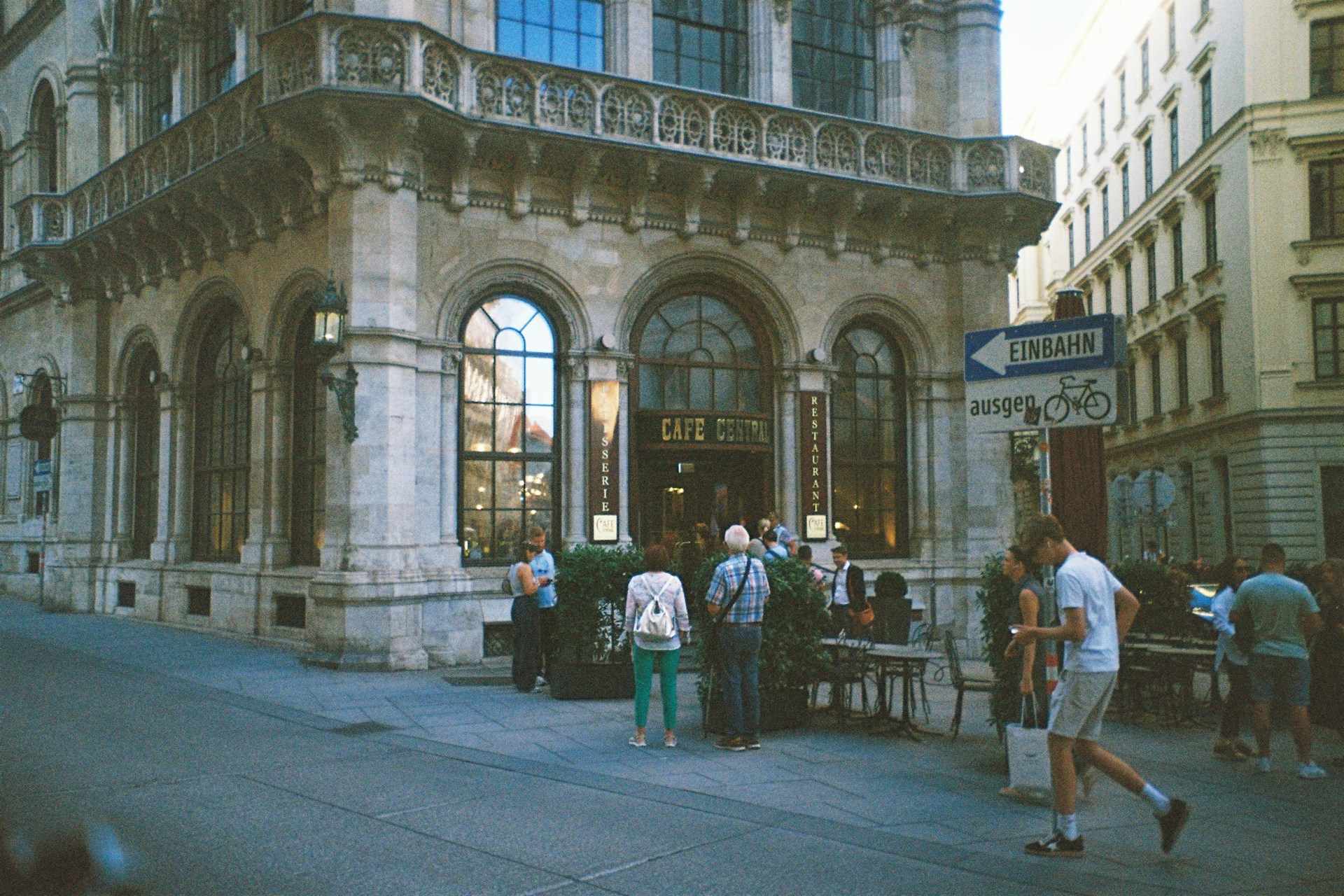
Viennese cooking is imperial leftovers. Hungarian goulash, Bohemian dumplings, Balkan grills, Italian pasta, Turkish coffee — the kitchen of a capital that spent centuries absorbing a large and argumentative empire, then kept the recipes after losing the territory.
It’s also more precise than its reputation suggests. There are rules about what counts as a Wiener Schnitzel. There are legal limits on what a traditional Buschenschank may serve. And there’s a specific sign that tells you when one is pouring, which you can walk straight past without noticing.
Most of what follows is walkable from the historic centre, which is compact enough to cover on foot — our self-guided audio tour of Vienna’s historic centre is built for that half of the day. The wine taverns are the exception, and worth the trip out.
Quick Answer
| Topic | Short answer |
|---|---|
| The one dish | Wiener Schnitzel — but only if it’s veal |
| Classic Viennese order | Tafelspitz, boiled beef with horseradish and apple |
| Best cheap classic | A Käsekrainer at a Würstelstand; many stands stay open late |
| Classic local option | A Beisl — the Viennese neighbourhood tavern |
| The market | Naschmarkt. Produce stalls close Sundays; restaurants may still open. Flea market Saturdays |
| The wine | Wiener Gemischter Satz, a field blend grown inside the city |
| Wine taverns | Check the Aussteckzeiten before going; a conifer branch confirms a traditional Buschenschank is pouring |
| Tap water | Excellent Alpine spring water; restaurants may charge for serving it |
Wiener Schnitzel: The Veal Rule
This is the one thing to get right, because the difference is on the menu and most visitors don’t read it.
A Wiener Schnitzel is veal. Under the Austrian food code, that name means a breaded veal cutlet. If a menu says Schnitzel Wiener Art or nach Wiener Art, it’s the same preparation using another meat — most commonly pork, sometimes turkey. Check which meat is named. Those versions are usually cheaper than veal, which is why the distinction matters: at Figlmüller, for instance, the famous pork schnitzel and the veal one are separated by several euros on the same menu.
Done properly, the cutlet is pounded thin, breaded loosely, and fried in enough fat that the coating puffs away from the meat and blisters. It should be pale gold and dry to the touch, not greasy. It’s served with lemon, and traditionally with potato salad or parsley potatoes — not with fries, though you’ll be offered them.
The Milan story is almost certainly a legend. Field Marshal Radetzky is often said to have brought the recipe back from Lombardy in 1857, but Wiener Schnitzel was already mentioned in Austrian cooking in 1831. Whatever its deeper origins, the dish didn’t arrive in Vienna with Radetzky.
Figlmüller is the famous address, serving a plate-sized pork schnitzel that has become a sight in its own right; the veal is on the same menu at a higher price. Any decent Beisl will do a good version with fewer photographs.
Beyond Schnitzel: The Other Classics
Schnitzel gets the fame, but it barely explains the Viennese kitchen. The dishes below are where the city’s imperial inheritance becomes much easier to taste.
- Tafelspitz is the one to try if you want the Viennese kitchen at its most characteristic: beef simmered in broth, served in the pot with the broth as a first course, then the meat with roast potatoes, apple-horseradish, and chive sauce. It was famously one of Emperor Franz Joseph’s favourite dishes. It arrives as a small production and takes a while to eat.
- Gulasch in Vienna is the Hungarian dish naturalised: beef, onions, paprika, thickened rather than soupy, usually with a bread dumpling. The Viennese version has roughly as many onions as meat.
- Backhendl is breaded fried chicken, and it was already a prestige dish in early nineteenth-century Vienna.
- Beuschel is the brave order: sliced lung and heart in a sour cream sauce with a dumpling. It’s genuinely delicious and genuinely not for everyone.
- Liptauer is a paprika-and-quark spread commonly found on wine-tavern boards.
- Frittatensuppe — clear broth with sliced pancake — is a classic Beisl starter and one of the simplest Viennese comfort dishes.
The Würstelstand
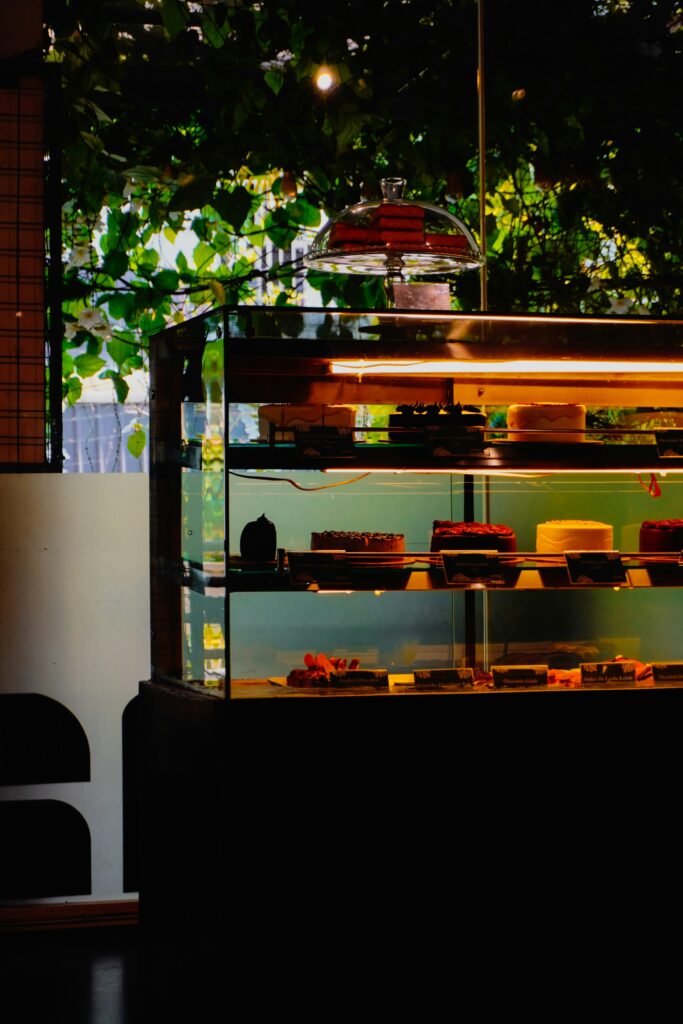
Vienna’s sausage stands are an institution and one of the city’s most useful cheap meals; many stay open long after restaurant kitchens close.
- Käsekrainer is the signature: a sausage with pockets of cheese inside that erupt when you cut it. In Viennese slang you’ll also hear it called an Eitrige, a deliberately unappetising nickname. Burenwurst is a coarser boiled sausage, Bratwurst the grilled one, Debreziner the spicy one.
- How to order. You’ll usually be asked mit Senf oder Ketchup — mustard or ketchup. Traditional mustard choices include sweet Kremser and sharper Estragon, though every stand has its own selection. The sausage comes with a Semmel roll or dark bread; beer is a common accompaniment, though hardly a requirement.
- How to eat it. Usually standing at the counter or a high table, with the bread in one hand. Seating varies by stand.
The Beisl
A Beisl is the Viennese neighbourhood tavern: wooden tables, a short menu of classics, beer on tap, no concept. It’s one of the most useful restaurant categories to know if you want traditional Viennese food without building every meal around a famous address.
They’re everywhere beyond the most tourist-heavy central streets, which is precisely the point: neighbourhood restaurants often offer better value for the same Viennese classics. The districts guide is a decent map of where to look.
Naschmarkt: What It’s Good For
Vienna’s best-known market runs along the Wienzeile for about a kilometre, with roughly 130 stalls: produce, cheese, spices, olives, bread, and a long row of restaurants.
- What it’s genuinely good for. Cheese and Austrian alpine varieties, spices, bread, and a sit-down lunch. On Saturdays, a large flea market at the western end, which gives that side of the market a reason to visit beyond the food stalls.
- What to be careful about. The middle section is heavily tourist-facing, prices are higher than the neighbourhood markets, and the aggressive free-sample approach at some stalls is a sales technique rather than hospitality. Ask prices before accepting anything.
- Practical. The market stalls are closed Sundays, though restaurants and bars may open. The Saturday flea market runs year-round, which makes Saturday the liveliest day to visit — and the busiest. The western edge runs past two of Otto Wagner’s Jugendstil apartment buildings, including the tiled Majolikahaus, which makes the walk worth it independent of the food.
Naschmarkt is Vienna’s best-known market, not necessarily its best everyday shopping market. Brunnenmarkt in the sixteenth district and Karmelitermarkt in the second are the more neighbourhood-focused alternatives. If you’d rather have the stalls explained than guess, guided tastings run through the Naschmarkt most days.
GetYourGuide
Market and food tours in Vienna
If you would rather have someone tell you which cheese counter, which spice merchant and which prices are fair, guided market and tasting walks run from the Naschmarkt and the neighbourhood markets most days of the week.
See market tours →Heurigen: The Wine Taverns, and How to Tell If They’re Open
Vienna is exceptional among European capitals for the scale of commercial vineyards inside the city limits, and the wine taverns on the hills above the city are among the best evenings it offers.
Heuriger is the everyday word visitors meet for a Viennese wine tavern. Buschenschank is the narrower legal category: a tavern selling wine from the grower’s own harvest under restrictions on what else it can serve.
The branch is the real-time signal. A genuine Buschenschank must display a bundle of pine, fir, or spruce branches while wine is being served. You’ll also commonly see the traditional Ausg’steckt sign. Smaller taverns publish limited Aussteckzeiten, their declared serving periods, so check those before making the trip and look for the branch when you arrive.
There’s a law about what a true Buschenschank can serve. Its wine and specified grape or fruit drinks come from the grower’s own harvest, and the food is limited to a defined range of cold dishes; mineral water, soda, and cold soft drinks are also permitted. Hot food, beer, and coffee require an additional hospitality licence — which is why some Heurigen feel like full restaurants and others really are a cold counter in a courtyard.
How it works. Many traditional Buschenschank serve food from a self-service buffet and wine at the table, though this varies by house. Sharing long tables with strangers is normal. A Brettljause — cold cuts, cheese, spreads, and pickles on a wooden board — is a classic order.
What to drink. Wiener Gemischter Satz is Vienna’s own field blend: at least three grape varieties grown in the same Viennese vineyard, harvested and processed together. During the harvest season, usually from late summer into autumn, look for Sturm — partially fermented grape must, cloudy, sweet, and considerably stronger than it tastes.
Where. Grinzing and Nussdorf in the nineteenth district are the classic and most visited areas; Neustift am Walde tends to feel quieter; Stammersdorf, across the Danube in the twenty-first, is a less central alternative with its own concentration of taverns. Public transport reaches all of them — tram and bus tickets work the same as in the centre.
The legal tradition of the Viennese Heuriger is conventionally dated to Joseph II’s regulation of wine taverns in 1784, the ancestor of today’s Buschenschank system. Nearly two and a half centuries later, that’s still roughly the business model.
Practicalities
Eating here comes with its own small rules about hours, payment, and which days the markets go quiet.
- Tipping. Round up, or add five to ten percent for a full meal. Say the total you want to pay when you hand over the money rather than leaving cash on the table.
- Meal times. Lunch runs roughly noon to 2:00 p.m., dinner from 6:00 p.m. Kitchens in traditional places close earlier than visitors expect — often by 9:00 or 10:00 p.m.
- Reservations. Worth it for popular Beisln on weekends and essential at the well-known schnitzel addresses.
- Mittagsmenü. Many restaurants do a fixed-price weekday lunch, often significantly cheaper than ordering the same food à la carte in the evening. It’s among the best-value eating in the city.
- Tap water. Vienna’s comes from Alpine springs by aqueduct. Ordering it is normal, though some places charge a small amount for serving it.
- Vegetarians are better served than the reputation suggests: Käsespätzle, Eierschwammerl in season, Kaiserschmarrn, and a strong Middle Eastern presence around the markets.
Common Mistakes
Vienna’s food traps aren’t bad restaurants. They’re the right dish bought in the wrong place.
- Ordering “Schnitzel Wiener Art” expecting veal. The phrase means Viennese-style preparation using another meat, commonly pork or turkey.
- Eating every meal on the busiest central streets. Neighbourhood places nearby often serve the same dishes for less.
- Treating Naschmarkt as the city’s main food market. It’s worth an hour; Brunnenmarkt and Karmelitermarkt are more everyday.
- Planning a Heuriger evening without checking the serving dates. Traditional taverns declare limited periods, and the branch over the door confirms they’re pouring today.
- Underestimating Sturm. It tastes like grape juice and is not grape juice.
- Waiting for the check. As in the coffee houses, it comes when you ask.
Continue Exploring
- Vienna’s coffee houses and what to order in them — the other half of the Viennese table.
- One day in Vienna — where the meals fit in a single day.
- A walking tour of Vienna — the route most of these addresses sit on.
- How to save money in Vienna — including the lunch-menu trick above.
- Tours and tastings in Vienna on GetYourGuide.
Frequently Asked Questions
What food is Vienna famous for?
Wiener Schnitzel, Tafelspitz, goulash, sausage stands, and the pastry tradition of the coffee houses. The city’s cooking is essentially the surviving kitchen of a multinational empire.
What’s the difference between Wiener Schnitzel and Schnitzel Wiener Art?
Wiener Schnitzel means veal. Wiener Art means another meat prepared in the same style — check the menu for pork, turkey, or whatever else is named.
Where should you try traditional Viennese food?
A Beisl is the classic neighbourhood-tavern option, usually away from the busiest central streets. Würstelstände are useful for quick food, often late in the day.
What is a Heuriger?
A Viennese wine tavern, usually tied to a local grower. A traditional Buschenschank serves its own wine and a legally limited range of cold food; Heurigen with an additional restaurant licence can also serve hot dishes, beer, and coffee. Check the serving dates before going, and look for the branch to confirm a traditional Buschenschank is pouring.
What should you drink in Vienna?
Wiener Gemischter Satz, the local field blend, and Sturm during the harvest season, usually from late summer into autumn. The tap water is also genuinely good.
Is Naschmarkt worth visiting?
Yes for an hour, particularly on Saturday when the flea market runs. The produce stalls close Sundays, though the restaurants may open.
Do you tip in Vienna?
Yes — round up or add five to ten percent, and state the total when paying.
Disclosure: this article contains affiliate links. If you buy a TouringBee audio guide or book an experience through GetYourGuide, we may earn a small commission at no extra cost to you.