
No products in the cart.

Classical Music in Vienna
How to tell a main-season concert from a visitor-oriented one, how to hear world-class music for the price of lunch, and what the men in wigs are actually selling.
Vienna has an unusually dense classical calendar and, alongside it, a large parallel market of concerts aimed at visitors. It’s easy to book the second while expecting the first, and the confusion is understandable: both happen in the same rooms.
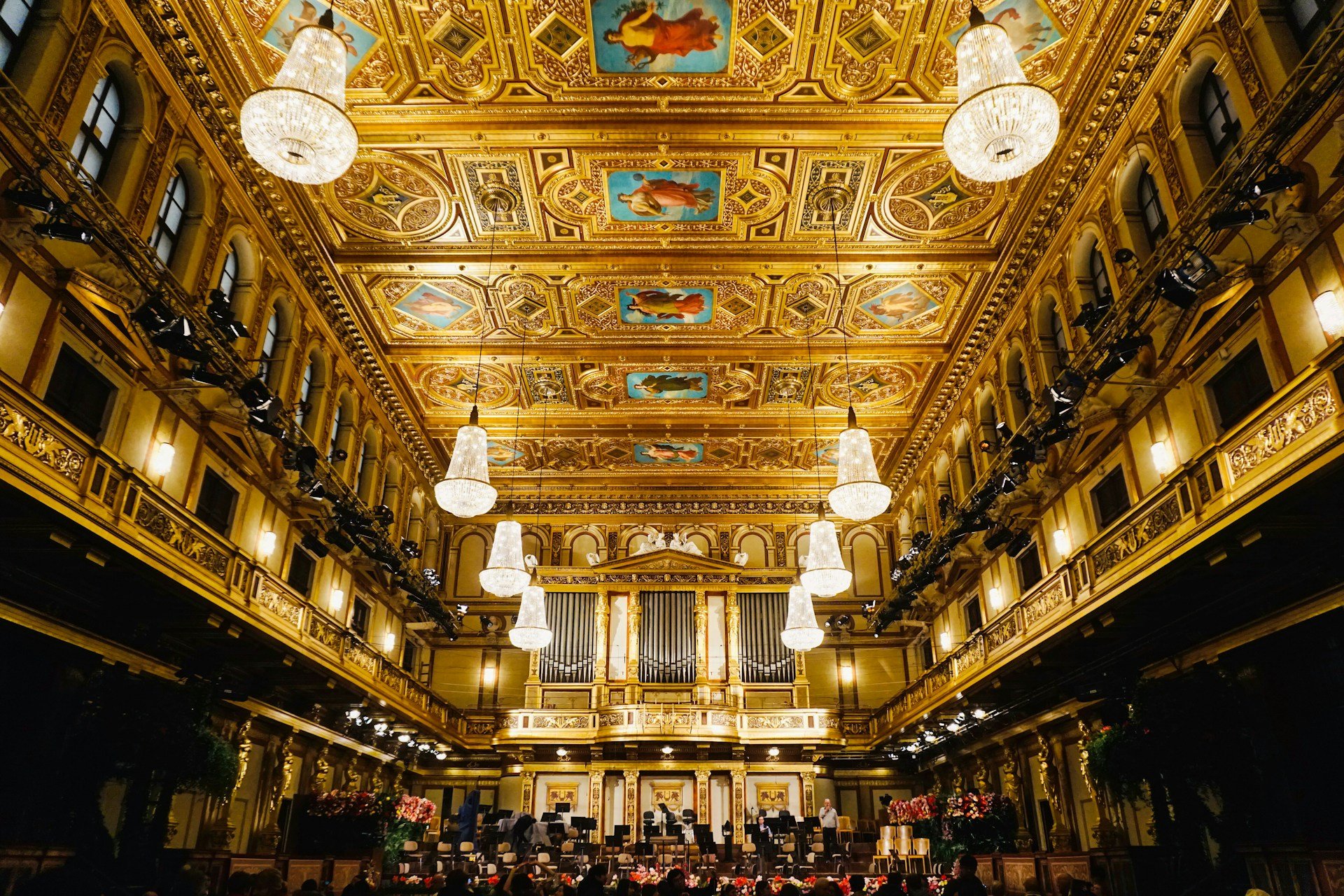
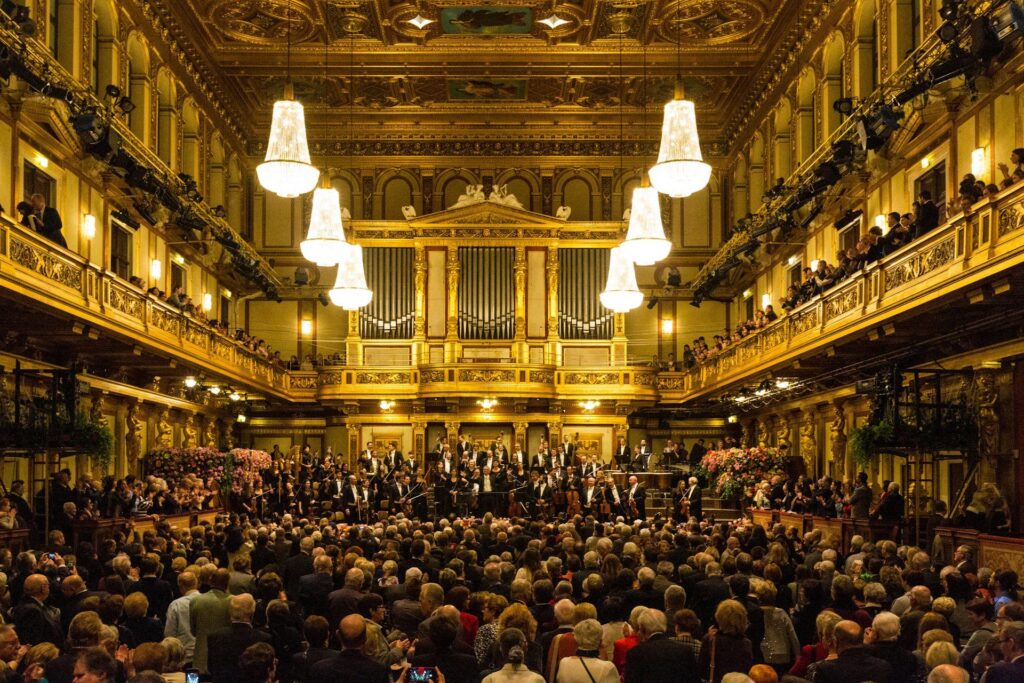
The Golden Hall of the Musikverein, the room you’ve seen on television every New Year’s Day, hosts the Vienna Philharmonic. It also hosts visitor-oriented ensembles playing Mozart-and-Strauss programmes, some in period costume, including during the summer when the main concert seasons pause. Both can be legitimate concerts in a magnificent hall. They’re simply different products, aimed at different audiences and often sold at very different prices, and the venue name alone doesn’t tell you which one you’re buying.
This article is about telling them apart, and about the routes into the main-season programme that cost less than dinner. The concert halls sit on and just inside the Ringstrasse, in the compact area our self-guided audio tour of Vienna’s historic centre covers on foot.
Quick Answer
| The two main concert halls | Musikverein and Konzerthaus |
| Low-cost main-season option | Musikverein standing room — price varies by concert, often €10–20 |
| Under 30, booked ahead | Musikverein U30: €20 in the Golden Hall, €10 in the smaller halls |
| Under 30, last minute | Konzerthaus remaining tickets, €20, for almost all of its own events, subject to availability |
| Free, if you’re early | Standing places at the Hofburgkapelle Sunday mass, from 8:30 a.m. |
| Hofburgkapelle mass | Sundays 9:15 a.m., mid-September to June. Check whether the Boys’ or Girls’ Choir is singing |
| Season | Main concert seasons run September to June |
| What’s on in summer | Visitor-oriented concerts, free open-air screenings, festival programmes |
| The costumed sellers | Typically selling visitor-oriented Mozart and Strauss concerts; not an official State Opera sales channel |
| Opera | A separate subject — the State Opera guide covers it |
The Venue Is Not the Guarantee
This is the single most useful thing to understand before you buy anything.
The Musikverein and the Konzerthaus both rent their halls out. Alongside the Vienna Philharmonic, the Vienna Symphony, and visiting international orchestras, the same rooms host commercial ensembles playing programmes aimed squarely at visitors — often in period costume and wigs, usually a mix of Mozart, Strauss waltzes, and a soprano in a crinoline.
Those concerts tend to advertise the hall more prominently than the ensemble. If a listing emphasises the room more than who’s playing, that’s a reason to check the promoter carefully.
None of this means the visitor-oriented concerts are automatically bad. They’re generally professional performances in impressive rooms, and if you want an evening of familiar Mozart and Strauss in a gilded hall, that can be exactly the right product. The risk is only paying premium prices for something other than what you thought you were booking.
How to check. Look at the orchestra or ensemble and at who is promoting the concert — not at the hall, and not at whether the venue is selling the ticket. The Musikverein lists visitor-oriented concerts in its own official calendar and sells them in its own shop, while marking them as third-party or rental events. That marking, and the name of the ensemble, are what tell you which product you’re looking at.
The Main Concert Halls
- The Musikverein is home to the Vienna Philharmonic, and its Golden Hall — around 1,700 seats — is famous for its acoustics. The smaller Brahms Hall is the chamber venue and worth checking when the main hall is sold out or expensive.
- The Konzerthaus, a few minutes away, is the other major concert house. The Vienna Symphony performs regularly here, as do visiting orchestras and chamber ensembles, across four halls: the Great Hall, the Mozart Hall, the Schubert Hall and the Berio Hall.
Their main concert seasons run September to June. The buildings themselves keep going through the summer, hosting guest and visitor-facing programmes instead.
Getting In Cheaply
The routes are less famous than the opera’s standing room, and in some ways easier.
| Route | Roughly | How it works |
|---|---|---|
| Musikverein U30 | €20 Golden Hall, €10 smaller halls | Ages 14–29, free registration; the house’s own concerts |
| Musikverein standing | Varies, often €10–20 | Advance sale opens weeks ahead; not for every programme |
| Konzerthaus, under 30 | €20 | Remaining tickets from 30 minutes before, for almost all Konzerthausgesellschaft events |
| Konzerthaus, ages 5–16 | Half price, or €20 remaining | Same scope: the house’s own events |
| Jeunesse concerts | Usually 50% off for under-30s | A concert organisation with its own programme |
| University concerts | Often free | Student recitals and degree concerts at mdw and MUK |
| Hofburgkapelle Sunday mass | Free standing places | Handed out from 8:30 a.m. on the day |
Musikverein standing room is the headline, but there’s no single price: it depends on the concert and the promoter, running from under €10 for some of the house’s own events to around €20 for third-party ones.
Unlike the opera’s, these go on sale well in advance. For the Musikverein’s own concerts, the member presale starts two months before the date and general sales open a week after that; third-party events follow their own schedules. So you don’t have to wait for the day of the concert.
If you’re under 30, there’s another route worth comparing. The Musikverein runs its own U30 programme for ages 14 to 29: registration is free, and tickets to the house’s own concerts cost €20 in the Golden Hall and €10 in the smaller halls. They go on sale online from the 20th of the preceding month, or at the box office from an hour before the concert. Unlike the State Opera’s U27 scheme, there’s no citizenship or residency requirement.
One thing standing room does not get you. The Vienna Philharmonic’s own subscription concerts run on a separate ticketing system, largely taken up by subscribers, with a limited number of returned tickets released shortly before. A cheap standing place at the Musikverein is not a back door into those. Check which orchestra is playing and who is selling.
The Konzerthaus works the other way around: its cheap route is remaining tickets released half an hour before the start, €20 for anyone under 30. That applies to almost all of the Konzerthausgesellschaft’s own events rather than to everything happening in the building — the same organiser-not-venue rule again. It’s a gamble on availability rather than a plan.
University concerts. The University of Music and Performing Arts (mdw) and the Music and Arts University of the City of Vienna (MUK) both publish event calendars full of student recitals and degree concerts, many of them free.
The Vienna Boys’ Choir
The choir tours internationally, but the distinctly Viennese experience is hearing it at the Hofburgkapelle, as part of a court-music tradition that dates back to 1498.
Sunday mass at the Hofburgkapelle, 9:15 a.m., mid-September to the end of June. It’s an actual religious service, running roughly 70 to 90 minutes depending on the programme, with some services longer. Depending on the mass, the choir is joined by members of the Vienna State Opera Orchestra and the State Opera men’s chorus, along with the Hofburgkapelle’s own Choralschola — a startling roster for a Sunday morning.
Which choir sings varies. The Vienna Girls’ Choir shares the Sunday schedule with the Boys’ Choir. Which ensemble is singing on a given Sunday is listed with the date, so check if it matters to you.
Practical. Paid tickets run roughly €14 to €52 and are sold in categories; the cheapest are explicitly listening places with no view of the altar or the musicians — fine if you came for the sound, disappointing if you expected to watch.
There’s also a free option. Free standing places are available from 8:30 a.m. on the day, with no reservation possible. For anyone chasing world-class music at low cost, that’s the best entry on this page.
Be in place by 9:00. No photography or recording.
What the Costumed Sellers Are Offering
The people in eighteenth-century dress handing out flyers around St. Stephen’s and the Opera are typically selling visitor-oriented Mozart-and-Strauss concerts by commercial ensembles, in venues ranging from the Golden Hall to the Kursalon to palace ballrooms.
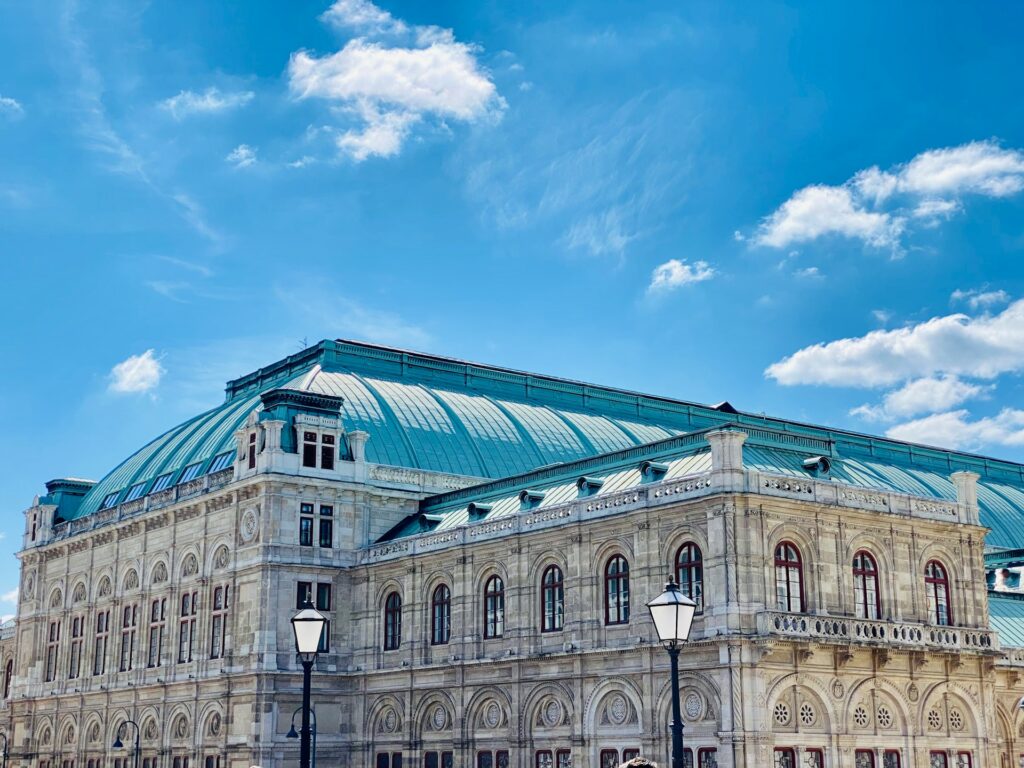
Two things worth knowing. The State Opera warns that no street seller is authorised to sell tickets on its behalf, so a State Opera ticket offered on the pavement isn’t an official sale. And before buying anything, compare the seller’s offer with the promoter’s or venue’s own shop.
If that’s the evening you want, buy it deliberately: check the ensemble, the programme, the venue, and the running time, and compare against what a main-season concert costs the same week. Don’t assume the visitor-oriented concert is the cheaper option.
What’s On in Summer
July and August are the gap. The regular Vienna hall seasons pause and the orchestras shift toward festivals, touring, and occasional special events; the State Opera’s own repertory pauses too. What fills the calendar is a mix of visitor-facing concerts and free outdoor programming.
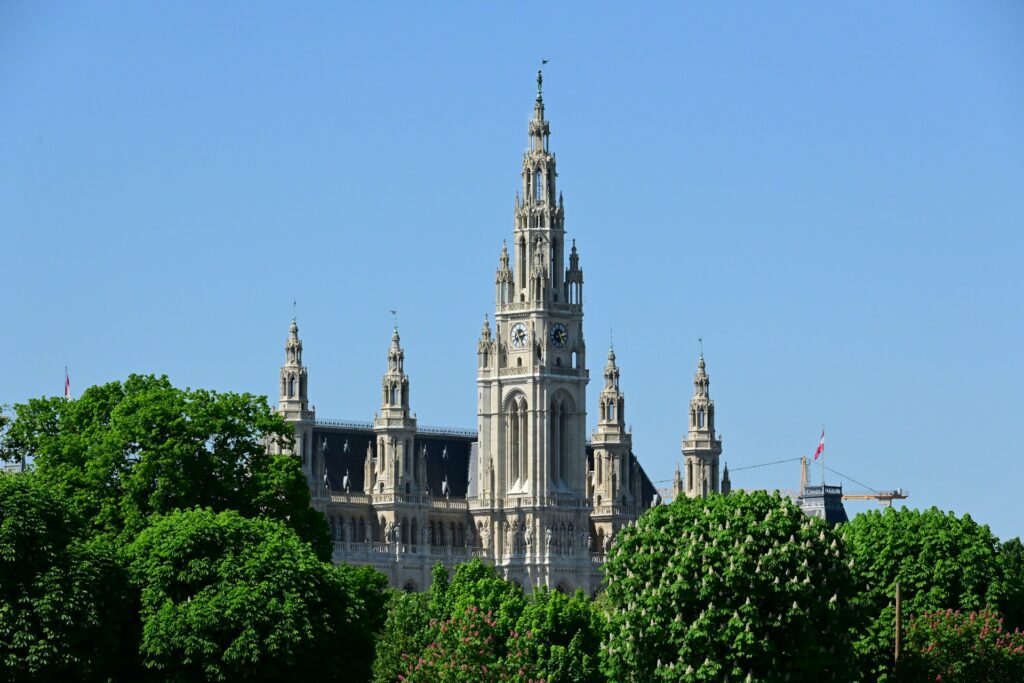
The Film Festival on Rathausplatz shows opera, ballet, and concert recordings on a giant screen for free from early July into September.
Some church-music programmes continue year-round and cost little or nothing. The Peterskirche, a few steps off the Graben, runs a regular programme of organ and church concerts, much of it free or donation-based.
Common Mistakes
The recurring error in this city is booking a room instead of a performance.
- Booking by hall rather than by orchestra. The Golden Hall hosts both the Vienna Philharmonic and visitor-oriented concerts, and the venue’s own calendar lists both. Check the ensemble and the promoter.
- Assuming standing room works like the opera’s. Musikverein standing tickets go on sale weeks ahead, prices vary by concert, and they don’t exist for every programme.
- Turning up in July expecting the regular Philharmonic season. The main Vienna concert seasons run September to June.
- Buying a Vienna Boys’ Choir ticket without checking the category. The cheapest places have no view at all.
- Paying agency prices without comparing. Check the promoter’s or venue’s own shop before buying from a street seller — and compare against what a main-season concert costs the same week.
Continue Exploring
- Vienna State Opera: tickets, seats and what to expect — the other half of Vienna’s live-music picture.
- The Hofburg: tickets, routes and what’s actually inside — the palace complex that holds the Hofburgkapelle.
- Best museums in Vienna — where to spend a rained-off afternoon before an evening concert.
- What to see in Vienna — the wider first-time overview.
Frequently Asked Questions
Where can you hear classical music in Vienna?
The Musikverein and the Konzerthaus are the two main concert halls, the State Opera and the Volksoper stage opera, and the Hofburgkapelle hosts a sung Sunday mass. Churches and the music universities add a large free and low-cost layer.
How much are cheap classical concert tickets in Vienna?
Musikverein standing room varies by concert, often €10–20, sold weeks in advance. The Konzerthaus releases remaining tickets at €20 to under-30s half an hour before the start, for almost all of its own events and subject to availability. The Musikverein’s U30 programme sells €20 Golden Hall tickets to registered 14–29-year-olds in advance. Free standing places are handed out for the Hofburgkapelle Sunday mass from 8:30 a.m.
Are the Mozart concerts in costume worth it?
Many are professionally presented in impressive venues, but they’re designed for visitors rather than for the city’s regular concert audience. Whether they’re worth it depends on whether you want familiar repertoire and atmosphere, or a particular orchestra and programme.
How do you hear the Vienna Boys’ Choir?
At Sunday mass in the Hofburgkapelle at 9:15 a.m., mid-September to the end of June. The Vienna Girls’ Choir shares the Sunday schedule with the Boys’ Choir, so check the ensemble listed for your date. Paid tickets run about €14–52, and free standing places are available from 8:30 a.m. on the day.
Can you get Vienna Philharmonic tickets as a visitor?
Its Musikverein subscription concerts are largely taken up by subscribers, with a limited number of returned tickets released shortly before. The orchestra also plays other Vienna concerts where the promoter handles sales. The New Year’s Concert is allocated by public ballot roughly ten months ahead.
Is there classical music in Vienna in summer?
Yes. The regular hall seasons pause, but there are occasional orchestra events, visitor-oriented concerts, festival programming, and free open-air screenings.
Disclosure: this article links to TouringBee’s own audio guide. If you book through it we may earn a commission, at no extra cost to you.