
No products in the cart.

Vienna State Opera: Standing Room, Tickets and the Guided Tour
How standing room actually works, when seats go on sale, and what the guided tour gets you if you are not seeing a performance.
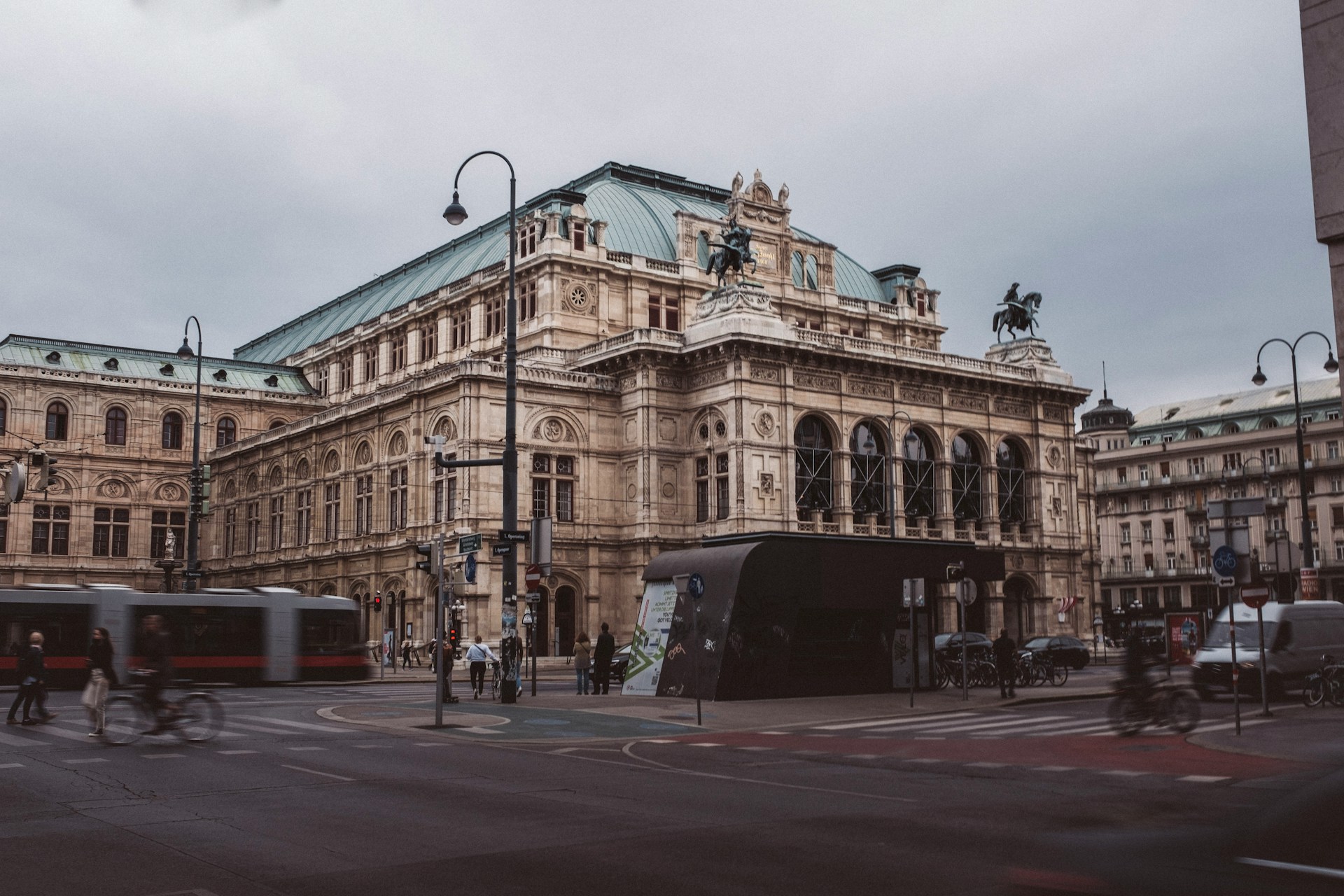
The Vienna State Opera is a repertory house, which in practice means the production can change from one night to the next throughout its September-to-June season. That’s the thing to understand before you plan around it: there’s no long run of one show. What’s playing on your Tuesday may not be what’s playing on your Wednesday.
It also means the building is heavily used, and that getting in can be much easier and cheaper than visitors expect — provided you know which ticket route you’re taking. There are 1,709 seats and 435 standing places, and standing room is by far the cheapest way to see a performance here.
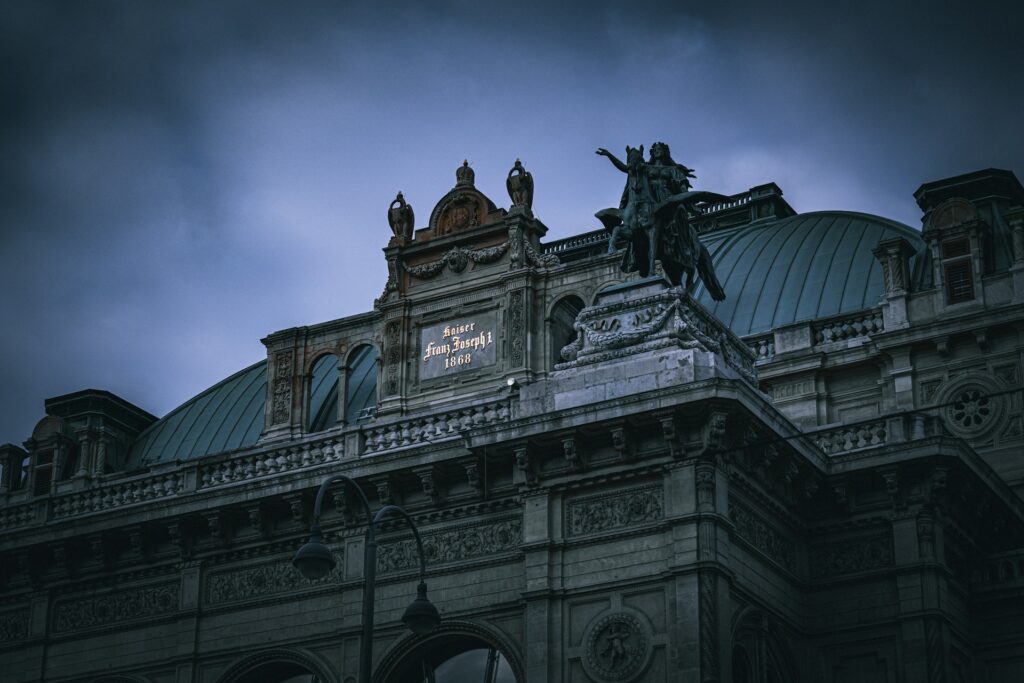
The house sits on the Ringstrasse at the edge of the historic centre, which is the compact area our self-guided audio tour of Vienna’s historic centre covers on foot. Getting inside is a separate decision, and this is how to make it.
Quick Answer
| Season | The house’s own opera and ballet repertory runs September to June |
| Cheapest performance ticket | Standing room: €13–18 regular, or €5/€7 with Standing RoomPLUS |
| Seats | Go on sale for the current month plus the next two |
| Guided tour | About 40 minutes, €18 adults, €14 reduced. Offered year-round on published dates |
| Subtitles | Every seat and almost every standing place has its own screen, English always available |
| Under 27 | €25 through U27 membership (EEA citizens or permanent residents), or remaining tickets 30 minutes before curtain, open to anyone under 27 |
| Dress code | No formal requirement for ordinary performances |
| Where | Opernring 2, at Karlsplatz — U1, U2, U4 |
Standing Room: How It Actually Works
This is the answer most people are looking for, and the system changed recently enough that a lot of guides still describe an older version of it.
There are 435 standing places, spread across the ground-floor standing area (Stehparterre), the balcony and the gallery. Regular prices run €18 on the ground floor, €15 in the gallery and €13 on the balcony.
They’re sold in two waves on the day of the performance. The main contingent goes on sale at 10am, online and at the Federal Theatres box offices. For regular evening performances, a further fixed quota is then sold 80 minutes before curtain at the standing-room box office on the Operngasse side of the building. The old advice — that the 80-minute queue is the only way in — is out of date, but the queue itself still exists as a second chance.
- Two things change if you have a BundestheaterCard. The card is free, and holders can book standing room online from the day before the performance rather than waiting for the morning. The separate, paid Standing RoomPLUS add-on is what unlocks the heavily reduced standing prices — €5 or €7 for the 2026/27 season. Free card for the earlier access, paid add-on for the lower price.
What it’s actually like. You stand, or lean on the padded rails. Sightlines vary by category, and a Wagner opera can run four hours or more with intervals, so choose the work as carefully as the ticket.
The practical trap. Without a card, standing tickets are same-day only, which doesn’t fit a rigid itinerary. If you have exactly one evening in Vienna and it has to be the opera, buy a seat in advance instead.
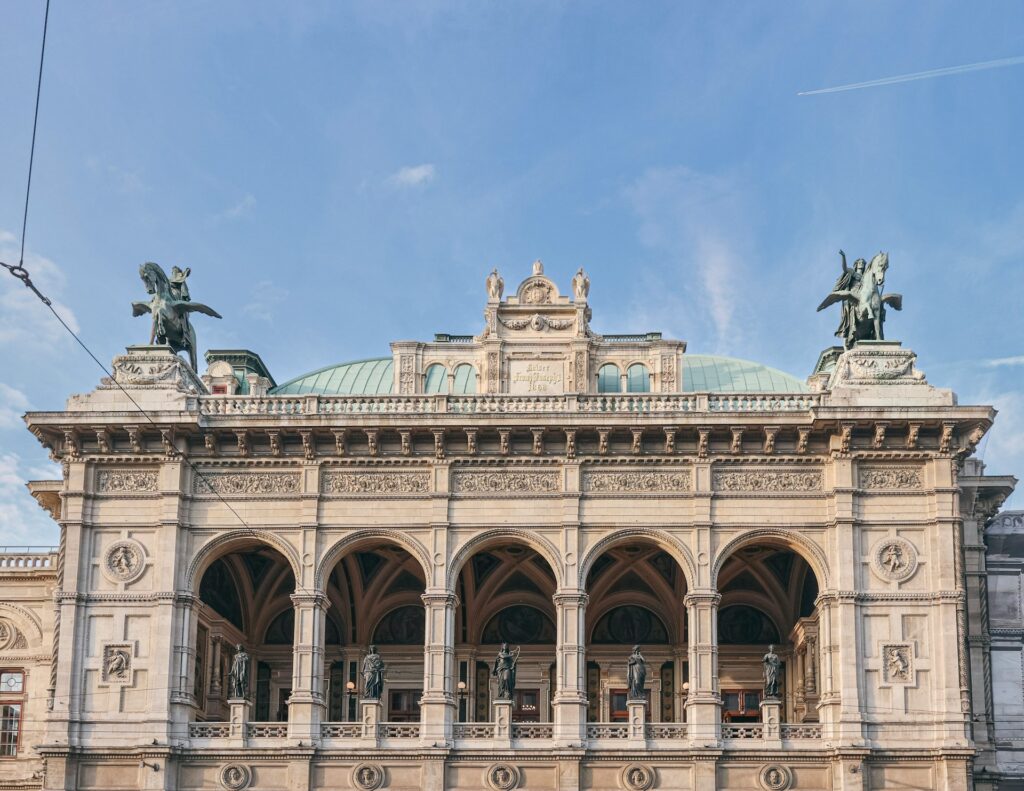
Seats: The Sales Calendar
Seated tickets follow a fixed rhythm, and knowing it is worth more than any booking trick.
Tickets go on sale for the current month plus the next two. All of March goes on sale on 1 January; all of April on 1 February, and so on. If you’re planning further out than that, the house takes pre-orders, with a cutoff three weeks before regular sales begin and payment due only once tickets are allocated.
Buy through the opera’s own channels. If a night is sold out, keep checking the official ticket shop: the house runs a commission exchange where ticketholders can list seats for resale, and those tickets go back into the normal sales channels rather than onto a separate platform.
- Returns are generally not possible. Illness, changed plans, a cast change or arriving late are all explicitly not grounds for a refund — though a cancelled performance or a substituted work is. Otherwise the commission exchange is the official way out.
Cheaper Routes In
| Route | Price | Conditions |
|---|---|---|
| Standing room | €13–18 | Same day, in two waves |
| Standing room with BT-Card + Standing RoomPLUS | €5 or €7 | Free card plus a paid add-on |
| U27 membership | €25 per ticket | Under 27, EEA citizens or permanent residents only; selected performances, limited quota |
| U27 last-minute | €25 | Under 27, no membership needed; remaining tickets 30 minutes before curtain, subject to availability |
| U27 dress rehearsals | €10 | Under 27, membership required |
| Children under 16 | €20 | Bought with a regular ticket, minimum age 5 |
| Guided tour | €18, or €14 reduced | No performance needed |
The U27 restriction matters, but it isn’t the whole story. Membership is open only to citizens and permanent residents of the European Economic Area, so a visiting 24-year-old from outside it can’t register — and even for members it covers selected performances in limited quantities. What any under-27 visitor can do is buy remaining tickets at the under-27 price 30 minutes before curtain, subject to availability, with no membership required.
Children’s tickets have rules worth reading. They come from a limited quota rather than being available for any free seat. Minimum age five, maximum two per purchase, and they must be bought together with a regular ticket. Online purchases have to be collected on the day, up to thirty minutes before curtain, or they go back into general sale. Premieres and several specified productions are excluded, so check the current list.
If none of these routes fits your dates, the cost of a Vienna day is worth reading alongside them — an opera evening changes the budget less than most people assume.
The Guided Tour
If you’re not seeing a performance, or you’re visiting outside the regular repertory season, this is the alternative: a way to see the interior and the auditorium during the day.
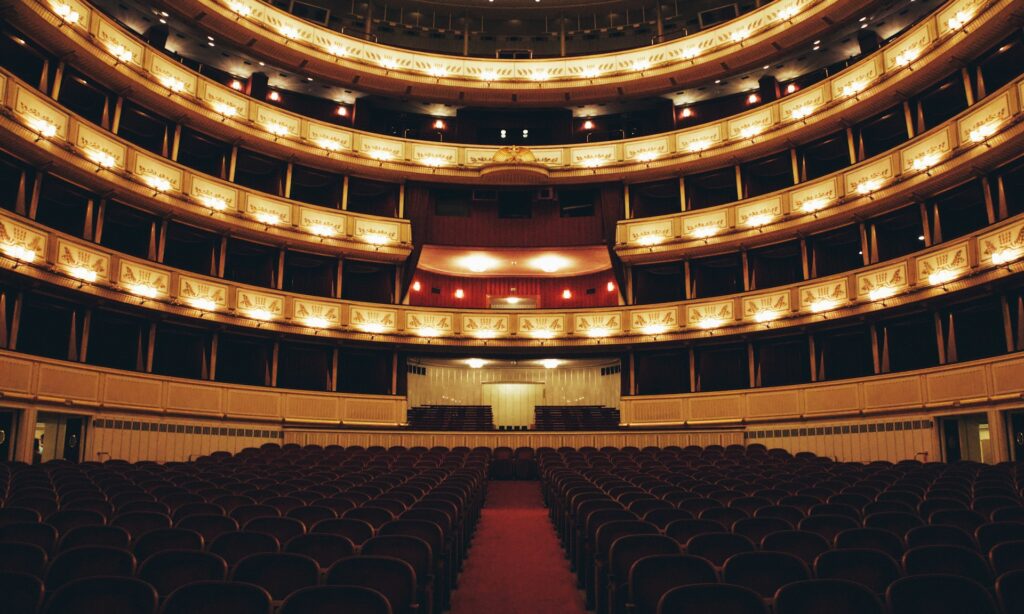
- The standard tour runs about 40 minutes: the foyer, the grand staircase, the state rooms and the auditorium with a view of the stage. It costs €18 for adults 27 and over, €14 for seniors, under-27s and children from 6; under 6 is free. Tours are offered year-round on published dates, in German, English, French, Spanish, Italian and Japanese, with a maximum of 30 people. Skip-the-line tour tickets are also sold through GetYourGuide if the opera’s own dates for your visit are full.
- Booking. Dates are published around the middle of each month for the following month. You can buy online or on site from thirty minutes before the tour starts, subject to availability. Arrive fifteen minutes early. Tickets can’t be refunded or exchanged, and being late isn’t grounds for either.
- The children’s tour is a different product: 90 minutes, ages 6 to 10, in German only, with costumes and props to try on.
- Accessibility. The State Opera is clear that neither the standard nor the children’s tour is suitable for visitors with limited mobility.
- One thing to check first: if you hold a Vienna Pass, the standard tour is included once, but you have to reserve through the opera’s own ticket shop and enter the promo code rather than turning up with the card.
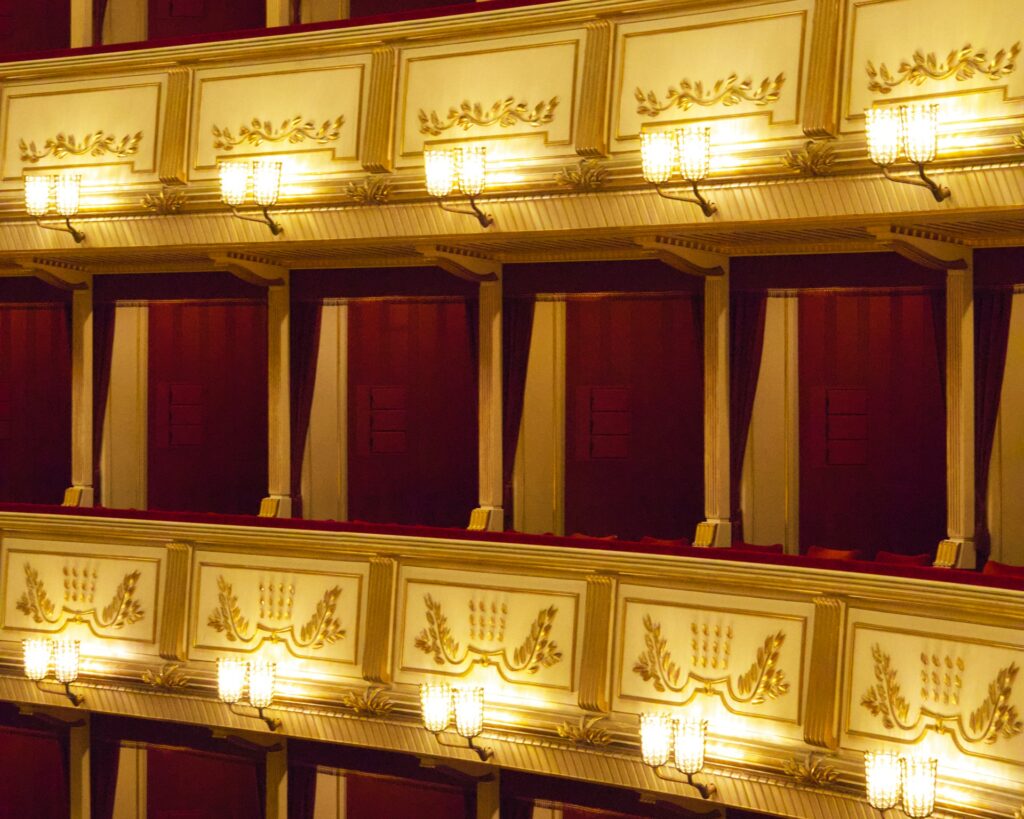
Subtitles, and Why They Change the Calculation
This is the detail that makes a first opera far less intimidating than people expect.
Every seat, and almost every standing place, has its own screen. Subtitles run in up to eight languages, with English, German and the original language always available. You control your own screen.
Which means the usual objection — that you won’t follow a four-hour opera in Italian — doesn’t hold. You can follow the plot throughout the performance, or switch the screen off.
What to Wear
There is no formal dress code for ordinary performances, and people turn up in everything from suits to jeans. The house does note that obviously unsuitable clothing — flip-flops, an undershirt as a top, very short shorts — can be refused at the door. Ordinary smart-casual is entirely fine.
- Two exceptions. Premieres and gala nights are noticeably dressier, and the Opera Ball in February is white tie with an enforced dress code, sold separately and in a completely different price tier.
If you’re standing, factor in the interval: the long ones are enough for a coffee and a slice of cake in the foyer, which is the Viennese way of pacing a four-hour evening rather than pushing through it.
Common Mistakes
Getting into the State Opera is easier than its reputation suggests, but only if you’re working with the current rules rather than yesterday’s advice.
- Planning a July or August evening around the house’s own repertory. Its opera and ballet productions don’t run in those months. Guided tours continue and guest events use the building, but the season you’re picturing is September to June.
- Buying from the costumed sellers outside. The opera warns that no street seller is authorised to sell tickets on its behalf. Buy State Opera tickets only through its own channels — what the costumed sellers are actually offering is a different, unaffiliated concert product.
- Assuming standing room can’t be booked ahead at all. Without a card it’s same-day only, but a free BundestheaterCard lets you book online the day before. If your itinerary is fixed, that extra day of access can make standing room considerably easier to plan around.
- Using a resale site for a sold-out night. Seats listed through the opera’s commission exchange reappear in the official sales channels, so keep checking there first.
- Booking the cheapest seat without checking the sightline. Some seats are marked as restricted or severely restricted view, and the official seating plan shows the view from individual seats before you buy.
Continue Exploring
- What to See in Vienna — where the opera house sits among the city’s other headline sights.
- One Day in Vienna — how an evening performance reshapes a single day.
- Walking Tour of Vienna — the Ringstrasse route that passes the opera house.
- Vienna Public Transport — Karlsplatz is on U1, U2 and U4, and late trains matter after a long performance.
For daytime visits, both the Vienna State Opera and the wider Vienna selection are bookable through GetYourGuide.
GetYourGuide
State Opera tour with skip-the-line entry
The opera publishes its own tour dates only about a month ahead, and they go quickly in high season. If the house’s calendar is full for your visit, the same 40-minute tour of the foyer, staircase, state rooms and auditorium is bookable here.
Check State Opera tours →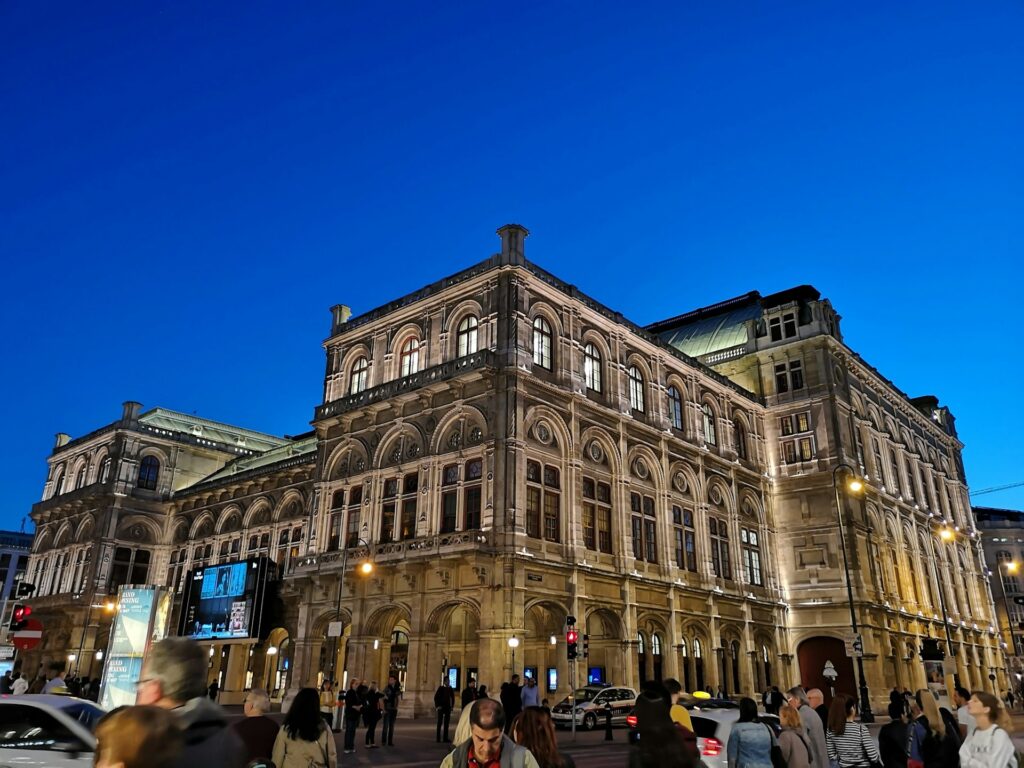
Frequently Asked Questions
How much are standing tickets at the Vienna State Opera?
€13 to €18 depending on the area, sold on the day of the performance in two waves — most at 10am, and for regular evening performances a further quota 80 minutes before curtain. Reduced standing tickets at €5 or €7 require a free BundestheaterCard plus a paid Standing RoomPLUS add-on.
When do Vienna State Opera tickets go on sale?
For the current month plus the next two — so all of March goes on sale on 1 January. Performances further out can be pre-ordered, with a cutoff three weeks before regular sales open.
Is there a dress code?
No formal one for ordinary performances, though obviously unsuitable clothing can be refused at the door. Premieres and the Opera Ball are the exceptions.
Can you see the opera house without a performance?
Yes. The guided tour is offered year-round on published dates, takes about 40 minutes and costs €18 for adults.
Are there subtitles in English?
Yes. Every seat and almost every standing place has an individual screen with up to eight languages, and English is always available.
Is the State Opera open in summer?
Yes, but not for its regular opera-and-ballet repertory, which runs September to June. Guided tours and some guest events continue through the summer.
Can children go?
Yes, from age five, with a €20 children’s ticket bought alongside a regular one. Premieres and several specified productions are excluded.
Disclosure: this article links to TouringBee’s own audio guide and to GetYourGuide. If you buy through those links we may earn a commission, at no extra cost to you. Prices and schedules were correct at the time of writing — check the opera’s own site before you book.