
No products in the cart.

Vienna Public Transport: Tickets, Passes, and How Not to Get Fined
What to buy, where to stamp it, and why paying for a ticket in Vienna is not always enough. Prices, passes, the airport run, and the €135 fine that catches honest travellers.
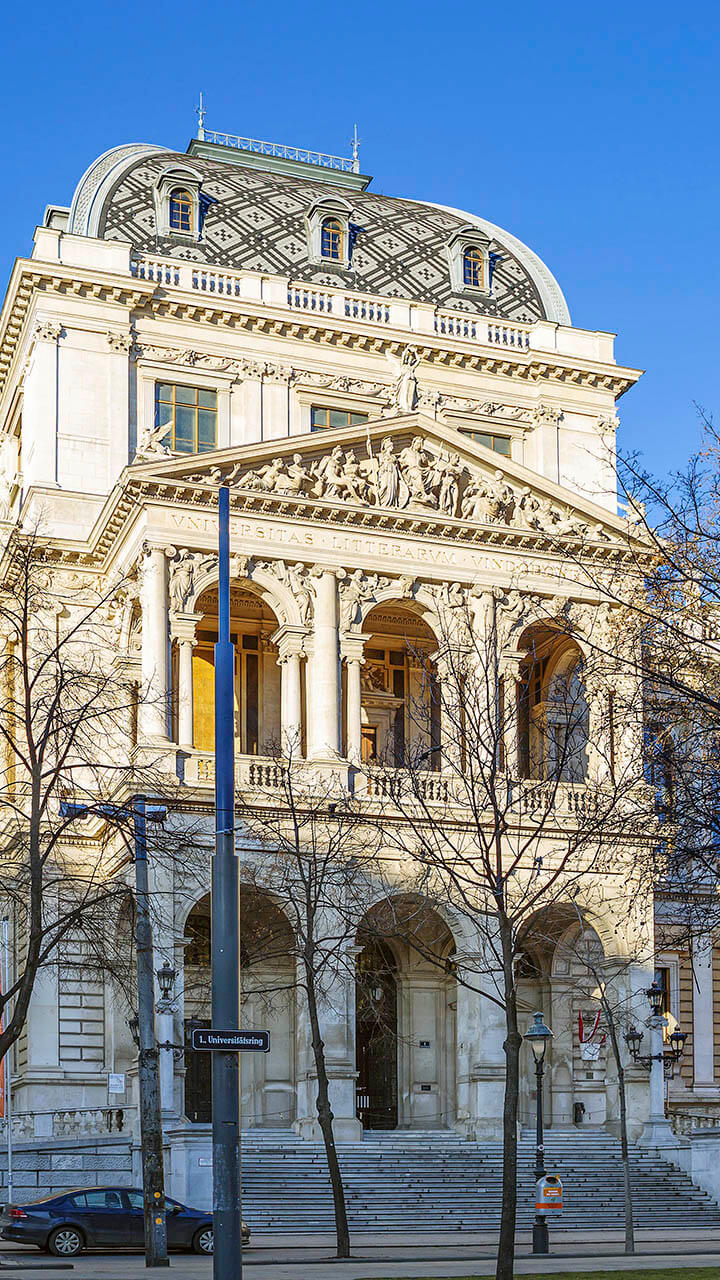
Vienna’s transit system is easy to use once you understand its ticket rules. Five metro lines plus a dense tram and bus network cover the city thoroughly enough that almost nothing requires a taxi, and trains come every few minutes.
The trap is the honour system. There are no ticket barriers anywhere in the metro — you walk from the street to the platform without touching a gate — and visitors reasonably conclude that the rules are relaxed. They aren’t. Inspections are routine and the fine is steep. The most frustrating way to get caught isn’t deliberate fare-dodging: it’s paying for a paper ticket and forgetting to validate it.
That takes about five minutes to get right. It’s also worth knowing that inside the Ring you’ll barely use any of this: the historic centre is compact enough to cover on foot with commentary, and transit mainly matters for the palaces, the outer districts and the airport run.
At a Glance
| What | Details |
|---|---|
| Single ride | €3 digital; €3.20 paper bought in advance; €3.40 on a tram. Valid 80 minutes, one direction |
| 24-hour pass | €9.70 digital, €10.20 paper |
| 7-day pass | €25.20 digital, €28.90 paper |
| 48- and 72-hour passes | Discontinued in 2026 |
| Ticket barriers | None |
| Paper tickets | Validate before entering the metro or S-Bahn ticket zone, or immediately after boarding a tram or bus |
| Airport | Outside the core zone. Full S7/Railjet fare €5.50; €2.30 supplement if you already hold a valid multi-day city ticket |
| Fine | From €135 |
For a visitor, three lines do most of the work: U1 and U3 cross at Stephansplatz, which is as central as it gets, and U4 toward Hütteldorf is the line to Schönbrunn, about twenty minutes from Karlsplatz. Trams and buses fill in the rest, and one ticket covers all of them inside the Vienna core zone with as many changes as you like.
How Tickets Work and Where to Validate
There are no gates. You walk into a metro station, down to the platform and onto a train without anything checking whether you paid. This is the single most misunderstood thing about transit here.
Paper tickets must be validated before the first journey, and where you do it depends on the vehicle. At metro and S-Bahn stations — S-Bahn being the suburban rail network — use the blue validation box before crossing into the area marked Ticket required. On trams and buses the boxes are inside, so validate immediately after boarding. Insert the ticket printed side up and wait for the beep; it comes back stamped with the date and time. An unvalidated paper ticket counts as invalid, even if you paid for it.
Validate once and once only. A stamped single ticket runs 80 minutes from that moment; a stamped 24-hour pass runs 24 hours from that moment.
Tickets bought in the app don’t need stamping. They’re timestamped when you buy or activate them, as are print-at-home tickets and digital passes. One catch: those are issued to a named passenger, so carry official photo ID and make sure the ticket is already active before you enter the ticket zone or board.
Tap+Ride pilot. At nine major metro stations, including Stephansplatz, Hauptbahnhof and Westbahnhof, you can buy a single ticket by tapping a Visa or Mastercard, phone or smartwatch at a marked device before travelling. Use the same payment method as proof during an inspection. Tap+Ride currently sells single tickets only and doesn’t require tapping out.
Which Ticket to Buy
| How much you’ll ride | Buy this |
|---|---|
| One to three trips in a day | Single tickets |
| Four or more trips within 24 hours | 24-hour pass |
| Two days | Compare singles against two 24-hour passes |
| Three days with frequent trips | 7-day pass |
| Four to seven days | 7-day pass |
The unexpected one is the three-day case. Since the 48- and 72-hour passes were discontinued in 2026, a three-day trip no longer has a neat middle option — and the arithmetic tips the other way than you’d guess: three 24-hour digital passes cost €29.10, while the seven-day digital ticket costs €25.20. If you’ll be riding often, the longer ticket is cheaper despite covering days you won’t use. If you’ll mostly walk the centre, singles still win.
Digital costs less than paper in every category. The seven-day paper ticket is transferable between people; the digital one isn’t.
The Vienna City Card bundles transit with sightseeing discounts, from €19 for 24 hours to €39 for seven days. It’s a different product from a plain transit pass and only pays off if you’ll use the discounts — worth running against your own itinerary rather than buying on principle.
Where to Buy
- The WienMobil app — the city transit operator’s own app, and the simplest option. Buy, hold, show if asked, no validation step
- Machines in metro stations — multilingual, take cards
- Tabak shops — the small tobacco-and-newspaper kiosks sell tickets, often with no line
- Machines inside trams — €3.40 per single, the most expensive way to buy. Purchase immediately after boarding, then validate it in a blue box; buying doesn’t validate. Buses don’t sell tickets on board at all
Getting In from the Airport
Vienna International sits southeast of the city, outside the Vienna core zone, which catches people out in both directions. A standard S7 or Railjet ticket to the city costs €5.50. But if you already hold a valid 24-hour or seven-day Vienna ticket, or a Vienna City Card, you only need the €2.30 supplementary ticket covering the stretch between the city boundary and the airport — not the full fare.
| Option | Time | Cost |
|---|---|---|
| S7 to Wien Mitte | About 22 minutes | €5.50 |
| Railjet to Hauptbahnhof | About 15 minutes | €5.50 |
| CAT, nonstop to Wien Mitte | 16 minutes | €14.90 |
| Bus to Schwedenplatz or Westbahnhof | About 22–40 minutes | €11 |
The S7 and Railjet are the best value for most travellers. The CAT — City Airport Train — costs more but runs nonstop to Wien Mitte, the central rail-and-metro interchange, with luggage space and city check-in, which can be worth it if your hotel is near that end. Whichever you pick, add time for waiting and for the onward journey from the city station.
Travelling between September 7, 2026 and October 31, 2027? Airport services change for construction: the S7 will run only as far as St. Marx, the REX7 will reach Hauptbahnhof in about 20 minutes, and the CAT will be replaced temporarily by buses. CAT city check-in at Wien Mitte will not be available during the replacement-bus period. Check current information before you travel.
GetYourGuide
The U4 ends at a palace
Twenty minutes on the U4 from Karlsplatz and you’re at Schönbrunn. The ride is the easy part — the palace runs on timed entry, and the queue on the day is what turns a morning into an afternoon. Book the slot, then let the metro do the rest.
Check Schönbrunn tickets →Nights and Weekends
The metro runs all night on Fridays, Saturdays and nights before public holidays, at 15-minute intervals. On other nights it stops shortly after midnight and NightLine buses — the night network — take over until around 5:00 a.m. Ordinary tickets are valid on them.
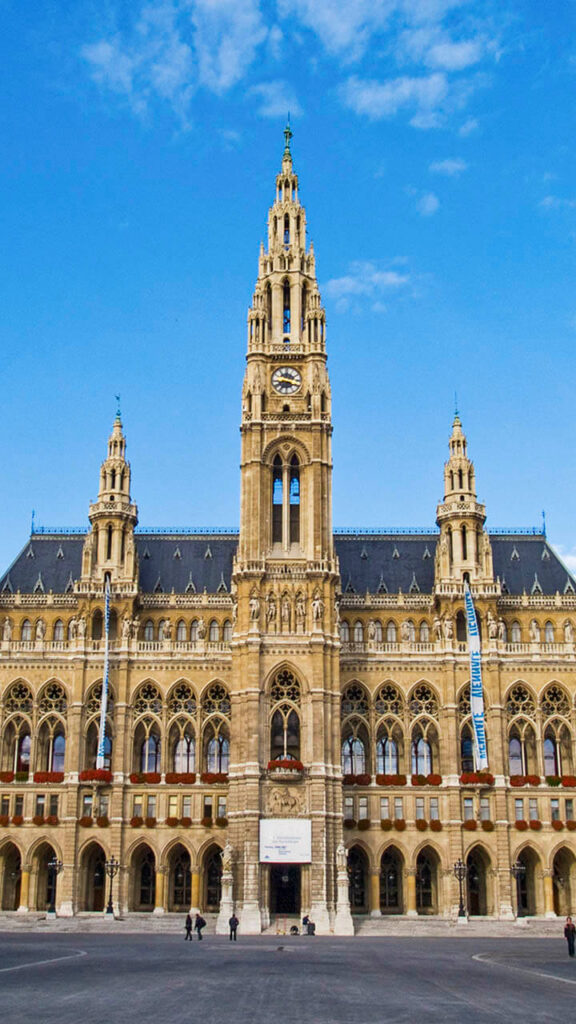
Trams 1 and 2 each cover a good stretch of the Ringstrasse, passing the opera house, the Hofburg, parliament and city hall. At a normal fare that’s a pleasant seated look at the boulevard — but they follow different routes rather than looping, and there’s no commentary. If you want to know what you’re looking at along the way, plan that separately. Check WienMobil for current diversions.
Avoid These Three Mistakes
Forgetting to validate a paper ticket. Skipping those five seconds turns a €3.20 ticket into a €135 charge.
Buying the wrong pass. A three-day trip spent walking the centre rarely justifies a pass at all, while three days of heavy riding is cheaper on the seven-day ticket than on three day passes.
Assuming the airport is included — or that it isn’t, at all. It sits outside the core zone, so a city pass alone won’t get you there. With a valid multi-day ticket, though, you need only the €2.30 supplement rather than the full €5.50 fare.
On the fine itself: riding without a valid ticket costs €135 if you pay immediately, €145 within two weeks, and €185 after that. Inspections are random and take place inside vehicles as well as in metro exit areas, so keep your ticket until you’re out of the station.

Common Questions
Do I need to validate a ticket bought in the app?
No. App tickets, print-at-home tickets and digital passes are timestamped on purchase or activation. They’re personalised, though, so carry photo ID.
What happens if I forget to stamp a paper ticket?
It counts as travelling without a ticket, and the fine applies in full.
Is one ticket good for metro, tram and bus?
Yes, across the Vienna core zone, with unlimited changes as long as the journey is continuous and in one direction.
How long is a single ticket valid?
80 minutes from validation, one direction. It’s a journey ticket, not a window for round trips.
Do children pay?
Under-6s travel free. Children aged 6 to 14 pay a reduced single fare, and under-15s ride free on Sundays, public holidays and Vienna school holidays.
Do I need transit at all for a short trip?
For one day in the centre, often not. For Schönbrunn, the Belvedere or the airport, yes.
Continue Exploring
- One Day in Vienna — the centre on foot, where you’ll barely touch a ticket machine.
- Vienna for First-Time Visitors — days, budget, bookings and local habits.
- What to See in Vienna — the sights the U-Bahn and the Ring trams actually deliver you to.
Tickets worth pricing before you go:
Disclosure: this article contains affiliate links to TouringBee and GetYourGuide. If you buy through them, we may earn a commission at no extra cost to you.