
No products in the cart.

How to Save Money in Vienna
Vienna is not a cheap city, but the savings come from choosing the format rather than going without. Free parks, €13–18 opera standing places, the transit ticket most visitors overbuy, and where saving simply doesn't work.
Where the real savings are, where they aren’t, and the one trick that gets you into the opera for the price of two coffees.
Vienna is not a cheap city, and most advice about visiting it on a budget starts by pretending otherwise. Cafés and restaurants cost noticeably more than in Prague or Budapest, and museum admission runs €19–24.
What Vienna does have is an unusual number of things that cost little or nothing — and they aren’t consolation prizes. The Prater, the city’s largest recreational park, is free to enter. At Schönbrunn, the main park and the view from the Gloriette hill cost nothing either. An evening at one of Europe’s great opera houses costs less than lunch.
The savings, in other words, come from choosing the format rather than from going without. A guided walking tour of the centre runs €20–30 per person in a group and considerably more privately; the same ground with an audio tour costs €9.99 and doesn’t come with a schedule. That pattern repeats across the whole trip.
What Actually Saves Money
| Move | Why it works |
|---|---|
| Standing places at the opera | The same performance without paying for a seat |
| Walking the centre | Most of the major sights inside the Ring are close together |
| A sausage stand for lunch | Less service, a shorter stop, a much lower total |
| Refilling a bottle | The tap water is excellent and fountains are common |
| A regular tram on the Ring | Normal transit fare instead of a sightseeing ticket |
| Buying museum tickets online | Sometimes a little cheaper, reliably faster |
| Coffee away from the famous addresses | The same everyday café culture, lower prices |
Free and Worth Doing
These aren’t filler. Several would be on the list even if they cost money.
- Schönbrunn’s main park. The palace interiors are ticketed; the park behind them isn’t. The walk up to the Gloriette and the view back over the palace with the city behind it cost nothing. Only the rooftop terrace on the Gloriette itself requires a ticket.
- The Belvedere gardens. The formal garden between the Upper and Lower buildings is open and free. Klimt is inside and ticketed, but the grounds stand on their own.
- The Wien Museum. Its permanent exhibition on Karlsplatz is free, across three floors, and every Wien Museum location is free on the first Sunday of the month.
- St. Peter’s Church. Small, oval and one of the densest Baroque interiors in the city, a minute off the Graben. No admission.
- The courtyards. The medieval lanes behind the cathedral hide inner courtyards with wooden galleries, and nobody charges to walk into them. This is the layer of the city most visitors miss entirely, and it happens to be the free one.
- City Hall tours. Free guided tours run on selected weekdays, though the schedule shifts around council sessions, public holidays and a summer break. Check current dates before planning around one.
The Albertina’s terrace, with its view of the opera house, is worth a look if you’re passing — but access depends on what’s running there, so treat it as a bonus rather than a plan.
The Opera, for the Price of Two Coffees
This is the single best value in Vienna and most visitors never hear about it.
On repertory performance days, the Vienna State Opera sells standing places for €13–18. Some go online from 10:00 a.m. on the day of the show; the rest are sold at a separate window 80 minutes before curtain. You see the same performance as the seated audience; the trade-off is that you stand. Every standing place has its own subtitle system.
Two caveats. The queue at the window forms early for anything popular, so treat it as an evening plan rather than a whim. And July and August have no regular repertory season, so the standing-room offer isn’t running then. Other venues may have summer programmes, but schedules and prices vary — check the calendar before relying on one as a fallback.
Transit: Buy Less Than You Think
Most visitors overbuy here. Inside the Ring you walk; transit matters for the palaces, the outer districts and the airport.
| Trip pattern | Usually cheapest |
|---|---|
| Mostly walking in the centre | Single tickets as needed |
| Several rides in one day | 24-hour pass |
| Frequent travel over three to seven days | Compare the 7-day digital pass |
The counterintuitive case is three days. Since the 48- and 72-hour passes were discontinued in 2026, three 24-hour digital passes now cost €29.10 while the seven-day digital ticket costs €25.20 — so with frequent riding, the longer ticket is cheaper. If you’re mostly staying inside the Ring, singles may still win.
Remember that paper tickets must be validated. A fine costs far more than any saving it could undo. The full ticket breakdown covers the current fares and the validation rules.
Museums Without Overpaying
Admission clusters between €19 and €24 across the major museums, and there isn’t much room to negotiate. What there is:
- Buy online. Sometimes a couple of euros cheaper, and reliably faster than the box office. Timed entry to the big collections — the Kunsthistorisches Museum among them — is straightforward to book in advance
- Pick two, not five. Two major museums in one day tend to blur together; the third ticket usually buys fatigue rather than another memorable experience
- Use the late nights. Several of the big museums stay open one or two evenings a week, which lets one museum share a day with something else instead of consuming it
Eating: Where the Gap Is Widest
Food is where Vienna gets expensive, and also where the difference between choices is largest.
At a well-known schnitzel restaurant, a main course with a side and a drink pushes lunch toward €40. A sausage stand feeds you for €9–10 in fifteen minutes rather than an hour, and the sausage is not a consolation prize.
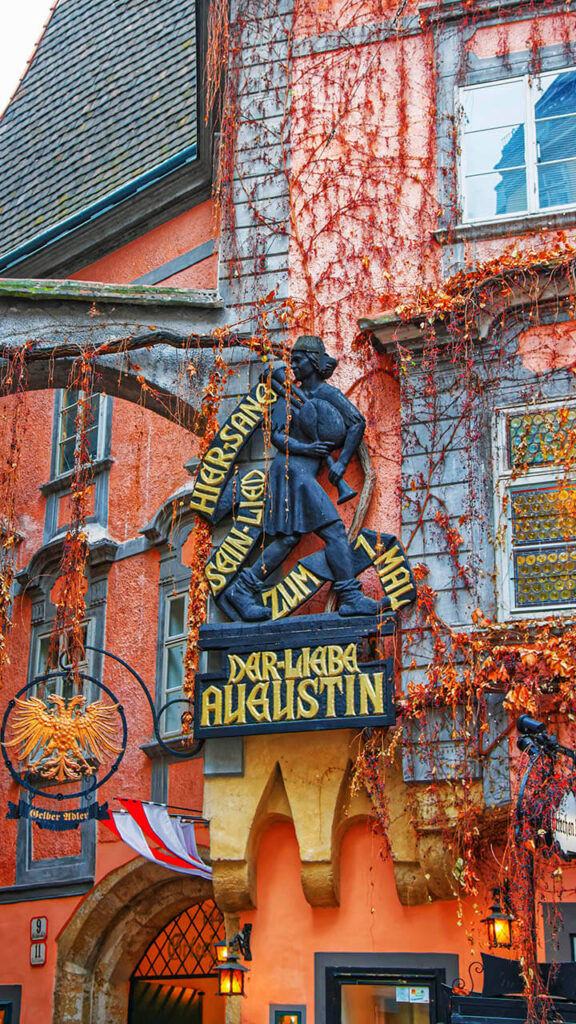
Coffee follows the same pattern. At the famous houses a Melange and a slice of cake runs €16–18. Away from those addresses, in a café that locals actually use, you get the everyday version of the same city habit for noticeably less.
Markets can be a middle path: prepared food, produce and less table service to pay for. At the Naschmarkt, though, the stalls close on Sundays, even though the restaurants stay open.
Bring a reusable bottle. The tap water is Alpine and public drinking fountains are easy to find.

City Cards: The Honest Math
Two products get confused constantly, and neither is automatically worth buying.
The Vienna City Card covers public transport plus discounts, from €19 for 24 hours to €39 for seven days. Compare it against a plain transit pass: at €19 against €9.70 for the digital 24-hour ticket, you’re paying €9.30 for the discount system. It pays off only if the discounts you’ll actually use exceed that.
The Vienna PASS covers admission to around 90 sights and starts at €109 for one day. That’s roughly the cost of four or five major admissions — more paid attractions than most people can enjoy properly in a day. It works for a specific kind of traveller moving fast, and badly for everyone else.
The rule: build the itinerary first, then price it both ways. A card bought on principle is a donation.
Where Saving Doesn’t Work
Honesty is more useful here than a longer list of tips.
- Staying far out. The cheaper districts can genuinely save on the room. The trade-off is commuting time and less flexibility during the day, so compare the actual price difference before assuming the outer district is the better deal.
- Skipping Schönbrunn or the Belvedere to save the ticket. These are the reasons people come. Cut the third museum instead.
- Hunting for cheap food in the 1st district. It mostly isn’t there. Walk a few blocks out or accept the price.
- Assuming a cheap flight makes it a cheap trip. A low airfare can hide several days of comparatively high spending on food, museums and accommodation.
GetYourGuide
Schönbrunn tickets, sorted before you go
The park and the walk up to the Gloriette are free. The state rooms are not — and this is the one ticket most people shouldn’t cut. Booking a timed entry in advance costs the same as the desk and removes the queue from your morning.
Check Schönbrunn tickets →Common Mistakes
- Buying a sightseeing card before building the itinerary. The card should follow the plan, not produce it.
- Staying far outside the centre for a slightly cheaper room. The saving may be real, but a small price difference is rarely worth the extra commuting time.
- Saving by skipping the things you came for. That isn’t economy, it’s cancellation.
Frequently Asked Questions
How much does a lean sightseeing day cost?
One transit ride, an inexpensive lunch, one major museum and a basic coffee come to roughly €35–45 per person. That’s a sightseeing subtotal rather than a daily budget — breakfast, dinner, accommodation and any paid evening are extra.
Are there free museums?
Yes. The permanent exhibition at the Wien Museum is free, and every Wien Museum location offers free admission on the first Sunday of the month. The large imperial and art museums charge normal adult admission.
Is the Vienna City Card worth it?
Only if the discounts you’d genuinely use exceed the €9.30 premium over a plain 24-hour transit ticket.
Can you see Vienna without paying for anything?
For a day, yes, and it would be a decent day. Longer than that, the museums and palaces are the point, and skipping them saves money by removing the reason you came.
Continue Exploring
- One Day in Vienna — how the free and the ticketed fit into a single day
- Walking Tour of Vienna — the courtyards, lanes and squares that cost nothing
- Vienna Public Transport: Tickets and Passes — fares, validation and which pass actually pays off
- Is Vienna Worth Visiting? — the honest case, price included
Tickets worth booking ahead, if they’re on your list: Schönbrunn Palace, the Belvedere and the Gloriette terrace at Schönbrunn.
Disclosure: this article links to TouringBee’s own Vienna audio guide and to GetYourGuide. If you buy through those links, we may earn a commission at no additional cost to you.