
No products in the cart.

Best Museums in Vienna: Which One to Choose and How Many Fit in a Day
Which Vienna museum to choose if you only have time for one, what the big names actually cost, and how many museums realistically fit into a day.
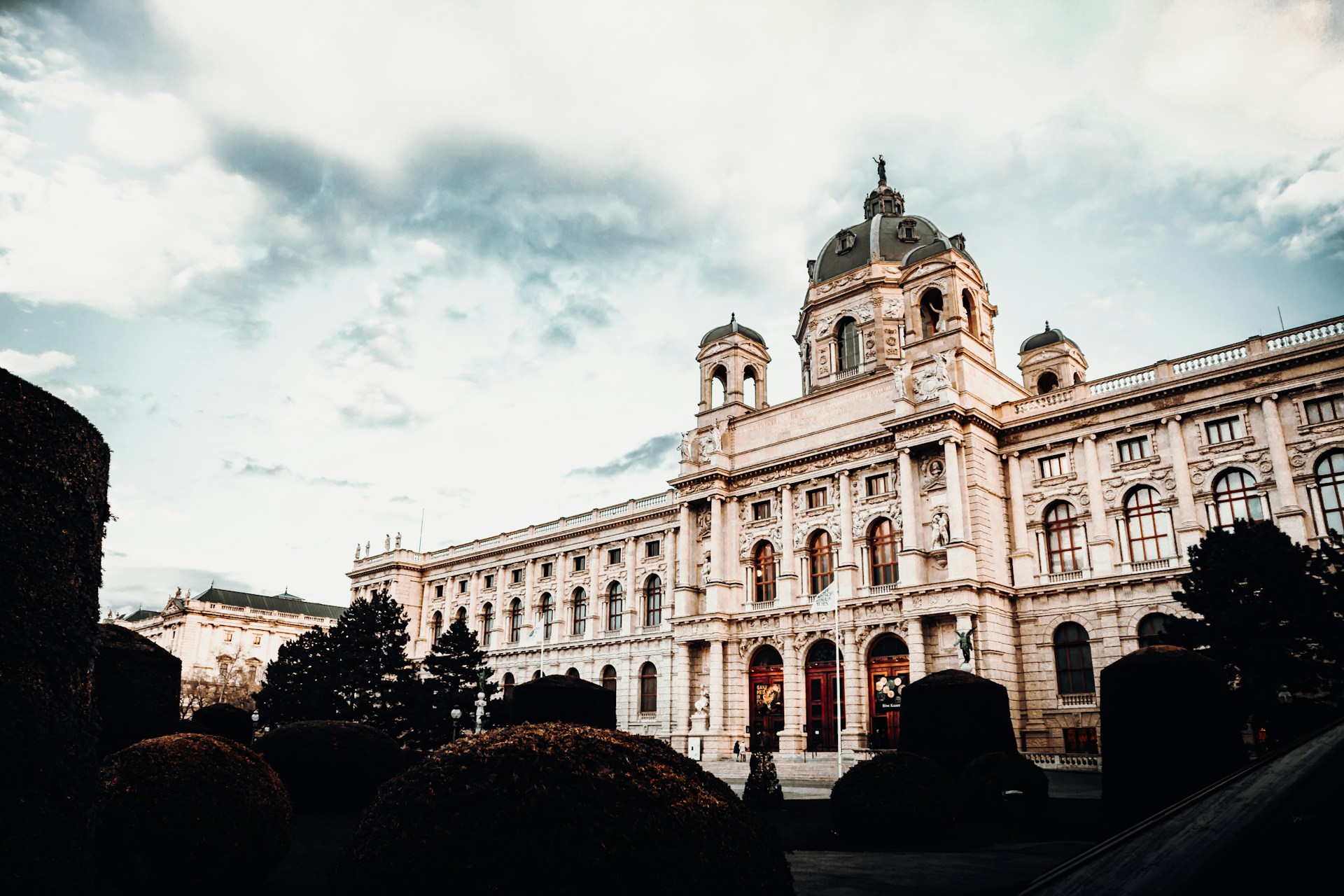
Which one to choose if you only have time for one, what the big names actually cost, and how many museums fit into a day.
Vienna has more museums than any visitor can reasonably absorb. Six centuries of Habsburg collecting left the city with an exceptional concentration of art, much of it clustered around the Ringstrasse and the MuseumsQuartier.
The practical problem isn’t finding a good museum. Several are major two- to three-hour visits, and doing them back to back turns even great art into wallpaper. Two museums in a day is the honest ceiling; three usually means the last one gets skimmed.
Many of the central museums sit close to the historic core, which is compact enough to cover on foot. Our self-guided audio tour of Vienna’s historic centre is designed for that outdoor half of the day, and it pairs naturally with a walking route through the old city. Going inside is a separate choice, and this article is about making that choice well.
Quick Answer
| If you only visit one | Kunsthistorisches Museum, for the building as much as the collection |
| If you came for Klimt | Upper Belvedere, where the original of The Kiss is displayed |
| If you came for Schiele | Leopold Museum, in the MuseumsQuartier |
| Best compact visit | Albertina — manageable in about two hours, with the state rooms included |
| Under 19 | Free at the Kunsthistorisches, Albertina, Belvedere and mumok |
| Opening days | Vary by museum and by season. Check each museum’s own calendar |
| Realistic pace | Two museums a day, with a long break between |
| Booking | Usually not required for the permanent collections listed here; the Upper and Lower Belvedere use timed entry |
Kunsthistorisches Museum
The default answer, and the right one for most first visits.
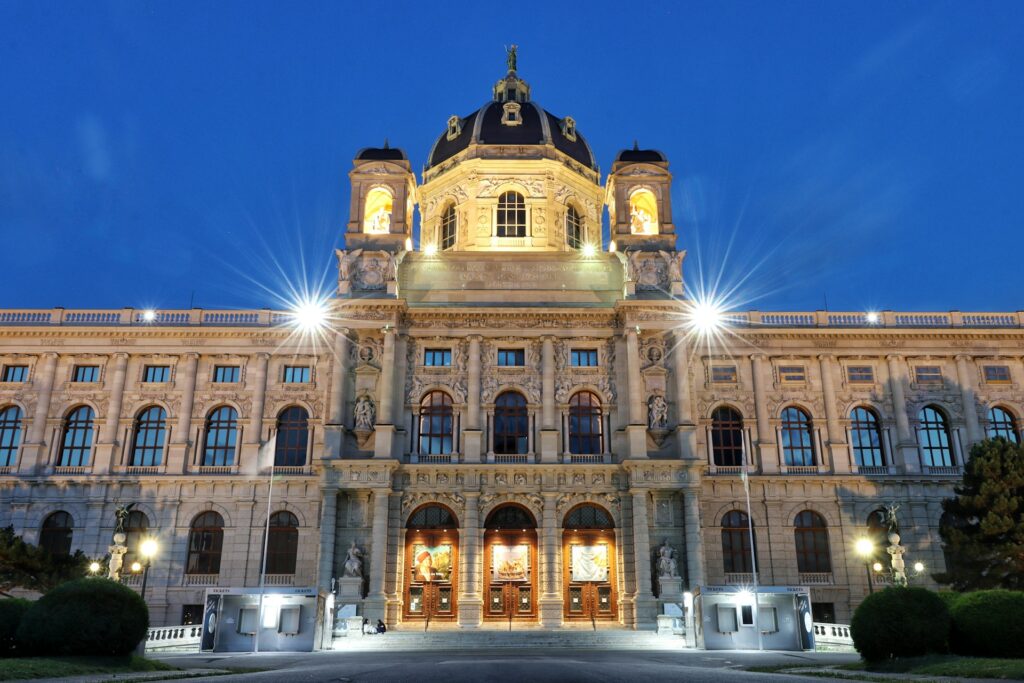
The Picture Gallery holds twelve paintings by Pieter Bruegel the Elder — the largest group of his paintings anywhere, including Hunters in the Snow — plus Vermeer’s The Art of Painting, Raphael’s Madonna in the Meadow, Caravaggio, Titian, and enough Rubens that you stop counting. The Kunstkammer downstairs is the older, stranger half: the Habsburg cabinet of curiosities, automata, carved ivory, Cellini’s gold salt cellar.
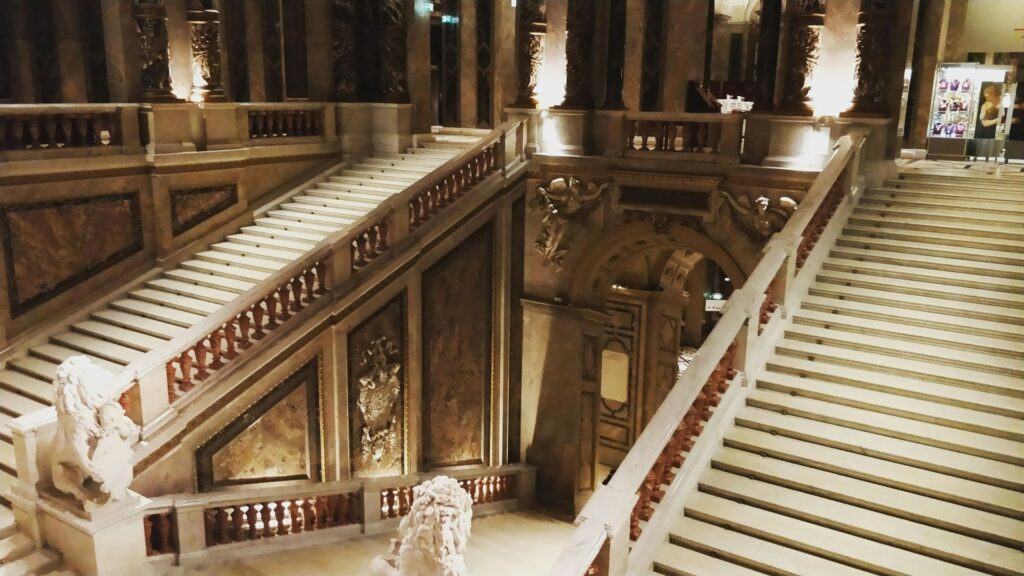
And the building is the point as much as the contents. It went up in 1891 as one of a matched pair facing each other across Maria-Theresien-Platz, and the sequence from entrance hall to staircase to cupola is deliberately theatrical. The staircase alone stops people.
-
Practical. Open 10:00 a.m. to 6:00 p.m., Thursdays until 9:00 p.m. Opening days shift with the season — the museum runs daily through the summer months and closes Mondays for much of the rest of the year, so check the current calendar. No timed entry is normally required; arrive during opening hours. Under 19 free. If you would rather have the ticket in hand before you travel, entry tickets for the Kunsthistorisches are sold online.
-
Thursday evening is the most useful planning detail here. The museum stays open three hours later, and the galleries are often quieter after about seven.
Albertina
The efficient one. A Habsburg palace on the bastion above the Opera, built around a graphics collection — drawings and prints, a narrower field than it sounds when the holdings include Dürer’s Young Hare and sheets by Leonardo and Michelangelo.
But works on paper can’t stay exposed to light, so the graphics rotate through temporary displays. The famous sheets may not be on view on your date, which is a common source of disappointment for visitors who came expecting a specific work. What’s reliably present is the modern collection — Monet, Degas, Renoir, Picasso, Kirchner — along with the restored Habsburg state rooms, complete with historic wall coverings, chandeliers, stoves and furniture. Many visitors walk through those without realising they’re a separate attraction rather than part of the modern display.
-
Practical. Daily 10:00 a.m.–6:00 p.m., Wednesdays and Fridays until 9:00 p.m. €20.90, under 19 free, ticket valid for one year. Albertina Modern is a separate building at Karlsplatz and costs €17.90; the three-location combined ticket is €29.90.
-
The approach is worth the climb. The ramp up to the main entrance gives you the Opera, the Burggarten and the old-city roofline even if you skip the museum. Access to parts of the bastion terrace can change during events.
The MuseumsQuartier: Leopold and mumok
A former imperial stables converted into a courtyard of museums, and the one entry on this list that works as a place rather than a visit. In summer the courtyard fills with people on brightly coloured furniture doing nothing in particular, which is a legitimate use of an afternoon.
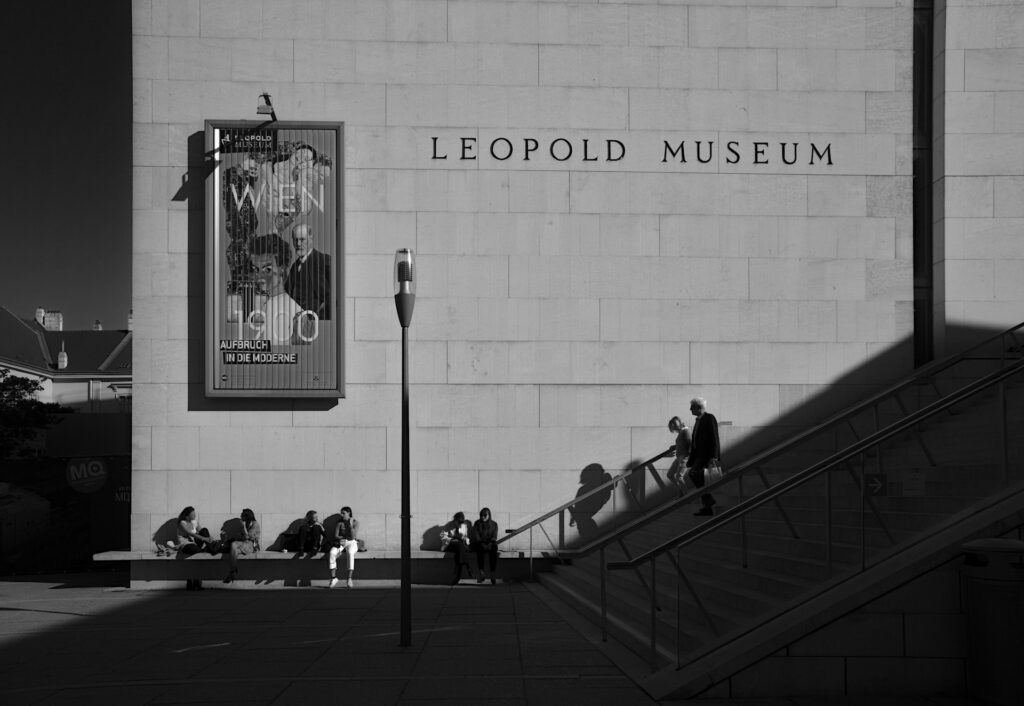
- The Leopold Museum is why art people come. Rudolf Leopold, an ophthalmologist, spent fifty years buying Egon Schiele when Schiele was cheap, and the result is the largest concentration of his work anywhere — over 220 pieces, alongside Klimt, Kokoschka and the Wiener Werkstätte. If the Belvedere is where you see Klimt at his most decorative, this is where you see what came after and how much harder it got.
The museum runs daily through the summer and closes on Tuesdays for the rest of the year; check the current calendar before building a day around it.
-
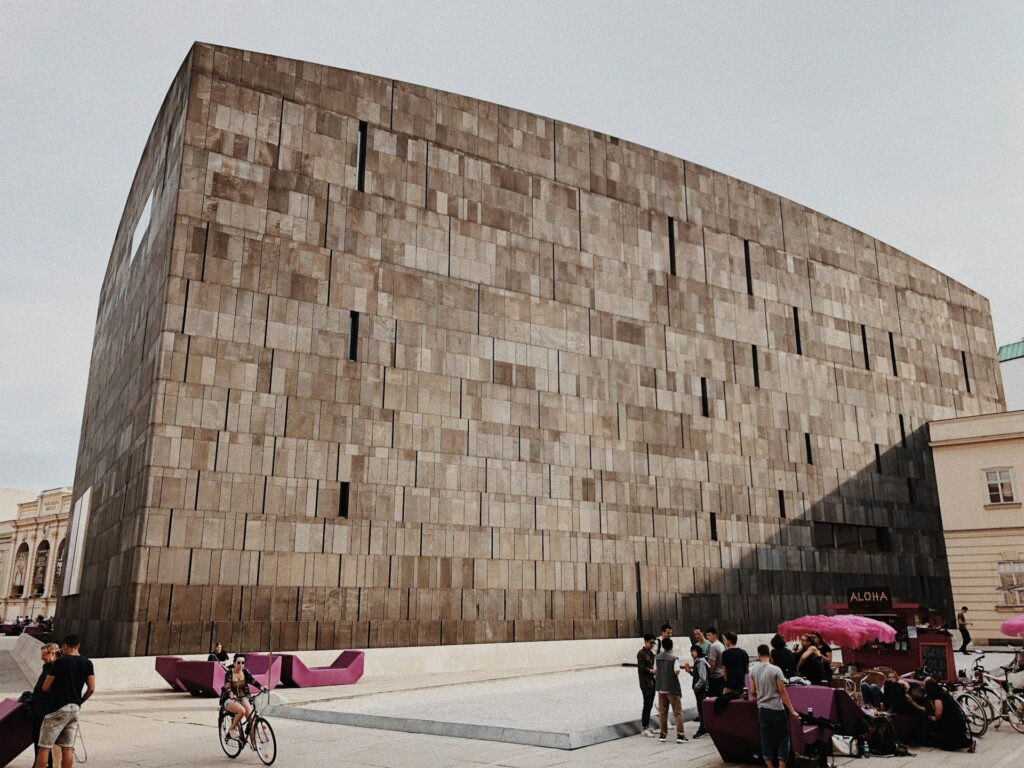
mumok is the dark basalt block opposite: postwar and contemporary, Viennese Actionism, Pop, Fluxus. €13, under 19 free, and a fair companion if the Leopold left you wanting the twentieth century to keep going. If it left you exhausted, skip it.
-
The MQ Libelle roof terrace on top of the Leopold is free and reached by external lifts. It takes a winter break from November through February and can close for bad weather or events; check the current status before you go, especially in March or early April.
Five Best First-Visit Choices
| Museum | Adult ticket | Time needed | Come for |
|---|---|---|---|
| Kunsthistorisches | €22 online, €24 on site | 2.5–3 hours | Bruegel, Vermeer, the Kunstkammer, the building |
| Upper Belvedere | €23 | 1.5–2 hours | Klimt, Schiele, Messerschmidt |
| Albertina | €20.90 | 1.5–2 hours | The modern collection and the state rooms |
| Leopold Museum | €19 | 2 hours | The largest Schiele holding anywhere |
| mumok | €13 | 1–1.5 hours | Postwar and contemporary art |
Prices change, so check before you go. Albertina tickets are valid for one year from purchase, and standard Kunsthistorisches tickets remain valid until used, so buying early doesn’t tie you to a particular visit date at either museum.
The Belvedere and the Hofburg Museums
Two entries that are really other articles.
The Upper Belvedere holds the original of The Kiss and a serious permanent collection around it. It’s a fifteen-minute trip southeast of the centre and needs its own slot rather than an hour tacked onto a museum day.
Inside the Hofburg are several separately administered museums. The Imperial Apartments and Sisi Museum cover the dynasty and its private life; the Imperial Treasury holds the regalia, including the crown of the Holy Roman Empire; and the Neue Hofburg contains the Weltmuseum Wien, the Imperial Armoury and the Collection of Historic Musical Instruments. The entrances and ticketing differ enough that the palace needs its own guide.
Smaller and More Specialised
Vienna’s specialist museums are unusually good, partly because the city has enough visitors that the strange ones survive.
| Museum | What it is | Roughly |
|---|---|---|
| Haus der Musik | Interactive sound museum; conduct the Philharmonic badly | 2 hours |
| Jewish Museum Judenplatz | Excavated medieval synagogue foundations beneath the square | 1 hour |
| Globe Museum | The only museum of globes in the world, in a palace on Herrengasse | 45 minutes |
| Clock Museum | More than 700 clocks and watches on display | 1 hour |
| Funeral Museum | Vienna’s relationship with death, played straight | 1 hour |
| Sigmund Freud Museum | The Berggasse apartment where psychoanalysis was born | 1 hour |
The Funeral Museum is the one that most clearly explains a specifically Viennese subject: the city’s elaborate relationship with death and the ideal of a schöne Leich, a funeral done properly. The Globe and Clock museums are compact central choices that combine easily with another stop, though current gallery access is worth checking before making a special trip.
Passes: Do the Arithmetic, Not the Rule of Thumb
There’s no universal threshold at which a pass starts paying. It depends entirely on which museums you’ve chosen.
The 7 Museums Pass from the Kunsthistorisches group costs €53 for a year and covers the Kunsthistorisches, the Weltmuseum, the Imperial Treasury, the Imperial Carriage Museum at Schönbrunn, the Imperial Armoury, the Collection of Historic Musical Instruments and Ambras Castle in Innsbruck. Combine the Kunsthistorisches, the Treasury and one more from that group across a few days and you’re already near the price.
For two museums, look at the combination tickets first. The Leopold pairs with the Kunsthistorisches for €37, with mumok for €33, with the MAK for €34 and with the Freud Museum for €30 — each saving a few euros without forcing you into a four-attraction day you wouldn’t enjoy.
Build the museum list first, then add up the exact tickets. Where the free tier is and when a city card is worth it has the wider arithmetic.
How Many Museums a Day
Two, with a real break in between, and the second one smaller than the first.
- The Kunsthistorisches plus the Albertina is a good pairing — one enormous, one manageable, ten minutes apart.
- The Leopold plus mumok works because they’re in the same courtyard.
- The Kunsthistorisches plus the Belvedere is where people overreach: both are major museums, they’re separated by a cross-centre transfer, and the second one often gets forty minutes it doesn’t deserve.
If you’re planning a first trip of several days, one major museum per day usually works better than a dedicated museum marathon. A single day in Vienna realistically holds one.
Practicalities
Vienna’s museums are easy to reach; coordinating them is the harder part. Opening days, late hours, free admission rules and even bag policies vary enough that a quick check before you go pays off.
- Opening days vary. Several of the large museums are now open daily or change their schedules seasonally, while smaller institutions may close on Monday, Tuesday, or both. Check the museum’s own calendar before building a day around it.
- Late evenings. The Kunsthistorisches stays open late on Thursdays, and the Albertina on Wednesdays and Fridays. Their later hours are often quieter than the middle of the day.
- Visitors under 19 enter free at the Kunsthistorisches, Albertina, Belvedere and mumok. Some museums still issue a free ticket: the Upper and Lower Belvedere require a reserved time even for it, while Belvedere 21 uses a dated day ticket.
- Bags and coats. Large bags must be left in the cloakroom at the major museums. Allow some extra time, particularly near closing.
- Getting there. The Kunsthistorisches, the MuseumsQuartier and the Albertina are all within easy reach of one another around the Ring and the historic centre. Ticket types and validation work the same everywhere in the city.
Common Mistakes
Vienna’s museums are hard to choose badly and surprisingly easy to plan badly. Most disappointments come from trying to see too much, or assuming that nearby museums work the same way.
- Assuming the museums share a schedule. They don’t, and several change theirs by season. One check of the right calendar saves a wasted morning.
- Booking three major museums in one day. By the third you’re walking through rooms rather than looking at them.
- Buying a sightseeing pass without adding up the tickets it replaces. For two museums, a combination ticket is usually the better product.
- Going to the Belvedere for Schiele or the Leopold for The Kiss. Both museums show both artists, but The Kiss is at the Upper Belvedere, while the Leopold holds the far larger Schiele collection.
- Skipping the Kunstkammer at the Kunsthistorisches. It’s downstairs, most people run out of energy before reaching it, and it’s the most unusual thing in the building.
GetYourGuide
Museum tickets, bought before you queue
Most of the permanent collections here don’t require a timed slot, but on a wet Saturday the ticket desk is the slow part. Booking the Kunsthistorisches or the Belvedere in advance takes that variable out of the day.
See Vienna museum tickets →Frequently Asked Questions
Which museum should you visit if you only have one?
The Kunsthistorisches Museum, unless you specifically came for The Kiss — in which case choose the Upper Belvedere, where the original hangs.
Do you need to book museum tickets in Vienna?
The Kunsthistorisches and Albertina normally don’t require a reserved entry time. The Upper and Lower Belvedere do.
Are Vienna’s museums free for children?
Admission is free for visitors under 19 at the Kunsthistorisches, Albertina, Belvedere and mumok, though some venues still require a free ticket.
When are museums least crowded?
Weekday mornings are usually the safest choice. The late openings at the Kunsthistorisches and Albertina can also be calmer than daytime hours.
Is the MuseumsQuartier worth visiting on its own?
The courtyard is free, pleasant and full of people in summer. Without a museum ticket it’s a place to sit rather than a sight — which on a warm afternoon is the point.
Is a Vienna museum pass worth it?
Only against your actual museum list. Compare the individual and combination tickets first; an annual group pass makes sense only when several included museums already match your plan.
Continue Exploring
- What to See in Vienna — the wider shortlist, indoors and out
- One Day in Vienna — where a single museum fits
- Walking Tour of Vienna — the outdoor half of a museum day
- St. Stephen’s Cathedral — the one interior that isn’t a museum
- How to Save Money in Vienna — free days, city cards and the arithmetic
- Tickets: Kunsthistorisches Museum · Belvedere Palace
Disclosure: this article contains affiliate links to TouringBee and GetYourGuide. If you book through them we may earn a small commission, at no extra cost to you. Prices and opening hours were correct at the time of writing — always check the museum’s own site before you go.