
No products in the cart.

Belvedere and Klimt’s The Kiss: Which Palace, When to Go and What Else to See
Which of the two Belvedere palaces you actually want, how to reach The Kiss before the room fills, and what else is worth your time upstairs.
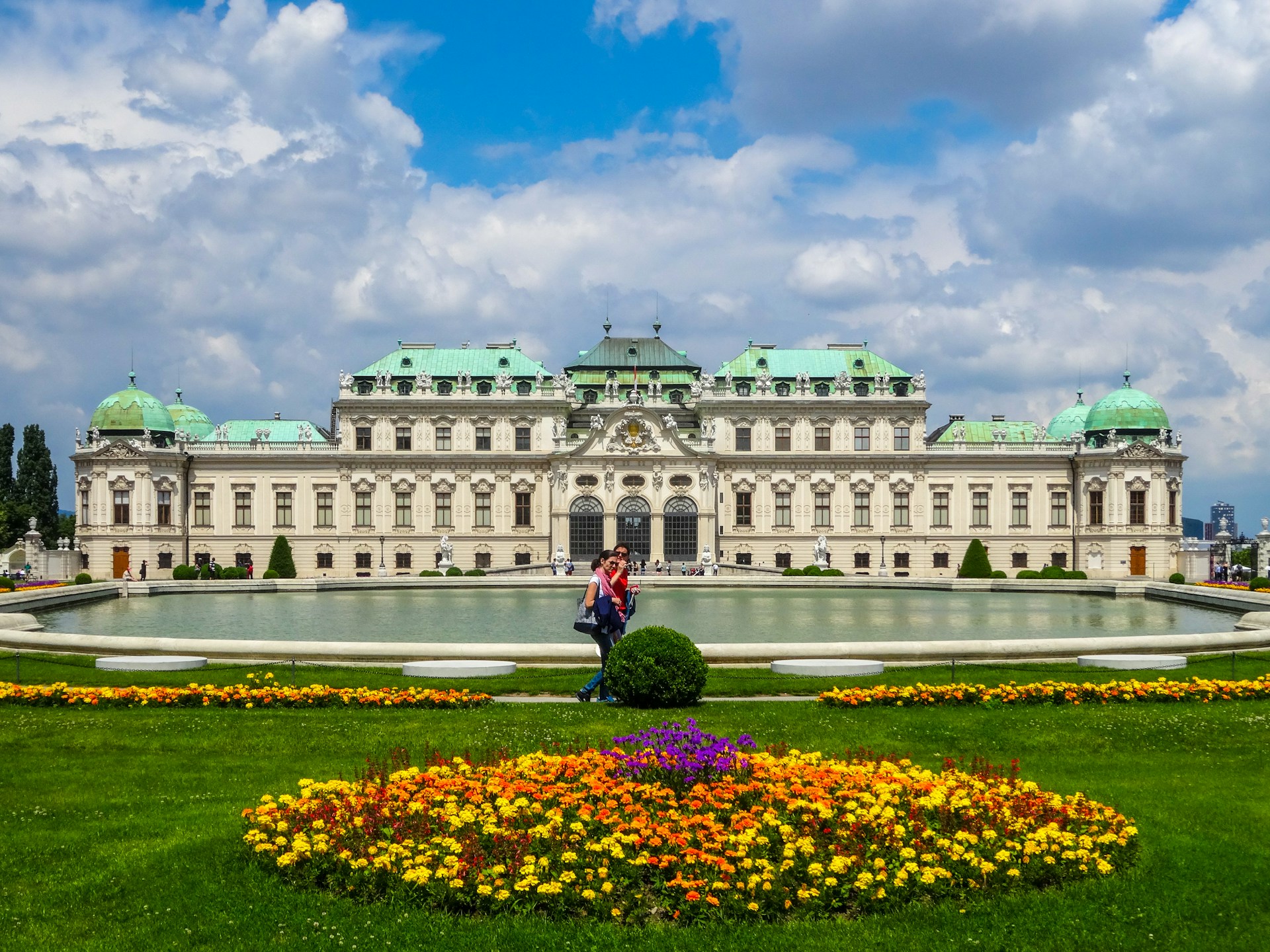
Most people come to the Belvedere for one painting, which is a reasonable thing to do and slightly unfair to the rest of the building. The Austrian state acquired The Kiss in 1908 for the Moderne Galerie, then housed in the Lower Belvedere, while Klimt was still finishing it. It has stayed in the museum’s collection ever since and is now the centrepiece of the Upper Belvedere’s permanent display.
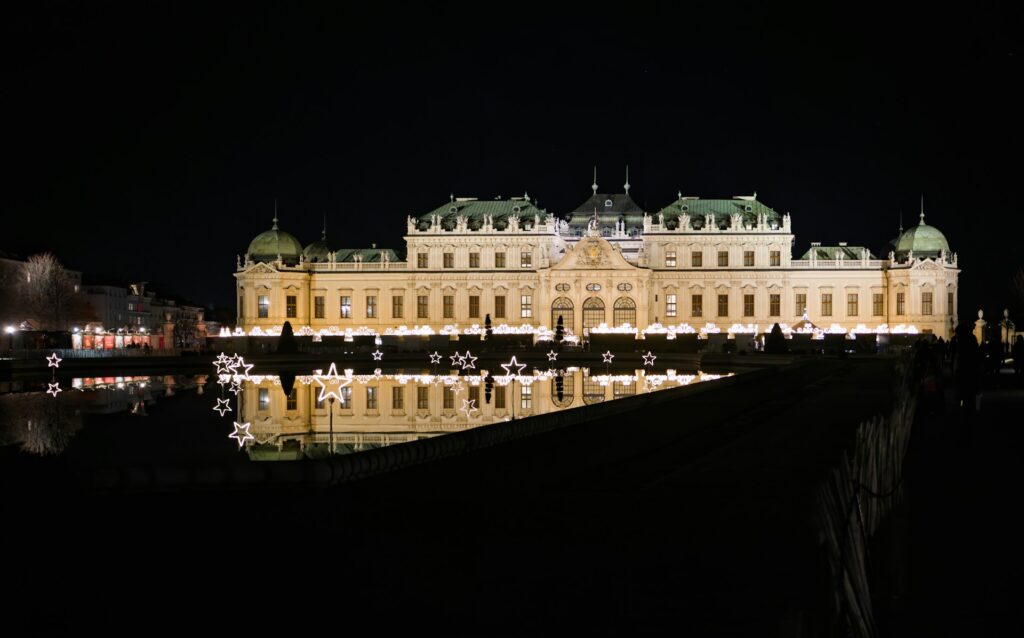
The complication is that the Belvedere isn’t one museum. It’s two Baroque palaces at opposite ends of a formal garden, built for the same man, and they now do completely different jobs. One holds the permanent collection, including the Klimt rooms. The other runs temporary exhibitions. Buying a ticket for the wrong one is a common and entirely avoidable way to miss the painting.
It also sits outside the Ringstrasse, southeast of the centre — close enough to reach in fifteen minutes, far enough that it’s a separate outing rather than a detour. The historic core works differently: most of its major sights can be covered on foot, which is what our self-guided audio tour of Vienna’s historic centre is designed for. The Belvedere deserves its own slot in the day.
Quick Answer
| Where’s The Kiss? | Upper Belvedere, upstairs in the Vienna 1900 galleries |
| Upper Belvedere | €23; normally open daily 9am–6pm |
| Lower Belvedere | €20; temporary exhibitions in the palace, with medieval and Renaissance art in the adjacent Palace Stables. Daily 10am–6pm |
| Both in one day | €32 for the 2-in-1 day ticket, against €43 bought separately |
| Under 19 | Free at all three locations; reserve a free time slot for the Upper or Lower, or a dated day ticket for Belvedere 21 |
| Garden between them | Free |
| Time needed | 1.5–2 hours for the Upper Belvedere |
| Booking | Upper and Lower require timed tickets. Belvedere 21 uses a dated day ticket. Combination tickets reserve a time only for the Upper Belvedere |
| Getting there | Tram D to Schloss Belvedere, or U1 to Südtiroler Platz and a 15-minute walk |
Temporary summer hours: through 31 August 2026 the Upper Belvedere stays open until 7pm. Outside that period it normally closes at 6pm.
Upper or Lower: The Decision That Matters
They’re a ten-minute walk apart through the garden, and they are not interchangeable.
- Upper Belvedere — €23. The permanent collection: eight hundred years of art, with the Klimt rooms and The Kiss upstairs, Egon Schiele and Oskar Kokoschka alongside them, Franz Xaver Messerschmidt’s contorted character heads, a van Gogh, and the largest holding of Biedermeier painting anywhere. If you have one visit, this is it.
- Lower Belvedere — €20. Prince Eugene’s former residence now hosts temporary exhibitions, while the adjacent Palace Stables display medieval and Renaissance art. The value of the visit depends heavily on the current programme, so check what’s showing before booking.
- Both palaces in one day — €32. The 2-in-1 day ticket covers the Upper and Lower against €43 bought separately. You reserve a time for the Upper and visit the Lower before or after it, during opening hours.
The 3-in-1 day ticket adds Belvedere 21 and only makes sense if contemporary art is also part of the plan. The Gold Pass is an annual product for repeat visits, not the default ticket for a single sightseeing day.
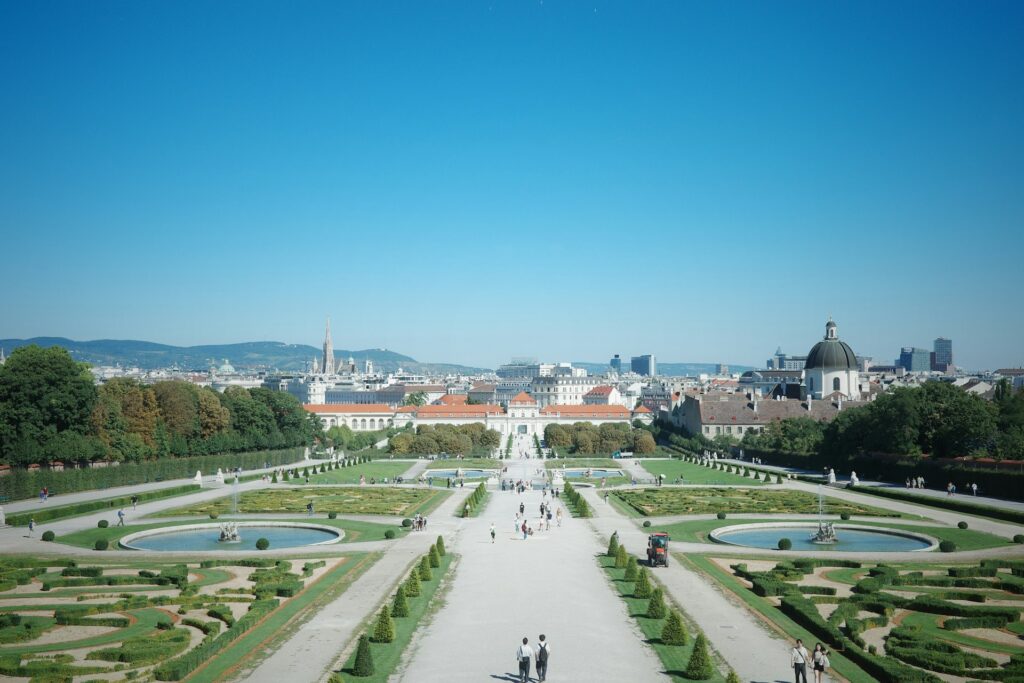
The garden between them is free, and it’s a late Baroque attraction in its own right. Walking up from the Lower to the Upper palace, with the cascades stepping down and the city behind you, is a fine approach and costs nothing.
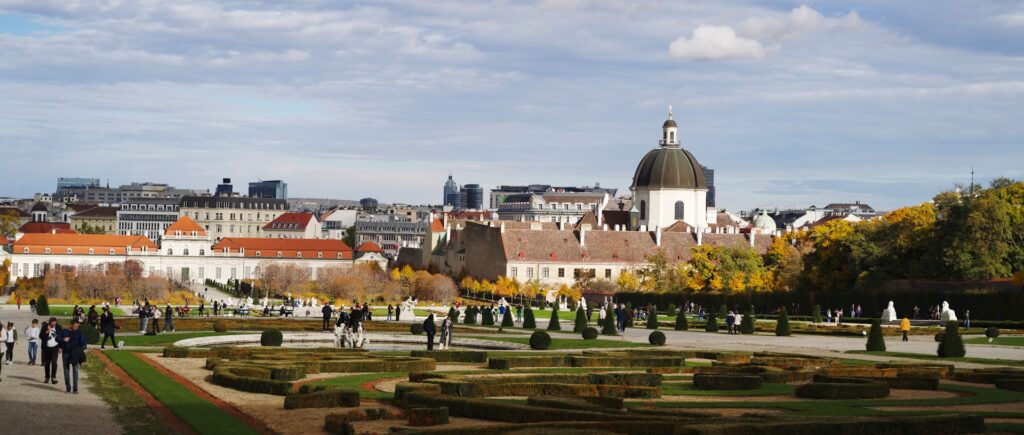
Seeing The Kiss Properly
The painting has its own dedicated gallery upstairs, which is a mixed blessing. It means you can stand in front of it rather than glimpse it over shoulders. It also means everyone else knows exactly where to go.
Take the 9am slot on a weekday and go straight up. It’s your best chance of reaching the painting before the museum hits its busiest stretch, which runs roughly from late morning into the early afternoon. Nobody can promise you an empty room — a tour group can arrive at nine as easily as at noon — but the odds are much better at opening.
Two things get lost in reproduction. The metallic surface isn’t a single layer of gold paint: Klimt combined gold leaf with gold powder, silver, platinum and other metallic effects, so the surface shifts as you move past it in a way no print preserves. And the figures stand on a narrow flowering meadow that ends abruptly against a dark, gold-flecked background. Seen at full scale, the composition feels less simple than the romantic image on the posters.
Klimt painted it during his gold period and at the height of his reputation. A decade earlier he had helped found the Vienna Secession after breaking with the official art establishment, and that rejection of academic convention is still visible in the galleries around this one.
Schiele occupies the adjacent rooms and offers a sharper, more psychologically exposed contrast. Visitors who arrive for The Kiss often spend longer with him than they expected.
What Else Is Upstairs
The Klimt rooms are only part of the permanent collection, and the building rewards the hour you spend after them.
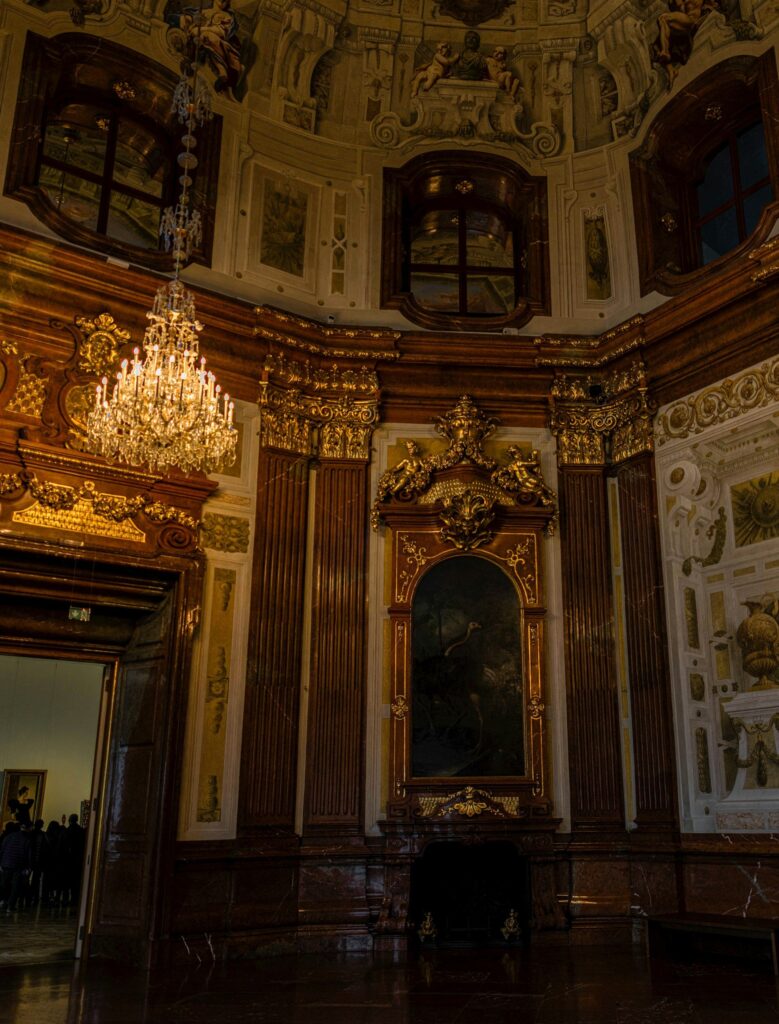
- The Marble Hall is the ceremonial room at the centre of the Upper Belvedere, where the Austrian State Treaty was signed in 1955 — the agreement that re-established Austria as a free and sovereign state and paved the way for the end of the Allied occupation. It’s a reason to stop in a room most visitors cross quickly.
- Messerschmidt’s character heads are a set of sculpted busts pulling extreme facial expressions, made in the 1770s, and nobody has fully settled what they were for. They’re funnier and more unsettling than anything else in the building.
- The early rooms of the permanent collection cover medieval and Renaissance art and are usually much quieter than the Vienna 1900 galleries.
- And the building itself. In 1777 the Upper Belvedere opened as one of the world’s earliest public art museums. Prince Eugene of Savoy commissioned the whole complex; Maria Theresa acquired the estate in 1752, and the imperial picture collection was later moved here — which is how a general’s summer palace became a national gallery.
How Long to Allow
| What you’re doing | Time |
|---|---|
| The Kiss and the Vienna 1900 rooms | 45 minutes |
| Upper Belvedere, properly | 1.5–2 hours |
| Upper Belvedere plus the garden walk | 2.5 hours |
| Both palaces plus the garden | Half a day |
| Adding Belvedere 21 | A full afternoon, and a different mood |
Two hours is the honest number for a first visit. The Upper Belvedere is large enough to tire you and small enough to finish, which is a better combination than most major museums manage. Afterwards, the Viennese solution is not to rush on to the next sight but to sit down with a coffee and a slice of cake for half an hour — the city has spent three centuries perfecting exactly that.
Practicalities
The Belvedere is compact enough to look simple and divided enough not to be. A few decisions made before you arrive make the visit noticeably smoother.
- Getting there. Tram D stops at Schloss Belvedere, right by the Upper palace. Tram 71 serves the Lower. From the U1, Südtiroler Platz / Hauptbahnhof is about fifteen minutes on foot. How the ticket system works is the same as everywhere else in the city.
- Book online. The Upper and Lower Belvedere use fixed admission times; Belvedere 21 needs a ticket for the chosen day but no fixed entry time. With a combination ticket, only the Upper Belvedere gets a reserved slot. An online ticket lets you walk to the entrance instead of queueing at the ticket office — timed entry tickets are also sold through GetYourGuide if the museum’s own slots for your date are gone.
- Visitors under 19 enter free, but the ticketing rules still apply — reserve the free time slot for the Upper or Lower Belvedere, or the free dated ticket for Belvedere 21. Reduced rates are available for some students and older visitors; compare them with any Vienna City Card discount before booking.
- Direction of travel. Entering at the Lower palace and walking up gives you the garden as an approach and the city view as a reward. Entering at the top is faster and gets you to the painting first. Neither is wrong; they’re different visits.
Common Mistakes
Most mistakes here begin with the same misunderstanding: treating the Belvedere as one museum with two doors. It isn’t, and the difference matters.
- Buying a Lower Belvedere ticket to see The Kiss. The painting is in the Upper. This is the single most expensive mix-up available here.
- Buying the Gold Pass for a one-day visit to two locations. It’s an annual pass; the 2-in-1 day ticket is the relevant product for seeing the Upper and Lower once.
- Arriving during the late-morning peak. The Klimt gallery is usually busiest from late morning into the early afternoon, especially in high season.
- Booking the Lower Belvedere without checking what’s on. The programme changes several times a year, and the building’s appeal changes with it.
- Treating the garden as a corridor. It’s a listed Baroque landscape and it’s free; walking it end to end takes ten minutes and is the best part of the ticket you didn’t buy.
Continue Exploring
- What to See in Vienna — where the Belvedere fits among the city’s other headline sights.
- One Day in Vienna — how to fit a museum this size into a single day.
- Schönbrunn Palace — the other palace with a ticket decision worth getting right.
- St. Stephen’s Cathedral — the one major sight you can reach on foot from the centre.
If the museum’s own timed slots for your date have sold out, both the Belvedere Palace and the Lower Belvedere are also bookable through GetYourGuide.
GetYourGuide
Belvedere tickets with a fixed entry time
The Upper and Lower Belvedere both use timed admission, and popular slots go first at weekends and in high season. If the museum’s own calendar is full for your date, the same entry times are usually still available here.
Check Belvedere tickets →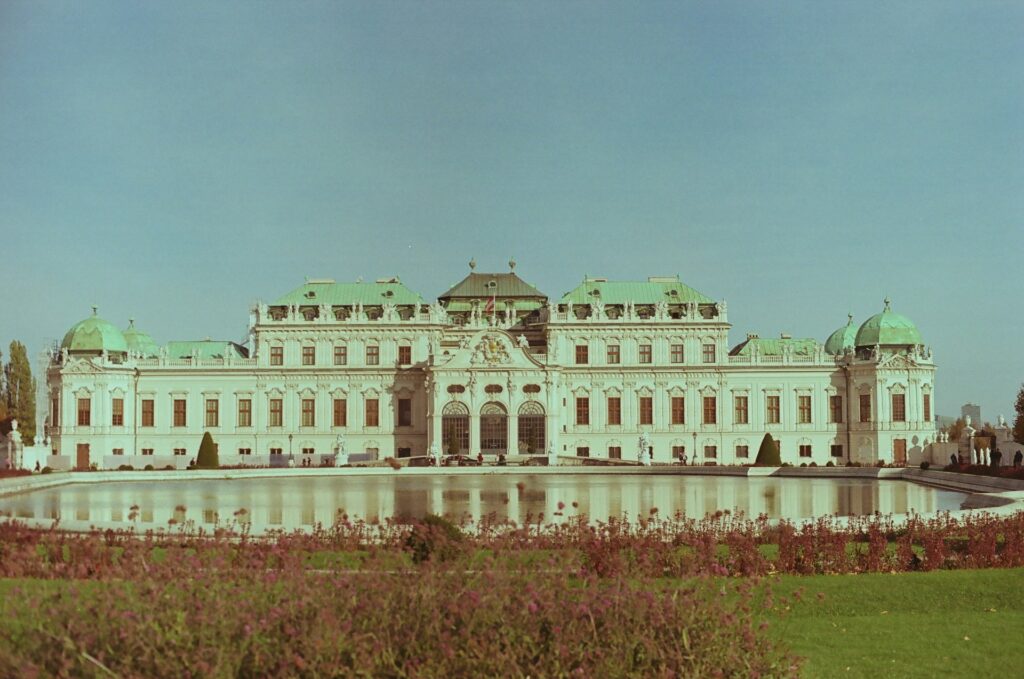
Frequently Asked Questions
Where exactly is The Kiss?
Upstairs in the Vienna 1900 galleries at the Upper Belvedere. The museum acquired it in 1908, and it’s now the centrepiece of the permanent collection.
Is the garden free?
Yes. The formal garden between the two palaces is open without a ticket.
Do you need to book ahead?
The Upper and Lower Belvedere use timed admission; Belvedere 21 only needs a dated day ticket. Book once your date is fixed, particularly for weekends and peak periods. Tickets are available on site, but the times left may not suit your plan.
Is it worth visiting if you don’t care about Klimt?
Yes, but choose deliberately: Messerschmidt, the Biedermeier rooms, the Marble Hall and the garden are the argument. If none of that appeals, there are museums in the centre that will suit you better.
Disclosure: this article links to TouringBee’s own audio guide and to GetYourGuide. If you buy through those links we may earn a commission, at no extra cost to you. Prices and opening hours were correct at the time of writing — check the museum’s own site before you travel.