
No products in the cart.

Vienna Christmas Markets 2026: Which Ones to Visit, Dates and the Mug Deposit
Which of Vienna's twenty-odd Christmas markets are worth your evening, how the mug deposit works, and why the famous one shouldn't be your only one.
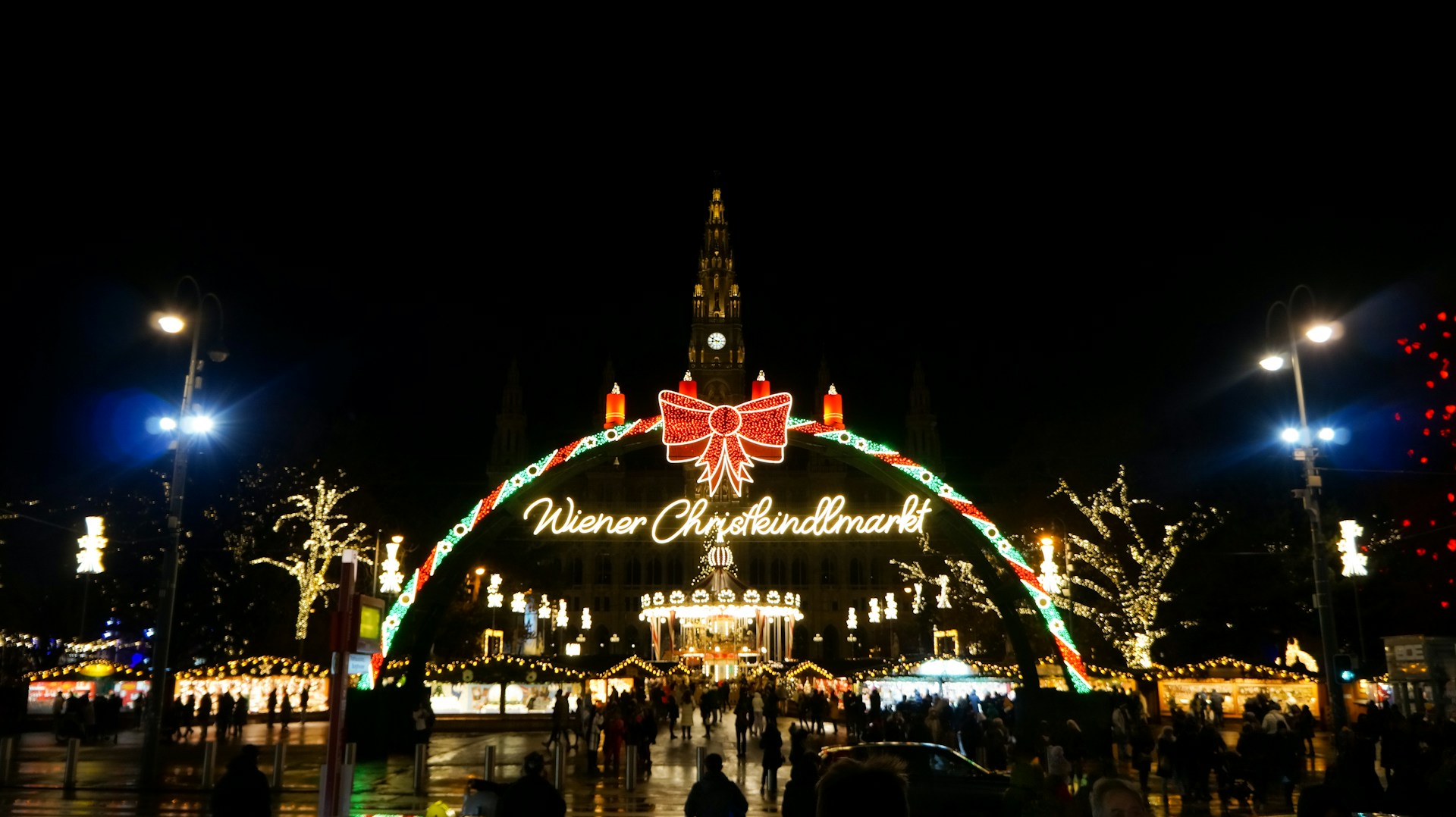
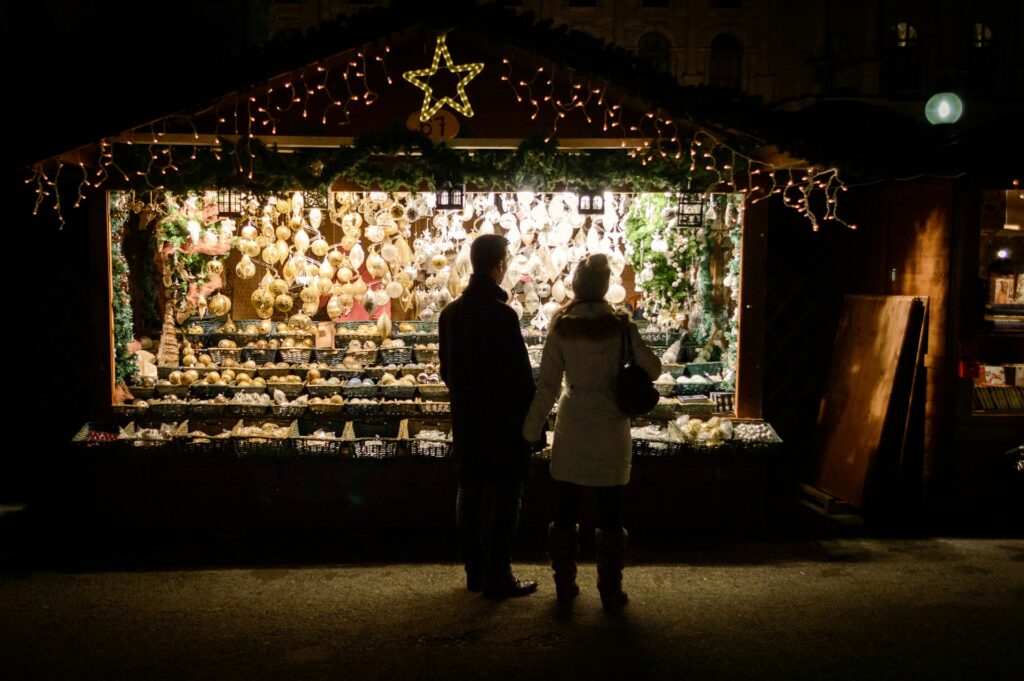
Vienna has more Christmas markets than any visitor can do properly: over twenty across the city, from the sprawling flagship in front of the City Hall to a dozen wooden huts in a Baroque courtyard. They’re free to enter, most run from November to just before or just after Christmas, a few continue into early January, and the difference between them is much larger than the photographs suggest.
The useful thing to know before you book is that they’re not interchangeable. One is a spectacle. One is a craft fair. One is a quiet cobbled lane that feels like the version everyone imagines. Visiting the famous one and concluding that Vienna’s markets are crowded and commercial is a common and entirely avoidable outcome.
Several of the central markets sit on squares in the historic core, the same compact area our self-guided audio tour of Vienna’s historic centre covers on foot, which means the daytime sightseeing and the evening markets can share the same few streets.
Quick Answer
| At a glance | Detail |
|---|---|
| Core season | Early November to 23 or 26 December; a few continue into January |
| Entry | Free at all the markets in this guide |
| The famous one | Rathausplatz, in front of the City Hall: the biggest and the busiest |
| Best for atmosphere | Spittelberg |
| Best for craft | Karlsplatz |
| Longest season | Schönbrunn, running 6 November to 6 January |
| What to drink | Punsch or Glühwein, served in a mug you pay a deposit on |
| Best timing | Weekday afternoons and early evenings. Friday to Sunday nights are packed |
| Payment | Card acceptance varies by stall; carry some cash |
Belvedere hadn’t published firm 2026 dates when this was written. Confirm on each market’s own site before building a day around one.
Which Market for What
The single most useful decision here is which two or three to visit, and it isn’t obvious from the marketing.
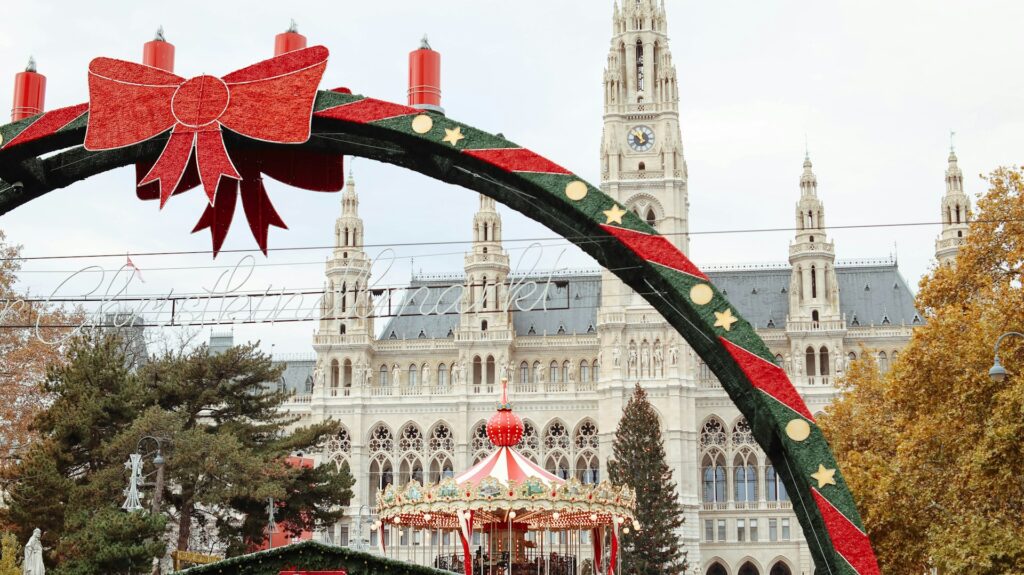
- Rathausplatz is the flagship: rows of chalets, a giant tree, the illuminated neo-Gothic City Hall, light installations through the park, and an ice-skating trail winding behind it. It’s genuinely impressive and it is extremely busy. Go once, early in the evening, for the spectacle.
- Spittelberg is the atmosphere pick: a grid of narrow Biedermeier lanes in the seventh district, closed to traffic, with stalls packed between the houses. It feels more intimate and less like a large event site than Rathausplatz.
- Karlsplatz Art Advent is the craft market: stalls curated around arts and crafts rather than mass-market merchandise, certified organic food, and live bands, in the park in front of the Karlskirche. If handmade work matters more than sheer scale, start here.
- Freyung hosts the Altwiener Christkindlmarkt, the traditional old-Vienna option: smaller, quieter, more classic in feel, and a few minutes’ walk from Am Hof.
- Schönbrunn wins on setting, in the forecourt of the palace, and on staying power: it’s among the earliest to open, on 6 November, and runs to 6 January with shorter hours after Christmas Eve. If you’re going, Schönbrunn tickets and tours on GetYourGuide are worth booking for the daytime.
- Belvedere puts a smaller market, around forty stalls, in front of the Upper Belvedere, which is a hard backdrop to beat.
- The university campus market at the old general hospital in the ninth district is a particularly good family option: a children’s train, a carousel and two curling lanes, set in the courtyards of a former hospital.
A working plan for one evening: Freyung and Am Hof are a few minutes apart and pair naturally. Add Rathausplatz if you want the spectacle. For two evenings: the central cluster on one, Spittelberg on the other.
The Mug Deposit, Explained
The mug deposit is the single most useful practical thing to understand before your first market.
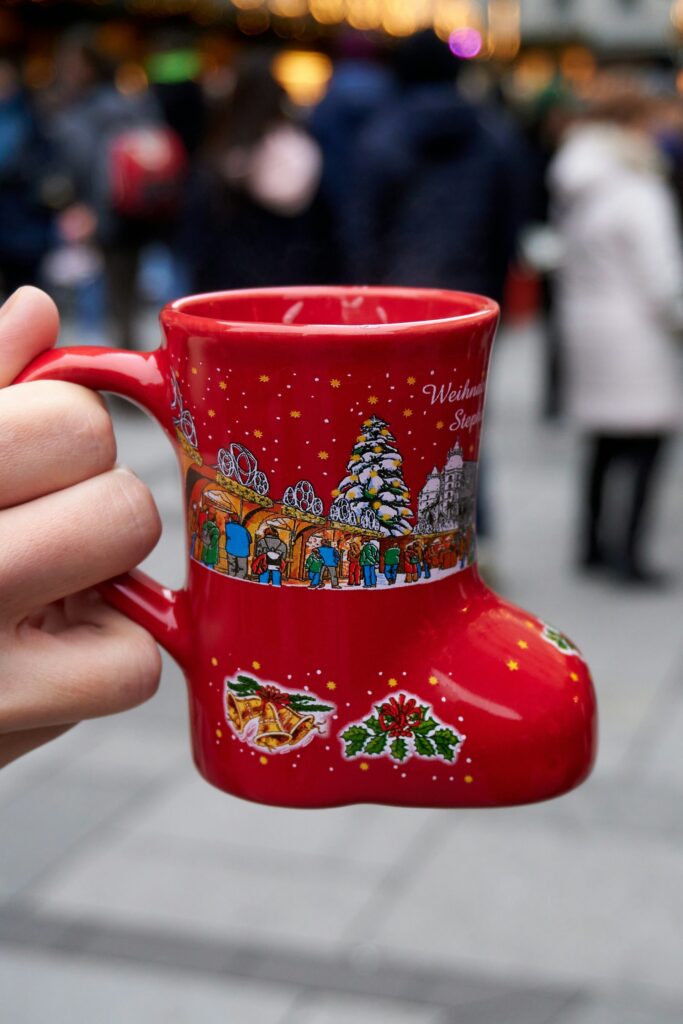
When you order Punsch or Glühwein, you pay for the drink plus a deposit on the mug, typically a few euros. Hand the mug back at a participating stall or return point at that market and you get the deposit back. Keep it and you’ve bought a souvenir, which plenty of people do.
Two consequences. First, your first drink costs noticeably more than the menu price, and this is not a scam. Second, treat each market’s system as separate unless a sign tells you otherwise: if you’re market-hopping, return the mug before you move on.
What to Drink and Eat
The menu makes most sense when you remember you’re outdoors in December. The best things here are designed either to warm your hands or to justify another lap around the stalls.
- Punsch is a hot spiced fruit punch, often with rum, and it’s the Viennese default.
- Glühwein is mulled red wine.
Both come in alcohol-free versions (ask for ohne Alkohol), and Kinderpunsch is widely available.
The food is straightforward and good.
- Maroni, roasted chestnuts, sold from smoking drums that appear across the city in November.
- Kartoffelpuffer, fried potato pancakes with garlic sauce or applesauce.
- Bratkartoffeln, fried potatoes with onions and bacon.
- Käsekrainer and other sausages.
- Baumkuchen and Punschkrapfen for the sweet end.
When to Go
The core market season lasts about six weeks, and the difference between a good visit and a miserable one is mostly timing. If you’re still choosing your dates, our guide to the best time to visit Vienna puts December in context.
- Weekday afternoons are the calmest, and the light starts going around four, so you get the illuminations without the crush.
- Weekday early evenings, from about five, are the sweet spot: dark, lit, busy enough to feel like something, not yet full.
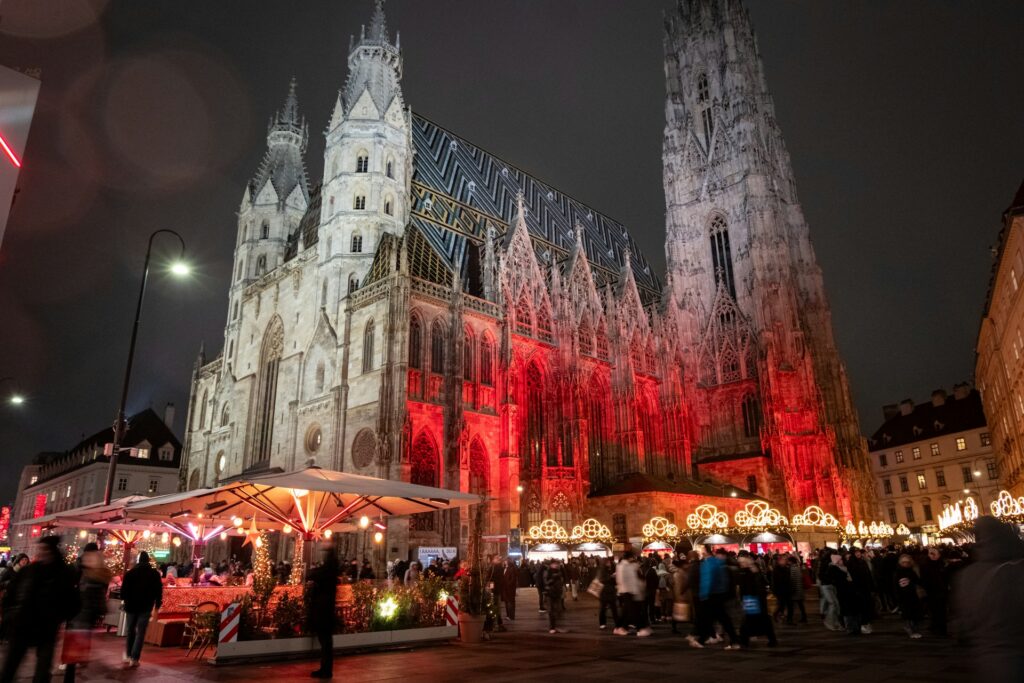
- Friday to Sunday evenings at Rathausplatz and Stephansplatz are shoulder-to-shoulder. If those are your only options, start at the smaller markets and treat the big one as a walk-through.
- 8 December is a public holiday in Austria and behaves like a weekend.
After 24 December, many markets have already closed or are near the end of their season. Rathausplatz, Stephansplatz and Maria-Theresien-Platz continue through 26 December. Schönbrunn and the Winter Market at Riesenradplatz keep going to 6 January, as does the Rathauspark ice rink.
Dates for the 2026 Season
| Market | Dates | Hours |
|---|---|---|
| Rathausplatz (Wiener Christkindlmarkt) | 13 Nov–26 Dec | Daily 10am–10pm; 24 Dec to 6:30pm |
| Schönbrunn Palace | 6 Nov–6 Jan 2027 | Daily 10am–9pm; 24 Dec to 4pm; 25 Dec–6 Jan to 7pm |
| Stephansplatz (Weihnachtsdorf) | 6 Nov–26 Dec | Daily 11am–9pm; 24 Dec to 4pm; 25–26 Dec to 7pm |
| Am Hof | 13 Nov–23 Dec | Mon–Thu 11am–9pm; Fri–Sun 10am–9pm |
| Freyung (Altwiener Christkindlmarkt) | 14 Nov–23 Dec | Daily 10am–9pm |
| Karlsplatz (Art Advent) | 13 Nov–23 Dec | Daily 12pm–8pm; food to 9pm |
| Spittelberg | 13 Nov–23 Dec | Weekdays 2pm–9:30pm; weekends and holidays 11am–9:30pm |
| University Campus (Altes AKH) | 13 Nov–23 Dec | Mon–Thu 2pm–10pm; Fri to 11pm; Sat 11am–10pm; Sun 11am–9pm |
| Maria-Theresien-Platz | 20 Nov–26 Dec | Detailed hours to follow |
| Riesenradplatz Winter Market | 20 Nov–6 Jan 2027 | Mon–Fri 12pm–10pm; Sat, Sun, holidays 11am–10pm; 24 Dec 11am–5pm |
| Ice Dream rink, Rathauspark | 13 Nov–6 Jan 2027 | Daily 10am–10pm; closed 31 Dec |
Practicalities
Standing outdoors for three hours in December makes its own demands, and they aren’t the ones people pack for.
- Dress for standing still. You’ll be outdoors, mostly stationary, for two or three hours. Vienna in December sits around freezing. Proper shoes and a real coat, not a fashion coat.
- Payment. Card acceptance varies from stall to stall, even at the big markets. Carry some cash.
- Getting there. Everything central is walkable or a short tram ride. Trams 1, 71 and D stop at Rathausplatz/Burgtheater, and the U2 stops at Rathaus; the transport guide covers ticket types.
- Combining with sightseeing. Museums and palaces close in the late afternoon, markets open into the evening. So: daytime for the big museums, evening for the markets. It’s the one time of year when Vienna’s short winter days work in your favour.
- New Year’s Eve. The Silvesterpfad turns the historic centre into an open-air party, and it’s a completely different kind of crowd. The Rathauspark rink closes that night.
Common Mistakes
The markets are free to walk into, which makes it easy to forget that the choice and the timing still cost you something.
- Visiting only Rathausplatz. It’s the largest-scale experience in this guide and one of the busiest, so it gives a very different impression from smaller markets like Freyung or Spittelberg.
- Not knowing about the mug deposit. You’ll think you’ve been overcharged, and you’ll leave money behind when you walk off with the cup.
- Going on Saturday evening because it sounds festive. It is, in the way a train platform at rush hour is festive.
- Arriving after 26 December expecting markets. Most have closed. Schönbrunn and Riesenradplatz are the exceptions, both running to 6 January.
- Buying without comparing. If handmade work is the point, Karlsplatz is built around arts and crafts and Spittelberg leans that way too, so it’s worth a look before committing at the first stall.
GetYourGuide
Schönbrunn Palace: tickets and tours
Schönbrunn’s Christmas market fills the palace forecourt, and the palace itself is worth an hour of your day beforehand. Compare tickets and time slots for your dates.
See Schönbrunn tickets →
Frequently Asked Questions
When do Vienna’s Christmas markets open in 2026?
The earliest in this guide open on 6 November (Schönbrunn and Stephansplatz), with most of the others following between 13 and 20 November.
When do they close in 2026?
Several end on 23 December, others on 26 December. Schönbrunn and the Riesenradplatz Winter Market run to 6 January 2027.
Is there an entry fee?
No. All the markets covered in this guide are free to enter.
Which is the best Christmas market in Vienna?
It depends what you want. Rathausplatz for spectacle, Spittelberg for atmosphere, Karlsplatz for craft, Schönbrunn for setting.
What’s the deposit on the mug?
A few euros, refunded when you hand the cup back at a participating stall or return point at the same market. Plenty of visitors keep it as a souvenir instead.
How many Christmas markets are there in Vienna?
Over twenty across the city, though a first visit realistically covers two or three.
Are the markets good for children?
Yes. The university campus market in the ninth district has a children’s train and curling lanes, Schönbrunn runs rides and workshops, and the Rathauspark has the ice rink.
Continue Exploring
Tickets for the daytime: Schönbrunn Palace, Kunsthistorisches Museum and more Vienna experiences.
Disclosure: this article contains affiliate links to TouringBee’s own audio guide and to GetYourGuide. If you buy through them, we may earn a commission at no extra cost to you.