
No products in the cart.

Hidden Corners of Vienna: Districts, Markets and Parks Beyond the Ring
Where to go once the first district is done — the neighbourhoods, markets, buildings and green space that start where the Ring ends.
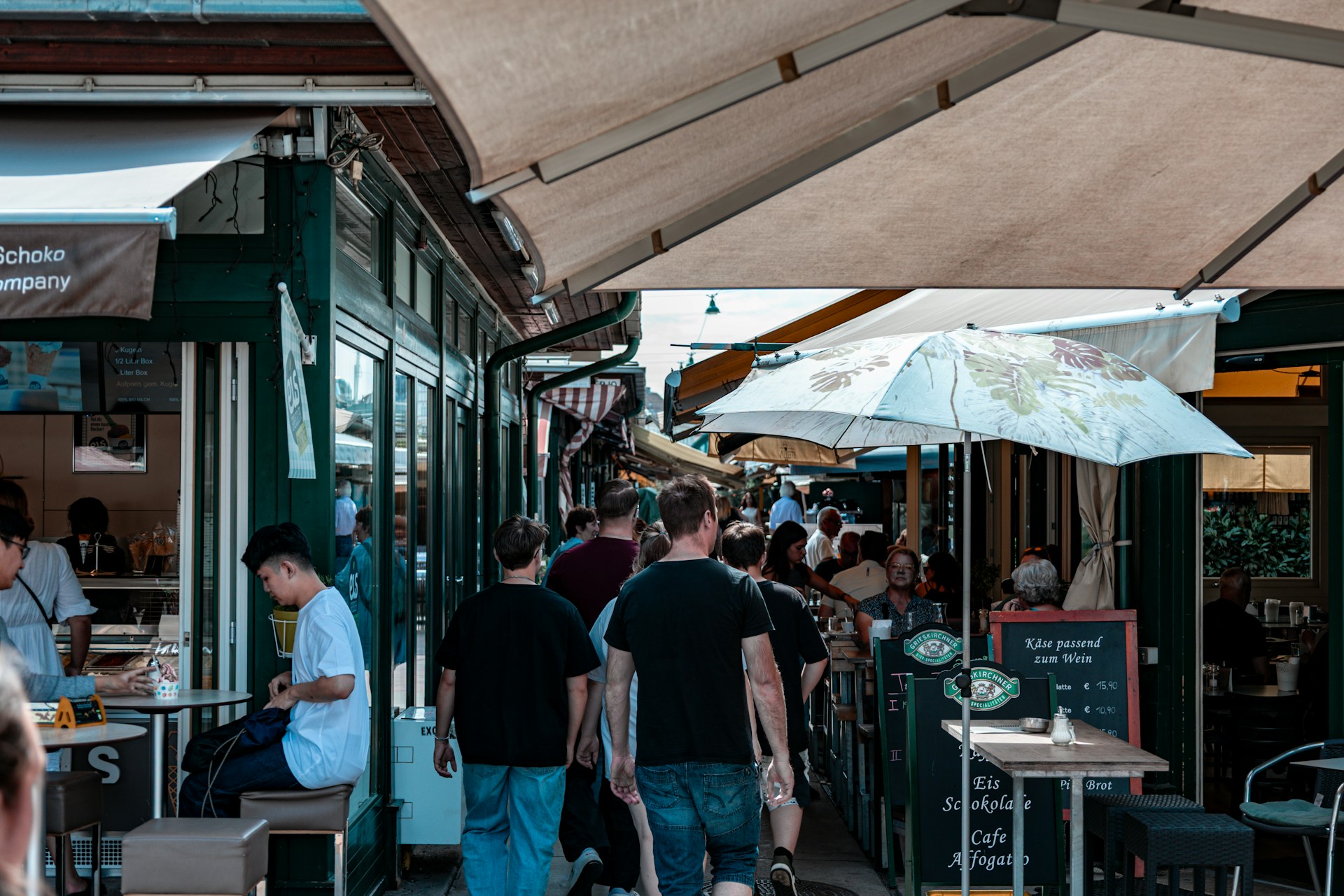
Vienna’s historic centre is small enough to walk in a morning, and it’s where most first-time itineraries concentrate. That’s the reason this article exists: the interesting problem isn’t finding things to see in the first district, it’s knowing what to do on the afternoon when you’ve finished it.
Everything here is outside the Ringstrasse. Not because the centre isn’t worth your time, but because outside it Vienna becomes much more residential, and much less of a performance. Beyond the Ring the scale changes: residential streets, neighbourhood markets, large parks, and buildings that rarely fit into a first-time itinerary.
The centre itself is compact enough to cover on foot, which is what our self-guided audio tour of Vienna’s historic centre is built around. This is the guide to the day after.
Quick Answer
| Best half-day neighbourhood | Neubau, the seventh district — shops, lanes, cafés |
| Best market morning | Brunnenmarkt and Yppenplatz in Ottakring |
| Most surprising building | Otto Wagner’s Kirche am Steinhof — open May through September only |
| Quiet green space | The Augarten, in the second district |
| For a strange afternoon | The Central Cemetery, or the Bohemian Prater |
| Getting there | All reachable by public transport; some outlying sites need a bus and a short walk |
| Time needed | Half a day per neighbourhood; the outlying buildings are their own trip |
The Neighbourhoods
These are places to spend an afternoon rather than sights to tick off. Pick one, walk it, eat there.
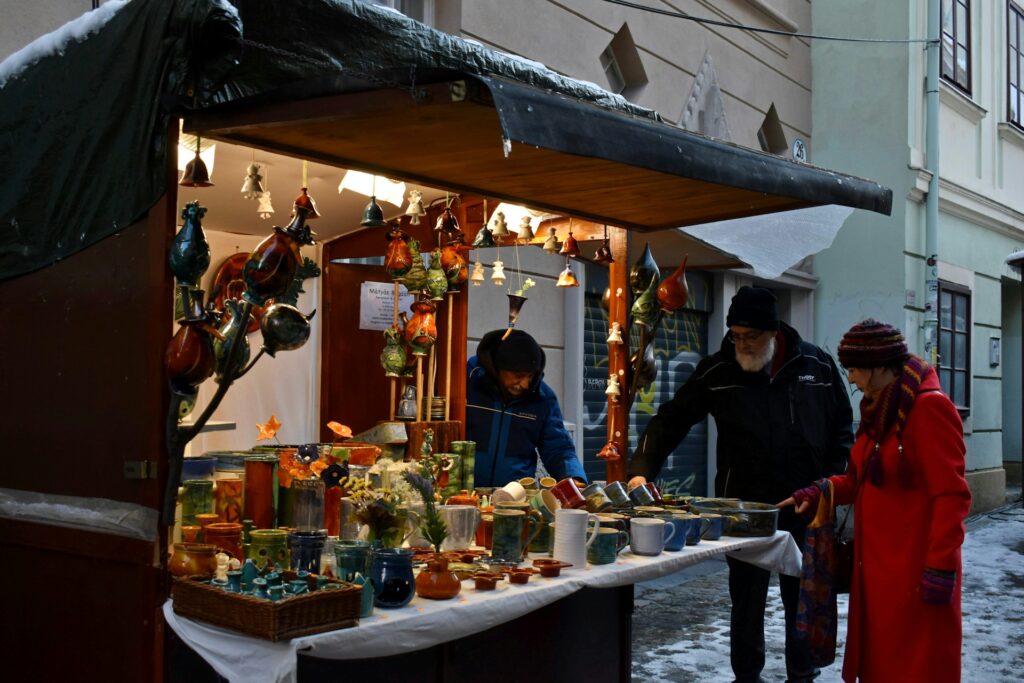
- Neubau, the seventh district, is the easiest first step: it starts immediately behind the MuseumsQuartier, so you can walk out of a museum and into it. Neubaugasse and the small streets off it hold independent shops, secondhand and vintage dealers, small galleries, and a very high density of cafés. Spittelberg, at its eastern edge, is a cluster of narrow cobbled lanes lined with Biedermeier houses — quiet most of the year, and home to the Spittelberg Christmas market in December.
- The Karmeliterviertel, in the second district, sits just across the Danube Canal from the centre and feels a long way from it. Before the Holocaust, this part of Leopoldstadt was one of the centres of Jewish life in Vienna. A visible Jewish community is again part of the neighbourhood today, alongside the cafés, restaurants and market life around Karmelitermarkt. The Karmelitermarkt is the anchor: a working neighbourhood market with a farmers’ section on Fridays and Saturdays and a row of places to eat.
- Ottakring, the sixteenth district, offers the strongest market contrast with the historic centre. The Brunnenmarkt runs for almost a kilometre with around 170 stalls, and it’s Turkish, Balkan and Viennese at once. At its top end, Yppenplatz is a square of small restaurants and cafés around permanent market pavilions, with a farmers’ section on Fridays and Saturdays.
- The Servitenviertel, in the ninth district, is the quiet option: a few pedestrian streets around a Baroque church, small restaurants, and Freud’s apartment a few minutes away.
Buildings Worth the Trip
Three of these need real travel time. All three are worth it, and two have opening hours that catch people out.
- Otto Wagner’s Kirche am Steinhof is the one to plan around. Built 1904–07 on a hill in the fourteenth district as the chapel of a psychiatric hospital, it’s a Jugendstil building of the first rank: gold dome visible from a distance, marble cladding, Koloman Moser’s stained glass, and an interior designed in consultation with the hospital’s doctors around the needs of the patients — seating without sharp corners, a separate doctor’s room, emergency exits. Its season is the reason most visitors never see it. The church is run by the Wien Museum and is open May through September, closed October through April. In season it opens Tuesday to Saturday, 10:00–17:00, and Sunday 11:00–17:00, with occasional later openings when the church is booked for events. Admission is €5, or €4 reduced; under-19s enter free, as does everyone on the first Sunday of the month. It’s reached only by steps and isn’t accessible for wheelchair users.
- The Wotrubakirche, in the twenty-third district, is the opposite kind of building: a church assembled from roughly 150 irregular concrete blocks in the 1970s, looking like a pile of rubble from outside and startling from within. Opening hours are limited and mostly at weekends, so check before making the trip.
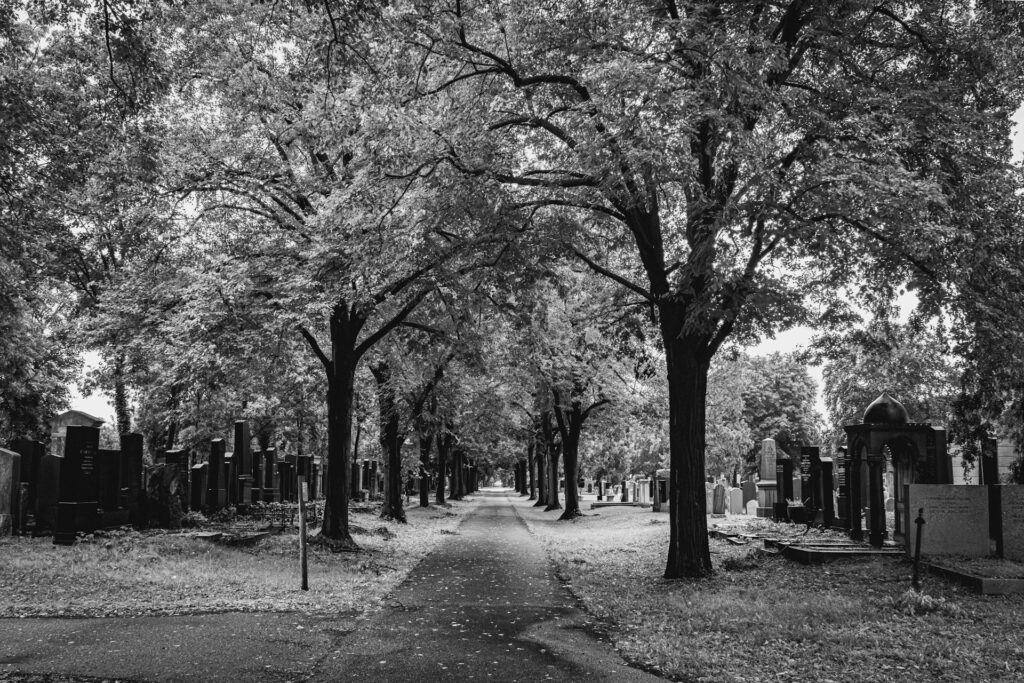
- The Central Cemetery in the eleventh district is the size of a small town. More than three million people are buried here — more than Vienna’s current population — across roughly 330,000 grave sites. The reason to go is the group of honorary graves near Gate 2: Beethoven, Schubert, Brahms, Johann Strauss, and a memorial to Mozart, who was buried at St Marx Cemetery, though the exact location of his grave is unknown. The old Jewish section near Gate 1 is heavily overgrown and completely different in atmosphere from the formal honorary-grave area.
Green Space and Water
Vienna is unusually green, and many of its largest recreational landscapes lie outside the first district.
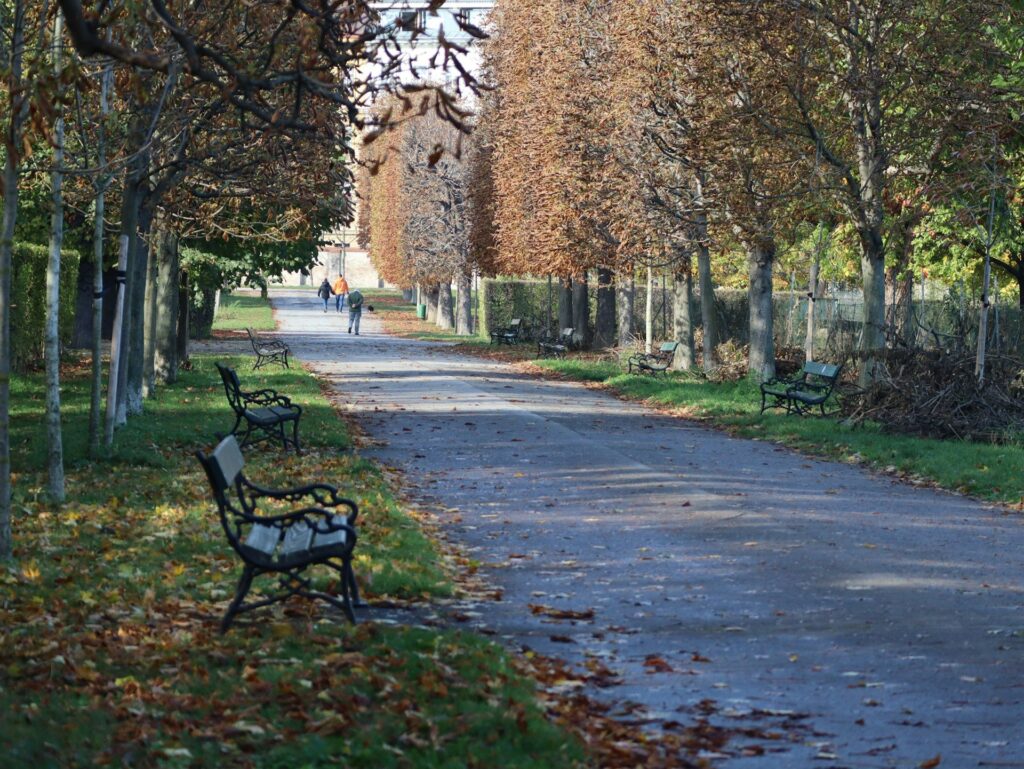
- The Augarten, in the second district, is a walled Baroque park — the oldest surviving garden complex of its kind in Vienna, and free. Two enormous concrete anti-aircraft towers remain inside it from the Second World War.
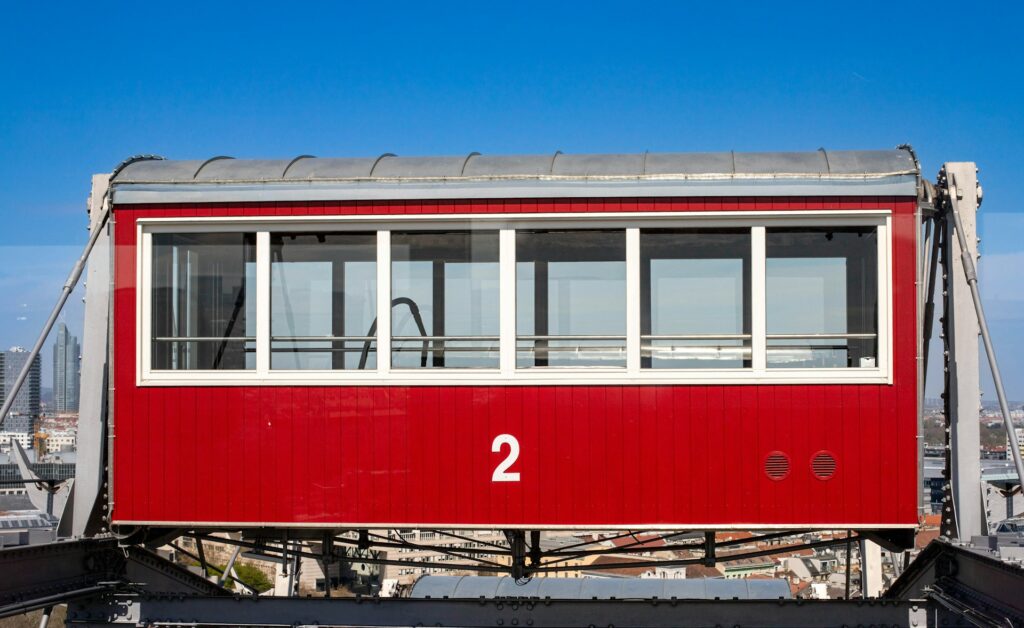
- The Prater is not the Ferris wheel. The amusement park is a small corner of it; the rest is a former imperial hunting ground with a 4.5-kilometre tree-lined avenue running from Praterstern to the Lusthaus, and it’s where the city runs, cycles and lies around.
- The Danube Island is a 21-kilometre artificial island built as flood protection and used as a beach: swimming, bars, barbecue areas, and a lot of bicycles. The Old Danube, a cut-off arm of the river, is calmer, with boat rental and swimming areas.
- The Lainzer Tiergarten is a walled former imperial hunting reserve in the west, home to deer and wild boar, and it contains the Hermesvilla, which opens seasonally.
- The Bohemian Prater, on a hill in the tenth district, is a tiny amusement park that has been running since 1882, with a heritage-listed wooden horse carousel dating to 1890 and rides that predate anyone’s nostalgia for them.
Markets Are the Easiest Starting Point
If you want one simple way to get beyond the centre, build a morning around Brunnenmarkt and Yppenplatz in Ottakring, or Karmelitermarkt in the second district. Both combine everyday market stalls with places to eat, and both add farmers’ sections on Fridays and Saturdays. The pattern is the same in either case: buy something, then sit down with a coffee at one of the pavilion tables and let the morning run on longer than you planned.
Practicalities
Most of this sits outside the Ring, which makes the journey out part of the decision rather than an afterthought.
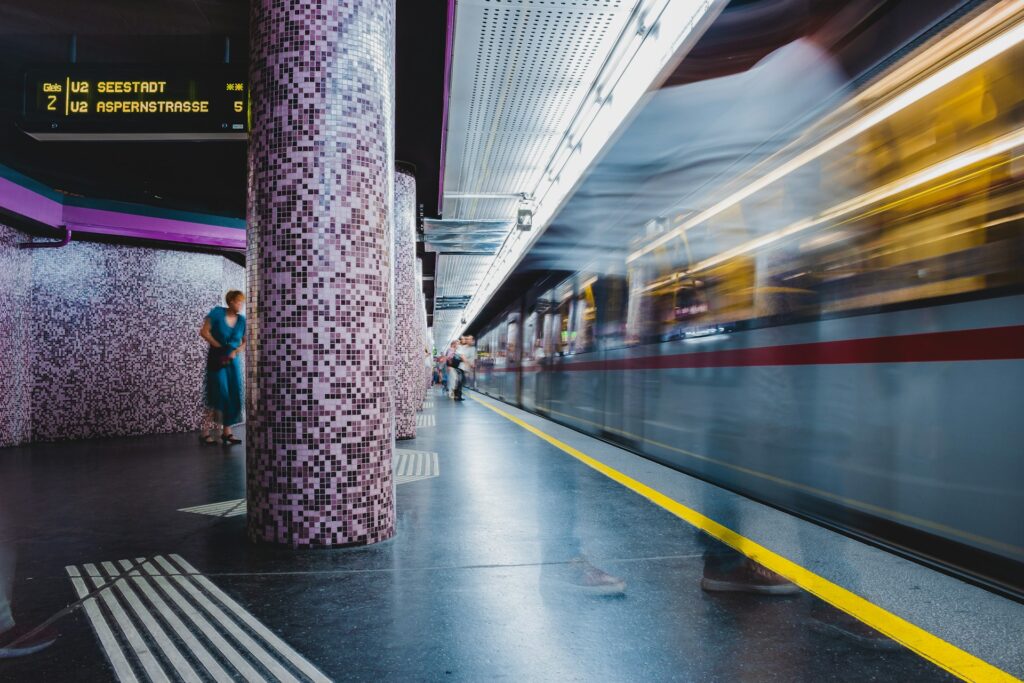
- Getting there. Everything here is reachable by public transport, though some of the outlying sites need a bus and a short walk — the Kirche am Steinhof and the Lainzer Tiergarten among them. Neubau is walkable from the centre and the second district is a short tram ride; the outlying buildings are a real trip, so give each one its own slot. Ticket types work the same everywhere.
- Timing. Markets are best visited during the daytime; the regular stalls close on Sundays, though some market restaurants stay open. The Kirche am Steinhof is open May through September and closed October through April. Neighbourhood walks work well in the late afternoon and evening; market visits are better earlier in the day.
- Sunday is different. Most regular shops in Vienna close on Sundays, market stalls included; some shops at the major train stations and the airport stay open, as do certain museum and souvenir shops. Museums, parks, cafés and restaurants give you far more Sunday options, though it’s worth checking individual hours. Plan Sunday around those rather than around shopping.
- Combine selectively. Karmeliterviertel and the Augarten pair naturally, and Neubau begins just beyond the MuseumsQuartier. Ottakring, the Central Cemetery, the Kirche am Steinhof and the western green spaces are better treated as separate outings.
- Book the centre separately. If you’re mixing outer-district afternoons with the headline sights, timed tickets for Schönbrunn are the one thing worth reserving before you arrive.
Common Mistakes
The risk with the quiet places isn’t the crowd. It’s arriving on the one afternoon of the week they happen to be shut.
- Treating the outer districts as a list of sights. They’re places to spend time in, not things to photograph and leave.
- Going to the Kirche am Steinhof during its winter closure. It’s normally open May through September, so check the current seasonal schedule before making the trip.
- Assuming the Prater means the amusement park. The amusement park occupies only one part of the much larger Prater landscape.
- Doing a market on a Sunday. The stalls are closed, even where the surrounding restaurants aren’t.
- Planning three distant areas in one day. The outer districts are spread out. Pick one main neighbourhood or outlying destination, then add something nearby rather than crossing the city repeatedly.
Continue Exploring
- Walking Tour of Vienna — the centre on foot, before you head outwards.
- One Day in Vienna — what to prioritise if you only have the one day.
- Best Museums in Vienna — including the ones just outside the first district.
- Vienna Public Transport: Tickets and Passes — how to reach all of the above.
- How to Save Money in Vienna — free parks, free days, and what’s genuinely worth paying for.
GetYourGuide
Book the headline sights, keep the outer days free
Outer-district afternoons work best when the queueing is already dealt with. Timed tickets for Schönbrunn, the Belvedere and the Kunsthistorisches Museum take the pressure off the days you spend inside the Ring.
See Vienna tickets →Frequently Asked Questions
What is there to do in Vienna beyond the centre?
Neighbourhood districts like Neubau, Ottakring and the Karmeliterviertel; large parks including the Prater, Augarten and Danube Island; and outlying buildings such as the Kirche am Steinhof and the Central Cemetery.
Which Vienna district is best for a half day?
Neubau, for the combination of shops, lanes and cafés, and because it starts immediately behind the MuseumsQuartier.
When can you visit the Kirche am Steinhof?
It is open May through September and closed October through April, Tuesday to Saturday 10:00–17:00 and Sunday 11:00–17:00.
Is the Central Cemetery worth visiting?
Yes, if you’ll enjoy scale and quiet. The composers’ honorary graves near Gate 2 are the usual reason to go.
Which are Vienna’s neighbourhood food markets?
Brunnenmarkt in Ottakring and Karmelitermarkt in the second district, both with farmers’ sections on Fridays and Saturdays.
Is it safe to walk around the outer districts?
These are ordinary residential neighbourhoods; use normal urban precautions.
How do you get to these places?
All by public transport. Some of the outlying sites need a bus and a short walk, but nothing in this guide requires a car.
Disclosure: this article links to TouringBee’s own audio guide and to GetYourGuide. If you buy through those links we may earn a commission, at no extra cost to you.