
No products in the cart.

Volvo and Gothenburg: The Complete Story
How Volvo was born in Gothenburg in 1927, why the three-point seatbelt patent was given away for free, and what to expect at the Volvo Museum on Hisingen.
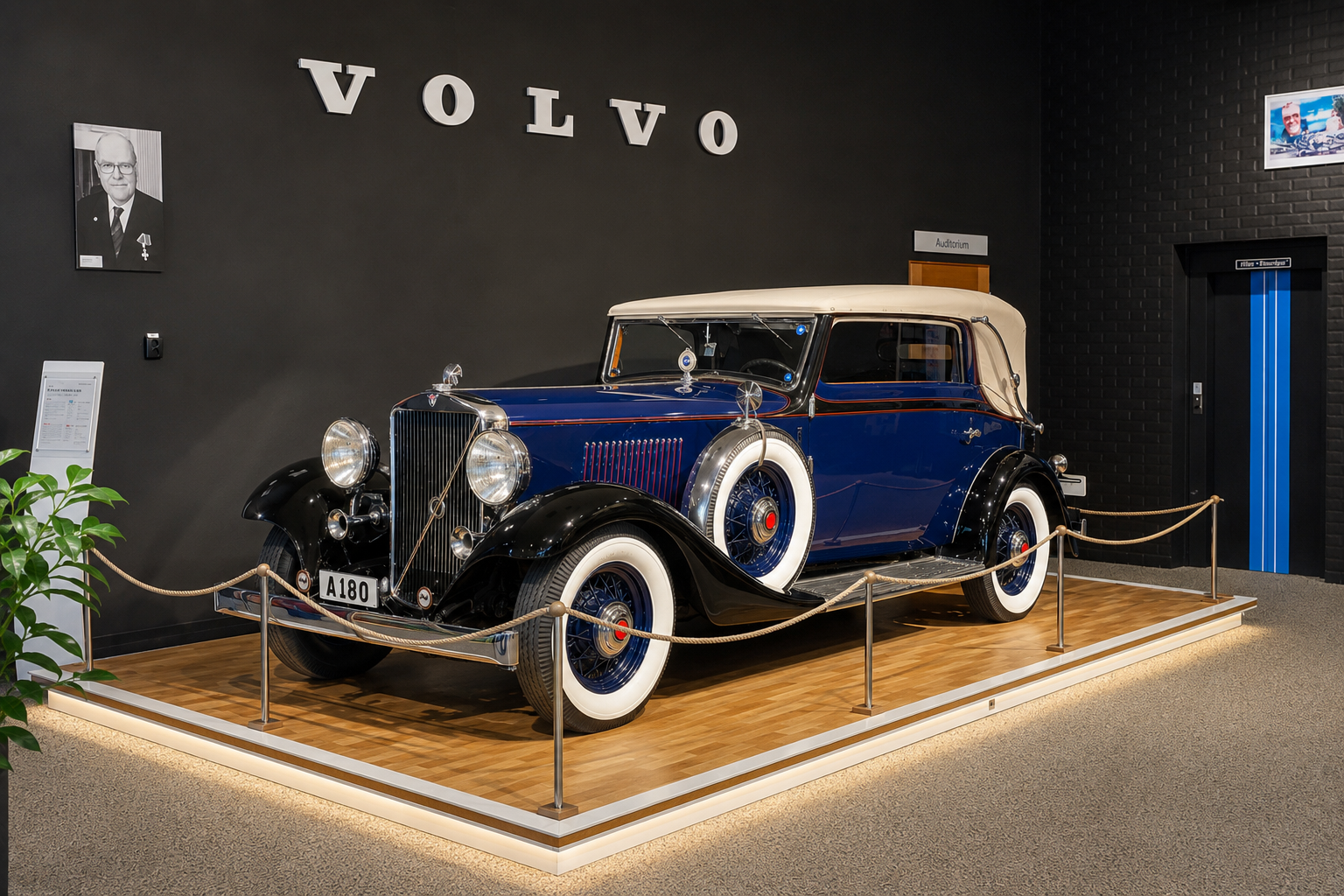
Gothenburg and Volvo are inseparable. The car company was born here in 1927, grew here through the twentieth century, and still builds cars here today — which makes Gothenburg one of the few major European cities where a car brand is genuinely embedded in the urban identity rather than just historically associated with it. You will see more Volvos on the streets of Gothenburg than anywhere else on earth, and once you notice it, you cannot stop noticing it.
This guide covers the whole relationship: the founding, the innovation that changed every car on the planet, the museum out on Hisingen, and what the company and the city tell you about each other.
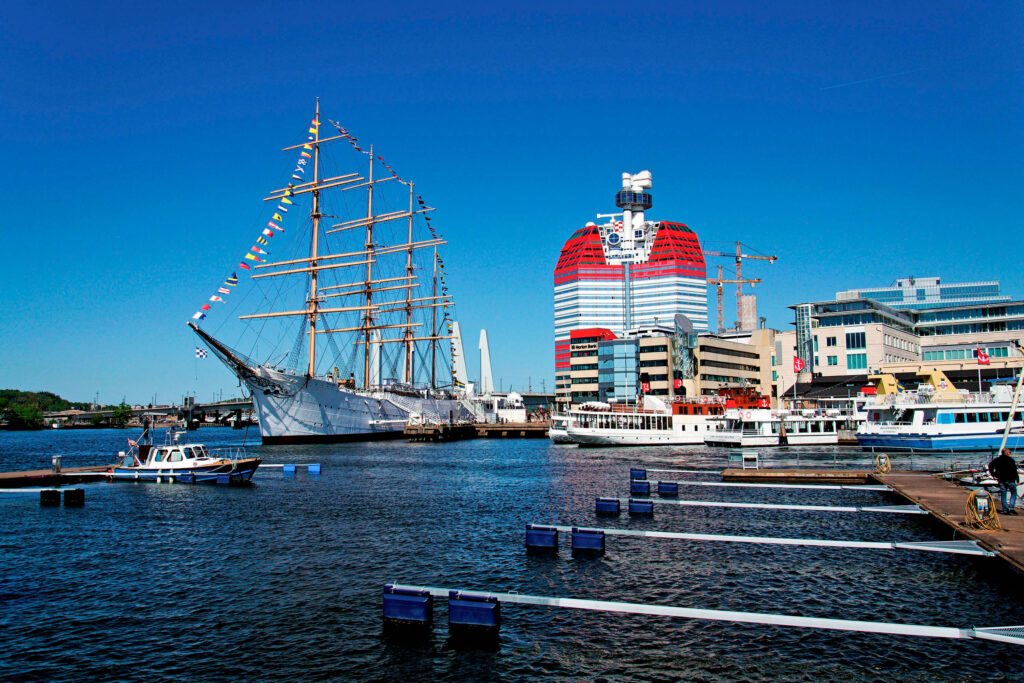
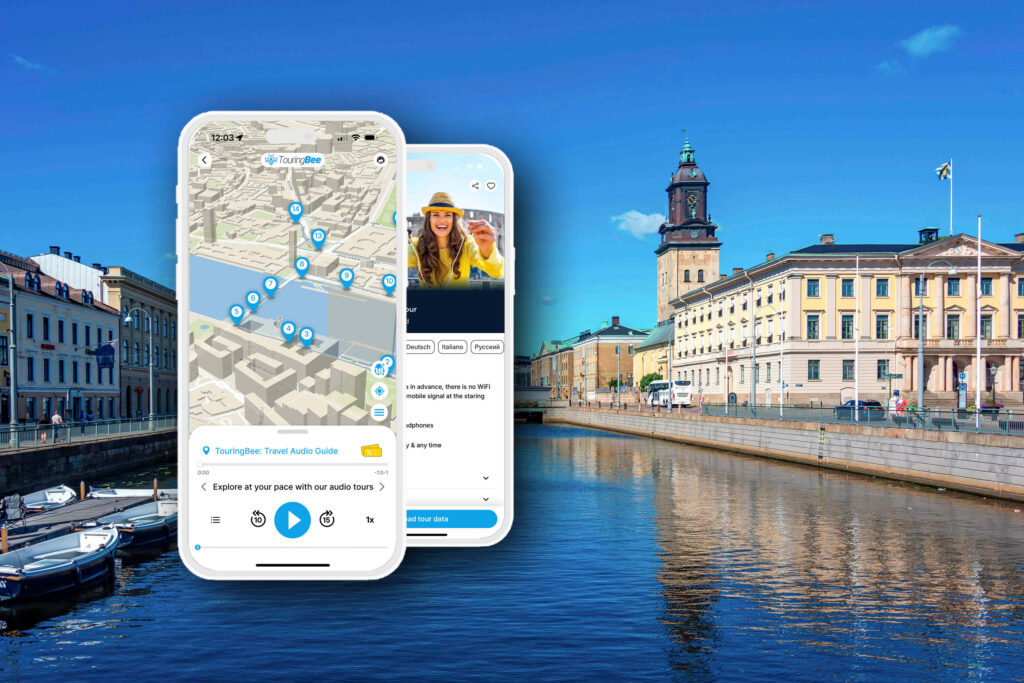
If you want the wider context before you head out to the museum, the TouringBee Gothenburg City Walking Tour walks you through the city’s 1621 founding and its industrial transformation across 29 stops in about three hours, offline and GPS-guided — a useful companion on a day that also involves a tram ride across the river. The same story is told in more depth in our history of Gothenburg.
How It Started: 1927 and the ÖV4
Volvo was founded in Gothenburg on 14 April 1927 by Assar Gabrielsson and Gustaf Larson. Gabrielsson was a former sales director at SKF, the Gothenburg ball-bearing company that is still one of the largest industrial firms in the world; Larson was an engineer. Their premise was simple: Sweden needed a Swedish car built for Swedish conditions — the cold, the snow, the bad roads, the long distances — and the American and European cars then on sale were not designed for any of that.
The first Volvo, the ÖV4, nicknamed “Jakob,” rolled out of the factory on that April day. It was an open-topped touring car built largely from American components, because the Swedish supply chain could not yet produce everything required, but it was assembled in Gothenburg and designed with Swedish winters in mind. 297 cars were produced in the first year. The company lost money.
The rescue came from trucks. Volvo’s truck division, launched shortly after the cars, found an immediate market in Swedish industry and construction — exactly the rugged, cold-weather application the founders had in mind. Trucks subsidised the car division through its early years and established Volvo as an engineering company with real durability credentials, which became the defining characteristic of the brand.
The Three-Point Seatbelt: The Most Important Safety Innovation in Automotive History
Of everything Volvo has contributed to the car, one achievement stands apart: the three-point seatbelt.
Before 1959, seatbelts — where they existed at all — were two-point lap belts that offered limited protection and posed their own injury risks in a serious crash. Volvo engineer Nils Bohlin, hired specifically to solve the problem, developed the three-point diagonal belt that spreads crash forces across the chest and shoulder instead of concentrating them across the abdomen. It appeared in Volvo cars in 1959.
What followed was extraordinary. Volvo made the patent freely available to the entire industry. The company’s reasoning was that the belt’s value as a life-saving device outweighed any commercial advantage in keeping it proprietary. Every other manufacturer was invited to use the design without paying a licence fee.
The result: the three-point belt became the global standard within a few years and now appears in virtually every car built anywhere. Conservative estimates credit it with saving more than a million lives; some put the figure above three million. The patent Volvo gave away is almost certainly the most consequential act of corporate generosity in automotive history — and it came out of a workshop in Gothenburg.
Volvo and Gothenburg: The Industrial Relationship
Volvo shaped Gothenburg’s physical and social geography through the twentieth century. The Torslanda plant, opened in 1964 on the island of Hisingen just across the river from the centre, became one of the largest car assembly plants in Scandinavia and a major regional employer. At its peak Volvo employed tens of thousands of people directly in Gothenburg and supported a much larger network of suppliers and service businesses.
You can read the relationship in the neighbourhoods. Torslanda, Arendal and the western industrial districts of Hisingen grew in step with the company. Chalmers University of Technology maintains extensive research partnerships with Volvo in automotive engineering, autonomous driving and safety systems. Gothenburg’s engineering culture — the thing that most obviously distinguishes it from Stockholm’s finance-and-media identity — is substantially a Volvo inheritance.
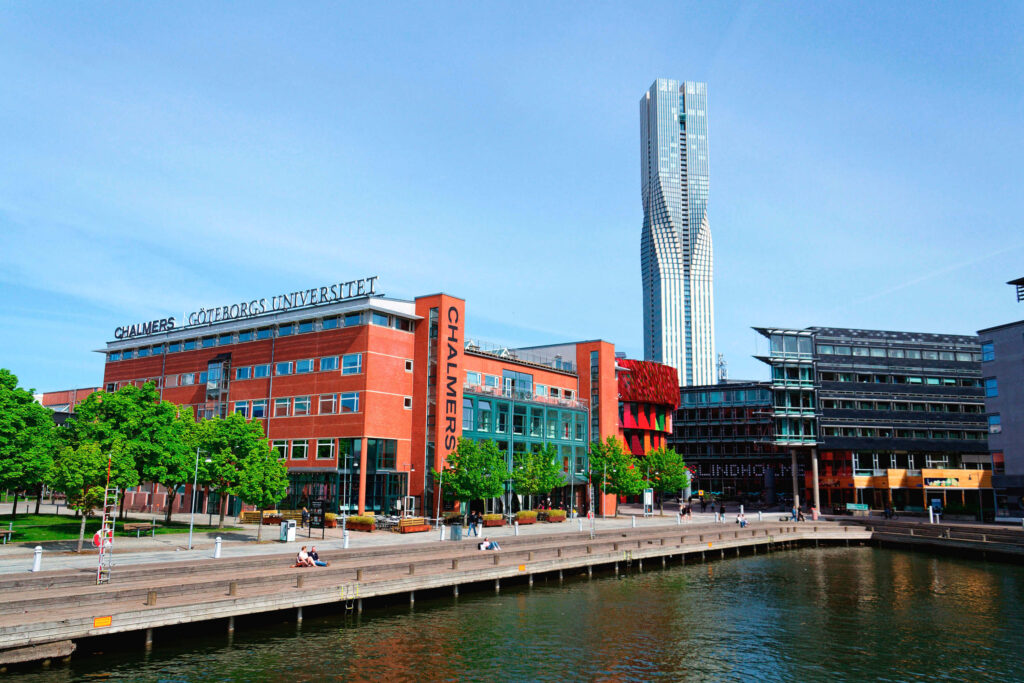
The city also hosts the headquarters of Volvo Cars (passenger vehicles) and Volvo Group (trucks, buses, construction equipment) — now separate companies with different ownership structures, the result of splits and reorganisations through the 1990s and 2000s.
The Ownership Question: Volvo Today
Volvo Cars was sold by Ford to Geely, the Chinese automotive group, in 2010. The sale raised obvious questions about whether Gothenburg would remain the centre of the brand, and those questions have largely been answered in the positive: Geely kept Gothenburg as the global headquarters and primary engineering centre, invested heavily in the Swedish operations, and let the brand keep its Swedish character.
Volvo Group — trucks, buses and construction equipment — remains a Swedish-listed company headquartered in Gothenburg and independent of Geely. The two share the Volvo name under a licensing arrangement but are entirely separate corporate entities.
For a visitor the practical implication is simple: Volvo Cars is a Chinese-owned company that makes Swedish-designed cars in Gothenburg. The engineering, the design and much of the manufacturing remain in Sweden. The museum covers both the car and the truck histories.
The Volvo Museum
The Volvo Museum (Volvomuseet) sits on the Arendal peninsula on Hisingen, next to Volvo Group’s main site. It is a proper automotive and industrial museum, with a collection running from the 1927 ÖV4 to concept cars and experimental vehicles from recent decades — roughly a hundred vehicles across cars and commercial vehicles in a large purpose-built hall.
The museum covers the full arc: the early cars and trucks, the safety innovations (with a detailed exhibit on Nils Bohlin and the seatbelt), the company’s role in Swedish industrial history, and the more recent evolution of the brand under Chinese ownership.
For anyone interested in design, engineering history, or the intersection of industrial and social history, this is a genuinely substantial visit — not a promotional exhibit but a real museum with real historical content. It is also one of the quieter major museums in the Gothenburg area, which makes it a good alternative or addition to the standard tourist circuit. If you plan to pair it with the museums in the centre, tickets for the Gothenburg City Museum can be booked in advance.
Volvo Museum Practical Information
| Detail | Information |
|---|---|
| Location | Arendal, Hisingen island — roughly 20 minutes from central Gothenburg by tram and bus |
| Opening hours | Tuesday–Friday 10:00–17:00; Saturday–Sunday 11:00–16:00; closed Monday |
| Entry | Around SEK 120 for adults; reduced for students and seniors; free for under-15s |
| Getting there | Tram to Hisingen, then bus; or by car, with parking available. Check current public transport connections before you go. |
| Time needed | 2–3 hours for a thorough visit; 90 minutes for the highlights |
| Combine with | Liseberg is on the other side of the centre but doable in the same day if you start early |
Key Milestones in Volvo History
| Year | Event | Significance |
|---|---|---|
| 1927 | Volvo founded; ÖV4 “Jakob” first car produced | First Swedish-manufactured car; 297 cars in the first year |
| 1928 | Volvo truck division launched | Commercial vehicles subsidise the car division through the early years |
| 1959 | Nils Bohlin’s three-point seatbelt introduced | Patent released freely to the whole industry; an estimated 1 million-plus lives saved |
| 1964 | Torslanda plant opens on Hisingen | Largest car assembly plant in Scandinavia; a major regional employer |
| 1999 | Ford acquires Volvo Cars for $6.45 billion | Passenger vehicles separated from trucks and commercial vehicles |
| 2010 | Geely acquires Volvo Cars from Ford for $1.8 billion | Headquarters and engineering stay in Gothenburg; heavy investment in Swedish operations |
| 2021 | Volvo Cars lists on the Stockholm Stock Exchange | Partial return to Swedish public ownership, with Geely retaining a majority stake |
Nils Bohlin and the Seatbelt: The Full Story
Nils Bohlin joined Volvo in 1958 as the company’s first Chief Safety Engineer — a job that did not exist until Volvo created it. Before that he had worked at Saab designing ejector seats for military aircraft. Restraining a person in a high-speed crash is, in engineering terms, not so different from safely throwing one out of a jet.
Bohlin’s solution anchored the belt at three points: shoulder, hip and vehicle floor. Distributing crash forces along the diagonal of the body — the strongest structural path through the torso — dramatically reduced injury severity in frontal collisions compared with both unrestrained and lap-belted occupants. It was also far easier to use than earlier systems, which mattered, because a seatbelt only saves lives if people actually put it on.
The patent was filed in 1959 and granted in 1962. Volvo’s decision to open it immediately, at no cost to any manufacturer, was announced by the company’s then-president. In 1999 the German Patent Office listed Bohlin’s belt among the eight patents of greatest significance to humanity in the twentieth century — alongside the telephone, the internal combustion engine and the transistor. Bohlin died in Gothenburg in 2002. The museum has a permanent exhibit dedicated to him.
Practical Tips for the Volvo Visitor
- It is not central. Hisingen is about 20 minutes out by public transport. Build it into a half-day rather than trying to squeeze it between sights in the centre.
- It is quieter than the big-name attractions. In peak season, that alone is worth something.
- The seatbelt exhibit is the highlight. Whatever your interest in cars, the Bohlin story works as industrial history with genuine human stakes.
- Call ahead for group or specialist tours. The museum runs guided tours for groups on request.
- The Torslanda factory offers tours by advance booking only. If you want to see cars actually being built rather than displayed, check Volvo’s visitor programme — availability has come and gone depending on production schedules.

GetYourGuide
Doing more than one museum in Gothenburg?
The Gothenburg all-inclusive pass bundles entry to more than twenty attractions and tours in the city centre. It does not cover the Volvo Museum out on Hisingen, but if the rest of your trip is museum-heavy it usually pays for itself in two or three visits.
Check the Gothenburg pass →Common Mistakes When Visiting the Volvo Museum
| Mistake | Why it’s a problem | Fix |
|---|---|---|
| Treating it as a minor add-on to a day in the centre | The travel time makes it a half-day commitment at minimum | Give Hisingen its own block of time |
| Going on a Monday | The museum is closed | Plan for Tuesday to Sunday |
| Expecting a brand showroom | It is a history museum, not a marketing suite | Approach it as industrial history and it rewards the attention |
| Missing the seatbelt exhibit | It is the most historically significant thing in the building | Go to it first, or make sure it is on your route |
| Skipping the trucks | Trucks kept the company alive in its early years and remain a huge part of the business | The truck hall explains the car business |
Frequently Asked Questions
Is Volvo still made in Gothenburg?
Yes. The Torslanda plant on Hisingen produces Volvo Cars, and Volvo Group also maintains major operations in the city. Gothenburg remains the primary manufacturing and engineering centre for both companies.
Who owns Volvo now?
Volvo Cars is majority-owned by Geely, the Chinese automotive group, which bought it from Ford in 2010. It has been listed on the Stockholm Stock Exchange since 2021, with Geely retaining a majority stake. Volvo Group — trucks and commercial vehicles — is a separate Stockholm-listed company and is not owned by Geely.
Who invented the three-point seatbelt?
Nils Bohlin, a Volvo engineer, who introduced it in Volvo cars in 1959. Volvo made the patent freely available to the whole industry rather than using it as a competitive advantage. The design has been credited with saving more than a million lives.
Is the Volvo Museum worth visiting?
If you have any interest in automotive, industrial or design history, yes — the collection is comprehensive, the seatbelt exhibit alone justifies the trip, and it is far quieter than the central attractions. If your interest is mainly the historic centre and its architecture, treat it as optional.
What was Volvo’s first car?
The ÖV4, nicknamed “Jakob,” produced on 14 April 1927. It was an open-topped touring car assembled in Gothenburg from a mix of Swedish and imported components. 297 were built in the first year.
Continue Exploring
- Gothenburg: What to See — the full overview, including the Volvo Museum
- History of Gothenburg — how a 1621 trading port became an industrial city
- Walking Tour of Gothenburg — the route through the centre, stop by stop
- Museum Audio Guides: Are They Worth It? — useful before you plan a museum-heavy day
- Booking ahead: Maritiman floating ship museum · Universeum science centre · hop-on hop-off bus
- Extending the trip? TouringBee also covers Stockholm, Oslo and Copenhagen
Disclosure: this article contains affiliate links to TouringBee audio guides and to GetYourGuide. If you buy through them we may earn a small commission at no extra cost to you. It never changes what we recommend.