
No products in the cart.

History of Gothenburg: How Sweden’s Port City Was Built, Burned, and Rebuilt
From a contested Viking-era river mouth to the Swedish East India Company, Volvo, and beyond — the full history of Gothenburg, Sweden's port city founded in 1621.

Gothenburg is one of the youngest major cities in Scandinavia, founded in 1621 by royal decree — but the ground it stands on has a much longer story. The mouth of the Göta Älv river was strategically significant long before the city existed: a gateway between the North Sea and the Scandinavian interior, where trade routes converged and control of the waterway meant control of enormous economic and military value. Understanding Gothenburg’s history is understanding why that location mattered so much to so many different people, and how the city that emerged from that contested ground became what it is today.
Before the City: The Göta Älv and the Geats
The area that is now Gothenburg sits at the confluence of ancient tribal territories. The west coast of Sweden was historically the land of the Geats (Götar) — the tribe whose name survives in the river name (Göta Älv means “Geat river”) and ultimately in the modern name Göteborg (Gothenburg). To the north and east were the Svear, a rival tribe whose name gives Sweden its modern Swedish name, Sverige (Svea rike, “realm of the Svear”).
The relationship between these groups was competitive and eventually political: the Svear kings gradually expanded authority over Geatish territories, and by the Viking Age, the area that would become Gothenburg was part of a contested border region. The Göta Älv was a critical waterway — the only navigable river connecting the Scandinavian interior to the North Sea — and whoever controlled its mouth controlled a significant artery of Viking-era trade.
Viking Age settlements along the Göta Älv are documented archaeologically. The knarr found during excavation work along the riverbank — now the centerpiece of Gothenburg’s City Museum, and the only intact Viking ship in Sweden — is a physical remnant of this early trading history: a cargo vessel built for open-sea runs, its presence in the river sediment evidence of the commerce that made the location valuable long before any city existed.
The Failed Predecessor Cities
Gothenburg was not the first attempt to establish a city at the mouth of the Göta Älv. Several predecessor settlements existed at or near the site, each destroyed by war before the current city was successfully established.
The most significant was Älvsborg, a fortress on a small island at the river mouth that served as Sweden’s most important access point to the North Sea. The problem was that Älvsborg sat in territory frequently captured by Denmark (which controlled both sides of the Øresund strait and aggressively contested Swedish access to the western coast). The fortress changed hands multiple times; Sweden was at one point forced to pay an enormous ransom — 1 million riksdaler over six years, the so-called “Älvsborg Ransom” — funded by a tax on the Swedish population and representing one of the most significant financial burdens in Swedish history up to that point.
This pattern of build, lose, and rebuild made permanent settlement at the Göta Älv mouth a national fixation for Swedish kings. Gustav II Adolf’s founding of Gothenburg in 1621 was the definitive attempt — a city that could actually be defended and that would anchor Swedish presence on the west coast permanently.
The Founding: 1621
On May 4, 1621, King Gustav II Adolf granted Gothenburg its city charter, making it the youngest of Sweden’s major cities — younger than Stockholm by roughly three centuries. The choice of site was deliberate and strategic: south of the Göta Älv’s mouth, on slightly higher ground, with a star-shaped fortification system designed to make the city defensible in ways that Älvsborg had never been.

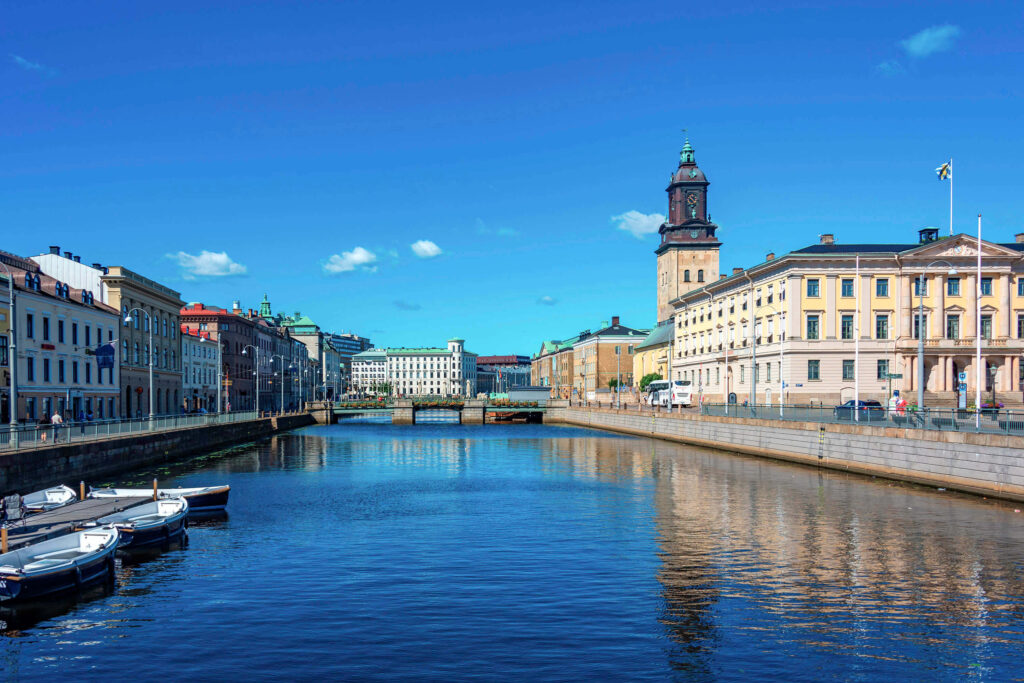
The construction was, from the beginning, an international project. Gustav II Adolf recruited Dutch engineers to design the canal system and lay out the street grid — a deliberate echo of Amsterdam, the greatest trading city in the world at the time. The canals served both a practical function (drainage of the swampy ground) and a commercial one (goods could be moved by barge from the harbor directly into the city’s interior).
The first city council reflected this intentionally international character: four Swedes, three Dutch, three Germans, and two Scots — a deliberate mix of nationalities chosen to attract merchants from the major trading nations of Northern Europe. This composition earned Gothenburg its early nickname: “Little London.” The city was designed to be a gateway, open to trade, attractive to foreign capital.
The Swedish East India Company and the Golden Age
Gothenburg’s 18th century was defined by the Swedish East India Company (Svenska Ostindiska Companiet, SOIC). Founded in 1731, the company held a monopoly on Swedish trade with Asia and operated from Gothenburg — the natural base for a company whose ships needed open-sea Atlantic access. For roughly 60 years, until its dissolution in 1813, the East India Company made Gothenburg fabulously wealthy.
The trade was primarily in Chinese goods: silk, porcelain, tea, and spices moved from Canton (Guangzhou) to Gothenburg on voyages that took 12–18 months each way. The profits were extraordinary — returns on individual voyages could exceed 100% of investment — and the wealth flowed into the buildings, the art collections, and the social institutions that still define Gothenburg’s historic center today.
The headquarters of the company — a grand baroque building on the southern bank of the Stora Hamnkanalen — is now the City Museum, one of the clearest surviving expressions of the period’s prosperity. The merchant families who grew rich from the East India trade built the elegant canal-side facades that make Gothenburg’s historic center look the way it does. When you walk along the canal today and see the handsome warehouses and former merchant houses, you’re looking at 18th-century East India Company money made stone and plaster. And if you’d rather see those facades the way goods once arrived — from the water — the Paddan canal sightseeing cruise follows the 17th-century moat and canals right through the historic core.

The Privateers: Lars and Ingela Gathenhielm
Gothenburg’s mercantile history produced some remarkable characters, none more singular than Lars and Ingela Gathenhielm. Lars Gathenhielm was a privateer — a ship captain licensed by the Swedish Crown during wartime to attack enemy shipping — who operated during the Great Northern War (1700–1721) and became extraordinarily wealthy from the prizes he seized. He was dead by 27, but in his brief career built one of the most significant private fortunes in Sweden.
His wife Ingela inherited everything and proved to be an exceptional businesswoman in an era that offered very few women such opportunities. She managed and expanded the privateering empire Lars had built, dealt with the Swedish court on equal terms, and successfully transferred her wealth across the legal and social obstacles that 18th-century Swedish law placed in the path of female property owners. Together, the Gathenhielms represent a version of Gothenburg’s commercial history that is less polite than the East India Company narrative: wealth built on maritime warfare, managed with extraordinary competence.
Industrialization and the Port City
The 19th century transformed Gothenburg from a mercantile city into an industrial one. The East India Company was gone, but the port remained — and as industrialization created demand for raw materials and manufactured goods on a previously unimaginable scale, Gothenburg’s position as Scandinavia’s western gateway made it the natural hub for the new trade flows.
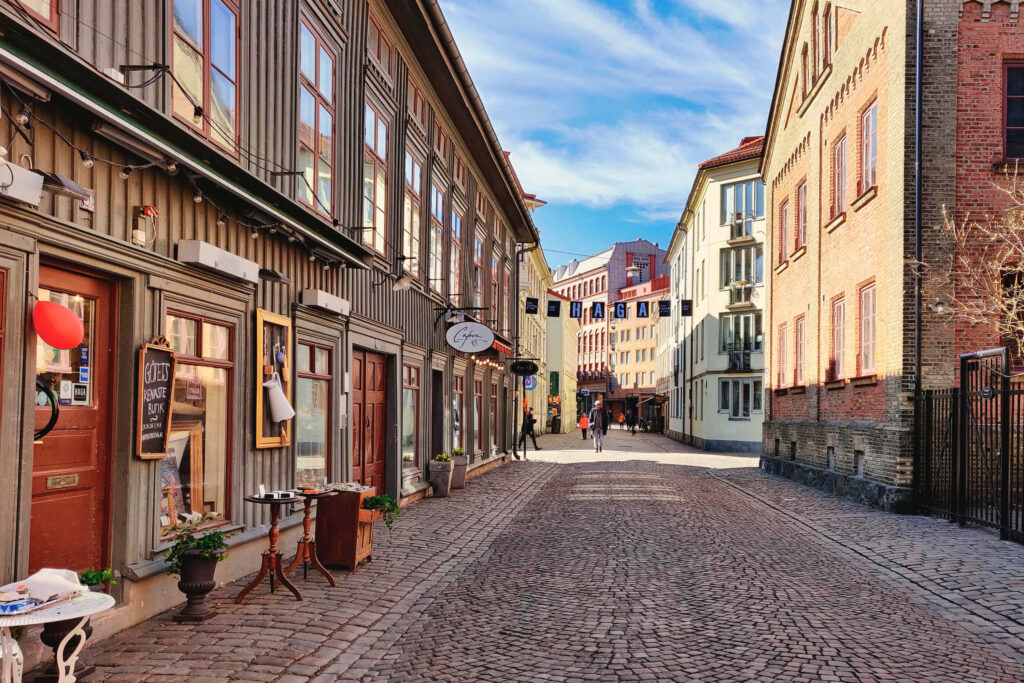
The city grew rapidly. The old fortress walls that had defined its boundaries since the founding were demolished in the mid-19th century as the city expanded beyond them. New neighborhoods were built: Haga, the dockworker housing district with its distinctive landshövdingehus buildings; Avenyn, the grand boulevard built to give the expanding city a main street worthy of its ambitions; Götaplatsen, the civic cultural center at the boulevard’s head, anchored by the Museum of Art.
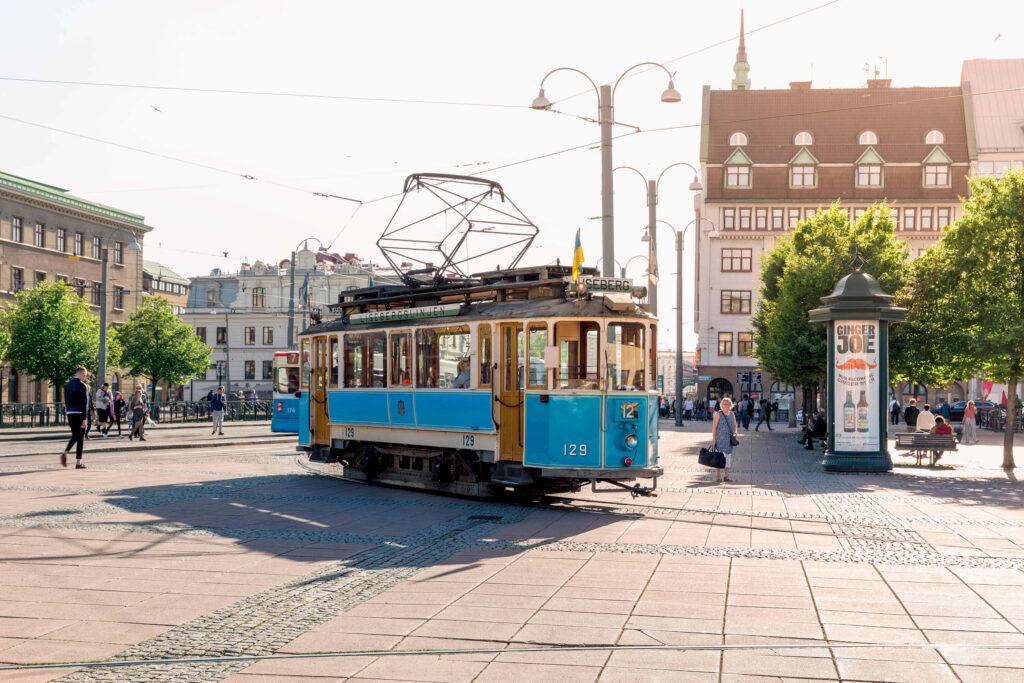
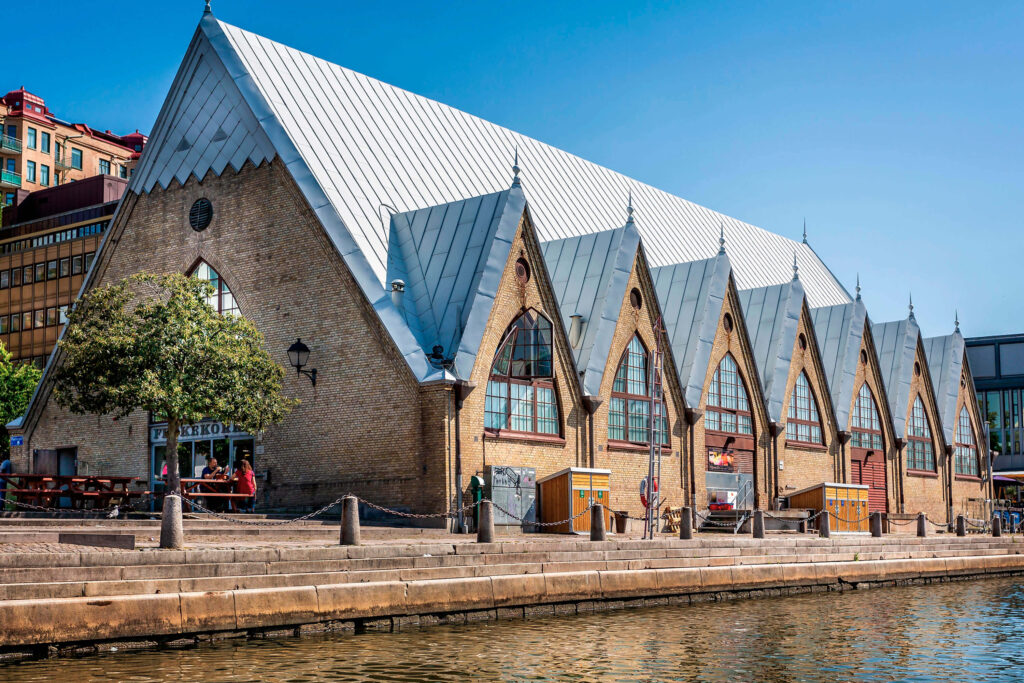
The tram network — established in 1879, still the largest in Scandinavia — was both a product and a driver of this expansion. The same period saw the construction of the Feskekörka (Fish Church) in 1874: the Gothic Revival fish market designed to move the outdoor fish trade indoors, solving a genuine public health problem created by the city’s scale.
Key Dates and Events
Gothenburg’s History: Key Dates
| Date | Event | Significance |
|---|---|---|
| Viking Age (800–1100 AD) | Trading settlements along Göta Älv | First evidence of commercial activity; knarr found here is only intact Viking ship in Sweden |
| 1563–1570 | Seven Years’ War with Denmark | Älvsborg captured; Sweden forced to pay enormous ransom to recover it |
| 1621 | Gustav II Adolf founds Gothenburg | Definitive founding: Dutch-designed canals, international city council, star-fort fortifications |
| 1731 | Swedish East India Company established | 60 years of monopoly trade with Asia; enormous wealth flows into the city |
| c. 1700–1720 | Lars Gathenhielm active as privateer | Private fortune built on licensed maritime warfare; wife Ingela inherits and expands the empire |
| 1813 | Swedish East India Company dissolved | End of the golden age; Gothenburg adapts to industrialization |
| 1850s–1870s | Fortress walls demolished; city expands | Gothenburg outgrows 17th-century boundaries; Haga, Avenyn, Götaplatsen built |
| 1874 | Feskekörka (Fish Church) built | Indoor fish market replaces chaotic outdoor trade; Gothic Revival architecture |
| 1879 | First tram line established | Now the largest tram network in Scandinavia |
| 1927 | Volvo founded in Gothenburg | Sweden’s most internationally recognized industrial brand |
| 1959 | Nils Bohlin invents three-point seatbelt at Volvo | Patent released freely to entire automotive industry; estimated to have saved over a million lives |
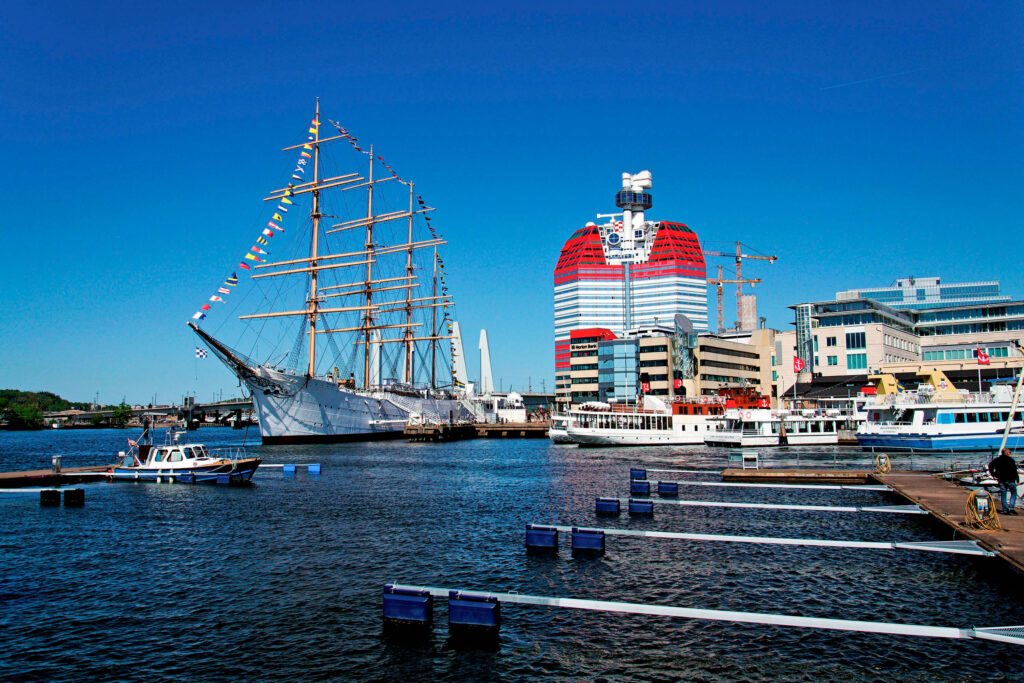
| 1994 | Gothenburg Opera House opens | Nicknamed “Box of Singers” — the ship-shaped building on the Göta Älv waterfront |
The 20th Century: Volvo and Modern Gothenburg
Gothenburg’s 20th-century identity was shaped above all by Volvo, founded in the city in 1927. The company grew into one of the most recognized automotive brands in the world, and its presence shaped the city both physically (the enormous factory complex at Torslanda on Hisingen) and culturally. The decision to release the three-point seatbelt patent freely — on the grounds that the safety benefit to the public outweighed competitive advantage — is one of the most remarkable corporate decisions of the 20th century, and thoroughly Gothenburg in character: pragmatic, modest about its own significance, deeply practical.
Gothenburg Today
Modern Gothenburg has managed its industrial heritage with more grace than most comparable port cities. The deindustrialization that gutted other waterfront cities in the late 20th century hit Gothenburg too — traditional shipbuilding largely collapsed in the 1970s and 1980s — but the city diversified into technology, automotive, logistics, and services, maintaining its economic weight as the industrial base shifted.
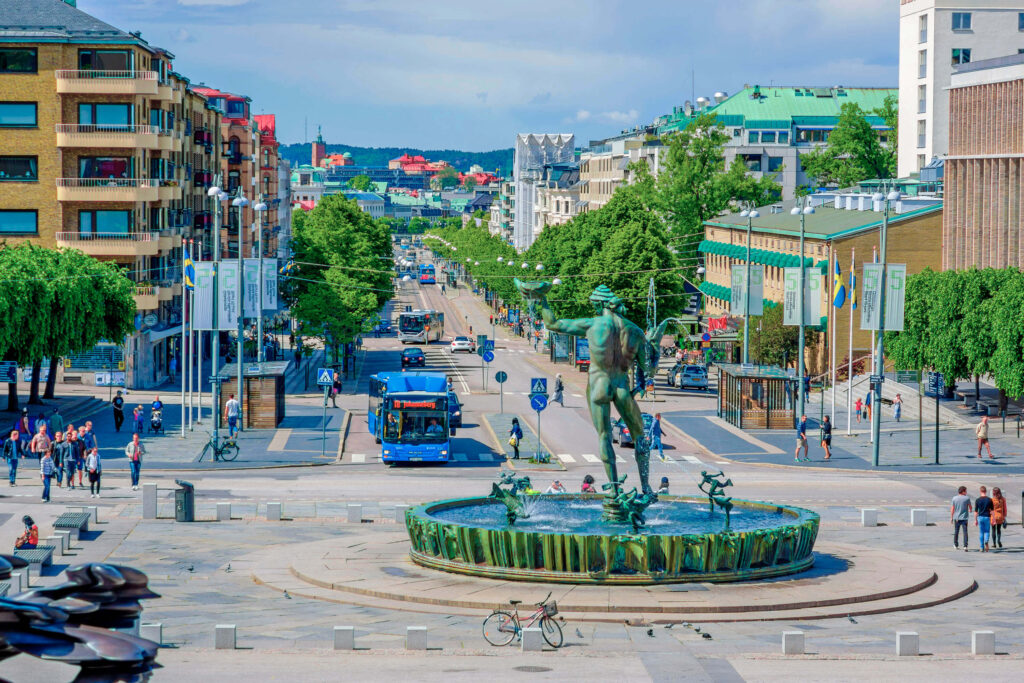
The historic center has been preserved with genuine care: the landshövdingehus buildings of Haga that might have been demolished were recognized as worth keeping; the canal network threatened with infilling in the post-war period was saved by preservation efforts. The result is a city that feels coherent — the 17th-century bones are still visible beneath the 19th- and 20th-century additions.
The TouringBee Gothenburg City Walking Tour follows that route — from Gustaf Adolfs Torg (named for the founding king) to Skansen Kronan (the 17th-century fortress) — providing the historical context that makes each stop meaningful rather than merely picturesque. The TouringBee Gothenburg audio guide was built around this exact arc of the city’s history, connecting the physical evidence visible on the street to the four centuries of events that put it there.
Gothenburg vs. Its Scandinavian Neighbors
Founding and Historical Character — Scandinavian Cities
| City | Founded | Historical Character | Key Historical Driver |
|---|---|---|---|
| Gothenburg | 1621 | Port and trade city; international from the start | Swedish East India Company, privateers, Volvo |
| Stockholm | c. 1252 | Capital and court city; seat of Swedish power | Royal court, politics, finance |
| Copenhagen | c. 1000 (city charter 1254) | Harbor city, Nordic crossroads | Danish royal court; Hanseatic trade; Øresund control |
| Oslo | c. 1000 (city charter 1048) | Fjord city; Norwegian capital | Norwegian independence; timber and fishing trade |
Common Misconceptions About Gothenburg’s History
Historical Misconceptions — Clarified
| Misconception | The Reality |
|---|---|
| “Gothenburg is an old city” | By Scandinavian standards, it’s young — founded 1621, significantly newer than Stockholm (c. 1252) or Oslo (c. 1000) |
| “The Dutch canals are just an aesthetic choice” | Dutch engineers were solving a real problem: the swampy ground at the Göta Älv mouth needed drainage, and canals were the logical infrastructure for a trading city |
| “The Swedish East India Company was like the British one” | The Swedish SOIC was a purely commercial venture with no colonial territorial ambitions — it traded, didn’t colonize |
| “Volvo is still a Swedish company” | Volvo Cars was sold to Ford in 1999 and acquired by China’s Geely in 2010. The trucks division (Volvo Group) remains Swedish-owned. The founding history is still Gothenburg’s |
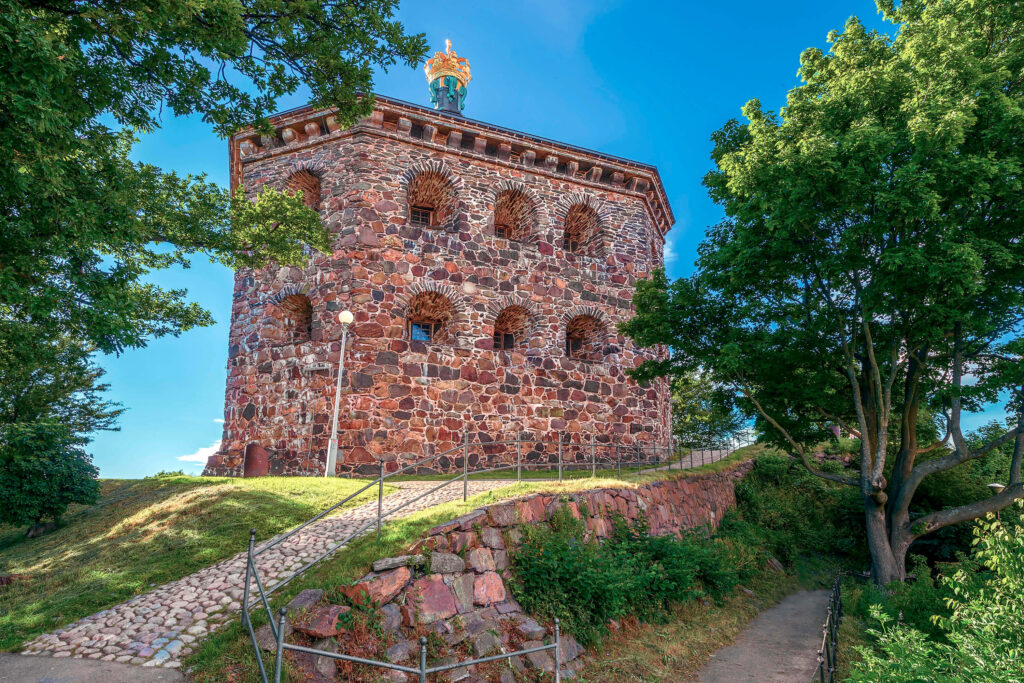
| “The fortress walls are still intact” | The 17th-century star-fort walls were demolished in the mid-19th century. Skansen Kronan survived because it was too useful as a viewpoint and signal station to demolish |
Practical Tips for Exploring Gothenburg’s History
- Start at Gustaf Adolfs Torg. The founding square with its equestrian statue of Gustav II Adolf and the City Hall facing it is the natural historical starting point. Everything in the historic center radiates from here.
- Visit the City Museum. The former East India Company headquarters houses the Viking ship, East India Company exhibits, and comprehensive coverage of the city’s history. The single best historical resource in Gothenburg.
- Walk the canal district slowly. The towpaths along the Stora Hamnkanalen pass the most significant buildings of the mercantile era. The facades tell the story of 18th-century wealth in stone, brick, and plaster.
- Climb to Skansen Kronan. One of the few surviving pieces of the city’s 17th-century defensive system. The view shows the geography that made the location strategically important: the river mouth, the harbor, the city grid below.
- Use an audio guide for context. Gothenburg’s historical layers are dense enough that walking without context means seeing buildings without understanding what they represent. A good audio guide connects the physical route to the historical arc.
Frequently Asked Questions
How old is Gothenburg?
Gothenburg was officially founded in 1621, making it just over 400 years old. The site had been the location of earlier settlement attempts since the late 15th century, and the Göta Älv river mouth was an active trading location during the Viking Age. By Scandinavian standards, 1621 is relatively recent: Stockholm dates to around 1252, Oslo to around 1000.
Why was Gothenburg founded where it was?
The Göta Älv river mouth was the only navigable outlet from the Scandinavian interior to the North Sea. Whoever controlled it controlled a critical artery for trade and military movement. Sweden had been trying to establish a permanent, defensible settlement here for 150 years before Gustav II Adolf succeeded in 1621.
What was the Swedish East India Company?
The Swedish East India Company (Svenska Ostindiska Companiet) was a trading company founded in 1731 and based in Gothenburg, holding a Swedish royal monopoly on trade with Asia. It operated for about 60 years, running trade voyages to China and bringing back silk, porcelain, tea, and spices. The former SOIC headquarters is now the City Museum. The company was dissolved in 1813.
Why does Gothenburg have Dutch canals?
Gustav II Adolf recruited Dutch engineers to design the city in 1621 — reflecting the Netherlands’ status as the world’s leading maritime trading nation at the time. The Dutch brought expertise in hydraulic engineering (managing waterlogged ground) and urban planning. The canal system served practical purposes (draining the Göta Älv delta, moving goods by barge) and commercial ones (making the city feel like Amsterdam, the most prestigious trading hub in Europe).
When did Volvo start in Gothenburg?
Volvo was founded in Gothenburg in 1927, initially as a subsidiary of the SKF ball bearing manufacturer. Nils Bohlin, a Volvo engineer based in Gothenburg, invented the three-point seatbelt in 1959 — a safety innovation whose patent Volvo released freely to the entire automotive industry, a decision estimated to have saved over a million lives.
Is Gothenburg historically important in Scandinavia?
Yes — more so than its size might suggest. Its position as Sweden’s only reliable western-coast port made it strategically critical for centuries. The Swedish East India Company made it the center of a global trade network in the 18th century. Its port remains the largest in Scandinavia today. And Volvo’s founding here gave it a 20th-century industrial identity that shaped Swedish manufacturing globally.
Guided Tours & Tickets in Gothenburg
- Gothenburg: City Canal Sightseeing Cruise (Paddan) — 50 minutes through the 17th-century moat and canals, under 20 low bridges, with live guiding.
- Gothenburg: 24-Hour Hop-On Hop-Off Bus and Boat Tour — cover the historical landmarks by land and water at your own pace.
- World of Volvo Exhibition Entry Ticket — the natural follow-up to the city’s 20th-century industrial story.
Some links above are affiliate links (GetYourGuide); the price you pay doesn’t change, but it helps support TouringBee.
Continue Exploring
- Gothenburg: What to See — how the city’s history translates into what’s worth visiting today
- Self-Guided City Walking Tours That Work — how to structure a walking day that makes the historical layers visible
- How to Find a Self-Guided Tour Near Me — finding audio guides and walking tours that provide genuine historical context
- Other Scandinavian cities with layered histories: TouringBee’s audio walking tours for Stockholm, Copenhagen, and Oslo each cover the historical context that makes those cities’ physical fabric legible.