
No products in the cart.

How to Find a Self Guided Tour Near Me
Find the best self guided tour near me with tips on routes, audio guides, pricing, offline maps, and how to choose a flexible tour that fits.
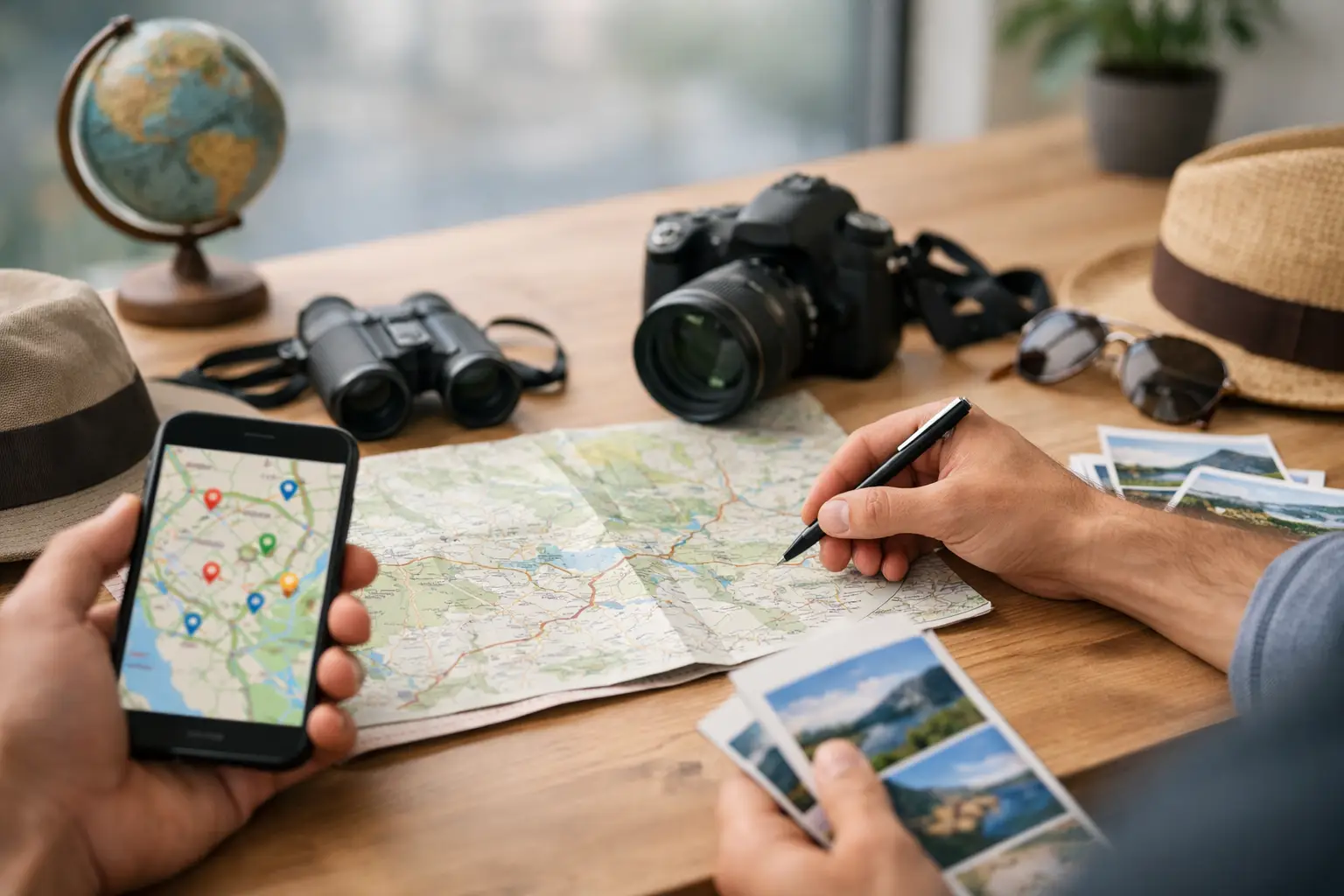
You land in a new city, open your phone, and type self guided tour near me because you want to start sightseeing now – not in two hours, not after a meeting point search, and not at the pace of a group that stops every five minutes for head counts. That search usually means one thing: you want freedom, but you still want a good guide.
A good self-guided tour sits right in that sweet spot. It gives you structure without boxing you in. You get the route, the stories, and the context, but you choose when to begin, where to pause, and how long to stay. For many travelers, that is the difference between feeling rushed and actually enjoying a place.
What makes a self guided tour near me worth booking
Not every self-guided tour is equally useful. Some are little more than a map with a few short captions. Others feel surprisingly close to having a local guide in your ear, pointing out details you would have missed on your own.
The best option usually combines three things: clear navigation, strong storytelling, and flexibility. Navigation matters because sightseeing is less fun when you keep checking street names and second-guessing turns. Storytelling matters because a city is not just a set of buildings – it is people, conflicts, symbols, food, architecture, and odd little details that make a place stick in your memory. Flexibility matters because travel days rarely go exactly as planned.
Price matters too, but not in the way people think. The cheapest option is not always the best value. If a tour costs about the same as a light meal and gives you two or three hours of curated sightseeing, that is often a better deal than wandering without context or paying for a full group experience you do not really want.
How to choose the right self guided tour near me
Start with the area, not the app. Ask yourself what you actually want to see in the next few hours. Historic downtown? A museum? A famous landmark? A neighborhood with local character? Your search will get better fast once you narrow the setting.
Then look at the route length. This is one of the easiest ways to avoid booking the wrong tour. A two-mile city walk can feel light and easy in the morning, but long and tiring after a travel day. A museum guide with 60 stops sounds thorough, but maybe you only have 90 minutes. Good tours tell you upfront how long the route takes and how many points are included.
Audio is another big divider. Reading from your phone while crossing streets, taking photos, and trying to stay oriented gets old quickly. Audio guides are more comfortable, especially when playback starts by location. That means your phone does the work while you keep moving.
Offline access is also worth checking. Travelers often ignore this until they are standing in a square with weak signal or trying to avoid data roaming charges. Offline maps and downloaded audio make the experience much smoother, especially for international trips.
Language options can be just as important. If English is not your first language, or if you are traveling with family members who prefer another language, multilingual tours make the day easier for everyone.
Why self-guided tours work so well for modern travel
A lot of sightseeing advice still assumes travelers want the old model: fixed departure time, group check-in, and one guide leading everyone together. Sometimes that is great. If you want live interaction or have a lot of questions, a group tour can be the better fit.
But many travelers are not looking for that. They want to move in their pace. They want to stop for coffee when they see a good cafe, spend extra time in front of one painting, skip a square that feels too crowded, or take a detour into a market. Self-guided tours fit real travel behavior much better than rigid schedules do.
They are also easier to fit into short windows. If you have one free afternoon in Rome, a morning before your train in Prague, or a few hours after hotel check-in in Paris, a self-guided audio tour lets you start right away. No waiting for tomorrow’s slot. No organizing your day around someone else’s timetable.
For solo travelers, there is another benefit: comfort. You are independent, but not directionless. For couples, it helps avoid the small arguments that happen when one person wants spontaneity and the other wants a plan. With a self-guided route, you get both.
What to look for in a quality audio guide
The easiest mistake is choosing based only on the number of stops. More stops do not automatically mean a better experience. What matters is whether the stops are meaningful and whether the narration adds something you would not get from a plaque or a quick web search.
Look for tours created by experienced guides, historians, or local experts. That usually shows up in the writing. The stories feel more specific. The route makes more sense. The guide knows which details are genuinely interesting and which ones are just filler.
Good narration also respects your time. It should be engaging without turning every corner into a lecture. A practical traveler wants useful context, not a history textbook in audio form. The best guides strike a nice balance between cultural background and easy listening.
Map quality matters more than people expect. If the route is unclear, even a well-written tour becomes frustrating. GPS-guided playback, visible stop order, and a simple interface make a real difference when you are in an unfamiliar place.
This is exactly why many travelers prefer apps built specifically for self-guided sightseeing. A service like TouringBee is designed around that use case: professionally narrated stories, GPS-based routes, offline maps, and the freedom to start, pause, and continue whenever it suits your day.
When a self-guided tour might not be the best choice
It depends on the kind of experience you want. If you are visiting a site where live access matters – like a behind-the-scenes tour, a food tasting with a host, or a place where you want to ask detailed questions in real time – a traditional guided option may suit you better.
Self-guided tours also require a little self-management. You need charged headphones or a speaker, enough battery, and a willingness to follow the route on your own. None of that is difficult, but it is part of the setup.
And if you are traveling with very young kids, your pace may be less predictable than any route can account for. In those cases, shorter tours or landmark-based guides often work better than long walking itineraries.
That said, these are usually small trade-offs compared with the convenience. For most city breaks, museum visits, and neighborhood walks, self-guided audio tours are one of the simplest ways to see more without adding stress.
Simple tips before you press play
A little prep goes a long way. Download the tour before leaving your hotel or before your flight if you know your destination in advance. Bring wired or wireless headphones if you want a more personal experience. Check the route length against your actual energy level, not your optimistic travel version of yourself.
It also helps to treat the guide as support, not a strict assignment. If you want to pause for lunch, do it. If a church, market, or bookstore catches your attention, take the detour. The whole point is that the tour works around your day, not the other way around.
And do not overbook yourself. One well-chosen walking route with great commentary is often more memorable than trying to cram five major sights into one afternoon.
A better answer to “self guided tour near me”
When you search self guided tour near me, you are usually not asking for a random option nearby. You are asking for the easiest way to turn free time into a good travel experience. You want something affordable, simple to start, and interesting enough to make the place feel alive.
That is why the best self-guided tours are not just digital maps. They are personal tours on your phone – ready when you are, easy to follow, and built for real travel days. If a tour gives you expert stories, clear directions, offline convenience, and the freedom to explore in your pace, you are already very close to the kind of sightseeing most travelers actually want.
The nicest part is this: you do not need a perfect plan to have a good day out. You just need a solid route, a few good stories, and the freedom to stop when something interesting catches your eye.