
No products in the cart.

Museum Audio Guides: Are They Worth It?
Museum audio guides help you explore at your own pace, hear expert stories, and get more from every gallery visit without joining a group tour.
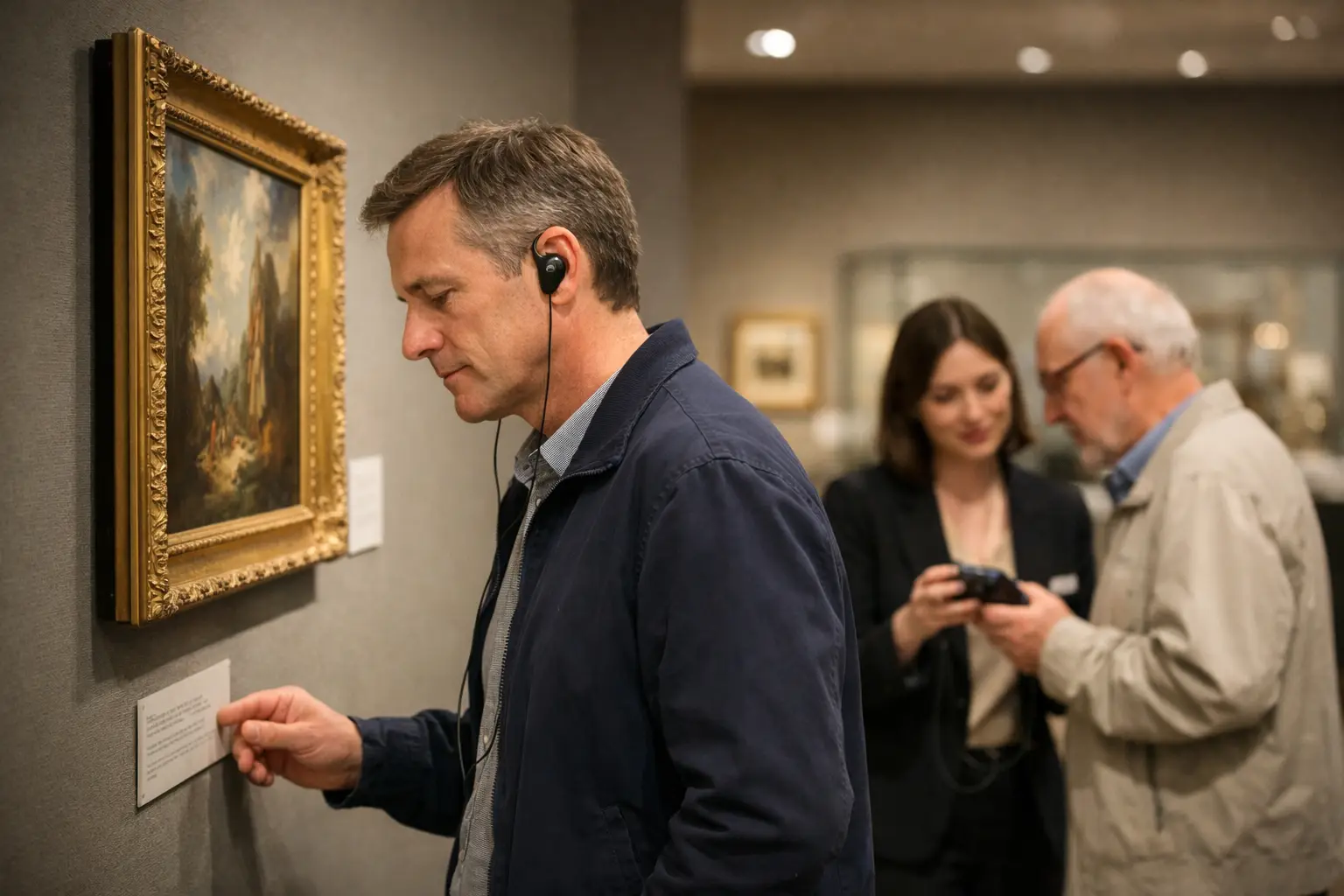
You’re standing in front of a painting everyone seems to love, but the wall label gives you three lines, two dates, and one unfamiliar art term. This is exactly where museum audio guides earn their keep. They turn a quiet walk through galleries into something clearer, richer, and much easier to follow – especially if you want context without committing to a scheduled group tour.
For many travelers, that balance is the whole appeal. You get expert storytelling in your ear, but you still decide where to stop, what to skip, and how long to stay. If you like museums but don’t love feeling rushed, crowded, or overloaded with information, audio can be the most comfortable way to visit.
Why museum audio guides work so well
Museums are full of objects that need interpretation. A sculpture, artifact, or historical room can look impressive on its own, but the meaning often sits below the surface. Good museum audio guides bridge that gap. They explain what you’re seeing, why it mattered then, and why it still matters now.
The best part is pacing. A live guide has to keep the group moving. An audio guide waits for you. You can replay a section, pause to look longer, skip ahead, or take a break without missing the thread. That makes a real difference in large museums, where attention fades long before the collection does.
There’s also a comfort factor people tend to underestimate. Not everyone wants to stand shoulder to shoulder with strangers while trying to hear a guide over ambient noise. Listening through your phone or a museum device feels more personal. It’s less performative and often easier to absorb.
What makes a good museum audio guide
Not all audio guides are equally helpful. Some feel like a list of facts read aloud. Others feel like a knowledgeable friend quietly pointing out the details you would have missed on your own.
A strong guide starts with clear storytelling. It should tell you more than the title, artist, and year. It should explain the human side of the object, the historical moment behind it, or the little visual clue that changes how you see the piece. If the narration sounds natural and well paced, that’s a big plus. Dry delivery can make even a world-famous collection feel longer than it is.
Navigation matters too. In a museum, friction adds up fast. If it takes too much effort to find the right stop, type numbers into a clunky device, or guess whether you’re in the correct gallery, people give up. The smoother the flow, the better the experience.
Language options are another practical detail. For international travelers, multilingual audio is not a bonus – it’s often the difference between a memorable visit and a confusing one. The same goes for offline access on a smartphone. If your signal drops inside a thick stone building, the guide should still work.
Smartphone guides vs traditional museum devices
Many museums still offer dedicated handheld devices, and they can work perfectly well. They’re simple, usually built for the exhibition, and may include content you won’t find elsewhere. If you prefer not to use your own phone while sightseeing, that can be a plus.
Still, smartphone-based museum audio guides are becoming the easier option for a lot of visitors. You already know how your phone works. You can use your own headphones. You don’t need to queue at a rental counter, carry an extra device, or worry about returning it before closing.
There are trade-offs. Your phone battery becomes part of the plan, and some visitors prefer a museum visit without screen time. But if the guide is well designed, you’re not staring at the phone much anyway. You’re mostly listening, walking, and looking around.
For independent travelers, smartphone audio often fits better with the rest of the day. It matches the way people already explore cities, landmarks, and neighborhoods – on their own schedule, with flexible stops and no fixed group meeting point.
When museum audio guides are most useful
They’re especially valuable in big-name museums where collections are huge and time is limited. If you only have two hours in a museum that could easily fill a full day, audio helps you focus. Instead of wandering without a plan, you get a curated path through the highlights.
They also help in museums with complex subjects. Ancient history, archaeology, science, and decorative arts can be harder to read at a glance than a painting gallery. Audio gives structure. It connects one room to the next so the visit feels like a story rather than a series of disconnected displays.
They’re just as helpful for travelers who don’t think of themselves as museum people. In fact, that group may benefit the most. A good guide lowers the barrier. It explains things simply, without making you feel uninformed. That can turn a polite cultural stop into one of the best hours of the trip.
When they may not be the best fit
Audio guides are helpful, but they’re not always necessary. Some small museums are best enjoyed slowly and quietly, with minimal mediation. If the exhibition is highly visual and well labeled, you may prefer to move through it without narration.
They can also feel too structured for visitors who like to follow pure curiosity. If you want to drift, notice what catches your eye, and build your own experience, a guided route may feel a little restrictive. The good news is that audio is easy to use selectively. You can listen only in certain rooms or for standout objects and ignore the rest.
Families with very young children may run into another limitation. Adult-focused audio content is not always engaging for kids, and sharing one device between several people can get awkward. Some museums solve this with family versions, shorter tracks, or interactive elements. If not, it may be better to keep the visit light and informal.
How to choose the right museum audio guides
Start with the kind of visit you want. If you’re trying to cover the essentials quickly, choose a highlights guide. If you love detail and have time, a full tour may be more satisfying. Neither is better. It depends on your energy, interest, and how much of the museum day you want to spend listening.
Check how the guide is delivered. Museum-rented devices can be convenient on-site, while app-based guides are often easier for flexible travel planning. If you’re visiting multiple attractions on one trip, using your own phone usually feels more consistent.
It’s worth checking practical basics before you go: length, language, whether headphones are needed, and whether the content works offline. These details sound small, but they shape the whole experience. A guide that’s clear, affordable, and easy to start is often more valuable than one packed with extra features you’ll never use.
This is where a mobile-first approach makes sense for many travelers. Companies like TouringBee build audio experiences around the way people actually sightsee now – independently, with limited time, and with a strong preference for convenience over ceremony.
Getting more from the experience
A few simple habits make museum audio guides work better. Start with a section that gives you the big picture. That early context helps the rest of the museum make sense. Wear comfortable headphones, but keep the volume low enough to stay aware of the space around you.
Try not to listen to every single stop unless you’re truly in the mood for that depth. Museum fatigue is real. A selective approach often works better than treating the guide like homework. Listen where your curiosity is strongest, and let yourself move on when your attention drops.
If you’re visiting as a couple or with a friend, it helps to pause and talk between stops. Audio can make a museum feel more personal, but conversation is what makes the visit memorable. One interesting story about a single object often stays with you longer than twenty facts in a row.
Museum audio guides do a simple job, but they do it well. They give structure without pressure, expertise without a crowd, and context without slowing your day down. If you want a museum visit that feels informative but still easy, they’re usually worth it – and often the difference between just seeing a collection and actually connecting with it.
Next time a gallery starts to feel like a blur of labels and masterpieces, put on your headphones and let the story catch up with what your eyes are seeing.
Imagine Visiting the Louvre Without an Audio Guide
You’re standing in front of the Mona Lisa. Like everyone else, you take a photo, spend a minute looking at the painting, and move on.
But do you know why it’s protected behind bulletproof glass? Why it became the world’s most famous painting? Or why millions of people continue to visit it every year despite its surprisingly small size?
Now imagine listening to a short story that answers those questions while you’re standing in front of the artwork. Suddenly, you’re no longer just looking at a painting—you’re understanding its place in history.
The same happens throughout the museum. A sculpture becomes the symbol of an entire civilization. A seemingly ordinary portrait reveals a political scandal. A decorative object tells the story of an emperor, an artist, or a revolution.
A good museum audio guide transforms a collection of beautiful objects into a series of memorable stories.
When You Might Not Need an Audio Guide
Museum audio guides aren’t essential for every visit.
If you’re stopping by for just thirty minutes to see one or two famous works, wandering through a museum simply to enjoy the atmosphere, or joining a live guided tour, you may not need one at all.
Some visitors also prefer discovering museums entirely on their own, letting curiosity guide them without any explanations.
However, if you’d like to understand the stories behind the exhibits rather than simply admire them, an audio guide can add a whole new dimension to your visit.
Museum Labels vs. Audio Guides
Museums do an excellent job of providing information through labels and exhibition panels. But because space is limited, they often include only the essential facts.
An audio guide can go much further.
| Museum Labels | Audio Guide |
|---|---|
| Brief descriptions | Rich storytelling and historical context |
| Limited space for information | Time to explain the bigger picture |
| Reading required | Listen while you continue exploring |
| Usually focused on the object | Connects artworks with history, artists, and culture |
| Available only inside the museum | Can often be used before, during, and after your visit |
Rather than replacing museum labels, audio guides complement them by providing the stories that simply don’t fit on a wall.
What Makes a Great Museum Audio Guide?
Not all audio guides offer the same experience.
The best ones do much more than read catalogue descriptions aloud. They help you understand why certain objects matter, explain historical events in a clear and engaging way, and guide you naturally through the museum without overwhelming you with information.
A high-quality museum audio guide should include:
- engaging storytelling rather than long academic lectures;
- carefully selected highlights instead of trying to cover every exhibit;
- clear navigation that’s easy to follow;
- offline access after download;
- professional narration that’s enjoyable to listen to; and
- well-researched content created by historians, guides, or subject experts.
When these elements come together, an audio guide becomes less like an instruction manual and more like a knowledgeable companion walking through the museum with you.
Why Audio Guides Have Become So Popular
Audio guides have been helping museum visitors explore collections for decades, and their popularity continues to grow.
Modern smartphones have made them even more convenient. Instead of borrowing dedicated devices, many visitors now prefer using their own phones with familiar headphones, offline content, and multilingual support.
They also match the way many people like to travel today: independently, at their own pace, and without having to follow a fixed schedule or a tour group.
For museums, audio guides provide deeper interpretation without creating crowded guided tours. For visitors, they offer the freedom to choose exactly how much time to spend with each exhibit.
It’s a combination that has made audio guides one of the most popular ways to experience museums around the world.
Official Museum Audio Guides vs. Independent Audio Guides
Many museums offer their own official audio guides, but they’re not the only option available.
Independent audio guides have become increasingly popular, especially for major museums and cultural attractions. Both formats have their strengths, and the best choice depends on the kind of experience you’re looking for.
| Official Museum Audio Guide | Independent Audio Guide |
|---|---|
| Produced by the museum | Created by independent guides and historians |
| Focuses primarily on the museum’s collection | Often connects artworks with broader historical and cultural context |
| Usually available only inside the museum | Can often be downloaded before your visit |
| Covers selected exhibits | May also include stories about the building, artists, and surrounding area |
| Sometimes requires renting a museum device | Typically works on your own smartphone |
Neither option is inherently better. Some travelers prefer the museum’s official perspective, while others enjoy independent guides that offer different stories, alternative routes, or a broader view of the destination.
The important thing is choosing an audio guide that is well researched, easy to follow, and designed to enrich your museum experience.
So, Are Museum Audio Guides Worth It?
For many visitors, yes—especially if you want to understand what you’re seeing rather than simply walk past famous artworks and historic objects.
A museum audio guide is not essential for every visit. If you only want a quick look around or prefer complete silence, you may be perfectly happy without one. But if you’re curious about the stories behind the collection, an audio guide can make the experience richer, clearer, and much more memorable.
The best museum audio guides help you focus on the highlights, explain why they matter, and give you the freedom to explore at your own pace. They don’t replace the museum itself—they help you connect with it.
So if you’re visiting a major museum for the first time, or if you want to get more from your visit without joining a group tour, a well-made audio guide is usually one of the simplest and most affordable ways to turn a good museum visit into a meaningful one.
Common Mistakes Visitors Make
Even the best museum visit can become tiring or confusing because of a few simple mistakes. Luckily, most of them are easy to avoid.
The first mistake is arriving without a plan. Large museums can be overwhelming, especially if it is your first visit. Trying to see everything often leads to museum fatigue long before you reach the most famous artworks. It is usually better to choose a focused route and enjoy fewer masterpieces properly.
Another common mistake is forgetting headphones. Smartphone audio guides are much more comfortable when you can listen privately, especially in busy galleries. Your own headphones are usually better than rented ones and help you stay focused on the story.
Many visitors also forget to download their audio guide in advance. Museum Wi-Fi is not always reliable, and mobile signal can be weak inside large buildings. Downloading the guide before you arrive makes the experience smoother and helps you avoid stress at the entrance.
Rushing is another problem. It is tempting to move quickly from one famous object to another, but museums are more rewarding when you slow down. A few minutes of explanation can completely change the way you look at a painting, sculpture, or historic object.
Finally, many people try to see too much. A thoughtful two-hour visit is often better than a rushed half-day marathon. Choose the rooms or highlights that matter most to you, leave time for breaks, and remember that you do not have to see everything in one visit.
Frequently Asked Questions
Are museum audio guides worth paying for?
In most cases, yes. A good audio guide gives you the context you need to understand what you are seeing. It can turn a simple walk through galleries into a much richer experience.
Is an audio guide better than a guided tour?
It depends on your travel style. A guided tour is better if you want to ask questions and interact with an expert. An audio guide is better if you prefer flexibility, independence, and the freedom to move at your own pace.
Do all museums provide audio guides?
No. Many large museums offer official audio guides, but smaller museums may not. In other cases, official guides may be available only in a few languages. Independent smartphone audio guides can be a good alternative.
Can I use my own headphones?
Usually, yes. Smartphone audio guides are designed to work with your own headphones. This is often more comfortable than using rented museum equipment.
Can I use an audio guide offline?
Many independent audio guides can be downloaded before your visit and used offline. This is especially useful when traveling abroad or visiting museums with limited Wi-Fi.
How long should I spend in a museum?
It depends on the museum, but two to three hours is often enough for an enjoyable visit. For very large museums, it is better to focus on a selected route instead of trying to see everything.
Can I use an audio guide in famous museums?
Yes. Audio guides are especially useful in famous and complex museums such as the Louvre, Musée d’Orsay, and the Vatican. They help you understand the stories behind the masterpieces and make the visit easier to follow.
Our Recommendation
If you are visiting a museum for the first time, an audio guide is usually one of the best investments you can make. For the price of a coffee, you can get hours of stories, historical context, and practical guidance that make the visit more enjoyable.
A self-guided audio tour is especially useful if you want to explore independently. You can start when you want, pause when you need, skip sections that interest you less, and spend more time with the works you love.
At TouringBee, we create audio guides for travelers who want freedom without missing the story. Our museum and city guides are designed for independent visitors and are available in multiple languages.
Conclusion
Museum audio guides have become one of the easiest ways to make a museum visit more engaging and memorable. They help you understand what you are looking at, notice details you might otherwise miss, and enjoy the collection without depending on a group schedule.
The best choice depends on your travel style. If you enjoy direct interaction, a guided tour may be ideal. If you prefer exploring independently, an audio guide gives you the freedom to move at your own pace while still learning the stories behind the artworks.
After creating audio guides for museums and historic cities across Europe, we have seen the same pattern again and again: visitors enjoy museums more when they understand the story behind what they see.
Before your next visit, choose a focused route, bring your headphones, download your guide in advance, and give yourself time to enjoy the experience. And if you are planning a visit to the Musée d’Orsay, the Vatican Museums, or Milan Cathedral, a self-guided audio tour can help you make the most of your time inside.