
No products in the cart.

Walking Tour of Gothenburg: The Complete Self-Guided Route (2026)
A complete self-guided walking route through Gothenburg's old town — from Gustaf Adolfs Torg to Skansen Kronan, stop by stop, with timings, tips, and how to add an audio guide.
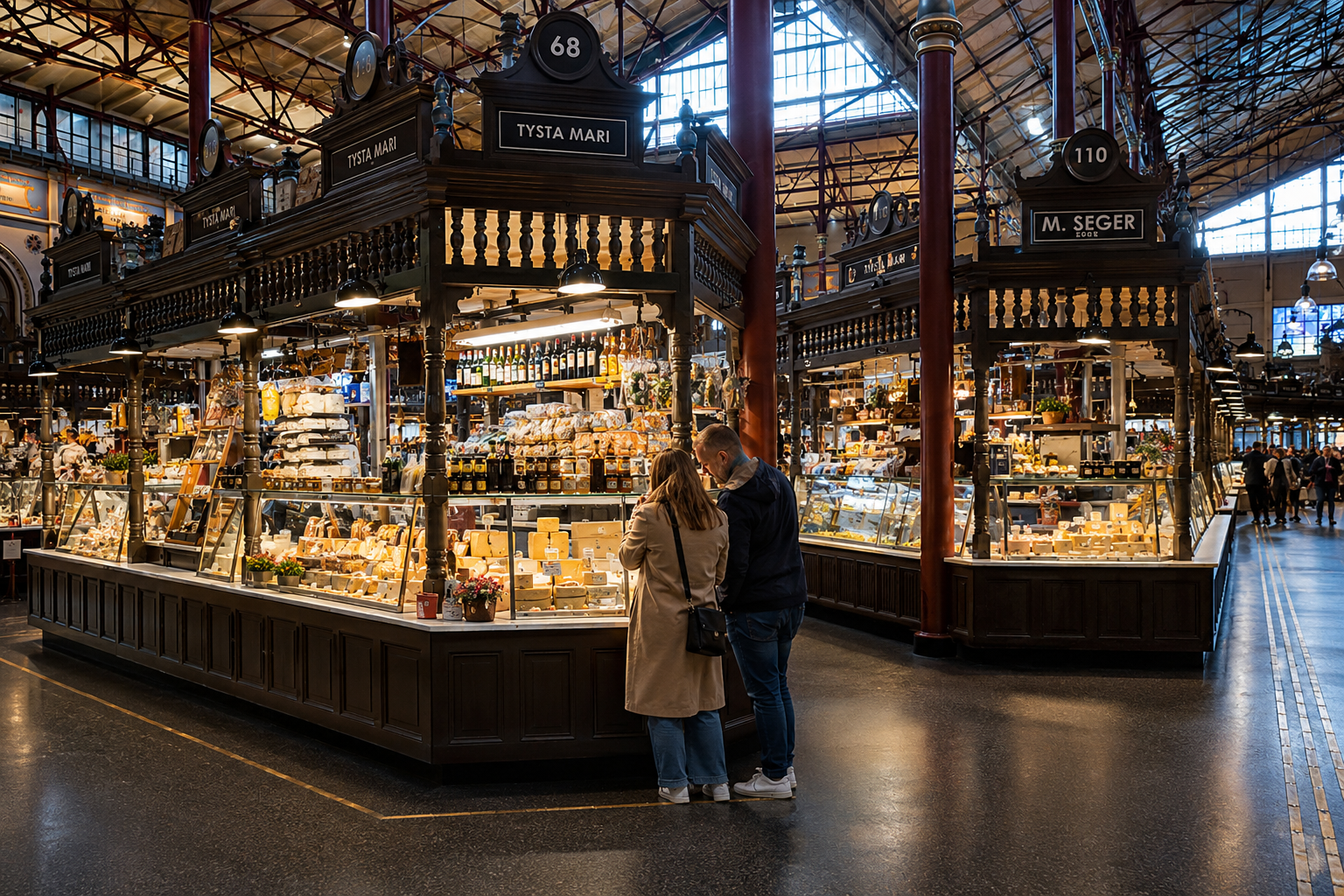
Gothenburg is, at its core, a walking city. The historic center is compact, almost every landmark sits within a few kilometers of the next, and the street life — canal towpaths, tram-lined boulevards, crooked cobblestone lanes in Haga — rewards slow movement in a way that no bus window can replicate. A walking tour here isn’t just a pleasant option; it’s genuinely the best way to understand how this city fits together.
This guide covers the classic route through Gothenburg’s old center: where it starts, what you’ll pass, how long it realistically takes, and what to look out for that most visitors miss. Whether you’re planning a solo morning stroll or looking for a structured audio-guided experience, the information below will help you get the most out of every kilometer on foot.
The short answer on timing: budget three hours for the core route. Do it on your first morning, while your legs are fresh and before the cafés fill up. The route described here is the same one the TouringBee Gothenburg City Walking Tour is built around, so if you’d rather have story and history narrated in your ear as you walk, you can follow it stop for stop.
Why Gothenburg Works So Well on Foot
Founded in 1621 by King Gustav II Adolf on a stretch of low, swampy ground at the mouth of the Göta Älv river, Gothenburg was designed from the start as a planned city. Dutch engineers drew up the street grid and dug the canal network — a deliberate echo of Amsterdam — so the bones of what you walk today are over 400 years old. The result is a downtown core that’s logical, human-scaled, and blessedly flat through most of its length.
The city grew into Scandinavia’s largest port and, over the 18th century, became wealthy from the Swedish East India Company’s trade in silk, spices, and porcelain. That money built the grand facades you’ll see along the canals. Later, industrialization added the tram network — still the largest in Scandinavia, running since 1879 — and the dockworker neighborhoods like Haga that now define the city’s character as much as its formal historic center does.
What this history leaves you with, as a walker today, is a city where the distance between “important things” is measured in minutes, not hours. You cross a bridge and you’re in a different era. You climb a hill and the entire layout suddenly makes sense. That’s rare, and it’s worth doing slowly.
The Classic Walking Route: Overview
The standard walking tour of Gothenburg’s old center runs roughly southwest to northeast, from Gustaf Adolfs Torg on the waterfront to the hilltop fortress of Skansen Kronan. It passes through the canal district, across the central avenues, through the Haga neighborhood, and up to the viewpoint. Most visitors find this direction — water to hilltop — more satisfying narratively and physically, since you end with a panoramic reward.
Walking Tour Route at a Glance
| Segment | Key Stops | Walking Time | Highlights |
|---|---|---|---|
| Waterfront & Canal District | Gustaf Adolfs Torg → Stortorget → Kronhuset | ~40 min | City Hall, old trade warehouses, the oldest building in Gothenburg |
| City Museum & Feskekörka | Stadsmuseet → Feskekörka | ~25 min | Viking ship, Gothic fish market on the canal |
| Avenyn & Götaplatsen | Kungsportsavenyn → Götaplatsen → Museum of Art | ~20 min | Main boulevard, Poseidon fountain, art museum façade |
| Haga | Haga Nygata → Haga Kyrka | ~30 min | Landshövdingehus houses, fika stops, cinnamon bun cafés |
| Skansen Kronan | Masthugget → Skansen Kronan hilltop | ~20 min | Best panoramic view in the city, free to access |
| Total | ~2.5–3 hrs walking | Breaks for coffee/food add 30–60 min |
This is a continuous, mostly-flat route with one significant climb at the end — the path up to Skansen Kronan involves some steps and a moderate incline. It’s well within reach for anyone with basic mobility; just wear shoes you’d be comfortable in for four hours.
Stop by Stop: What You’ll Actually See
Gustaf Adolfs Torg — The Natural Starting Point
This large square on the northern bank of the Stora Hamnkanalen is Gothenburg’s civic heart. The bronze equestrian statue of Gustav II Adolf — the king who founded the city — stands in the center, pointing (somewhat optimistically) toward the water. The City Hall faces the square from the east, a layered building that mixes Beaux-Arts grandeur with a later functionalist extension added in the 1930s that caused genuine controversy at the time.
Starting here gives you an immediate sense of the city’s scale. Everything in the historic center is visible or reachable within a short walk; you can already see the canal, the older warehouses on the opposite bank, and the start of the Kungsportsavenyn boulevard further south.
The Canal District
Gothenburg’s canal network runs east-west across the city center. The towpaths alongside the Stora Hamnkanalen are pleasant walking, and the view across to the brick warehouses on the south bank — many now converted into restaurants and offices — explains why first-time visitors are often surprised to find the city so handsome. It doesn’t photograph the way it looks in person. If you’d rather see the canals from the water at some point in your visit, the classic Paddan canal cruise glides under the low bridges from Kungsportsplatsen and pairs well with the walk.
Kronhuset, just off the canal near Kronhusgatan, is the oldest surviving building in Gothenburg, dating from 1654. The adjoining Kronhusbodarna courtyard is one of the city’s better-kept secrets: a ring of small workshops and craft shops in 18th-century outbuildings that feel untouched even when they’re busy. It’s an easy detour and worth the few extra minutes.
City Museum (Stadsmuseet)

The City Museum is housed in the former Swedish East India Company headquarters — a fact that alone justifies the building’s grandeur. Inside, the collection covers Gothenburg’s history from its founding through industrialization. The standout exhibit is a Viking-era knarr, a trading vessel found by a farmer during excavation work along the Göta Älv riverbank. It’s the only intact Viking ship in Sweden, and unlike the ones in Oslo’s Vikingskipshuset, it sits matter-of-factly in the museum, which somehow makes it more affecting.
You don’t need to spend long here if you’re on a walking pace. Thirty minutes covers the highlights. If you want to linger, budget an hour.
Feskekörka
A short walk south brings you to one of Gothenburg’s most photographed landmarks: the Feskekörka, or “Fish Church.” The name is ironic — the building is a secular fish market, designed in 1874 in the Gothic Revival style with pointed arches and lancet windows, purely because the architect thought the form suited an indoor market hall. It worked. The building is handsome, the fish inside is as fresh as you’d expect from Scandinavia’s largest port city, and the smell is considerably more manageable than the open-air fish markets it was built to replace.
It’s a good place to stop for an early lunch if you time your walk right. The restaurant on the upper level serves traditional Swedish seafood dishes.
Kungsportsavenyn and Götaplatsen
Kungsportsavenyn — locals just call it Avenyn — is Gothenburg’s answer to a grand boulevard: wide, lined with trees and outdoor café terraces, sloping gently uphill toward the cultural institutions at Götaplatsen. The atmosphere is more relaxed than comparable streets in Stockholm; people actually sit at the café tables rather than just walk past them.
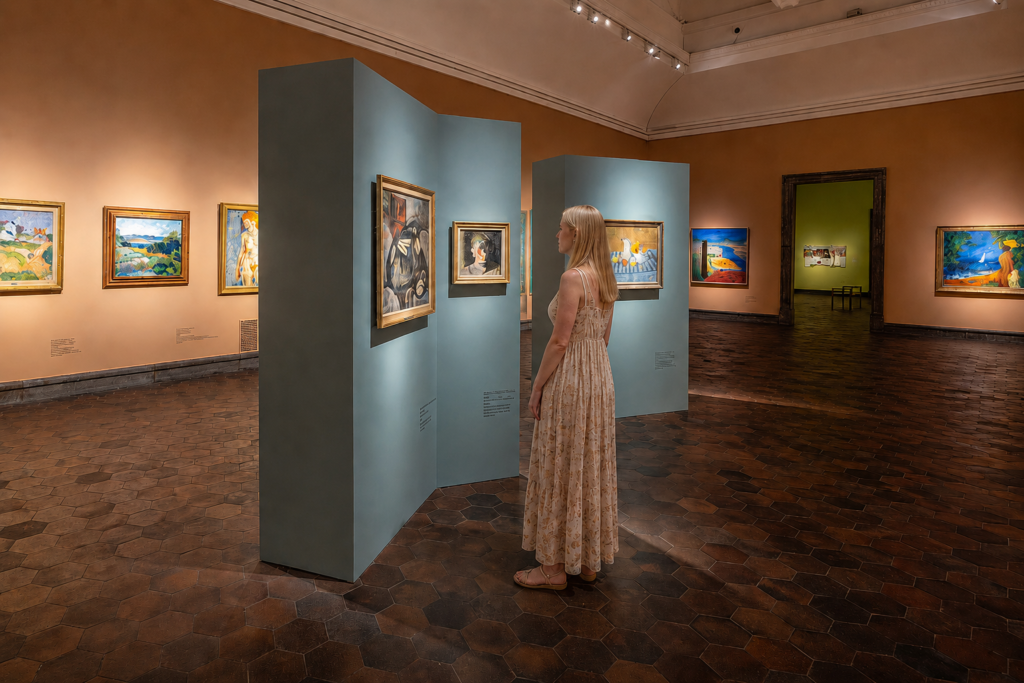
Götaplatsen anchors the top of the avenue with the Concert Hall on the left, the City Theatre on the right, and the Museum of Art straight ahead. Carl Milles’s Poseidon fountain stands in the center. The Museum of Art houses a significant collection of Nordic painting, including works by the Göteborgskoloristerna — a group of Gothenburg painters from the early 20th century whose vivid, color-forward style has been traced back to direct influence from Henri Matisse.
Haga

From Götaplatsen, the route turns west through the streets behind the museum and drops into Haga — the city’s oldest surviving residential neighborhood and, depending on who you ask, its most charming. Haga was built primarily in the 19th century as housing for dock workers and craftsmen, and its distinctive architecture reflects the regulations of the time: stone ground floor (for fire safety), wood upper floors (for cost). These hybrid buildings, called landshövdingehus, are found almost exclusively in Gothenburg.
Haga Nygata is the main pedestrian street, lined with independent cafés, vintage clothing shops, and bakeries that do a brisk trade in Gothenburg’s legendary cinnamon and cardamom buns. This is fika territory — the Swedish daily ritual of coffee and a pastry — and it’s worth building a stop here into your route. The buns are legitimately excellent, and the covered arcade at Saluhallen nearby is worth a look for its cheese and charcuterie stalls.

Skansen Kronan
The walk ends at Skansen Kronan, a 17th-century star-shaped fortress on a hill above Haga. The climb takes about fifteen minutes from the base of the hill, and the view from the top is the best free panoramic viewpoint in the city. On a clear day you can see across the entire historic center, the harbor, and the archipelago beyond. There’s no admission charge to walk the grounds.
It’s a natural place to sit for a few minutes, orient yourself to everything you’ve just walked through, and decide whether you have energy for the Maritime Museum and Aquarium (Maritiman) on the waterfront or whether the afternoon is better spent returning to Haga for another coffee.
Self-Guided vs. Group Tour: Which Makes More Sense?
Group walking tours do exist in Gothenburg — typically free tours running from Gustaf Adolfs Torg in summer months, plus a handful of paid themed options. They work well for people who prefer company and don’t mind moving at someone else’s pace. But they come with real trade-offs.
Self-Guided vs. Group Walking Tour — A Practical Comparison
| Factor | Self-Guided | Group Tour |
|---|---|---|
| Schedule flexibility | Start anytime, pause when you want | Fixed departure times |
| Pacing | Your own — fast, slow, or both | Group pace, often rushed at popular stops |
| Depth at each stop | As much or as little as you want | Guide moves on when time is up |
| Fika/lunch breaks | Whenever feels right | Rarely possible mid-tour |
| Offline use (no signal) | Yes, with a good app | N/A |
| Cost | ~€10–15 for a quality audio app | €0 (free tour, tip expected) to €25+ |
| Best for | Independent travelers, couples, families | Solo travelers wanting social interaction |
The practical advantage of going self-guided is that Gothenburg doesn’t really punish you for it. The city is easy to navigate, the streets are well-signed, and the route between landmarks is intuitive enough that you’re unlikely to get genuinely lost. The main risk is missing context — knowing what you’re looking at but not why it matters.
That’s where a good audio guide earns its keep.
How TouringBee’s Gothenburg Audio Guide Structures the Walk
TouringBee’s Gothenburg City Walking Tour was built specifically around this route — Gustaf Adolfs Torg to Skansen Kronan — and it’s designed to work as the practical backbone of a half-day visit rather than as background noise you half-listen to while scrolling your phone.
The guide has 29 stops along the route, each triggered automatically as you approach via offline GPS — no signal required, which matters more than you’d think in the covered arcades and canal-side streets where connectivity drops. Each stop gives you the cultural and historical context for what you’re looking at: why the canal district looks the way it does, what the East India Company actually traded and where the money went, why Haga’s houses were built the way they were. The narration is story-driven but fact-grounded — the kind of thing you’d get from a knowledgeable friend who lived here, not a scripted museum recording.
In practice, most people who use TouringBee’s Gothenburg guide spend about three hours on the walk itself, pause once for a museum visit (the City Museum works best mid-route), and stop twice for food — once at Feskekörka or Saluhallen for lunch, and again in Haga for fika. That’s a complete morning and early afternoon. Many leave Skansen Kronan already feeling like they understand the city in a way that would have taken two or three days of wandering to achieve on their own.
The guide is available through the TouringBee app, priced around the cost of a decent café lunch in Gothenburg. You download it before you leave your accommodation and it works entirely offline from that point — no roaming charges, no hunting for WiFi.
Practical Tips for Walking Gothenburg
- Start before 9:30am if possible. Gustaf Adolfs Torg and the canal district are noticeably less crowded in the early morning, and the light on the waterfront is better for orientation.
- Wear real walking shoes. Haga’s cobblestones and the Skansen Kronan climb are manageable in trainers; they’re unpleasant in anything with a heel or thin sole.
- Carry a tram card anyway. Gothenburg’s tram network is excellent and cheap. Even if you plan to walk the whole route, having a card means you can hop on if your legs give out or the weather turns.
- Download maps and guides offline before you leave your hotel. Signal in some parts of the city center and the Haga lanes can be unreliable. The TouringBee Gothenburg City Walking Tour works fully offline — download it over WiFi the night before.
- The route works best east to west in summer, west to east in winter. In low winter light, consider reversing the direction so you have light in front of you through the canal section rather than in your eyes.
- Budget for an actual fika stop. The buns in Haga are a genuine highlight and shouldn’t be rushed. Build 30 minutes into your plan for it.
- Skansen Kronan closes the grounds at dusk — check seasonal hours if walking late in the day, especially in winter when sunset can be as early as 3pm.
Common Mistakes on a Gothenburg Walking Tour
What Goes Wrong — and How to Avoid It
| Mistake | Why It Happens | What to Do Instead |
|---|---|---|
| Rushing Haga to get to Skansen Kronan faster | People treat the viewpoint as the destination and Haga as just the path to it | Treat Haga as a destination in its own right — it’s one of the best parts of the walk |
| Skipping the City Museum because “museums take forever” | Concern about losing time mid-walk | 30 minutes is enough to see the Viking ship and East India Company exhibits — it’s worth it |
| Arriving at Feskekörka after 2pm | Not knowing it closes earlier than expected | Aim to reach Feskekörka by noon for the best selection and a possible lunch |
| Over-relying on Google Maps for context | It gives directions but no explanations | Pair navigation with an audio guide so you understand what you’re looking at |
| Not allowing time for the Kronhusbodarna detour | It’s slightly off the main path and easy to skip | Add 15 minutes — it’s one of the most atmospheric spots in the city center |
| Doing the walk on a Monday | Several museums including Stadsmuseet are closed Mondays | Check opening days before planning; Tuesday–Sunday is safer |
What Else to See Along the Route
Maritiman (Optional Extension)

The Maritiman maritime museum, moored on the Göta Älv waterfront just north of the city center, is worth knowing about even if you don’t visit it on the walking day. It’s the world’s largest preserved ship museum, and its standout vessels include the warship Småland — the largest military ship ever built in Scandinavia — and the submarine Nordkaparen, a Cold War-era vessel you can walk through. If you have an afternoon after the main walk, it’s an excellent add-on, reachable in ten minutes by tram.
Götaplatsen Museum of Art (Optional Extension)
If Nordic painting interests you, the Museum of Art at Götaplatsen deserves more than a glance at the façade. The Göteborgskoloristerna collection — paintings by Gothenburg artists who studied in France in the early 1900s and brought back Matisse’s influence on color — is genuinely significant and not as well-known internationally as it should be. Admission is modest and the collection is compact enough to see in 45 minutes.
Slottsskogen (For Those Who Want More Nature)
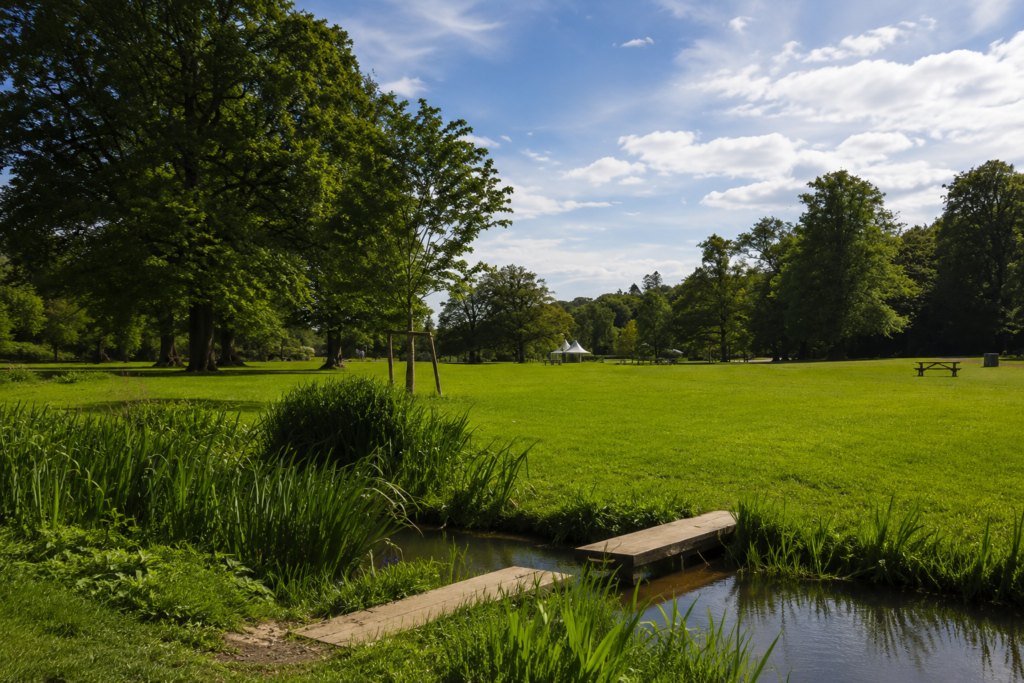
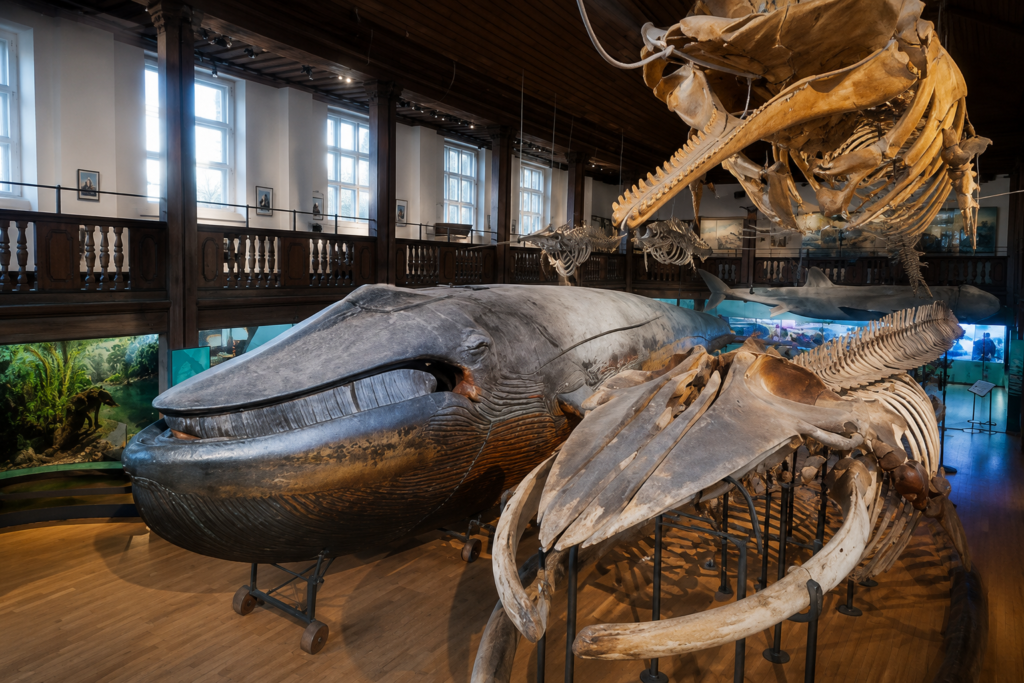
West of Haga, Slottsskogen is Gothenburg’s main park — large, free to enter, and home to a small zoo with moose and reindeer. The Natural History Museum at its edge houses a blue whale skeleton. If the walk through the historic center has left you craving open space, Slottsskogen is a natural next stop and adds another pleasant 45 minutes of easy walking.
Frequently Asked Questions
How long is a walking tour of Gothenburg?
The core route — Gustaf Adolfs Torg to Skansen Kronan via the canals, City Museum, Feskekörka, Avenyn, and Haga — takes about 2.5 to 3 hours of walking time. With a museum stop and a fika break, budget 4 to 4.5 hours for the full experience. This makes it ideal as a morning activity, finishing in time for a late lunch in Haga before the afternoon.
Is the walking tour of Gothenburg suitable for families with young children?
Yes, with a few notes. The route is mostly flat — stroller-friendly through the canal district, Haga, and Avenyn. The exception is the climb to Skansen Kronan, which involves steps; a carrier is more practical than a stroller for this section. The City Museum has child-friendly exhibits. Slottsskogen’s free zoo is an excellent add-on if the group includes younger children.
Do I need to book a walking tour in advance, or can I just show up?
For self-guided walks — including audio-guided options like the TouringBee Gothenburg guide — no advance booking is needed. Download the app and guide before you leave your accommodation, and you’re ready to start whenever you like. For commercial group tours, check availability in summer (June–August), when demand is higher.
Is a walking tour of Gothenburg free?
The walk itself is free — all streets, the canal towpaths, Skansen Kronan’s grounds, and Haga are publicly accessible without charge. Optional extras that cost money: City Museum admission (~120 SEK), Museum of Art (~100 SEK), Maritiman (~180 SEK), and an audio guide app if you use one (TouringBee’s Gothenburg guide is around €10–15). A complete day on this route, including one museum and food, typically runs €30–50 per person.
What’s the best time of year for a walking tour of Gothenburg?
May–September offers the best combination of weather, long daylight hours, and active street life. That said, winter has its own appeal: fewer tourists, the possibility of the Kronhusjul Christmas market (late November–December), and a quietness in Haga’s lanes that summer can’t offer. Winter walks require warmer layers and the awareness that Skansen Kronan may close by mid-afternoon.
Can I do a Gothenburg walking tour without a guide or app?
Absolutely. The route is straightforward enough to follow with a regular map. The trade-off is context: without some historical background, places like Kronhuset or the City Museum facade are just old buildings. A good audio guide fills that gap efficiently while leaving you fully in control of your own pace — which is why it’s worth the cost of a coffee to add one.
Is Gothenburg walkable compared to other Scandinavian cities?
Very. Gothenburg’s historic center is more compact than Stockholm’s and comparable to Copenhagen’s inner city. The key difference is that almost everything worth seeing on a first visit is within a single continuous walking route — you don’t need to jump between neighborhoods via metro the way you often do in Stockholm. Gothenburg rewards walkers more consistently than most Scandinavian cities its size.
How does the walking tour connect to other Gothenburg activities?
The walking route integrates naturally with other activities. The City Museum is mid-route, so a 30-minute visit doesn’t break your flow. Maritiman is close to the starting point and works as a pre- or post-walk extension. Liseberg and the Volvo Museum are further west and work better as afternoon or Day 2 activities. The archipelago ferry departs from Stenpiren, about 15 minutes by tram — a solid Day 2 option if you’ve covered the walking tour on Day 1.
Ready to Walk? Start With the Audio Guide
The route described in this article is exactly what the TouringBee Gothenburg City Walking Tour was built around. Twenty-nine stops, triggered automatically by offline GPS as you move through the city — so you can focus on what you’re looking at rather than staring at your phone figuring out where to go next.
Most users find that the audio guide turns what would have been a pleasant but somewhat anonymous walk into a structured experience of the city — one where the facts, the history, and the cultural context click into place in real time rather than hours later over dinner when you’re trying to remember what that building was. At around the price of a single meal, it’s the lowest-cost upgrade you can make to a Gothenburg visit.
Download TouringBee, grab your walking shoes, and start at Gustaf Adolfs Torg. The rest follows naturally.
Guided Tours and Add-Ons
If you’d like to combine the walk with a guided experience, these are worth a look:
- Paddan Canal Boat Sightseeing Cruise — 50 minutes through the 17th-century canals and out toward the harbor, the classic water-level view of the city.
- 24-Hour Hop-On Hop-Off Bus Ticket — useful for reaching Liseberg, the Volvo Museum, or the harbor after the central walk.
- 24-Hour Hop-On Hop-Off Bus & Boat Combo — bus and canal boat on a single 24-hour ticket if you want both.
Continue Exploring
- Gothenburg: What to See — a broader overview of the city’s top sights, including spots beyond the walking route
- One Day in Gothenburg — the perfect itinerary if the walk is your main event for the day
- Self-Guided City Walking Tours That Work — how to make any self-guided walking tour more effective
- How to Find a Self-Guided Tour Near Me — practical guide to finding quality audio and walking tours for any destination
Disclosure: Some links in this article are affiliate links (GetYourGuide). If you book through them, the price stays the same for you, but it helps support TouringBee.