
No products in the cart.

Lagom: The Swedish Word You Need to Understand Sweden
Lagom — "not too much, not too little" — is the key to reading Swedish culture. Here's what it means, where it comes from, and how you'll see it all over Gothenburg.
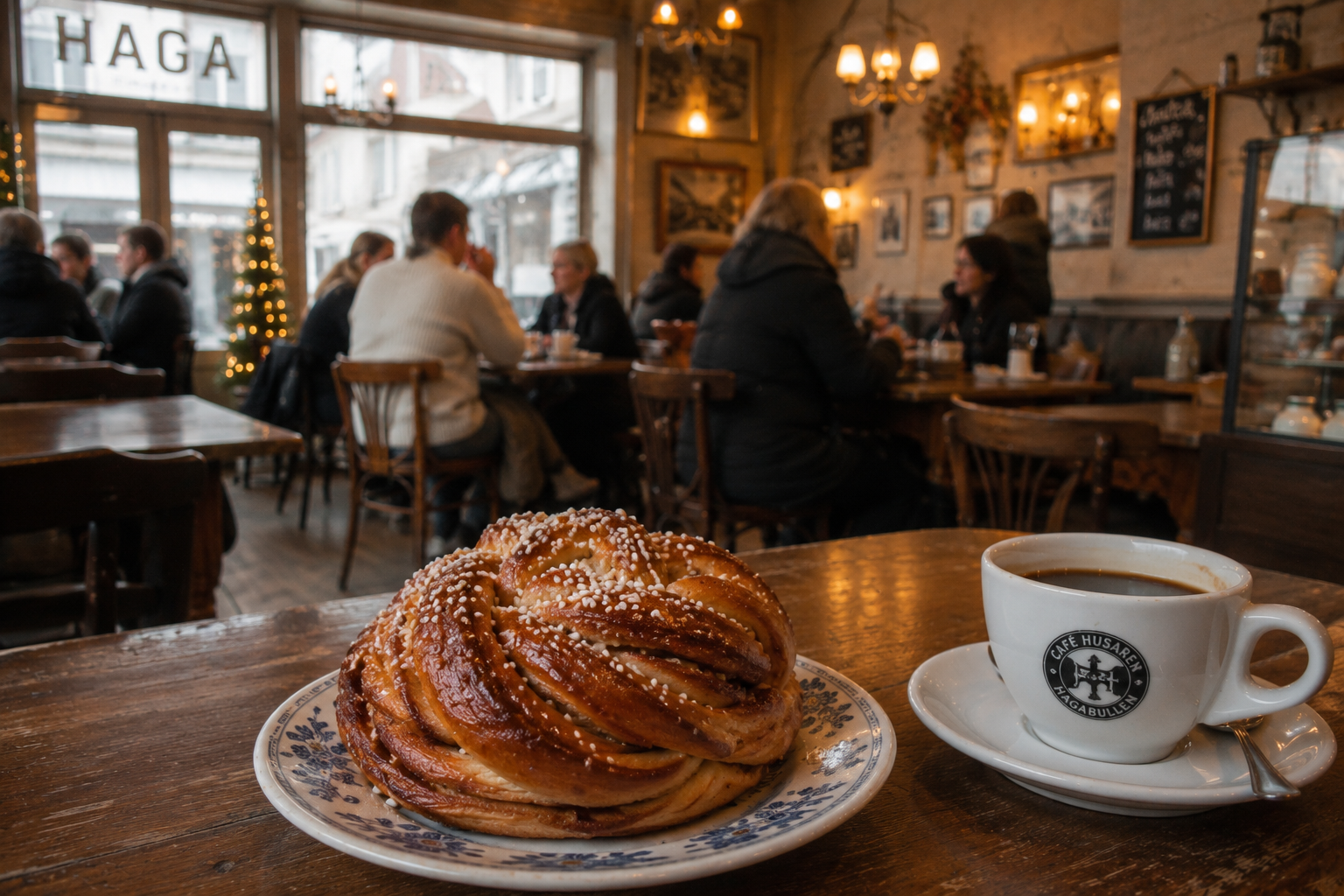
There is a Swedish word that appears in discussions of Nordic happiness, work-life balance, interior design, food culture, and social norms — and that word is lagom. It translates, roughly and inadequately, as “just the right amount” or “not too much, not too little.” But the translation doesn’t capture why the concept matters, why Swedes reach for it constantly, or what it actually looks like in daily life.
This guide explains lagom properly: where it comes from, what it means in practice, how it shapes everyday life in Gothenburg and across Sweden, and why it’s worth understanding before you visit — not as a tourist novelty but as a key to reading Swedish culture correctly.
If Gothenburg is on your itinerary, lagom will quietly change how you read the city, from the pace of its cafés to the calm of its trams. It pairs naturally with TouringBee’s self-guided Gothenburg audio guide, which unpacks that cultural context stop by stop as you walk.

What Does Lagom Mean?
The word lagom is an adjective, adverb, and standalone concept that Swedish speakers use to mean “appropriately,” “in moderation,” “just right,” or “enough.” It’s one of those words that doesn’t translate cleanly into English because English doesn’t have a direct equivalent — and that absence is itself revealing. Lagom describes a relationship to quantity and quality that prizes the middle path: not so little that something falls short, not so much that it becomes excessive.
You’ll hear it applied to everything: the coffee is lagom strong. The summer was lagom warm. The meeting was lagom long. The concept isn’t about mediocrity — a lagom result is a successful result, calibrated correctly for its purpose. It’s about precision and appropriateness rather than settling for less.

The Etymology: From the Viking Mead Hall
The origin of lagom is one of the more evocative pieces of Swedish etymology. The word is thought to derive from the phrase “laget om” — meaning “around the group” or “around the team.” The most commonly cited origin story places this phrase in the Viking mead hall, where a horn of mead would be passed around a seated circle of warriors or guests.
Each person drinking from the horn had to take the right amount — enough to get their share of a finite resource, not so much that the people after them would receive less. Taking too much was greedy and antisocial; taking too little was suspicious. The lagom amount was the amount that kept the whole group satisfied and in balance.
Whether this etymology is historically accurate or partly legendary doesn’t much matter — the story itself captures the principle perfectly. Lagom isn’t about individual restraint for personal virtue; it’s about calibrating your behavior with the group in mind. It’s a social concept, not a private one.
Lagom in Daily Swedish Life
At Work
Swedish workplace culture is one of the most visible expressions of lagom. Swedish offices are notable for flat hierarchies, consensus-driven decision-making, and an expectation that no one person will dominate a meeting or claim disproportionate credit for a group outcome. Decisions are taken slowly, by consensus, then implemented efficiently — because the process of reaching agreement has already smoothed over resistance. The goal is the right outcome for the group, arrived at in the right way.
In the Home
Swedish homes tend not to be overcrowded with objects; what’s there is chosen with care and expected to serve its purpose well. Conspicuous consumption is gently frowned upon — not with aggressive moralism, but with the quiet social pressure of a community that doesn’t admire excess.
The seven-kinds-of-cookies rule (sjusorterskaka) in Swedish fika culture is a perfect example of lagom applied to hospitality. When you receive guests for coffee, the host should offer exactly seven types of cookie — no fewer (inhospitable), no more (showing off). The rule is genuinely specific, and that specificity is the point: lagom implies a precision that “moderation” in English doesn’t have.

In Conversation and Social Life
Sweden has a reputation for social reserve — for people who don’t talk to strangers on public transport, who seem self-contained in ways visitors sometimes mistake for unfriendliness. Lagom explains some of this. Projecting too much of yourself into a social space — too much energy, volume, emotion — is, in the lagom framework, taking more than your share of the social atmosphere. Swedish social norms distribute attention and expression relatively evenly, producing the characteristic Swedish calm.
In established relationships, Swedes are warm, generous, and loyal. But the warmth operates in a different register: calibrated, considered, appropriate.
Lagom vs. Related Nordic Concepts
| Concept | Country/Culture | Core Meaning | How It Relates to Lagom |
|---|---|---|---|
| Lagom | Sweden | “Just the right amount” — the ideal middle that serves the group | The concept itself |
| Hygge | Denmark | Coziness, conviviality, the pleasure of togetherness | Hygge is about creating warmth; lagom is about calibrating behavior. Overlapping but distinct |
| Friluftsliv | Norway/Scandinavia | The philosophy of time spent in nature; “outdoor life” | Friluftsliv is about where you go; lagom is about how much of everything is right |
| Jantelagen | Scandinavia | “You should not think you are better than us” — the law of social modesty | Jantelagen is the negative version of lagom’s social balance: don’t stand out. Related but stricter |
| Sisu | Finland | Determination, grit, perseverance through hardship | Different axis entirely — about endurance rather than balance |
Jantelagen — The Darker Cousin
Understanding lagom also means understanding Jantelagen (the Law of Jante), a concept articulated most famously by the Danish-Norwegian author Aksel Sandemose in 1933 as a satirical description of small-town Nordic conformism. It amounts to: don’t think you’re better than anyone else, don’t boast, don’t set yourself apart.
Where lagom is a balanced ideal (the right amount), Jantelagen is a social control (don’t exceed). The two concepts share a root in the importance of collective over individual, but Jantelagen is about suppression where lagom is about calibration. Sweden is slowly moving away from the more punishing aspects of Jantelagen — particularly in entrepreneurial and creative industries — but the residue remains visible in how Swedish people talk about their own successes.
Lagom and the Swedish Relationship With Nature
Sweden’s allemansrätten — the right of public access to nature, enshrined in law — is a lagom concept in practice. The right gives every person access to forests, fields, waterways, and coastlines, subject to rules about not disturbing, not damaging, and not taking more than is needed. You can camp anywhere for one night. You can pick berries and mushrooms. But you do so with awareness of others’ use and without leaving a trace.
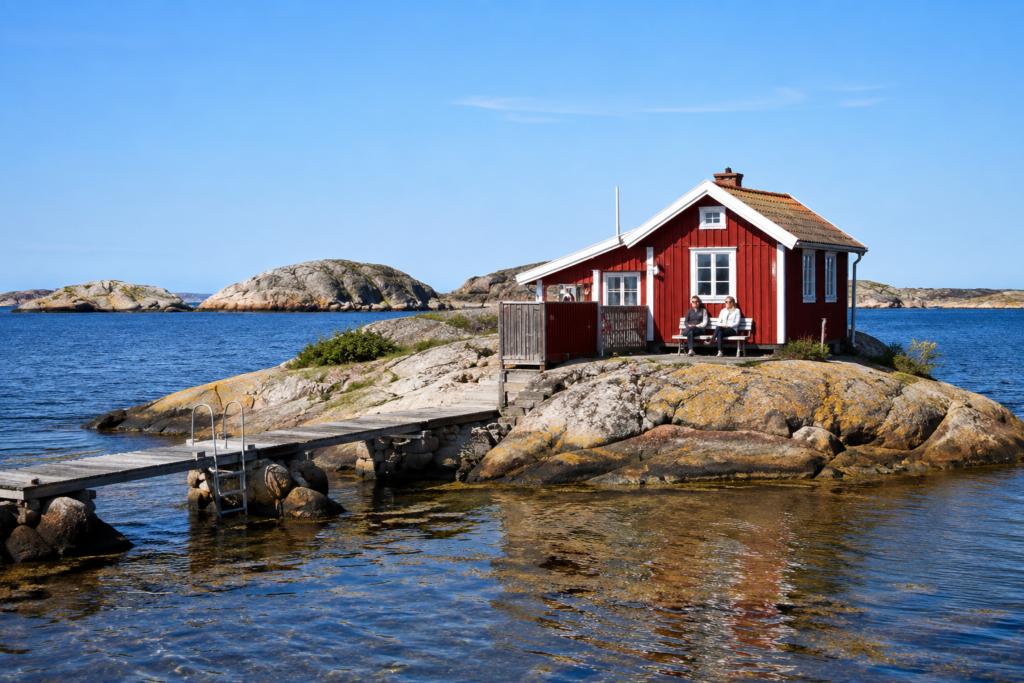
In Gothenburg, this translates into a relationship with the archipelago, the parks, and the waterways. Slottsskogen park is used seriously by locals for genuine recreation. The islands of the Gothenburg archipelago are accessible to anyone. The expectation is that everyone can use these spaces and that everyone will treat them with care — the lagom approach to shared natural resources.

Where You’ll See Lagom in Gothenburg
In the Fika Ritual
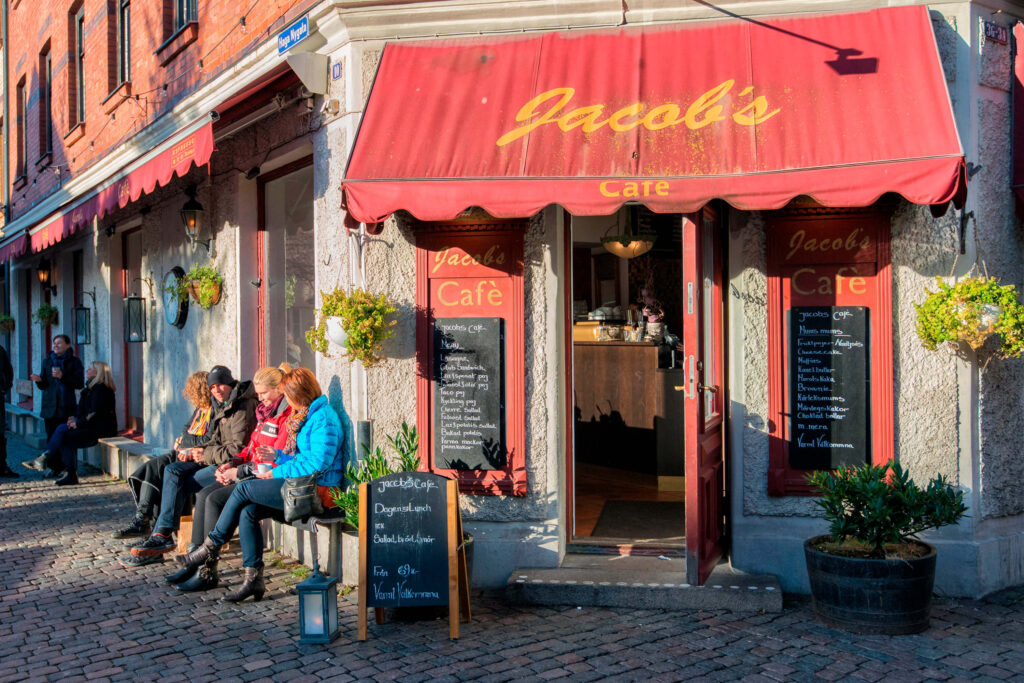
Fika — the daily Swedish coffee break with a bun — is lagom in its most pleasant form. The break is not too long, not too short. The bun is not too elaborate, not too modest. Even the påtår (free coffee refill) has a lagom logic: the original pour isn’t quite enough for a full break; the refill brings it to the right amount. If you’d like to learn the ritual properly, you can even join a guided Swedish fika walk that hops between the city’s best cafés and bakeries.
In the Architecture of Haga
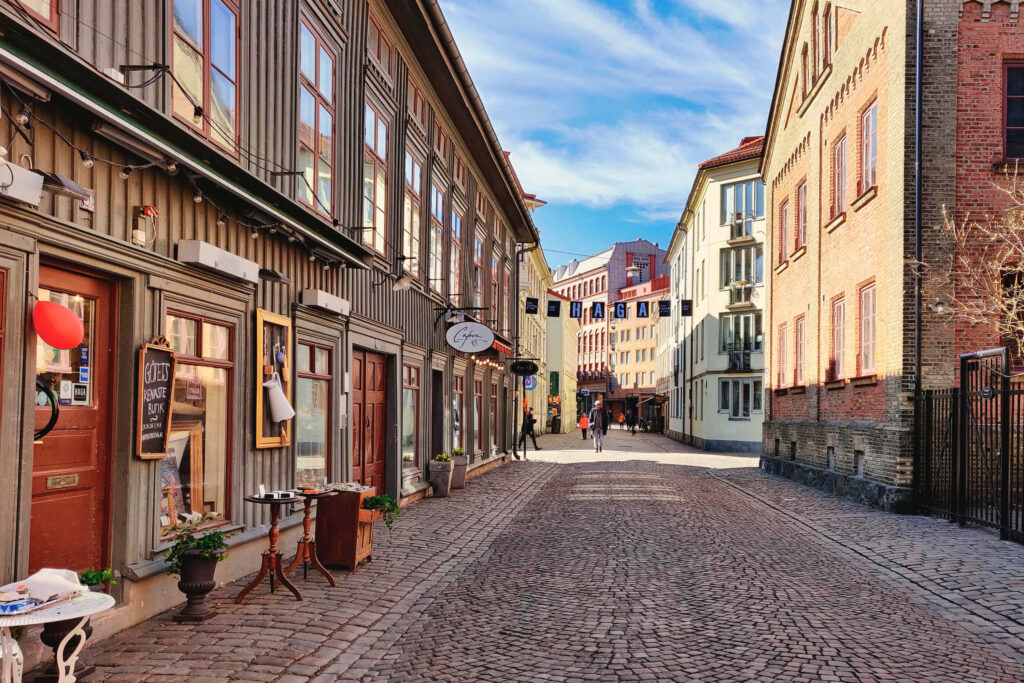
The landshövdingehus — the hybrid stone-and-wood buildings of Haga — are a literal lagom building type. Stone ground floor for fire safety and durability; wood upper floors for cost and ease. Neither material alone would be ideal; the combination is calibrated to be appropriate, functional, and affordable. Built for working-class families, they’ve survived into the 21st century because the approach was well-calibrated to last.
In the City’s General Pace
Gothenburg moves at a lagom pace. It’s a serious city with real economic weight — Scandinavia’s largest port, significant industry, a strong university — but it doesn’t perform urgency or importance the way Stockholm sometimes does. The streets are calm, the cafés are unhurried, and the city seems comfortable with being precisely what it is rather than aspiring to be something grander. That comfort is a lagom quality.

Lagom, Tourism, and What It Means for Visitors
Understanding lagom changes how you travel in Sweden. It explains why Swedes queue seriously, why restaurant service is unhurried rather than slow, why personal space is maintained on public transport. None of these things are unfriendly; they are calibrated. The right amount of engagement for the context, not more.
On a practical level, the TouringBee Gothenburg City Walking Tour encounters lagom culture at almost every stop on its route through the city center. The canal district built with Dutch engineering precision, the husmanskost lunch culture, the Haga fika ritual, the quietness of Skansen Kronan’s hilltop — understanding what you’re looking at is more rewarding with the cultural context. TouringBee’s Gothenburg audio guide provides that context at each stop along the route.
A Practical Lagom Checklist for Visitors
| Situation | The Lagom Approach | What to Avoid |
|---|---|---|
| Ordering food | Order what you’ll actually eat; share dishes if portions are large | Ordering extravagantly to impress, or leaving significant food |
| At a café (fika) | Sit, take your time, have one bun and a coffee with a påtår refill | Rushing in and out, or ordering excessive quantities |
| On public transport | Keep noise low; take up your own seat only | Loud phone calls, taking multiple seats, playing music without headphones |
| At a viewpoint (Skansen Kronan) | Find a spot, enjoy the view, give others reasonable space | Claiming space with spread-out equipment or dominating shared seating |
| In nature (allemansrätten) | Pick berries, camp, explore — but leave no trace and disturb nothing | Taking more than you need; leaving litter; damaging vegetation |
| In conversation | Listen as much as you speak; match the energy level of your companion | Dominating conversation or projecting high emotional energy into a calm setting |
Common Misunderstandings About Lagom
| Misconception | The Reality |
|---|---|
| “Lagom means being average or mediocre” | Lagom means being appropriately calibrated for the purpose. A lagom result can be excellent; excellence is just not performed for its own sake |
| “Swedes are cold because of lagom” | Lagom doesn’t mean emotional restraint universally — it means calibrated expression for the social context. Swedes in established relationships are warm and loyal |
| “Lagom is uniquely Swedish” | Other cultures have related concepts. What’s specific to Sweden is the word, the social precision it implies, and how thoroughly it’s embedded in daily life |
| “Lagom means being boring and conformist” | Lagom is about social calibration, not suppression of individuality. Sweden has strong creative industries and individual expression — just expressed with awareness of the group |
Practical Tips for Understanding Lagom on Your Visit
- Watch how Swedes queue. Serious and egalitarian — everyone in their place, no cutting. That’s lagom applied to physical space and time.
- Notice the volume levels in public spaces. Restaurants, trams, and parks in Gothenburg are quieter than you might expect. This is not subdued unhappiness — it’s the lagom register of public life.
- Let the pace of the city be your guide. If you find yourself rushing through Gothenburg’s historic center or hurrying through fika, the city is suggesting you recalibrate. Slow down.
- Tip appropriately, not excessively. Sweden doesn’t have a strong tipping culture because wages are calibrated through labor agreements. Modest rounding-up is fine; very large tips can actually be awkward in context.
- Pay attention to how businesses present themselves. Swedish restaurants and businesses tend not to oversell. A menu that says “good fish” means good fish.
Guided Tours in Gothenburg
If you’d like a guided experience alongside a self-guided walk, these are worth a look:
- Guided Walking & Swedish Fika Tour — learn the fika ritual first-hand across the city’s best cafés.
- Paddan Canal Sightseeing Cruise — the classic open-top boat through the 17th-century canals and out toward the harbour.
- Hop-On Hop-Off Bus Tour — an easy, low-effort way to link the main sights at your own pace.
Frequently Asked Questions
What does lagom mean in English?
The closest English equivalents are “just right,” “just enough,” or “in moderation,” but none fully captures the concept. Lagom implies calibration to the group rather than to individual preference, and carries connotations of social appropriateness that “moderation” in English doesn’t have. It’s often left untranslated because no single English word captures it.
Is lagom the same as hygge?
No. Hygge is a Danish concept primarily about coziness, comfort, and the pleasure of togetherness. Lagom is a Swedish concept about the right amount of everything — calibration, balance, appropriateness. They share a Nordic emphasis on social wellbeing but describe different things. You can have lagom amounts of hygge.
Where does the word lagom come from?
The most commonly cited etymology traces it to “laget om,” meaning “around the group.” In the Viking mead-hall origin story, it describes the amount each person was supposed to take when a drinking horn was passed around — enough for their share, not so much that others would be shortchanged. Whether fully historically accurate or not, the story captures the social logic of the word perfectly.
Is lagom a positive or negative concept?
Primarily positive — it describes the ideal calibration of things. A lagom amount of something is the right amount. A lagom outcome is a successful outcome. The concept can have a slight conservative edge in its social applications (don’t stand out), but in its core meaning, lagom is aspirational: it describes something done correctly, not just adequately.
How does lagom relate to Swedish happiness?
Sweden consistently scores near the top of global happiness surveys. A culture that values appropriate rather than excessive consumption, that distributes social space equally, that builds rest into the working day (fika), and that prizes collective wellbeing over individual status tends to produce more contented populations. Fika, lagom, allemansrätten, and the Swedish welfare model are all expressions of the same underlying value set.
Can a foreigner practice lagom in Sweden?
Yes, and it’s worth trying. The practical behaviors it suggests — not being excessively loud in public, not taking more than your share, sitting down properly for a meal or coffee rather than eating on the run, leaving spaces as you found them — are all things a visitor can do. Swedes appreciate guests who have made an effort to understand the local register.
Continue Exploring
- Gothenburg: What to See — the full city overview, where the lagom pace makes most sense to experience on foot
- Self-Guided City Walking Tours That Work — a self-guided walk through Gothenburg is itself a lagom approach to tourism: your own pace, your own curiosity, no pressure
- How to Find a Self-Guided Tour Near Me — finding the right guide for any city, including Gothenburg
- Lagom culture is visible across the Scandinavian capitals — TouringBee’s audio walking tours for Stockholm, Copenhagen, and Oslo each touch on the cultural context that makes each city feel the way it does.
Disclosure: Some links above are affiliate links (GetYourGuide). If you book through them, the price is the same for you, but it helps support TouringBee.