
No products in the cart.

Swedish Fika Explained: What It Is, Why It Matters, and How to Do It Right
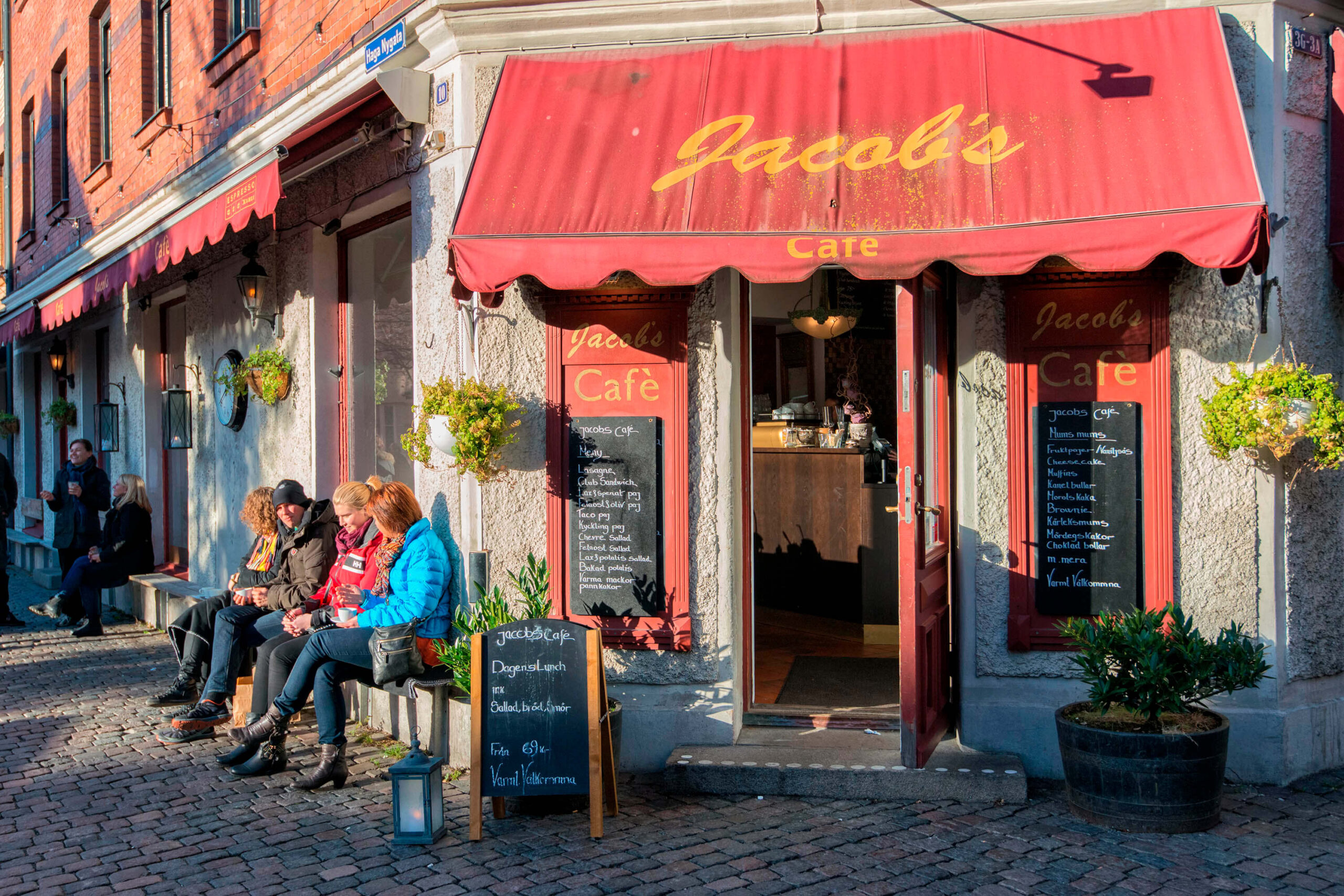
If you spend any time in Sweden, you will encounter fika. It will happen in offices, in homes, at cafés, in parks, at construction sites, in the middle of business meetings. It is one of the most consistent and genuinely embedded cultural practices in Scandinavian life, and visitors who understand it experience Sweden differently from those who treat it as a quirky coffee break custom and move on.
This guide explains what fika actually is — which is harder to pin down than it sounds — what you eat and drink during it, where to experience it at its best in Gothenburg, and what it says about Swedish values more broadly.
What Is Fika?
Fika is a Swedish word that functions as both a noun and a verb. You can “have a fika” (the event, the break) or you can “fika” with someone (the verb: to share that break). It refers to a pause in the day — typically mid-morning and mid-afternoon — that involves coffee (almost always), something sweet or baked (almost always), and company (very often, though solo fika is perfectly acceptable).
The word is thought to derive from an old Swedish slang inversion of “kaffi” (coffee): ffi-ka becomes fi-ka. This etymology underscores that fika is fundamentally about coffee — but it has expanded over time to encompass a whole ritual of stopping, sitting, and being present that Swedish working culture takes seriously.
What fika is not is a grab-and-go experience. Buying a coffee from a chain counter and drinking it while walking is not fika. Eating a pastry at your desk between emails is not fika. The social and temporal dimensions — the sitting down, the pausing, ideally the company — are as important as the food and drink themselves.
The History and Cultural Roots of Fika
Coffee arrived in Sweden in the 17th century and was initially regarded with suspicion — it was banned multiple times by different Swedish kings, partly for health reasons and partly because coffeehouses were considered potentially seditious gathering places. The bans never stuck, and by the 19th century, coffee drinking was deeply embedded in Swedish life at every social level.
The specific ritual of a structured daily coffee break became formalized in Swedish workplaces in the 20th century, partly through labor agreements that established rest periods during the workday. The morning fika and the afternoon fika became standard fixtures in offices and workshops, spreading from workplaces into homes and schools.
Gothenburg has its own particular relationship with fika, rooted in its identity as a working-class port city. In neighborhoods like Haga, the mid-morning coffee break wasn’t a corporate HR initiative — it was a genuine reprieve in physically demanding dock work, a moment of social solidarity. The cafés in Haga today carry traces of that history even as the neighborhood has gentrified. The buns are still serious, the coffee is still strong, and the expectation that you sit down and stay for a while is still intact.
What You Eat and Drink at Fika
The Coffee
Swedish coffee culture is filter-based and strong. The most traditional form is kokkaffe — coffee brewed by boiling ground beans directly in water — though most cafés now use more modern brewing methods. What remains consistent is the strength: Swedish coffee tends to be darker and more robust than Italian-influenced espresso-bar coffee.
The påtår is one of the most visitor-friendly aspects of Swedish café culture: a free refill of coffee, offered automatically at many traditional Swedish cafés without you needing to ask. At a traditional fika café in Haga, one purchase of coffee may realistically include two or three refills. This is the expected format, not a bonus.
The Buns
The kanelbulle (cinnamon bun) is the most internationally recognized Swedish pastry, but in Gothenburg — and in fika culture more broadly — the cardamom bun (kardemummabulle) holds equal or arguably higher status. Cardamom is a spice with deep roots in Scandinavian baking, brought to the region through Viking-era trading routes connecting the Norse world to the spice markets of the Middle East and Central Asia.
A proper Gothenburg fika bun — particularly in Haga — tends toward the generous side. The buns at the most famous cafés on Haga Nygata are significantly larger than the norm: soft, fragrant, glazed, and genuinely filling. First-time visitors sometimes order two and discover they needed only one.
The Full Range of Fika Pastries
| Item | Swedish Name | What It Is | When You’ll Find It |
|---|---|---|---|
| Cinnamon bun | Kanelbulle | Yeasted bun with cinnamon, sugar, butter filling; often topped with pearl sugar | Year-round; 4 October is Kanelbullens dag (cinnamon bun day) |
| Cardamom bun | Kardemummabulle | Same base dough as kanelbulle but flavored with cardamom; often braided or twisted | Year-round; particularly associated with Gothenburg/Haga cafés |
| Sticky chocolate cake | Kladdkaka | Gooey, dense chocolate cake with a barely-set center; served with cream or ice cream | Year-round |
| Princess cake | Prinsesstårta | Layered sponge with cream, custard, and raspberry jam under a marzipan dome (traditionally green) | Year-round; particularly for Swedish celebrations |
| Saffron bun | Lussekatt / Lussebullar | S-shaped bun flavored and colored with saffron; placed with raisins | Seasonal — associated with Saint Lucia Day (Dec 13) and Advent |
| Waffle | Våffla | Thin, heart-shaped Swedish waffle; served with jam, cream, or lingonberry | 25 March is Våffeldagen (Waffle Day) but available year-round |
| Mazarin | Mazarin | Almond tart in a short pastry shell; sweet, dense, and simple | Year-round |
| Seven kinds of cookies | Sjusorterskaka | The traditional Swedish “cookie rule”: when hosting, serve at least seven types of cookies to guests | Festive occasions and traditional homes |
The Seven-Cookie Rule (Sjusorterskaka)
One of the most socially precise expressions of Swedish fika culture is the seven-cookie rule: when receiving guests for coffee at home, the proper host serves at least seven different kinds of cookies. Fewer is considered insufficient; more is acceptable but not required.
The logic connects to a broader Swedish value around moderation: the right amount is neither too little (inhospitable) nor too much (ostentatious). Seven is enough to demonstrate care and effort without being excessive. It’s a small illustration of the lagom principle — the Swedish concept of “just the right amount” — applied to biscuits.
Where to Have Fika in Gothenburg
Haga — The Classic Choice
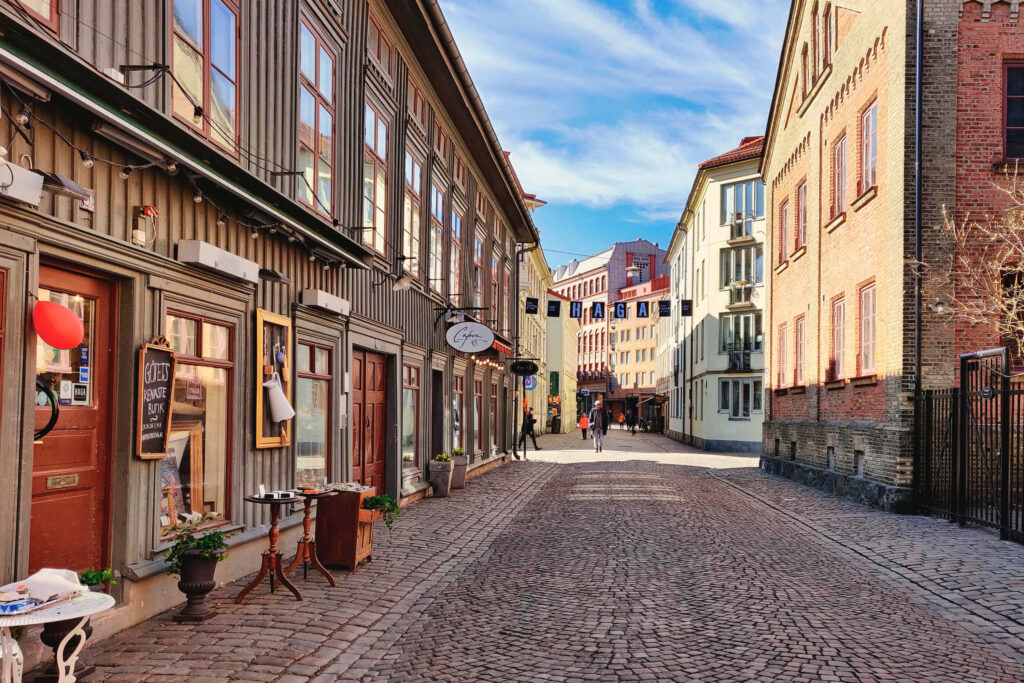
Haga is Gothenburg’s most celebrated fika neighborhood, and the reputation is earned. Haga Nygata, the main pedestrian street through the old dockworker neighborhood, is lined with cafés that have been serving cinnamon and cardamom buns for decades. The buns here are genuinely among the best in Sweden: large, soft, properly spiced, served in rooms that feel like actual cafés rather than branded chain experiences.
The landshövdingehus buildings that line the street — stone ground floor, wooden upper floors, a distinctly Gothenburg architectural form — create an atmosphere that’s warm even in winter. Tables fill up on weekend mornings; go on a weekday between 9:30 and 11:30 for the best experience. The most famous is Café Husaren, known for possibly the largest cinnamon buns in Gothenburg; the side streets off the main drag have smaller, quieter spots that locals prefer.
Saluhallen — The Market Alternative
The covered indoor market near Haga has stalls serving good coffee and pastries alongside cheese, bread, and fresh produce. It’s a more market-hall atmosphere than a sit-down café experience, but quality is there and it works well if you’re combining fika with buying supplies for a picnic or a self-catered meal.
Other Gothenburg Options
The Linné neighborhood (west of Avenyn) has better independent coffee shops where the fika ritual is taken more seriously than on the tourist-facing Avenyn. Götaplatsen and the area around the Museum of Art also has café options that work well for a post-gallery fika.
Fika as a Social Practice: What It Tells You About Sweden
Understanding fika as a cultural practice reveals something important about Swedish values. Sweden scores consistently high in surveys on work-life balance, happiness, and workplace wellbeing — and fika is part of that story. The institutionalization of a twice-daily pause that is explicitly social, explicitly unhurried, and explicitly not about work represents a set of priorities that many cultures don’t have or don’t enforce.
Skipping fika repeatedly in a Swedish workplace without good reason is mildly antisocial. The implicit message is that relationships — with colleagues, friends, family — are worth dedicating time to, and that time need not be dramatic to be meaningful. A fifteen-minute break over a bun is enough.
The TouringBee Gothenburg City Walking Tour touches on this social dimension as it passes through Haga — explaining not just the buildings but the neighborhood’s identity as the historical backdrop for the city’s working-class fika culture. Most people using TouringBee’s Gothenburg audio guide build a fika stop in Haga naturally into the walk — it’s how the route is designed to work.
Fika Etiquette: What to Know Before You Go
| Do | Don’t |
|---|---|
| Sit down and stay for at least 20–30 minutes | Buy your coffee and walk out — that’s not fika |
| Accept the påtår (free refill) if offered | Feel obliged to drink it quickly — the refill is meant to extend the break |
| Order a bun or pastry alongside your coffee | Skip the food and just have coffee — you’ll miss the full experience |
| Come with a companion when possible | Feel obligated to — solo fika is entirely normal |
| Ask what’s fresh that day | Grab the first thing you see without asking what just came out of the oven |
Practical Tips for Fika in Gothenburg
- Go mid-morning on a weekday for the best experience in Haga. Weekend mornings are busy; a Tuesday or Wednesday at 10am is as close to the real everyday experience as a visitor gets.
- The buns in Haga are bigger than you expect. Order one first and see how you feel before ordering a second.
- Ask about the påtår proactively if it isn’t offered. Not every café offers the free refill automatically. Asking is entirely normal at a traditional Swedish café.
- Fika is cheap by Swedish standards. A bun and a coffee typically costs SEK 50–80 (roughly €4–7), making it one of the most affordable experiences in an expensive city.
- Don’t eat just before. Build fika into your walking day as the designated break — around 10am or 3pm — and let yourself be hungry for it.
- Seasonal variations are worth knowing. Around Saint Lucia Day (December 13), Lussekatter (saffron buns) replace regular buns in many cafés.
Common Mistakes Visitors Make Around Fika
| Mistake | Why It Happens | Better Approach |
|---|---|---|
| Treating fika as just a coffee stop | The word sounds like a simple coffee break | Treat it as a social and cultural pause — the sitting and slowing down are the point |
| Going to a chain café for fika | Chains are visible and convenient | Go to an independent café in Haga or Linné where baking is done on premises |
| Going on a Saturday afternoon when queues are long | Weekends seem like the natural leisure time | Go on a weekday morning — quieter and more representative of actual local fika culture |
| Skipping it because “I’m trying not to eat too much sugar” | Health-consciousness overrides cultural curiosity | Have one bun — the cultural experience justifies it, and it’s not a daily commitment |
| Not asking about the påtår | Assumption that refills cost extra | Ask — at traditional Swedish cafés, the answer is almost always yes |
Frequently Asked Questions About Fika
What exactly is fika?
Fika is a Swedish tradition of taking a break — typically twice a day, mid-morning and mid-afternoon — that centers on coffee and something sweet or baked. It’s both a noun (the break itself) and a verb (to fika with someone). What distinguishes it from a regular coffee break is the expectation of sitting down, slowing down, and being present in a social way. It’s structured into the working day in most Swedish offices and is a fundamental part of how Swedes relate to each other socially.
Is fika just coffee and a bun?
In the most basic sense, yes. But the food is almost secondary to the social and temporal dimensions. Fika is about pausing, about the company you’re with, about the transition out of whatever you were doing before. A coffee at your desk is not fika. The same coffee and bun at a café table where you stay for 30 minutes — that’s fika.
Where is the best fika in Gothenburg?
Haga Nygata in the Haga neighborhood is the most celebrated fika street in Gothenburg. The cafés here have been baking cinnamon and cardamom buns for decades. The most famous for sheer bun size is Café Husaren. For a slightly less tourist-facing experience, explore the side streets off Haga Nygata where smaller cafés are favored by locals.
What do you eat at fika?
The classics are kanelbulle (cinnamon bun) and kardemummabulle (cardamom bun). Beyond buns, kladdkaka (sticky chocolate cake), prinsesstårta (princess cake), mazarin (almond tart), and seasonal items like lussekatter (saffron buns at Christmas) are all legitimate fika foods. At traditional home fikas, the seven-cookie rule applies: the host should offer at least seven different types of cookies.
What is påtår?
Påtår is a Swedish term for a free coffee refill, offered automatically at many traditional Swedish cafés as part of the original price of one cup. Not every café offers it — chain cafés typically don’t — but at independent Swedish cafés in Gothenburg, particularly in Haga, asking for a påtår is entirely normal and usually results in a free top-up.
How many times a day do Swedes have fika?
Twice, typically: once in the mid-morning (around 10am) and once in the mid-afternoon (around 3pm). Both are standard in Swedish workplaces. The concept of two distinct fika moments in the day shapes how Swedes plan their schedules.
Is fika expensive in Sweden?
By Swedish standards, fika is one of the most affordable experiences in the country. A coffee and a bun at a traditional Gothenburg café typically costs SEK 50–80 (roughly €4–7). With the påtår (free refill), a fika break can run an hour or more for that cost.
Does fika happen in other Scandinavian countries?
Similar traditions exist in Norway (kaffepause) and Denmark (hygge includes related elements), but the specific word, ritual, and cultural weight are uniquely Swedish. Fika has a precision and institutionalization in Sweden — the scheduled workplace break, the social norm, the seven-cookie rule — that its Scandinavian cousins don’t quite replicate.
Guided Tours in Gothenburg
Prefer a guide to go with your fika? On the Gothenburg Guided Walking and Swedish Fika Tour a local shows you the city's best cafés and the art of fika. A few more highly rated walks:
- Haga Old Town Walking Tour — the fika neighbourhood itself
- Best of Gothenburg: Private Walking Tour with a Local — Haga plus the Feskekörka fish market
Some links above are affiliate links (GetYourGuide). They don't change the price you pay but help support TouringBee.
Continue Exploring
- Gothenburg: What to See — the full city overview, including the Haga neighborhood and where fika fits into a walking day
- Affordable Travel Experiences That Feel Rich — fika is exactly this: low cost, high cultural yield
- How to Travel Really Cheap — budget strategies including using fika as a meal substitute in expensive Scandinavian cities
- Experiencing other Scandinavian cities? TouringBee’s audio walking tours for Stockholm, Copenhagen, and Oslo cover the local coffee and food culture in each city as you walk.