
No products in the cart.

Gothenburg for First-Time Visitors: Everything You Need to Know Before You Go
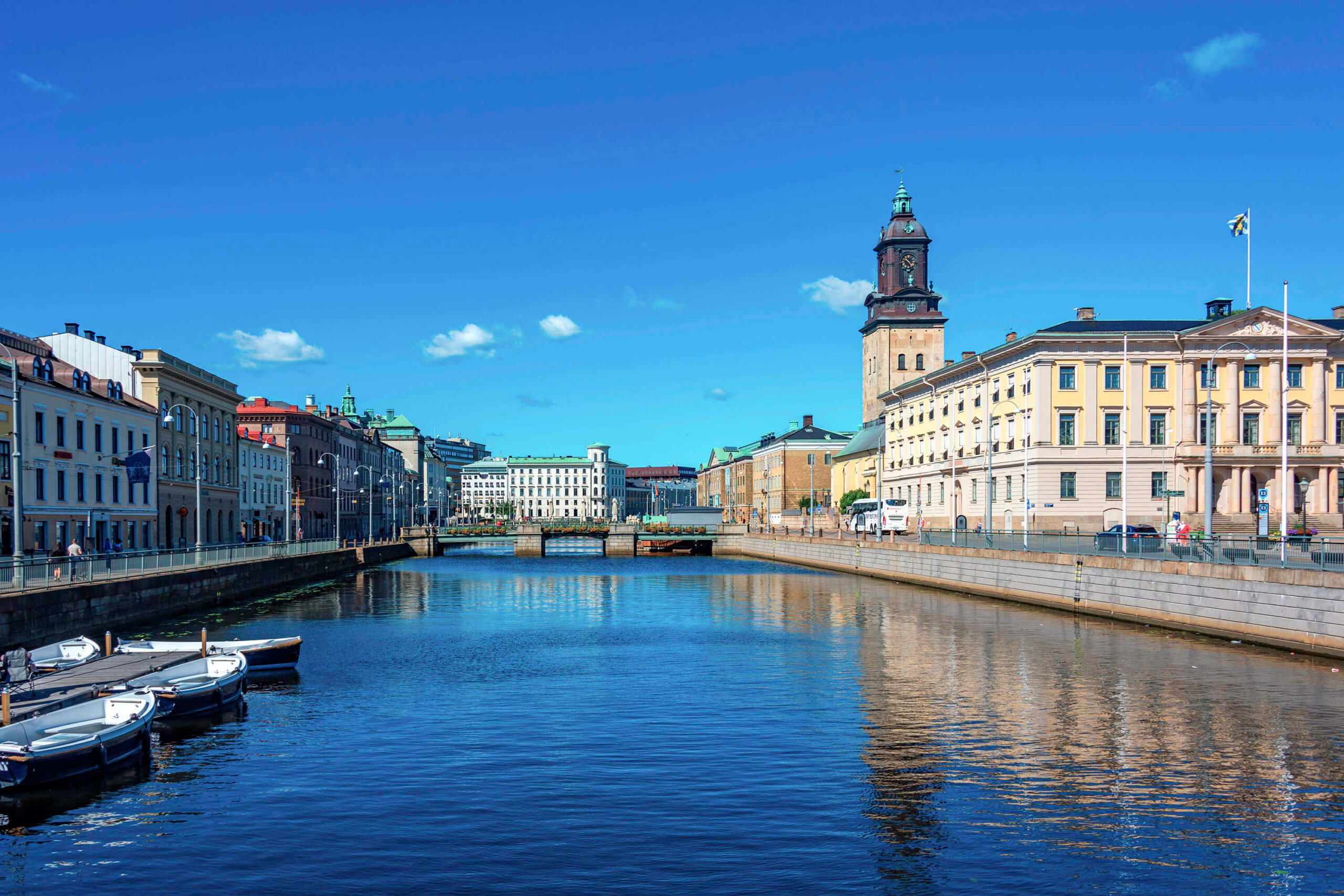
First-time visitors to Gothenburg tend to arrive with a loose mental map borrowed from better-known European cities that doesn’t quite fit. It’s not a sprawling capital you need days to decode, and it’s not a theme-park old town you can “complete” in two hours. It’s a compact, working Scandinavian port city with a legible historic core, a real food culture, and a pace that rewards people who slow down enough to notice it.
This guide is built for the visitor who hasn’t been before and wants a clear picture of the city’s layout, the neighborhoods that actually matter, how to get around, when to visit, and what most first-timers get wrong about pacing. It’s the practical orientation you wish every travel blog would give you instead of a ranked list of “top 10 attractions.”
One note before diving in: a lot of the orientation confusion in Gothenburg dissolves quickly once you start walking. The historic core is genuinely compact — almost everything described in this guide sits within a 30-minute walk of Gustaf Adolfs Torg, the central square. If you want a narrated version of that walk with GPS navigation and local context built in, TouringBee’s Gothenburg City Walking Tour covers the full route from the square to Skansen Kronan and is a natural companion to this guide for a first visit.
What Kind of City Are You Walking Into?

A few facts that set the frame before you arrive:
Gothenburg was founded in 1621 by King Gustav II Adolf, who personally chose this stretch of swampy riverbank on Sweden’s west coast as the site for a new fortified trading city. Because the local conditions were so demanding — building on wetlands, close to a contested coastline — the king brought in Dutch Protestant engineers who were used to exactly this kind of challenge. They laid out the city in a grid, dug the canal system that still defines the historic core, and modeled the whole thing loosely on Amsterdam. The Dutch community was so prominent in those early decades that Gothenburg was sometimes called a Dutch colony inside Sweden.
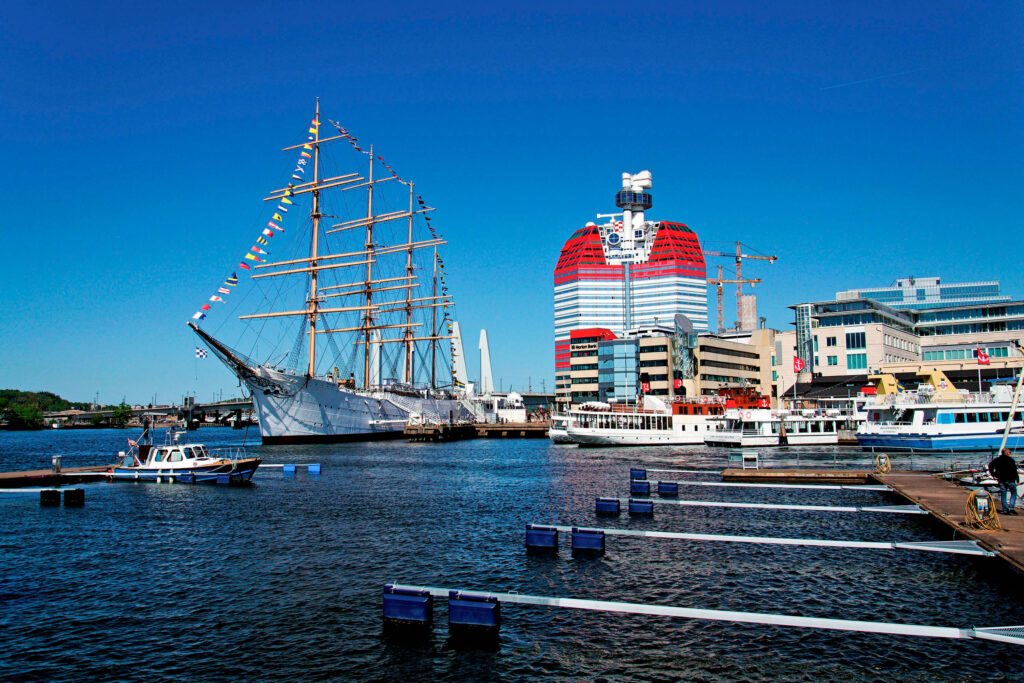
The city grew into Sweden’s dominant port, the launchpad for the Swedish East India Company, which traded silk, spices, and porcelain with Asia and made Gothenburg wealthy through the 18th century. It’s still the largest port in Scandinavia today — a working harbor, not a heritage museum. That port-city character, understated but present everywhere, is one of the things that distinguishes Gothenburg most clearly from Stockholm.
In size terms: the historic core is tight enough to walk across in 25 minutes. That compactness is the city’s greatest advantage for a first visit — you can cover its essential character in a single focused day without needing a transit card or a taxi.
The City at a Glance
| Area | Character | Key landmarks | Worth your time if… |
|---|---|---|---|
| Historic core (center) | 17th-century grid, canals, civic squares | Gustaf Adolfs Torg, City Hall, Kronhusbodarna, Gothenburg Cathedral | You want to understand how the city was built and why it looks the way it does |
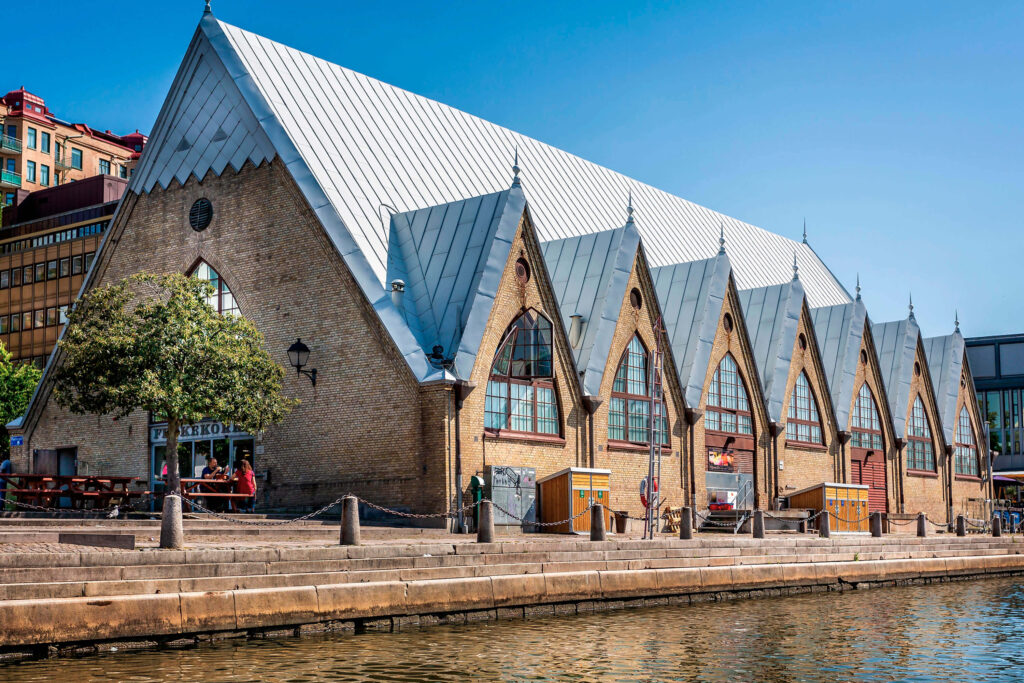
| Feskekörka & waterfront | Maritime/market, 19th-century fish market | Feskekörka, Gothenburg Opera, Maritiman museum ships | You like seafood, architecture, or harbor atmosphere |
| Haga | Former dockworker district, now bohemian | Landshövdingehus buildings, cafés, antique shops | You want fika, street browsing, and the most photogenic streets in the city |
| Avenyn & Götaplatsen | Grand 19th-century boulevard, cultural hub | Kungsportsavenyen, Poseidon statue, Museum of Art | You want restaurants, a gallery visit, or a feel for the city’s civic ambition |
| Vasa district | University neighborhood, quieter residential | University of Gothenburg, Vasa Church, Vasagatan | You want to see the city away from tourists, and like 19th-century townhouses |
| Skansen Kronan | Hilltop fortress, viewpoint | 17th-century crown fortress, panoramic views | You want the best skyline view of the city without paying for a tower |
Getting to Gothenburg
Most international visitors arrive via one of two routes. Landvetter Airport sits about 25–30 minutes east of the city center by Flygbussarna airport coach, which runs frequently and drops passengers at Gothenburg Central Station. The train is the other main option: Gothenburg Central sits on one of Sweden’s main rail lines, about three hours from Stockholm by fast train and roughly three and a half hours from Copenhagen. The station sits right at the northern edge of the historic core — you can walk to Gustaf Adolfs Torg in five minutes from the platform exit.
Cruise ship visitors arrive at the Frihamnen terminal, a short tram ride from the center. If your ship docks here, lines 10 and 11 connect directly to Brunnsparken, the main transit hub in the heart of the city.
Getting Around
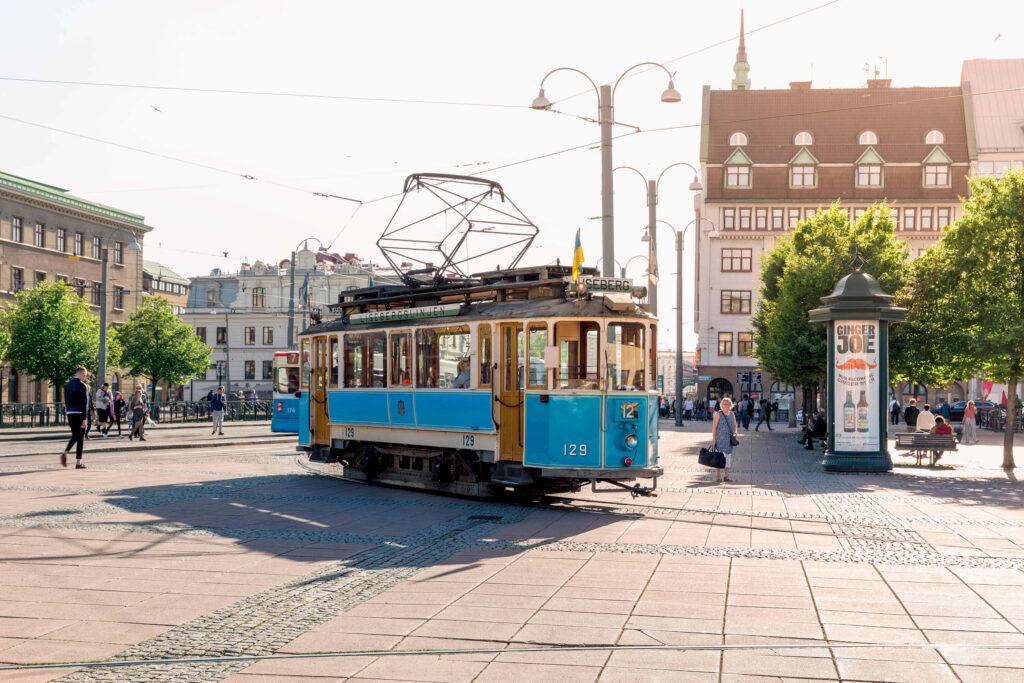
For the historic core, the honest answer is: your feet. Gothenburg’s central sights are arranged in a walkable sequence that makes trams largely unnecessary if you’re covering the area described in this guide. That said, Gothenburg operates the largest tram network in Scandinavia — the system has been running since 1879 — so if your visit extends to Liseberg, the Volvo Museum, or the archipelago ferry terminal, trams are fast and reliable.
| Getting around | Best for | Notes |
|---|---|---|
| Walking | The entire historic core | Everything from Gustaf Adolfs Torg to Skansen Kronan is walkable; cobblestones in some areas |
| Trams (lines 5, 10) | Reaching Brunnsparken from Central Station; Liseberg and outer areas | Single tickets ~€3–5; day passes available; contactless card accepted on most vehicles |
| Ferry (Älvsnabben) | Getting to the southern archipelago islands | Runs from Stenpiren terminal; included in some transit passes |
| Taxi / rideshare | Luggage-heavy arrival days, late nights | Swedish taxis are regulated and metered; rideshare apps also operate |
If your itinerary combines multiple paid attractions, the Gothenburg Pass bundles entry to more than 20 sights plus transit and some boat tours. For a focused one-day visit covering the historic core on foot, it usually isn’t worth the price — but run the numbers against your specific plans before deciding.
The Neighborhoods You Actually Need to Know
The Historic Core

This is where Gothenburg began in 1621, and it’s still where a first visit should start. Gustaf Adolfs Torg — the main square, named for the king who founded the city — is the natural anchor point. From here, the Dutch-built canal system fans out in either direction, the Cathedral sits a short walk north, and Feskekörka (the Victorian fish market) lies a few minutes west. The 17th-century street grid means you rarely need to backtrack: the stops connect logically, one leading naturally to the next.
Haga
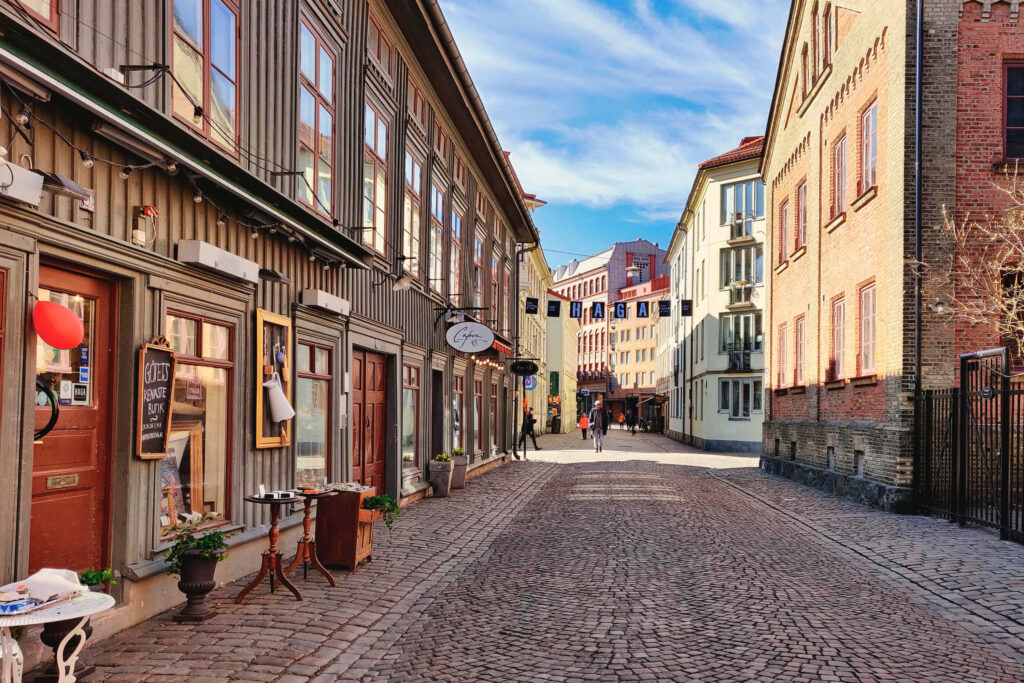
Originally housing for dockworkers outside the old fortress walls, Haga spent much of the 20th century in decline — at one point scheduled for demolition — before a preserved building stock of hybrid stone-and-wood houses (called landshövdingehus, a style unique to Gothenburg) attracted the cafés, boutiques, and antique shops that fill it today. This is the right place for fika: the neighborhood’s bakeries are known for oversized cinnamon and cardamom buns, and ordering black coffee here often includes a free refill (påtår) without asking.
Avenyn and Götaplatsen
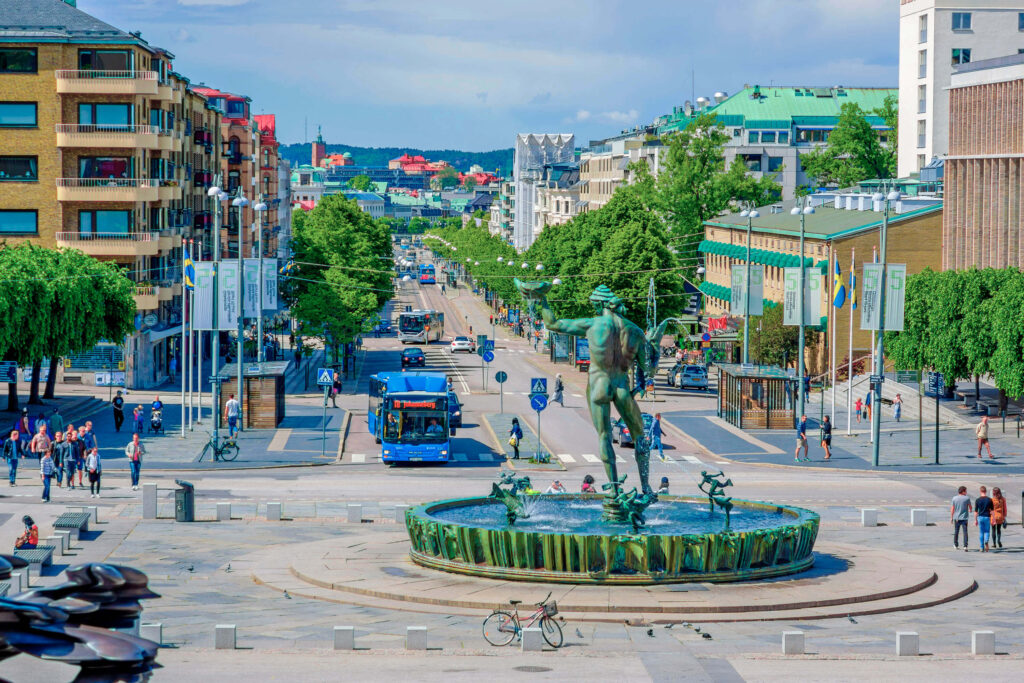
Kungsportsavenyen — Avenyn to everyone who lives here — is Gothenburg’s answer to a grand European boulevard: restaurants and terraces on both sides, leading south to Götaplatsen and the city’s most debated landmark, the Poseidon fountain statue by Carl Milles. The Gothenburg Museum of Art occupies the square’s southern edge and holds a surprisingly strong collection for a city this size, anchored by the Göteborgskoloristerna, a local 20th-century painting movement with a direct Matisse connection.
The Vasa District
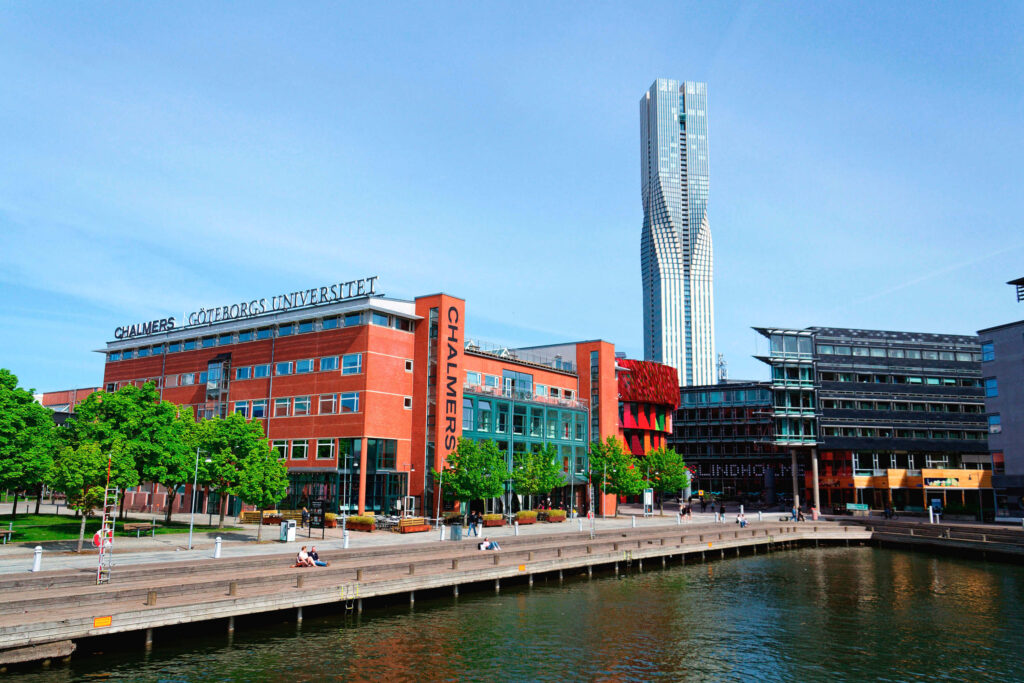
The quieter, more residential stretch between Götaplatsen and Skansen Kronan, home to the University of Gothenburg (founded 1891, with an academic reputation outsized for a city of this scale) and a string of handsome 19th-century townhouses along Vasagatan. First-time visitors sometimes skip this entirely; that’s a reasonable trade-off if your day is tight, but the contrast with the busier areas is part of understanding what Gothenburg actually looks like when it isn’t performing for tourists.
How to Orient Yourself on Day One
The most common first-day mistake in Gothenburg is treating the city as a list of individual sights to check off rather than a sequence to walk through. The historic core is genuinely best understood as a connected route — each area flows naturally into the next — rather than a set of destinations you navigate between separately.
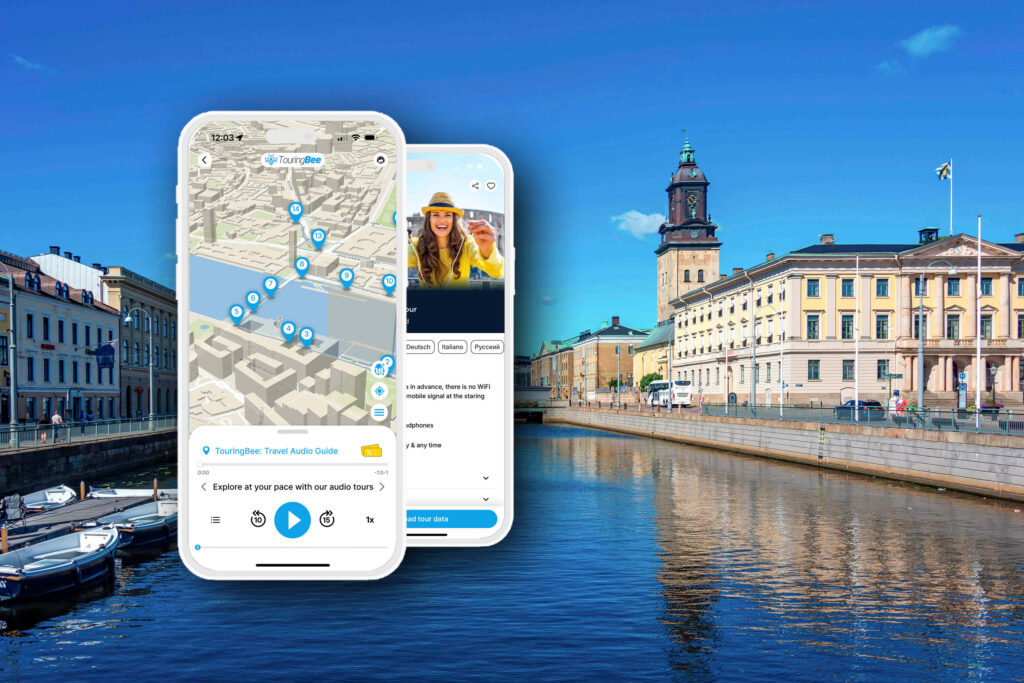
TouringBee’s Gothenburg City Walking Tour is designed specifically around this logic: a single narrated route from Gustaf Adolfs Torg to Skansen Kronan, covering 29 stops in about three hours of walking and listening time, with offline GPS navigation so you’re never dependent on data. The pattern that works best for a first day is simple — start the route in the morning, pause once for a museum if one catches your interest, pause twice for food (fika in Haga, lunch on or near Avenyn), and finish at Skansen Kronan for the panoramic view. That’s the whole day, without needing to make ten separate planning decisions.
First-time visitors who’ve used this approach consistently report that the city’s layout clicks into place by the end of the route in a way that a list-of-attractions approach rarely achieves.
When to Visit Gothenburg for the First Time
| Season | What it’s like | Best for | Watch out for |
|---|---|---|---|
| Late May – August | Longest daylight, warmest temps (~18–22°C), outdoor terraces fully open | Walking, café culture, archipelago day trips | Peak crowds around Midsummer (late June); book accommodation early |
| September – October | Quieter crowds, cooler air, autumn color in Slottsskogen and Haga | First-timers who want a more relaxed pace | Weather shifts quickly; pack a layer |
| November – early December | Dark, often rainy, but cozy indoor café season begins | Travelers who don’t mind gray weather and want cheaper prices | Short daylight hours; some outdoor attractions have reduced hours |
| Mid-December | Kronhusjul Christmas market, glögg and lussekatter, Lucia processions on Dec 13 | Visitors who specifically want the Swedish Christmas experience | Very short days; some sights crowded on weekends |
| January – March | Coldest period, but milder than inland Sweden; rarely snows at sea level | Budget travelers; anyone who prefers empty museums and streets | Coastal wind makes 5°C feel considerably colder; some smaller venues close for winter |
For a pure first visit with no specific seasonal goal, late May through September offers the most straightforward experience — light until 10pm in midsummer, outdoor cafés fully operating, and the archipelago accessible by public ferry.
Practical Tips for First-Time Visitors
- Start at Gustaf Adolfs Torg, not at the train station — the area around Central Station is functional but unremarkable, and a five-minute walk is all that separates it from the actual city.
- Download your walking route and any audio guides before you arrive, since not every street has reliable mobile data coverage, particularly in older parts of the city.
- Cash is rarely needed — Sweden is one of the most cashless countries in the world, and contactless card payment works in virtually every café, market, and transit vehicle.
- Check Feskekörka’s opening days before building your itinerary around it — the fish market has historically closed on Mondays, and showing up on a closed day is the most avoidable first-timer disappointment in Gothenburg.
- Tap water is excellent everywhere and free. Refillable bottles are widely available and culturally normal — Swedes are particular about not wasting packaging.
- The Gothenburg Pass is worth calculating against your actual plans. If you’re visiting three or more paid attractions, it often pays for itself; for a focused walking day in the historic core, it rarely does.
Common Mistakes First-Time Visitors Make
Treating It Like a Smaller Stockholm
Stockholm and Gothenburg are genuinely different cities, not versions of the same experience at different scales. Gothenburg’s identity is maritime, canal-driven, and deliberately unhurried. Arriving with Stockholm expectations — grand palaces, island-hopping, dense museum clusters — sets up a comparison Gothenburg isn’t trying to win.
Not Leaving Enough Time for Haga
First-time visitors often allocate Haga a 20-minute walk-through and wonder why everyone raves about it. The neighborhood rewards at least an hour: sitting down for fika, browsing one or two independent shops, and noticing the hybrid landshövdingehus architecture that exists nowhere else in Sweden. Rush it and you’ll miss what makes it worth visiting.
Underestimating How Windy It Is
Gothenburg sits on an exposed western coast, and the wind off the North Sea is a real presence year-round, including in summer. A light jacket that blocks wind is worth packing even in July. First-time visitors who assume “summer in Sweden = warm” often regret leaving their windbreaker at the hotel.
Confusing “Walkable” With “Nothing to Do”
The historic core’s compactness sometimes registers as smallness to first-time visitors expecting a large city’s rhythm. In practice, you can spend a full day in this area and still feel like you left things unfinished — the density of history, architecture, and good places to eat is higher than the physical footprint suggests.
Skipping the View From Skansen Kronan
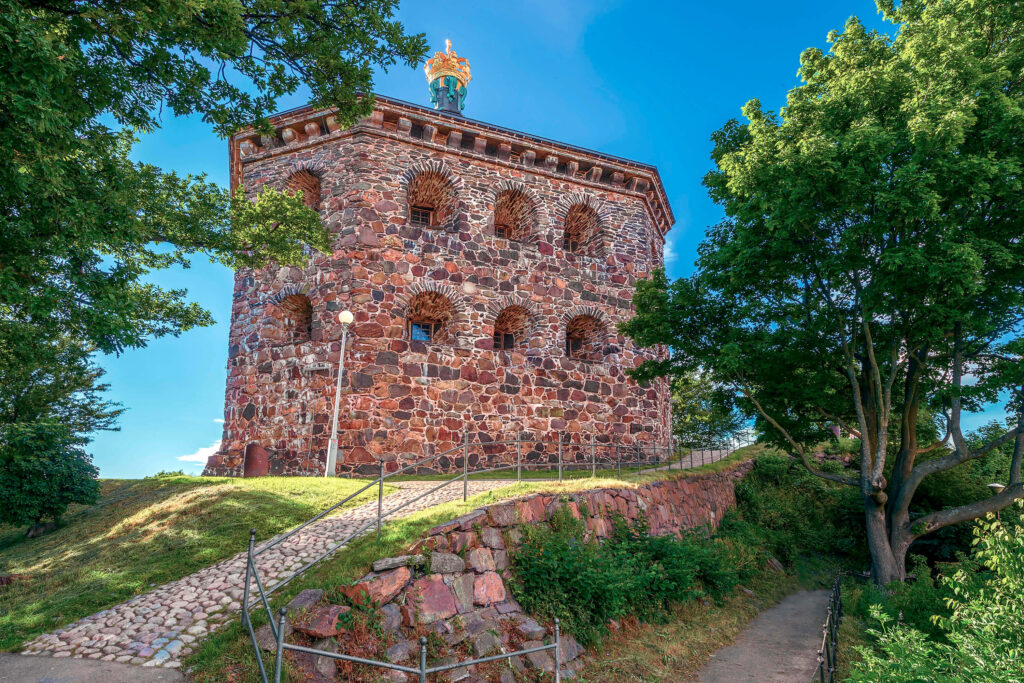
The hilltop fortress at the end of the main walking route is the single best free panoramic view of the city. Tired legs at the end of the day make it tempting to skip — almost everyone who does wishes they hadn’t.
Frequently Asked Questions
Is Gothenburg easy to navigate as a first-time visitor?
Very. The historic core sits inside a clear grid with the canal system as a natural reference line. Once you find Gustaf Adolfs Torg, the rest of the central sights orient themselves logically around it. English is spoken fluently by virtually everyone in the city, including in smaller cafés and markets.
How long does a first visit to Gothenburg typically take?
One focused day covers the essential historic core. Two days lets you add the archipelago, Liseberg, or a museum visit without feeling rushed. If Gothenburg is a single stop on a longer Scandinavia itinerary, one strong day is a reasonable allocation.
Do I need to book anything in advance for a first visit?
For the basic historic core route — the canals, Haga, Feskekörka, Avenyn, Götaplatsen — no advance booking is needed outside of peak summer weekends. If you want to visit the Museum of Art or Maritiman, check opening hours; they sometimes close on Mondays. Restaurant reservations on Avenyn are advisable on Friday and Saturday evenings.
Is Gothenburg suitable for first-time travelers to Scandinavia overall?
Yes — arguably more so than Stockholm for a very first visit to the region. The smaller scale means less orientation overhead, prices are slightly lower, and the city’s genuinely walkable character means you spend less time on logistics and more time actually seeing things.
What’s the single thing a first-time visitor shouldn’t miss?
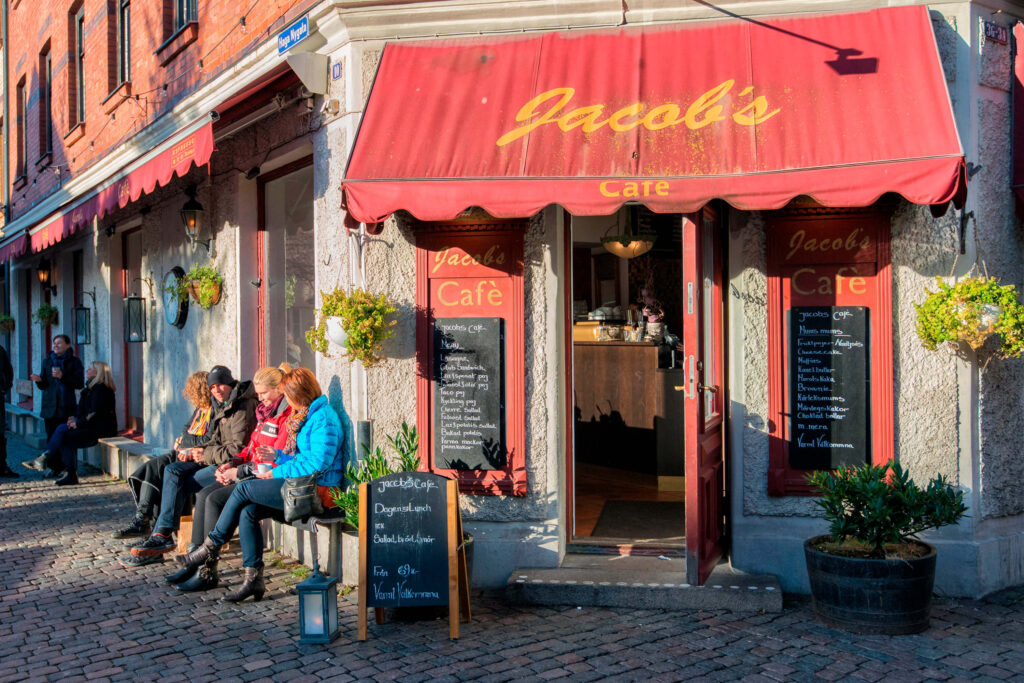
Fika in Haga. It’s one cinnamon bun and a cup of coffee, but it’s also a genuine window into how Swedes actually live — the scheduled pause, the free refill, the sitting-down-without-hurrying. It costs almost nothing and tells you more about Swedish daily culture than any landmark does.
Is it safe for solo travelers visiting Gothenburg for the first time?
Very. Sweden consistently ranks among the safest countries in Europe for solo travel, and Gothenburg’s central areas are well-lit, well-used, and effectively trouble-free for the kind of daytime sightseeing covered in this guide.
How does Gothenburg compare to Copenhagen as a first Scandinavian destination?
Copenhagen is larger, more internationally marketed, and has more headline sights concentrated in a smaller area. Gothenburg is quieter, slightly cheaper, and more immediately walkable. For first-timers to Scandinavia who want to see a lot quickly, Copenhagen is arguably the stronger single-city choice; for travelers who want a more relaxed, authentic Scandinavian city experience, Gothenburg often comes out ahead. If you’re doing both — which the train connection between them makes genuinely easy — TouringBee’s Copenhagen City Tour and Oslo City Tour use the same self-guided format as the Gothenburg guide, so you can explore all three cities consistently.
Continue Exploring
Ready to go deeper? These guides cover the next layers of a Gothenburg visit:
- What to See in Gothenburg: A Complete Guide for First-Time Visitors
- Self Guided City Walking Tours That Work
- Museum Audio Guides: Are They Worth It?
- How to Travel Really Cheap
- Is Gothenburg Worth Visiting? (coming soon)
- One Day in Gothenburg: The Perfect Itinerary (coming soon)
- Weekend in Gothenburg (coming soon)
Gothenburg is often a single stop on a longer Scandinavia trip. If you’re continuing on, TouringBee’s Exploring Stockholm Walking Tour, Copenhagen City Tour, and Oslo City Tour follow the same self-guided, go-at-your-own-pace format — download before you land, start whenever you’re ready, pause for lunch.
For the Gothenburg leg, the TouringBee Gothenburg City Walking Tour gives you narrated context for every major stop on the historic core route, with offline GPS navigation and 29 recorded stops covering the city’s history from its Viking-era origins through the East India Company era to the present. It’s the practical companion to everything in this guide — the difference between reading about the city and actually understanding it while you’re standing in it.