
No products in the cart.

Edinburgh New Town: What to See, Shop and Eat
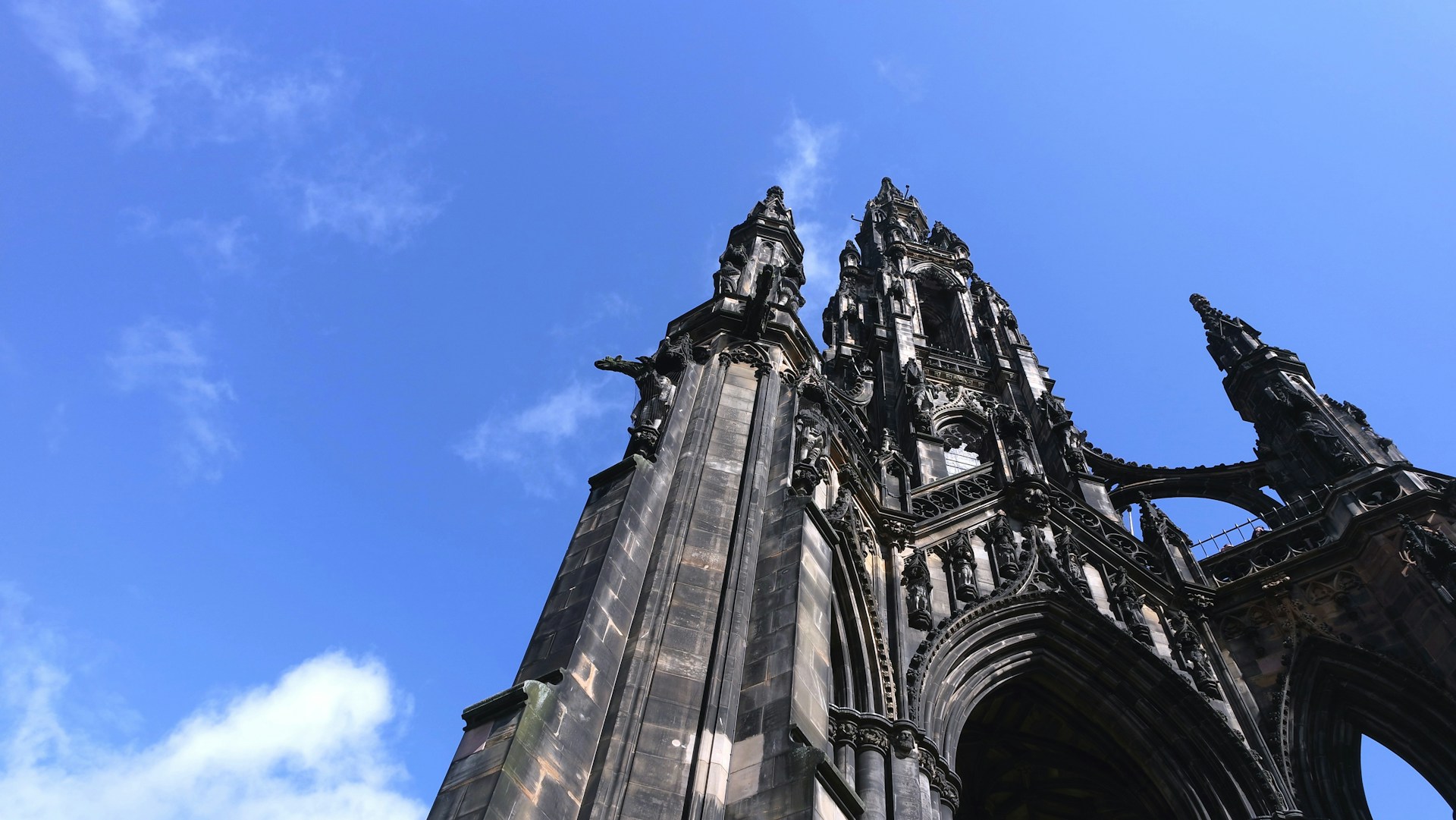
Cross the valley from Old Town and the whole city changes register.
New Town is easy to treat as the part of Edinburgh with hotels, broad streets and shopping — somewhere you pass through between the station and Old Town. That undersells it. New Town is as much a part of Edinburgh’s UNESCO World Heritage Site as the Old Town across the valley, and it rewards its own dedicated stretch of time.
It works well either before or after the Royal Mile, whether you walk that on your own or with TouringBee’s Royal Mile audio guide — it gives you the other half of the contrast that defines central Edinburgh: planned Georgian streets instead of the Old Town’s medieval street pattern, straight lines instead of closes.
Quick Answer
- New Town is “new” relative to Old Town, planned from 1767 onward as an organized alternative to an overcrowded medieval city.
- Prioritize Princes Street Gardens, George Street and Charlotte Square for a first visit; add the Scott Monument if you don’t mind a steep, enclosed climb.
- It is one of Edinburgh’s main shopping areas — Princes Street and George Street for retail, plus St James Quarter and Multrees Walk near St Andrew Square.
- Half a day covers the core sights; extending into Dean Village, the Water of Leith and Stockbridge turns this side of the centre into a full day.
- A more spacious central base than Old Town, though noise and nightlife vary sharply by street.
Why New Town is called “new” — and what makes it different
What most visitors mean by “New Town” — Princes Street, George Street, St Andrew Square, Charlotte Square — is really the First New Town, laid out from 1767 to a plan by James Craig as an organized response to an Old Town bursting at the seams: wide, straight streets on a grid, uniform Georgian façades, and garden squares in place of the Royal Mile’s tangle of closes and wynds. UNESCO recognizes New Town more broadly as a collection of seven new towns built between 1767 and 1890, but the core described here is the part most relevant to a first sightseeing visit.
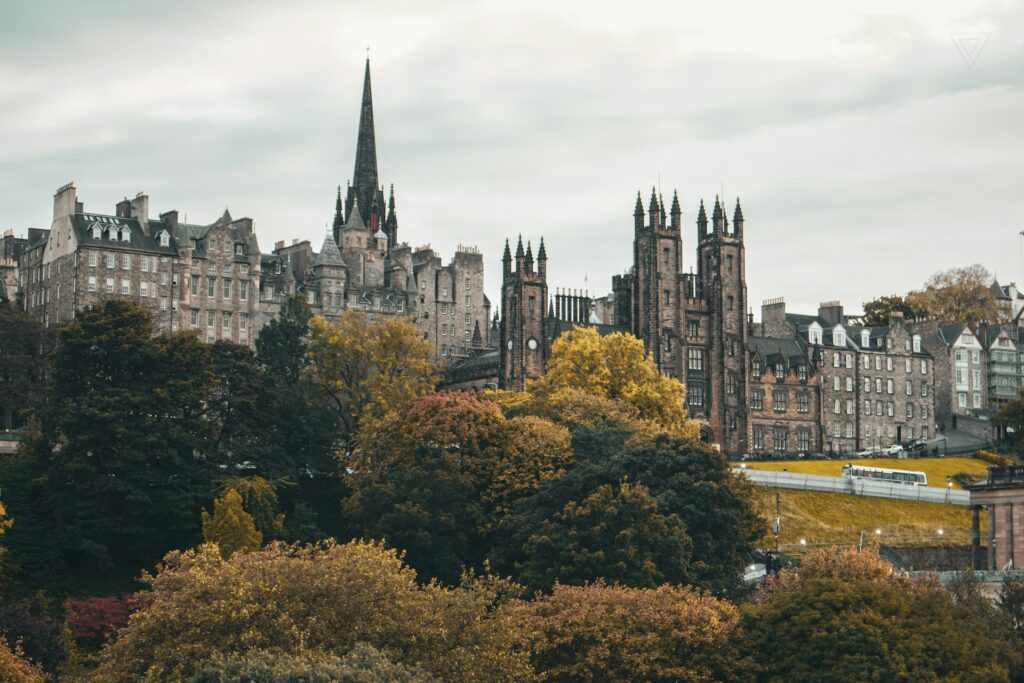
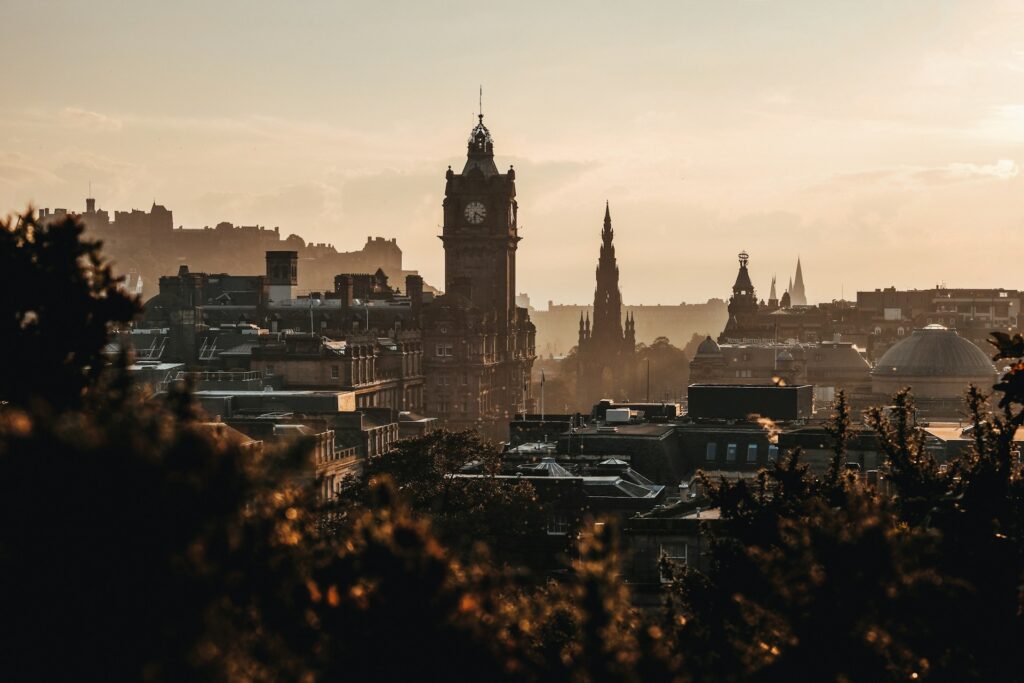
The contrast with Old Town is the whole point: standing on George Street and looking back at the Old Town skyline shows two completely different ideas of how to build a city, separated by a valley now filled with Princes Street Gardens.
What we’d prioritize
Princes Street and Princes Street Gardens
Princes Street is New Town’s southern edge, facing Old Town across the gardens that fill the valley where the old North Loch used to sit. The gardens are free and worth a walk in their own right — flower displays, the Ross Fountain, and some of the best straight-on views of the Castle anywhere in the city. Princes Street itself became commercial early on and has been substantially rebuilt, so it’s a poor example of New Town’s original Georgian character; George Street and Charlotte Square show that planning far more intact.

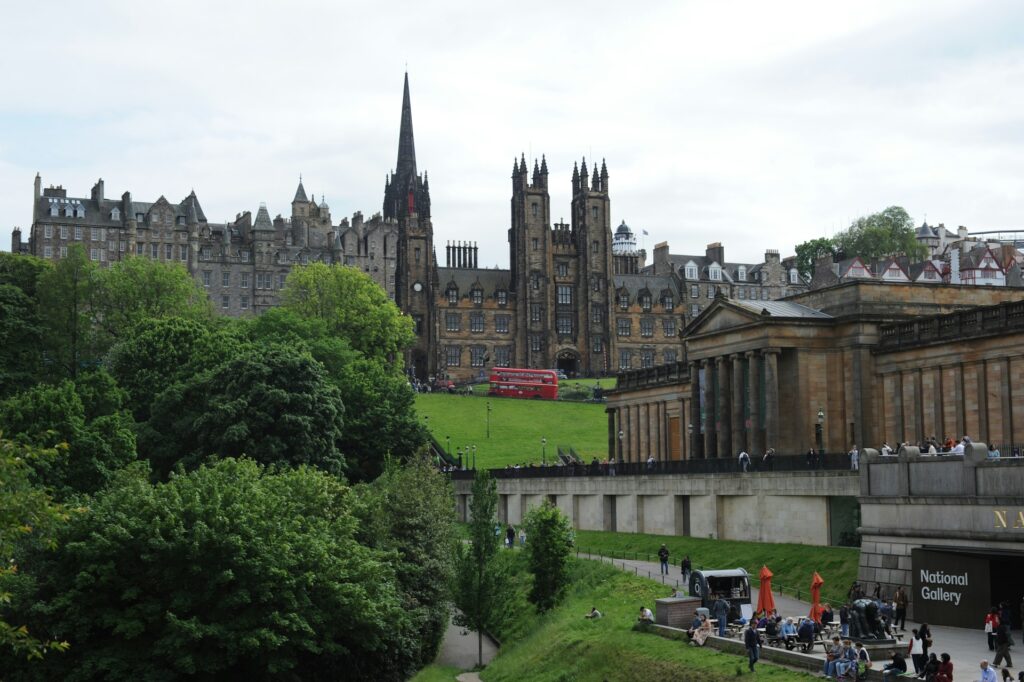
The gardens’ edge is also home to the Scottish National Gallery, whose columned buildings sit between New Town and the Old Town ridge.
George Street and St Andrew Square
George Street runs parallel to Princes Street one block north — wider and grander, lined with upscale shops, restaurants and former bank buildings now hosting bars and hospitality venues. St Andrew Square, at its eastern end, anchors the main shopping district, sits a short walk from the main train and bus stations, and is close to St James Quarter and Multrees Walk, two prominent modern shopping destinations. If you’d rather get your bearings from a bus, the hop-on hop-off bus pass loops past Princes Street and the main sights.
Charlotte Square
Charlotte Square, at George Street’s western end, is New Town’s architectural set piece. The square was already part of the original plan, but Robert Adam was commissioned in 1791 to design its frontages, completing the western end of the First New Town with a unified, palace-like look on the north side that’s still largely intact. The Georgian House, run by the National Trust for Scotland, normally opens one of the townhouses as a furnished period interior, but is currently closed for conservation work — check the National Trust for Scotland’s site before planning a visit around it.
Scott Monument
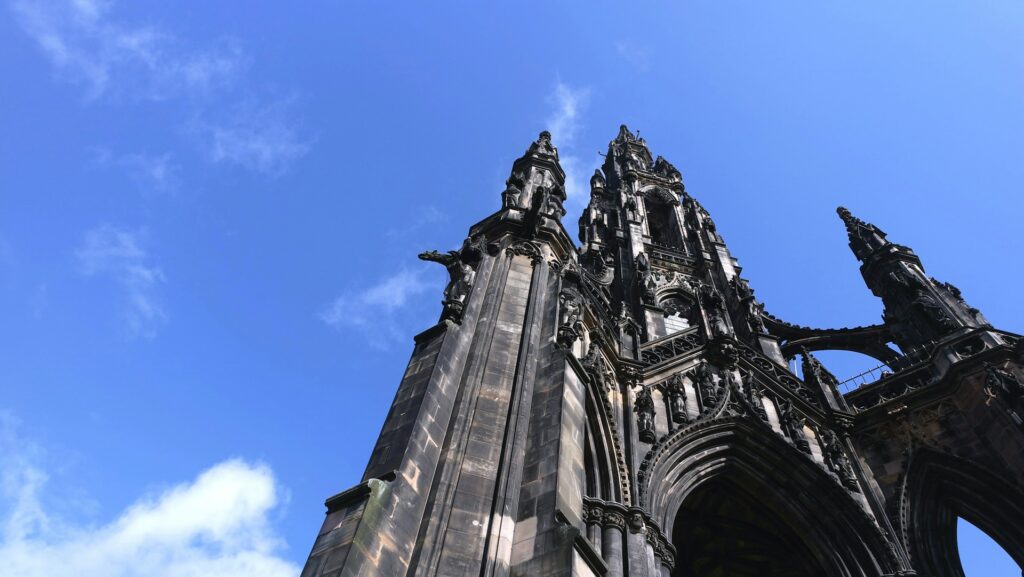
The Scott Monument’s Gothic spire dominates the eastern end of Princes Street Gardens, built as a tribute to Sir Walter Scott. Climbing means 221 narrow steps up to the third level, with a few landings to catch your breath, rewarded with a view over New Town and the Castle — worth it if a tight, enclosed staircase doesn’t bother you, and easy to skip if heights or confined climbs aren’t for you. Tickets are sold at the kiosk on the day rather than online.
Scottish National Portrait Gallery
The Scottish National Portrait Gallery sits on Queen Street on New Town’s northern side, in a distinctive red sandstone Gothic Revival building. General admission to the permanent collection is free, with occasional temporary exhibitions ticketed separately, and it’s an easy indoor addition between outdoor stops — an hour covers a selective visit well.
Shopping: New Town’s different zones
Princes Street carries the larger chain stores; George Street leans more upscale and design-focused, with a concentration of hospitality alongside the shops; Rose Street and Thistle Street, a block over, hold more of the independent and specialty shops; St James Quarter and Multrees Walk, near St Andrew Square, add modern retail. If shopping is genuinely part of your trip rather than a quick souvenir stop, New Town is where to spend that time. Our separate shopping guide, on its way, will cover specific recommendations, including the more independent stretches of Old Town like Grassmarket and Victoria Street.
Where to eat and drink
New Town covers a wide range, from casual pub food to fine dining, with George Street and the streets around St Andrew Square carrying a strong concentration of restaurants and bars — several occupying former bank buildings with striking, high-ceilinged interiors. Rose Street, a narrower parallel lane between Princes and George Streets, adds a livelier, pub-heavy stretch if that’s more your evening. A dedicated guide to what to eat in Edinburgh is on its way.
Dean Village, the Water of Leith and Stockbridge
If you’ve covered New Town’s core and have more time, the natural next step is west from Charlotte Square toward Dean Village — a former milling settlement tucked into a steep river gorge — then along the Water of Leith path to Stockbridge, where independent cafés and shops sit among residential streets, with a market on Sundays. It’s a completely different pace from both Old Town and New Town’s formal streets, and our dedicated guide to the combination is coming soon.
How much time you need, and whether to stay here
Half a day covers Princes Street Gardens, George Street and Charlotte Square at a comfortable pace; adding a gallery stop, some shopping or a meal stretches that further. Extending into Dean Village, the Water of Leith and Stockbridge is what turns this side of the centre into a full day. As a place to stay, New Town offers a more spacious central base than Old Town, with easy walking access to the historic centre — the trade-off is less of Old Town’s dense historic atmosphere outside your door, and nightlife that varies sharply by exact street. Our guide on where to stay in Edinburgh compares the areas in detail.
Common Mistakes
- Treating New Town as a place to walk through rather than around. The Gardens, Charlotte Square and the Portrait Gallery deserve their own block of time, not just a route between hotel and Old Town.
- Judging New Town’s architecture by Princes Street alone. It’s the most commercial and rebuilt of the streets — George Street and Charlotte Square show the Georgian planning far more intact.
- Skipping the Scott Monument climb without checking whether it’s worth it for you. 221 narrow, enclosed steps aren’t for everyone, but the view is a real reward if you’re up for it.
- Assuming New Town nightlife is uniformly quiet. Parts of George Street and Rose Street are busy well into the evening — check the specific street rather than the neighbourhood’s reputation.

FAQ
Why is it called New Town if it’s centuries old? “New” is relative to Old Town — the core most visitors see was planned from 1767 as an organized alternative to the older, more crowded medieval city, and the name stuck even as New Town expanded over the following century.
Is New Town worth visiting, or is it just for hotels? Worth visiting on its own — Princes Street Gardens, Charlotte Square, the Scott Monument and the free Scottish National Portrait Gallery all hold up as genuine sights, not just a place to sleep.
How long do I need for New Town? Half a day covers the core sights at a comfortable pace; extending into Dean Village, the Water of Leith and Stockbridge turns it into a full day.
Is New Town a good area to stay? Yes, especially if you want a more spacious base than Old Town while staying walkable to the historic centre — check the specific street for noise, since it varies more than the neighbourhood’s general reputation suggests.
Continue exploring Edinburgh
For the historic core across the valley, see Edinburgh Old Town: What to See Beyond the Royal Mile, or walk its spine with the Royal Mile guide and the Royal Mile audio guide article. For where to base yourself, see Where to Stay in Edinburgh; to fit it all into a day, One Day in Edinburgh. Guides to Dean Village and Stockbridge, the best viewpoints, what to eat and where to shop are on their way.
Planning tickets? Compare the Royal Edinburgh Ticket (hop-on hop-off, Castle, Britannia, Holyroodhouse), the Edinburgh Castle guided history tour with tickets and the Palace of Holyroodhouse entry ticket.
New Town makes more sense once you stop treating it as the space between Old Town and your hotel: its squares, gardens, Georgian streets, shops and galleries are the other half of the contrast that makes central Edinburgh work.
This article contains affiliate links. If you buy through our TouringBee audio guide or GetYourGuide links, we may earn a small commission at no extra cost to you.