
No products in the cart.

Edinburgh Old Town: What to See Beyond the Royal Mile
The Royal Mile is the spine of Edinburgh's Old Town, not the whole district. Grassmarket, Victoria Street, Greyfriars and the National Museum of Scotland, with timings and what is free.
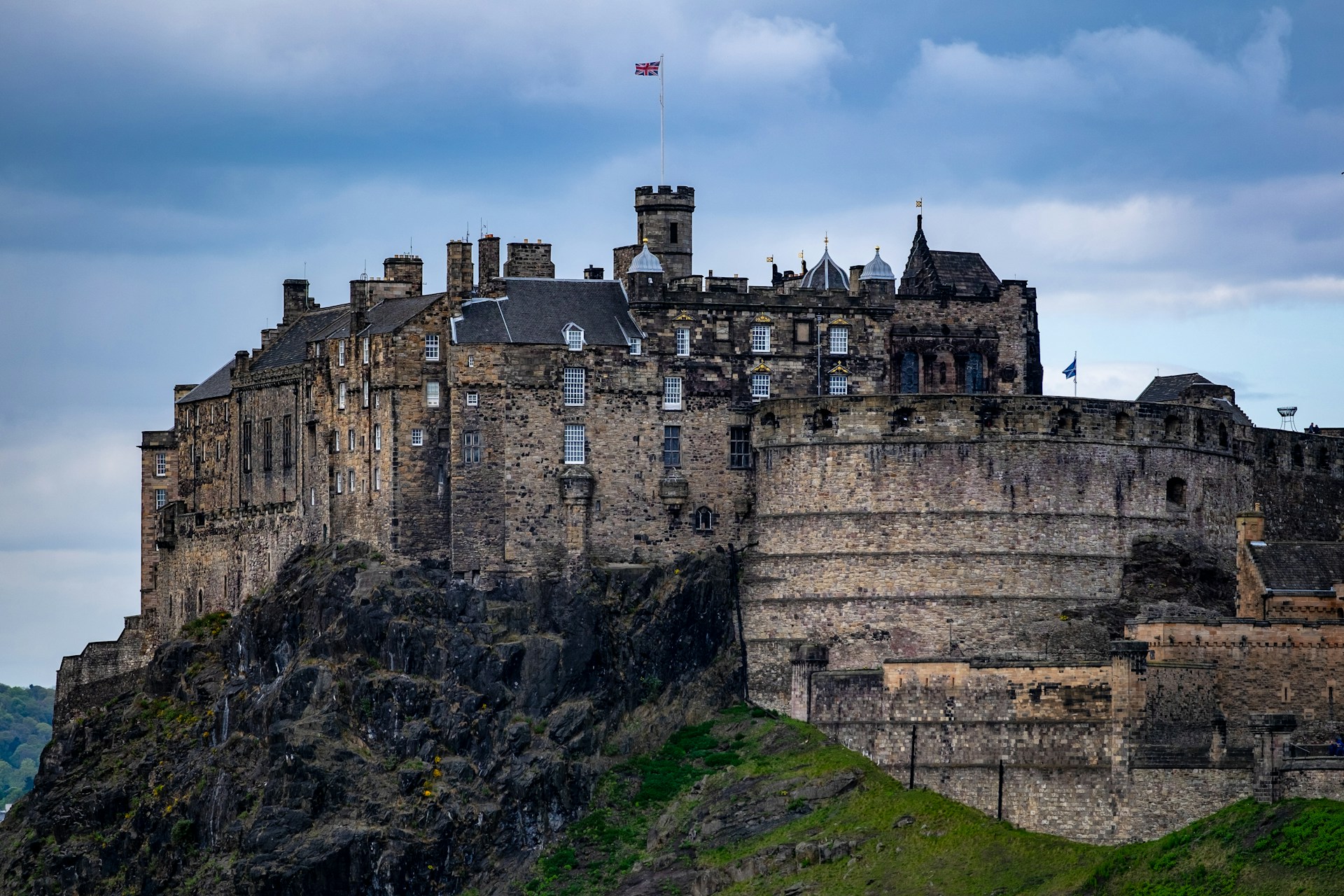
The Royal Mile is the spine of Old Town — not the whole district.
It’s easy for a first visit to reduce Old Town to one street. The Royal Mile runs the length of the district, connects Edinburgh Castle with Holyroodhouse, and shows up on every map of central Edinburgh. Walk a few minutes off it, though, and the district turns out to be considerably wider than that single line suggests.
Old Town is the historic core built along the ridge between Edinburgh Castle and Holyroodhouse, and the Royal Mile forms its spine. Dozens of narrow closes and wynds branch away from that spine like ribs, some opening onto quiet courtyards, others leading down toward Cowgate or up toward Chambers Street and the museum district. The Old and New Towns together make up Edinburgh’s UNESCO World Heritage Site, and this spine-and-ribs structure is part of what the listing specifically recognizes.
The Royal Mile itself is the easiest thread to follow when you’re first getting oriented, and TouringBee’s Royal Mile audio guide covers that central stretch as a self-guided walk, about 1.5 hours from Holyrood to the Castle. This guide picks up from there — Grassmarket, Victoria Street, Greyfriars, the National Museum of Scotland, and the streets that connect them. For the main street itself, see our Royal Mile guide.
Quick Answer
- Old Town includes the Castle and Royal Mile, plus Grassmarket, Victoria Street, Greyfriars, and the museum district around Chambers Street.
- A focused walk beyond the Royal Mile takes two to three hours; a full day fits comfortably if the Castle or National Museum joins the plan.
- Grassmarket, Greyfriars, and the National Museum of Scotland are the strongest additions for a first visit.
- Much of Old Town costs nothing to see — museum and kirkyard admission are free, and paid interiors are optional extras, not required stops.
What counts as Old Town
Old Town isn’t a single neighborhood so much as a cluster of areas organized around the central ridge and the slopes below it. South of the Royal Mile, Grassmarket and Victoria Street curve down toward Cowgate, running on much lower ground and now home to bars, restaurants, and late-night venues. Further south again, Chambers Street and the streets around Greyfriars form a quieter, more academic corner, anchored by the National Museum of Scotland and the University of Edinburgh’s older buildings.
None of this requires a mental map before arriving. On foot, the change registers on its own — buildings closing in, a close narrowing to shoulder-width, then opening onto a square you didn’t know was there.
What to prioritize
| Place | Why it’s worth the detour | How to treat it |
|---|---|---|
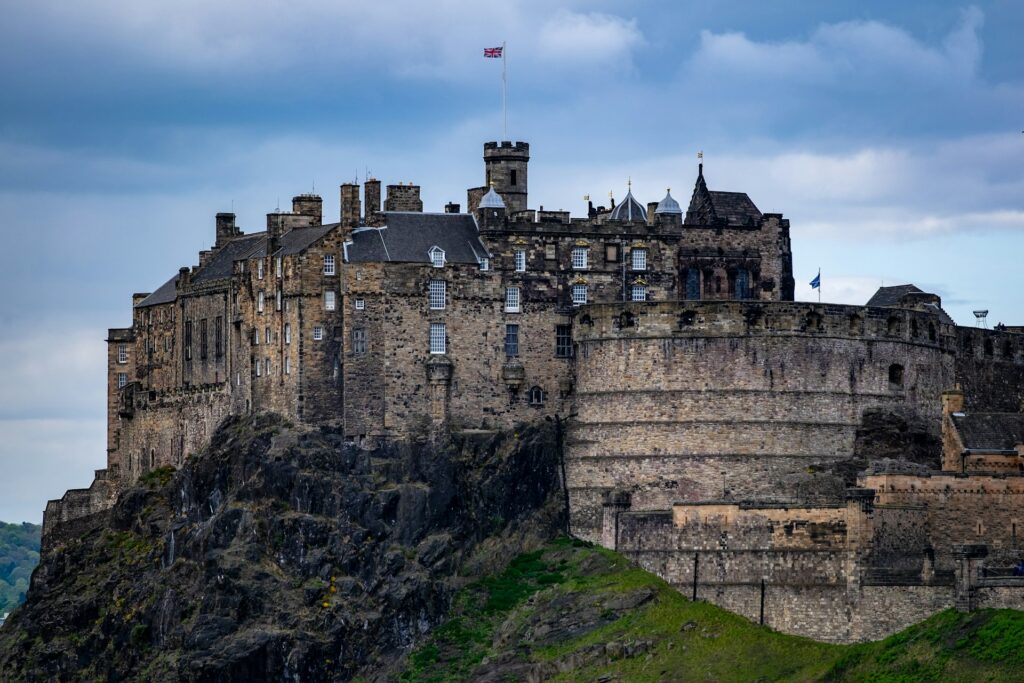
| Edinburgh Castle | Anchors the whole ridge, visible from most of Old Town | A visit of its own — a dedicated Castle guide is on its way |
| Grassmarket & Victoria Street | Historic market square, curved shopping street, some of the district’s best photo spots | 30–45 minutes, longer with a coffee stop |
| Greyfriars Kirkyard | Free historic graveyard, connected to the Greyfriars Bobby story | 20–30 minutes; the kirk itself keeps separate seasonal hours |
| National Museum of Scotland | Free general admission, strong option for a slow afternoon or a rainy one | An hour at minimum, half a day if you want to do it justice |
Grassmarket and Victoria Street
Grassmarket was a historic marketplace and was also used for public executions; today it’s a wide, café-lined square with the Castle looming directly above it, which makes for one of Old Town’s more striking sightlines.
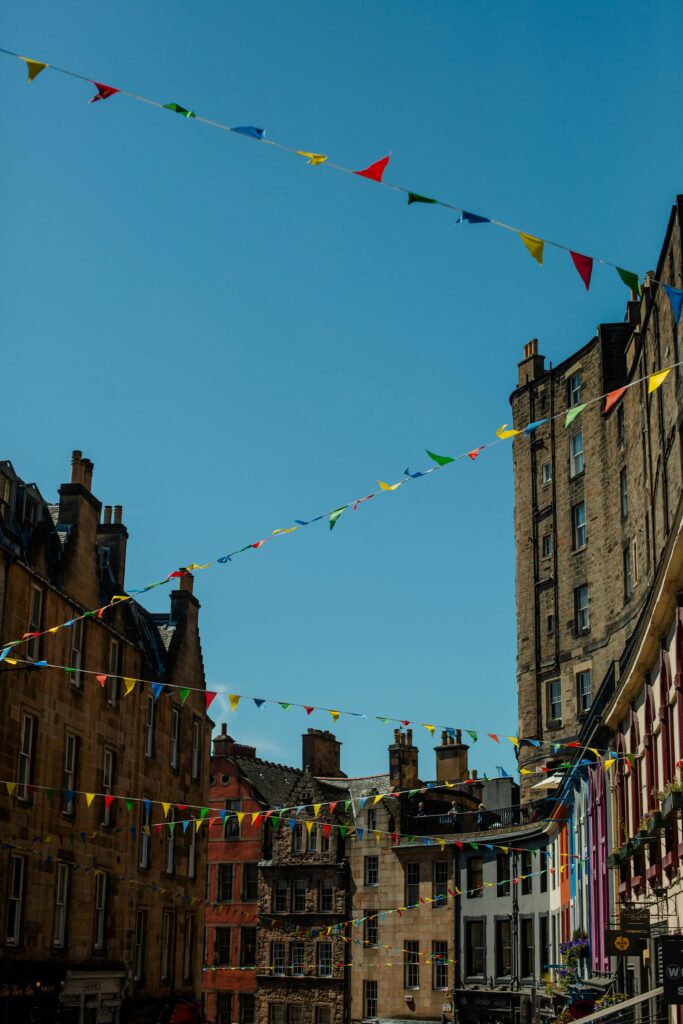
Victoria Street climbs away from it in a gentle curve, lined with independent shops in a row of colorful storefronts — a genuinely pleasant street to walk regardless of what else you have planned.

It’s often described as the inspiration for Diagon Alley, though J.K. Rowling herself has said no real street inspired that scene and that she hadn’t seen Victoria Street when she wrote it. Worth a look either way — just not as a confirmed literary landmark. If the film locations interest you more than Edinburgh’s disputed inspiration stories, TouringBee’s Harry Potter locations audio guide in London is the more direct follow-up.
Greyfriars Kirkyard
Greyfriars traces back to the Reformation, when the grounds of a former Franciscan friary were given over to the city as a burial ground; the present kirk building was begun in 1602 and opened in 1620, so the burial ground itself predates the church by decades.
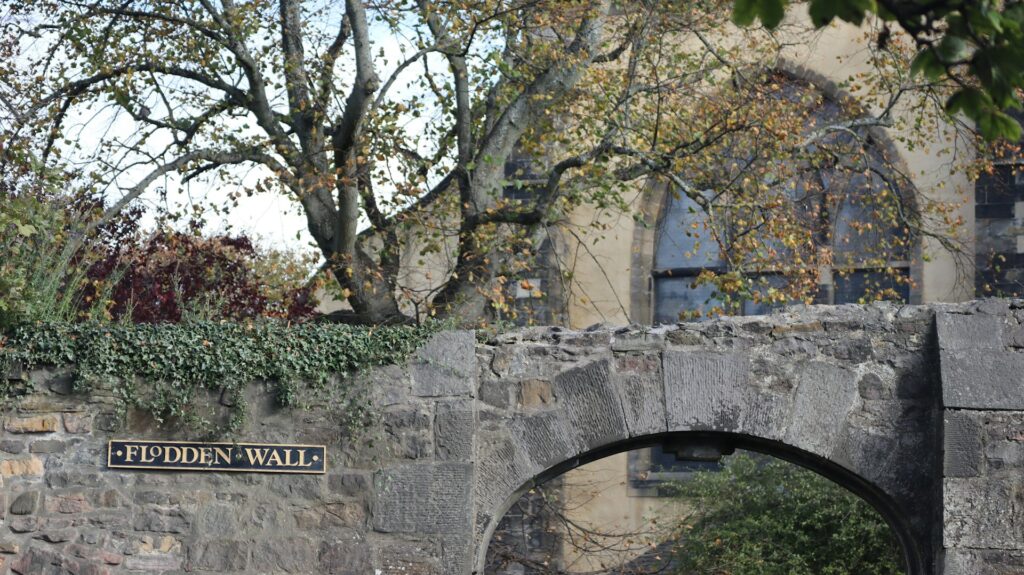
The site is best known today for the Greyfriars Bobby legend — a loyal dog said to have guarded his owner’s grave for years. The kirkyard is free to enter, while the kirk building keeps separate seasonal opening hours and is free as well, with donations welcome. Visitors are often shown gravestones with names resembling Harry Potter characters, but Rowling has denied taking character names from Greyfriars — treat it as part of the city’s Potter folklore rather than a confirmed source. The Covenanters’ Prison, a locked section of the kirkyard, is accessible only on specific guided tours.
National Museum of Scotland
On Chambers Street, opposite Greyfriars, the National Museum of Scotland holds free general admission across its permanent galleries, with paid tickets required only for occasional special exhibitions. It’s open daily, and the building alone — a soaring Victorian entrance hall connected to a newer wing — is worth a look even for visitors who’d rather skim than read every label.
Why Old Town feels different on foot
Old Town was built up rather than out, on a ridge with steep drops on either side, and centuries of that constraint show in ways a flat map can’t capture. Buildings that look only a few stories high from an upper street can extend to six or seven stories on the lower side. The early burgh grew up around one long main street, with narrow plots running back from it; closes and wynds began as access routes into those plots and the backlands behind them, and later generations built up along that same pattern with increasing density.
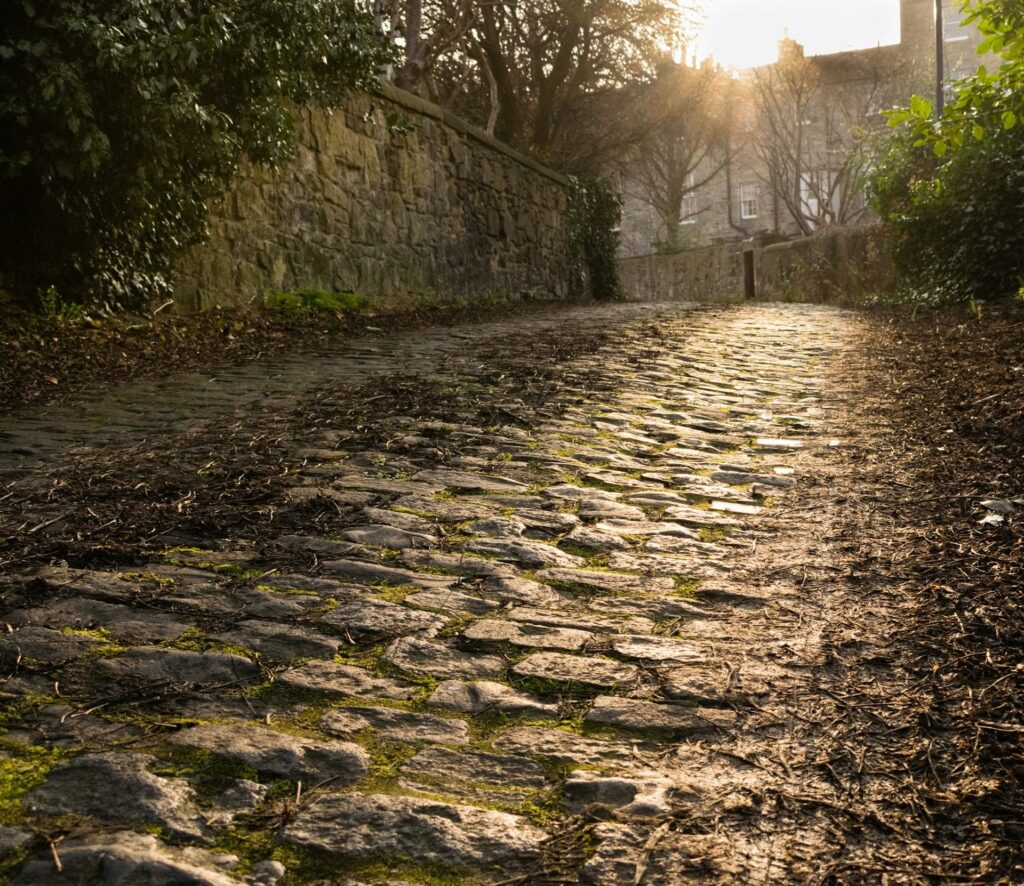
None of this needs a plan. Old Town rewards a bit of aimless turning off the main street more than most historic centers do, if only because there’s usually somewhere to go once you do.
Free things to do
- Walk Grassmarket and Victoria Street
- Visit Greyfriars Kirkyard
- Tour the National Museum of Scotland’s permanent galleries
- Explore clearly public closes that catch your attention — some open onto courtyards, stairways, or unexpected views
- Take in the view up toward the Castle from Grassmarket
Where to eat or take a break
Grassmarket and Victoria Street are packed with cafés and restaurants, with Cowgate just below adding a livelier, later crowd. Chambers Street, near the museum, tends to be calmer and better suited to a quiet coffee between sights. For a casual meal, you can often stay flexible, though a specific restaurant or a busy festival evening may be worth booking ahead.
How much time Old Town needs
| Time available | What fits |
|---|---|
| 2–3 hours | Grassmarket, Victoria Street, and Greyfriars Kirkyard |
| Half a day | The above plus a proper visit to the National Museum of Scotland |
| Full day | Grassmarket, Victoria Street, and Greyfriars, plus one major anchor — Edinburgh Castle or the National Museum of Scotland |
Want a guided anchor for the Castle? The Edinburgh Castle guided history tour with tickets is rated 4.8 by thousands of travellers.
Should you stay in Old Town?
Staying in Old Town puts most of this within walking distance, which suits travelers who want to be near the sights above almost anything else. The trade-off is the terrain and the crowds that come with the location — stairs, cobblestones, and steady foot traffic are part of the deal, not an exception to it. Our separate guide on where to stay in Edinburgh compares Old Town against New Town, Stockbridge, and the areas further out in more detail.
What to leave for a second visit
Old Town holds more than fits into one trip, and some of it makes more sense once the essentials are out of the way. The Real Mary King’s Close, several smaller historic closes with their own visitor experiences, and a slower, unplanned wander around the University of Edinburgh’s older buildings and streets near Chambers Street are all easy to postpone without losing much on a first visit.
Common Mistakes
A few habits tend to flatten an Old Town visit into “the Royal Mile and not much else,” usually without the visitor quite meaning for that to happen:
- Treating the Royal Mile as the whole district. It’s the spine, not the district — Grassmarket, Victoria Street, and Greyfriars sit a few minutes off it and are easy to miss if you never turn.
- Skipping the National Museum because it “sounds like a rainy-day activity.” It’s free and strong enough to justify a visit on a clear day too.
- Assuming Greyfriars Kirk keeps the same hours as the kirkyard. The kirkyard is free to enter; the kirk itself follows a separate, seasonal schedule.
- Rushing Victoria Street for a five-minute photo. The street rewards an actual walk up it — the shops and the curve are the point, not just the view from the bottom.

FAQ
Is Old Town only the Royal Mile? No — the Royal Mile is the spine, but Old Town also includes Grassmarket, Victoria Street, Greyfriars, and the museum district around Chambers Street.
Is the National Museum of Scotland free? Yes, general admission to the permanent galleries is free. Only occasional special exhibitions require a paid ticket.
Is Victoria Street really the inspiration for Diagon Alley? That’s a popular claim, but J.K. Rowling has said no real street inspired the scene and that she hadn’t seen Victoria Street when she wrote it. It’s still worth visiting on its own merits.
How much time should I set aside for Old Town beyond the Royal Mile? Two to three hours covers Grassmarket, Victoria Street, and Greyfriars. Add the National Museum for half a day, or a full day if you’re pairing that walk with either the Castle or the museum as a single major anchor.
Continue exploring Edinburgh
For the Royal Mile itself, see Royal Mile Edinburgh: What to See, Where to Eat and What to Skip, or take the story-led version with the Royal Mile audio guide article. For where to base yourself, see Where to Stay in Edinburgh; to fit it all into a day, One Day in Edinburgh. Dedicated guides to the Castle, New Town and Harry Potter in Edinburgh are on their way.
Planning tickets? Compare the Royal Edinburgh Ticket (hop-on hop-off, Castle, Britannia, Holyroodhouse), the Palace of Holyroodhouse entry ticket and the Royal Yacht Britannia ticket.
Old Town gives up its best corners slowly, and usually only to visitors willing to turn off the Royal Mile and see where a close actually leads.
This article contains affiliate links. If you buy through our TouringBee audio guide or GetYourGuide links, we may earn a small commission at no extra cost to you.