
No products in the cart.

Paris in January and February: Best Things to Do After Christmas
What to do in Paris after Christmas: galette des rois, the winter sales, quiet museums, cafés and the difference between January and February.
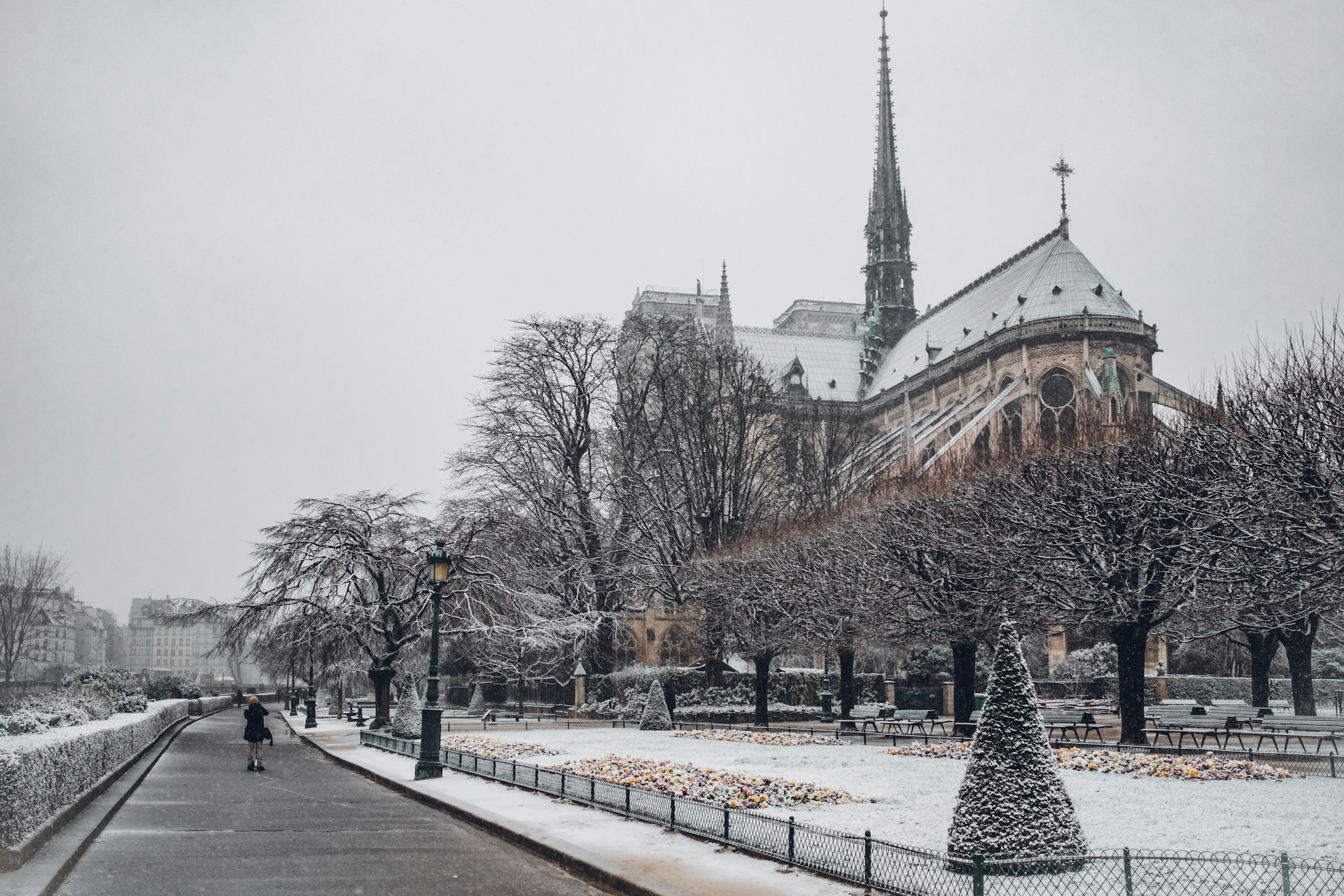
When the Christmas lights go out, Paris gets calmer, and hotel rates often drop after the holiday season. The museums keep their usual hours, café tables are easier to come by, the bakeries bring out their January treats, and the stores start their sales. January and February suit travelers who are interested in the city itself rather than the holidays.
Paris after the holidays
Christmas fades from Paris gradually. The lights and the market on the lower Champs-Élysées run until January 4, and the trees in the department stores and churches come down by mid-month. French school holidays end on January 3, and by the following week the popular tourist areas become noticeably quieter.
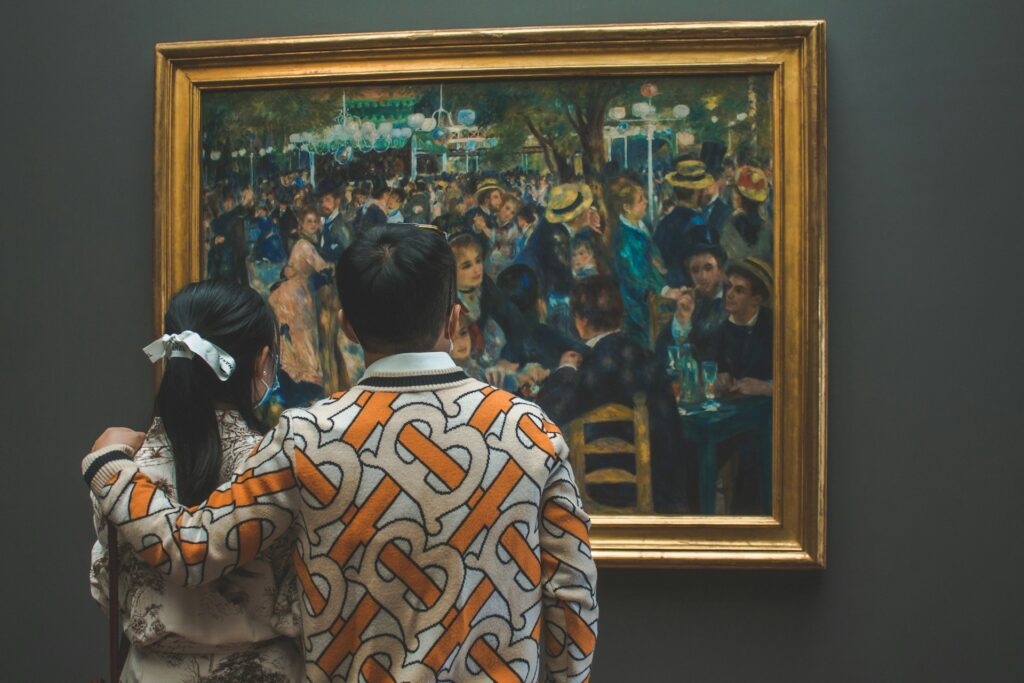
Winter light at this time of year is gray and even, and one of the best ways to see beauty in it is to look at how the Impressionists painted it. Alfred Sisley was best known for his landscapes. In his Snow at Marly-le-Roi, the bare trees and white street under a clear sky look calm and almost warm, though the cold of the winter day comes through in the painting’s muted tones. Nearby at the Musée d’Orsay hang his Forge at Marly-le-Roi and View of the Canal Saint-Martin, and if you’d like to see them with the story behind each one, the Orsay Museum audio guide walks you through Room 29 at your own pace, with no internet needed. After seeing them it’s tempting to walk along the real Canal Saint-Martin with Sisley’s winter scenes in mind.
January: a quiet city
January rewards travelers who enjoy wandering through old neighborhoods, spending time in museums, and discovering Parisian cafés without the December rush. Even in winter the popular museums have lines, but the small museums and cafés have room to spare. Many museums and shops are closed on New Year’s Day, which makes it a good day for a quiet walk and a leisurely brunch. If you’re still deciding whether the season is for you, our guide to Paris in winter covers the big picture.
Galette des rois: the Epiphany cake
In January, bakeries and pastry shops across France fill their windows with the galette des rois, a traditional French Epiphany cake baked for the feast of the Three Kings. Historically the holiday falls on January 6, but in France it’s celebrated on the nearest Sunday, which in 2027 is January 3. Either way, you’ll find galettes throughout January. The classic Parisian version is puff pastry filled with frangipane, an almond cream.
Hidden inside is the fève, a tiny figurine — once a real bean, now usually porcelain. Whoever finds it in their slice becomes king or queen for the evening and wears the paper crown sold with the cake. To keep things fair, in families the youngest child crawls under the table and calls out who gets each slice.
The galette is cut not only at home but at work, at school, and even at town halls. In the 7th arrondissement, local bakers make a giant galette for the residents at the town hall’s New Year reception. For a visitor, a small galette for two or a single slice from a bakery is enough to join in the liveliest January tradition. Modern pastry chefs make versions with chocolate, citrus, and pistachio, but the classic is the place to start.
The winter sales
France’s winter sales run through January and into early February, on dates set by law. In 2027, the soldes run from January 6 to February 2. Early on, there’s a better choice of sizes; toward the end, the discounts are usually deeper but the selection thins out fast.
The main shopping areas are Boulevard Haussmann with its department stores, the Marais with its boutiques, and Saint-Germain. The Marais also has vintage shops that sell clothes by weight, and one traveler called such a shop the best find of her January trip. The biggest risk of the sales is getting carried away and spending too much of the trip on shopping. It’s better to give them one day from the start and leave the rest to the city.
Museums, exhibitions, and concerts
Paris’s winter exhibitions usually open in the fall and run into February, so January is a chance to catch them without the December lines. For the big shows, it’s still best to book tickets ahead.
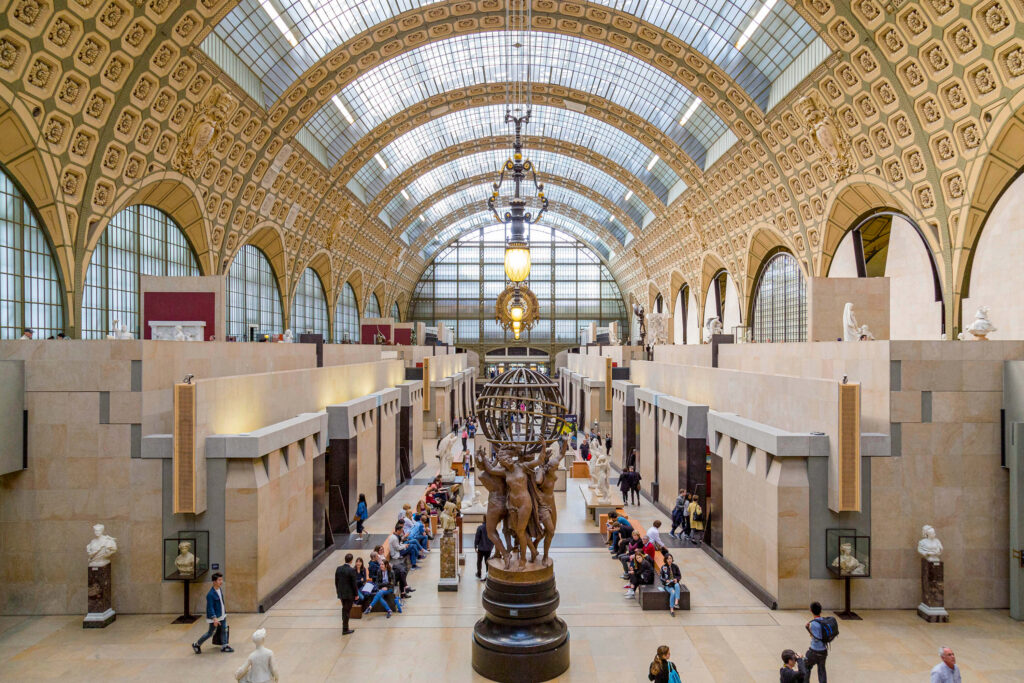
- The Musée d’Orsay — best at opening time or on Thursday evening; closed on Mondays.
- The Carnavalet — the museum of the history of Paris, in the Marais, with a free permanent collection. Through February 14, 2027, it hosts an exhibition on Jacques Villeglé and street art. Closed on Mondays.
- The Picasso Museum and the Orangerie — smaller museums for half a day, for anyone who doesn’t want to get lost in the Louvre.
- Evening church concerts and opera performances — a good way to spend the hours after an early sunset.
GetYourGuide
Louvre entry ticket with Mona Lisa audio guide
Winter is the easiest season to fit the Louvre into a day. Booking ahead means you skip the ticket queue and keep your time for the galleries.
Check availability →A special place for a winter walk is Père Lachaise Cemetery. On a quiet winter day it is especially peaceful. Its alleys are best explored in daylight, when the old headstones are easy to see and it’s simpler to find your way between the paths. Shoes with a good grip are a must, and the TouringBee Père Lachaise audio guide helps find the famous graves.
On a rainy day, the Marais works well: the Carnavalet, lunch at one of the neighborhood’s cafés, and a stroll through the old streets and shops (just not on a Monday, when the museum is closed). The oldest covered market in Paris, the Marché des Enfants Rouges, was badly damaged by a fire in October 2026, so it’s best left off the itinerary for now.
Cafés, chocolate, and pastry shops
Winter in Paris is a good time for food walks: cold, damp weather makes long outdoor walks less appealing, so there’s more time for pastry shops. Travelers who visit Paris in winter often notice three things:
- The most famous bakery isn’t necessarily the best. One traveler compared the croissants of three bakeries in the Latin Quarter and chose the one next door to the award winner. A plain croissant made with good butter has more than once beaten a trendy pistachio one.
- Go for pastries in the morning. The choice is wider then, and the croissants are fresher.
- Ladurée or Pierre Hermé. Ladurée is often chosen for its historic setting and pretty presentation, Pierre Hermé for its unusual macaron flavors. The best way to settle the argument is to try both.
At the cafés of fashion brands, a good part of the bill pays for the interior and the logo, and the neighborhood bakery next door is often more interesting. On a rainy day, a small food walk works well: start with a croissant, try a slice of galette, and finish at a chocolatier.
February: winter without the holidays
Outside the school break, February is usually calmer than festive December. Flights and hotels are often cheaper, and the days are noticeably longer: by the end of the month, the sun sets after 6:30 p.m. Paris schools are on break from February 6 to 21, 2027, and on those days family-friendly museums and the popular sights are busier.
Paris’s romantic reputation brings many visitors for Valentine’s Day. That evening, restaurants switch to special menus and book up in advance, just as at Christmas. One traveler came for February 14 on her own and called it a wonderful idea: aimless walks, chance cafés, and architecture are every bit as good solo.
What works well in February:
- A Seine cruise with an open deck. Every photo on the boat companies’ websites is from summer, but in a coat and scarf it’s perfectly possible to sit up top until the rain starts. The 1-hour illuminations river cruise fits the early sunset well.
- A cooking class. A morning in a small group baking croissants, and energy to spare for the rest of the day.
- The Canal Saint-Martin on a dry day. A quieter, more residential side of Paris, lined with neighborhood cafés — the canal Sisley once painted.
- Versailles without the summer program. The musical fountain shows only run in the warm season, but the palace is less busy. The palace and the Trianons are closed on Mondays and on January 1, and in winter a little tourist train still runs through the vast park.
Weather
January and February in Paris are usually chilly and damp: rain, wind, the occasional frost, and rare snowfall. Snow usually melts quickly but can linger during cold spells. The clothes are the same as for the rest of winter in Paris: waterproof shoes and several warm layers instead of one bulky jacket.
January or February?
| What matters | January | February |
|---|---|---|
| Atmosphere | the last lights, quiet museums | unhurried walks, longer days |
| Food | galette des rois all month | leisurely cafés and pastry shops |
| Shopping | the winter sales | the last days of the sales early in the month |
| Occasions | Epiphany | Valentine’s Day |
| How busy | calmer after the holidays | busy during the February 6–21 school break |
January is the month for galettes, the sales, and museum-going in winter Paris. February is for longer days, unhurried walks, and February 14. In both months, though, the exact dates of the trip matter more than the name of the month.
Continue exploring
- Paris in Winter: Is It Worth Visiting?
- Paris in Winter: A 3-Day Sightseeing Itinerary
- Christmas in Paris 2026
- New Year’s Eve in Paris 2027
- Big Sightseeing Tour of Paris (audio guide)
Disclosure: this article contains affiliate links to TouringBee and GetYourGuide. If you book through them, we may earn a commission at no extra cost to you.