
No products in the cart.

Paris in Winter: A 3-Day Sightseeing Itinerary
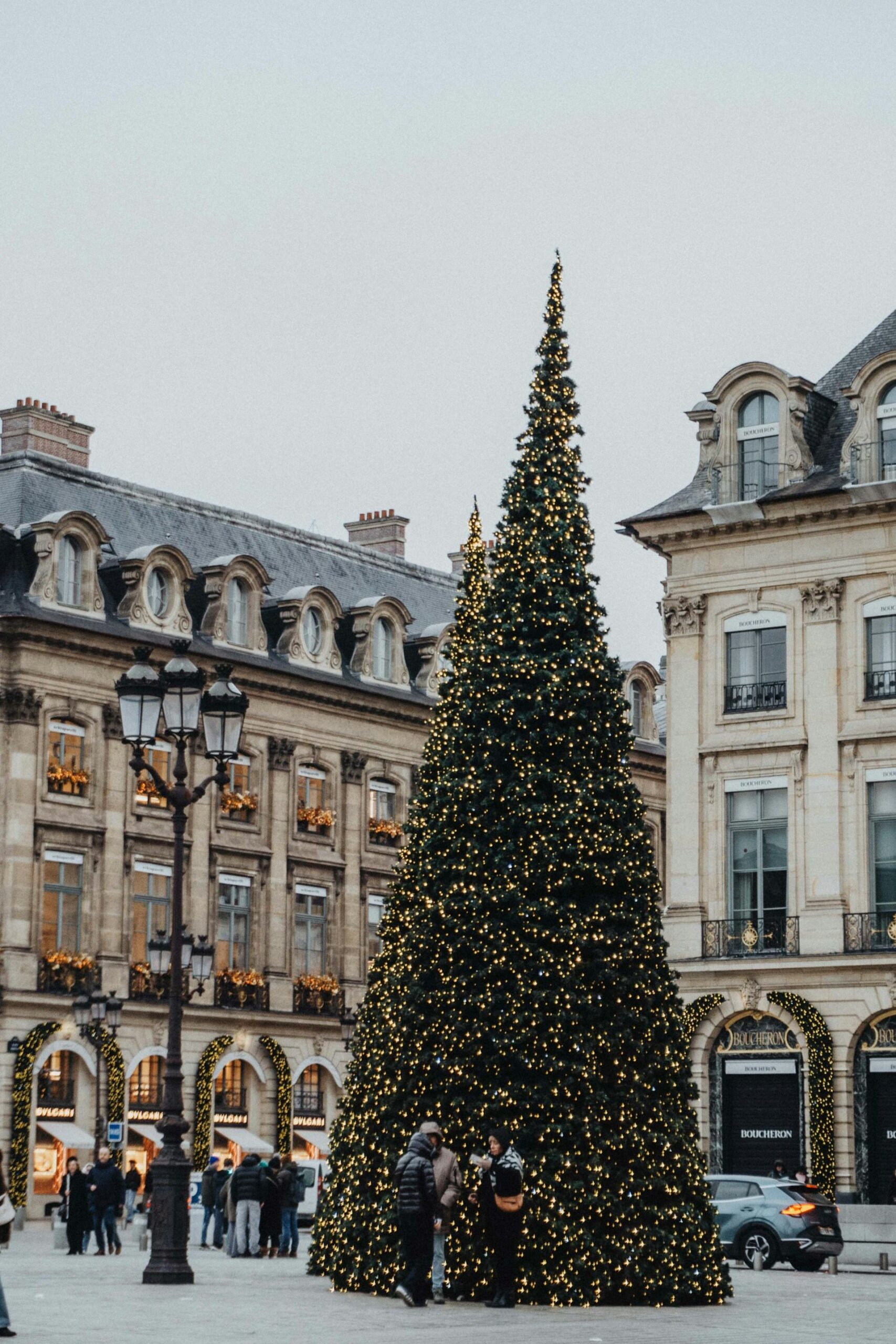
Three winter days are enough to discover three different sides of Paris: the medieval city on the islands and around the Louvre, the artists’ village on the hill, and the grand avenues leading to the Eiffel Tower. The route is organized by neighborhood, so the short winter day isn’t lost to crossing town, and each day comes with places to get out of the rain and warm up.
A few tips before setting out. Make the most of the daylight for outdoor sightseeing: in December it’s light roughly from 8:40 a.m. to 5 p.m., and by February the day is almost two hours longer. If you’d rather not juggle a map in cold hands, our self-guided audio walk through central Paris covers the same landmarks and works offline. Admission to Sainte-Chapelle, the Louvre, and the top of the Eiffel Tower is sold for specific time slots, so book ahead. Walk within a neighborhood, and take the metro between them. A leisurely lunch or café break will help you recharge for the evening.
If you’re still deciding whether to go at all, start with Paris in Winter: Is It Worth Visiting?
Day 1. Old Paris
Île de la Cité · Latin Quarter · the Louvre
Morning. Start at Notre-Dame. The cathedral has reopened after the fire and restoration. Entry is free, and a time slot can be reserved shortly before the visit, though it isn’t required. The line depends on the day and the service schedule: one traveler expected to wait an hour and got in after twenty minutes.
Before going in, look up. Not all of Notre-Dame’s stone monsters are there purely for decoration: many of them have a job to do, and on a rainy winter day it’s easy to see what it is. Inside, since the restoration, the cathedral is brighter than people who knew it before the fire remember. The TouringBee Notre-Dame audio guide explains why the cathedral needed gargoyles and how they differ from chimeras, with stories behind the portals and stained-glass windows. You start each track yourself at the right spot, and once downloaded it works offline.
A five-minute walk from the cathedral is Sainte-Chapelle, with its 13th-century stained glass. The windows look their best in sunshine, so if the forecast shows a brighter day later in the trip, consider saving the visit for it.
Across the bridge lies the Latin Quarter, with the narrow streets of the old student district. Time permitting, stop at the Shakespeare and Company bookstore (buy a book and they’ll stamp it with the shop’s seal) and at Le Procope, one of the oldest cafés in the city, open since 1686. For a deeper look at the neighborhood, there’s the TouringBee Latin Quarter walking tour.
Afternoon. Give the Louvre several hours. Today it’s famous for its art collections, but the lower levels of the palace preserve the walls of a medieval royal fortress, and you can walk past them before continuing to the painting galleries. Even a few hours inside can be tiring, so pick two or three departments in advance. On Wednesdays and Fridays the museum is open until 9 p.m. and can be saved for the evening. A timed Louvre ticket with Mona Lisa audio guide saves guessing at the entrance, and the TouringBee Louvre audio guide tells the story from fortress to collection.
Evening. If there’s energy left, walk out onto the Pont Neuf. From the bridge you can see the island and the illuminated riverbanks, with sightseeing cruise docks nearby: an hour on the water can replace the walk.
If it rains: the Conciergerie on the island, the Musée de Cluny in the Latin Quarter, and the underground Carrousel du Louvre. Sainte-Chapelle is open in the rain too, but without sunshine the stained glass loses half its effect.
Day 2. Montmartre and the Grands Boulevards
Montmartre · Opéra Garnier · Boulevard Haussmann
Morning. Start the second day on the hill while it’s still quiet. Narrow streets, steep climbs, and old houses make Montmartre feel like a village. Its history began long before the artists, back in Gallic times, and Paris only annexed the hill in the 19th century; traces of the old village are still visible. The TouringBee Montmartre walking tour follows them, and in the cold it’s easy to pause it and step into a café.
Stairs and a funicular lead up to Sacré-Cœur. A regular metro ticket works on the funicular, but you can’t transfer to it from the metro on the same ticket. The terrace in front of the basilica looks out over the whole city, and almost three hundred steps lead up to the dome. On the stairs, people offer “free” friendship bracelets; don’t stop, and keep your bag in front of you.
Place du Tertre is less busy in winter than in summer: fewer restaurant tables, the artists still at their easels, and a portrait sketch takes about fifteen minutes. After rain the cobblestones are slick, so take your time walking downhill toward Pigalle; from there, the metro is the easier way to the Opéra.

Afternoon. The grand façade of the Opéra Garnier recalls a time when Paris spun its own theatrical legends, the most famous being the Phantom of the Opera. During the day, visitors can explore the opera house, and on a cold afternoon it’s a pleasant place to warm up and rest your feet. The auditorium has a ceiling painted by Marc Chagall in 1964, but it sometimes closes for rehearsals, and then the Grand Staircase and the Grand Foyer become the highlights. Buy tickets online in advance.
Evening. Boulevard Haussmann is steps away. The free rooftop terrace of Galeries Lafayette looks out over the Opéra and the whole center, and in December the Christmas windows and the tree under the dome are waiting downstairs (more in Christmas in Paris 2026).
If it rains: the Musée de Montmartre and a café on Rue Lepic, then the Opéra and the department stores. The covered passages near the Grands Boulevards are close too, a 10–15 minute walk from the Opéra.
Day 3. The Tower and the River
Trocadéro · Eiffel Tower · the Seine · Champs-Élysées
Morning. In winter the sun rises late, around 8:30 a.m., and in the first hours after sunrise Trocadéro is usually fairly empty, so it’s often possible to photograph the tower without a crowd in the foreground.
At the top of the Eiffel Tower, winter means wind and noticeably colder air than down below, and in fog there’s almost nothing to see. One tourist who has been up several times recommends the second floor: the details of the city are easier to make out from there, and the elevator line is shorter. Today it’s hard to imagine Paris without the tower, but while it was being built, the city’s leading writers and artists wrote letters to the newspapers protesting against it. The TouringBee Eiffel Tower audio guide tells who attacked the tower, and in what words, and why it was nearly torn down. You can listen while waiting in line for the elevator.
After lunch, follow the Seine for about a mile and a half (2.5 km) to the Pont Alexandre III, the most ornate bridge in the city with its gilded statues, then head up Avenue Montaigne, lined with fashion houses, to the Champs-Élysées. In the cold, part of the way can be done by metro to save energy for the Arc.
Evening. An underground passage leads to the Arc de Triomphe: crossing the traffic circle on foot is not allowed. A narrow spiral staircase of 284 steps climbs to the observation deck. People who’ve done it call it a real workout, but they insist the view beats the one from the Eiffel Tower, because the tower itself is in the picture. Twelve avenues radiate from Place de l’Étoile, and at dusk, when the streetlights come on, the pattern is clearest from above.
If it rains: the museums around Trocadéro and the Musée du Quai Branly, and part of the riverside walk can be swapped for an hour on a boat with a closed, heated cabin. Choose the dock in advance so you’re not walking through the rain to the next stop. To warm up along the way, there are cafés around Place de l’Alma.
Paris after dark
Paris lit up: a one-hour Seine cruise
An evening sailing with audio commentary shows the illuminated city without the wind in your face — a good winter plan once the sun sets early.
See the illuminations cruise →
Before the trip
- The Louvre is closed on Tuesdays, December 25, and January 1.
- Sainte-Chapelle is open 9 a.m. to 5 p.m. in winter and closed on December 25 and January 1.
- The Opéra Garnier sets its visiting hours around the theater program.
- The Arc de Triomphe closes early on December 24 and 31, so plan to climb it on another day.
- Free: Notre-Dame, the Basilica of Sacré-Cœur, the Galeries Lafayette terrace, and the walks themselves. Paid: Sainte-Chapelle, the Louvre, the Sacré-Cœur dome, the Opéra, the Eiffel Tower, and the Arc.
- Rainy-day backups have closing days too, so check them against the specific date.
If it’s cold, time is short, or you’re traveling with kids
- In bitter cold, skip the riverside walk on day 3 in favor of a boat or the metro.
- If time is short, the Louvre’s interior can wait: a walk through the courtyards around the pyramid takes half an hour and still gives a sense of the palace.
- With small children, skip the climb up the Arc and the walk up Montmartre. Kids usually remember the funicular, the department-store windows, and the carousels more than the landmarks.
In three winter days, Paris shows three different faces: the historic islands, village-like Montmartre, and the wide avenues that look their best after dark.
Continue exploring
- Paris in Winter: Is It Worth Visiting?
- Christmas in Paris 2026: lights, markets and decorations
- New Year’s Eve in Paris 2027
- Louvre entry ticket with Mona Lisa audio guide on GetYourGuide
- Illuminations river cruise on GetYourGuide
Disclosure: this article contains affiliate links to TouringBee audio guides (a product of the site’s own company) and to GetYourGuide; we may earn a commission on purchases made through them.