
No products in the cart.
Legends of Père Lachaise Cemetery
Legends of père lachaise cemetery bring Paris history to life through ghost stories, famous graves, and quiet corners worth seeing at your own pace.
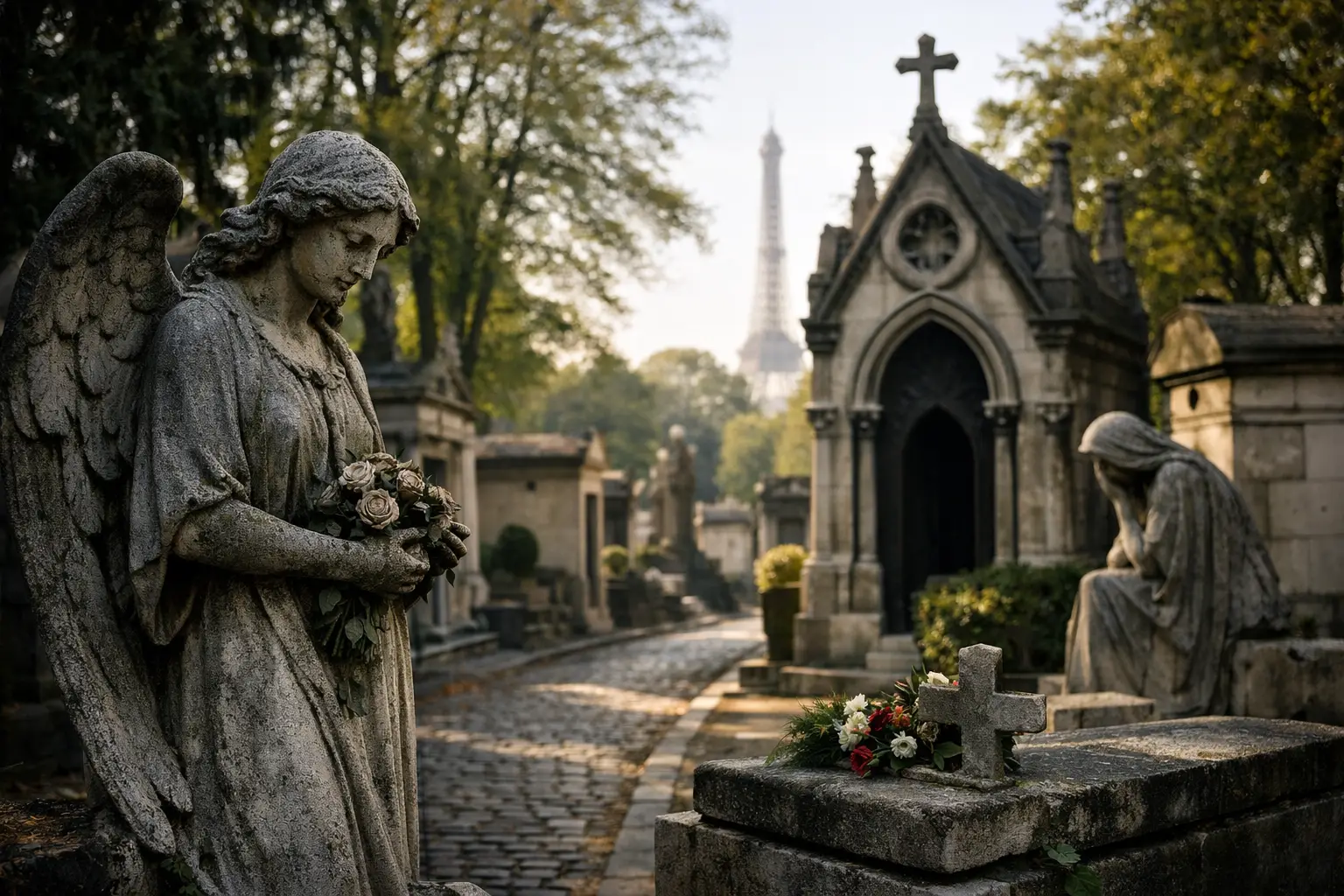
You do not go to Père Lachaise just to see tombs. You go because the place feels like Paris telling stories after dark, even at noon. The legends of père lachaise cemetery have a way of turning an ordinary walk into something far more memorable – part history lesson, part treasure hunt, part brush with the uncanny.
That mix is exactly why this cemetery draws travelers who might otherwise skip a burial ground altogether. Some come for famous names, some for architecture, and some for the thrill of hearing that a spirit still lingers near a particular grave. In reality, Père Lachaise works best when you treat it as all three at once. It is a museum without walls, a park with a gothic streak, and one of the easiest places in Paris to feel how myth and history constantly overlap.
Why the legends of Père Lachaise Cemetery endure
Père Lachaise is full of ingredients that naturally create legends. It is vast, hilly, and easy to get turned around in. Narrow cobbled lanes wind between chapel-like mausoleums, weathered angels, and family vaults that look dramatic even in bright sunlight. Add rain, fallen leaves, or a little silence, and the imagination does the rest.
But atmosphere alone does not explain its reputation. The cemetery also gathers an unusual cast of residents. Writers, singers, actors, political figures, and artists are buried here, and famous graves attract stories the way candles attract moths. Once a person becomes a symbol, visitors start bringing offerings, making rituals, and repeating tales that grow stronger with each retelling.
There is another reason these stories last. Paris is a city that likes elegance, but it also likes mystery. Père Lachaise gives you both in one walk. You can admire fine funerary sculpture one minute and hear a rumor about a ghostly figure the next. For travelers, that balance makes the cemetery feel less remote and more alive.
The most famous legends of Père Lachaise Cemetery
Some stories are tied to a single grave, while others belong to the cemetery itself. A few are old local tales. Others are basically modern folklore created by visitors, guides, and generations of curious tourists. That does not make them less interesting. In a place like this, belief and atmosphere matter almost as much as proof.
The spirit of Victor Noir
One of the best-known legends surrounds Victor Noir, a journalist whose death in 1870 made him a political symbol. His tomb is famous for the lifelike bronze sculpture that marks his grave. Over time, a very particular superstition developed around it. Visitors began saying that touching the statue could bring fertility, improve one’s love life, or help with romance.
That belief turned the grave into one of the cemetery’s most unusual pilgrimage sites. You can still spot the evidence in the polished areas of the bronze. Whether people treat the ritual seriously or with a grin, it shows how quickly a historical figure can become part of living folklore. The trade-off is that the story often overshadows who Victor Noir actually was, so it helps to know both the myth and the man.
Jim Morrison and the cult of the last visit
Jim Morrison’s grave may be the cemetery’s most internationally famous stop, and it has generated a legend all its own. Fans have long treated the site as more than a burial place. For some, it is a shrine to rebellion, youth, and unfinished artistic promise. Stories about secret gatherings, nighttime visits, and mysterious tributes have built an aura around the grave that goes far beyond the historical facts.
There is no single ghost story here that everyone agrees on. Instead, the legend is about presence. Even now, people come looking for a connection, as if the energy around the grave can still deliver something personal. That feeling is common at Père Lachaise. Some graves are famous because of what happened in a person’s life. Others become famous because of what visitors keep bringing to them afterward.
Oscar Wilde and the ritual of devotion
Oscar Wilde’s tomb has inspired another famous tradition. For years, visitors kissed the stone as a sign of admiration, leaving lipstick marks all over the monument. It became a ritual of affection, almost a performance of literary devotion. Conservation barriers have changed how close people can get, but the legend of the lipstick kisses remains part of the grave’s identity.
This is a good example of how cemetery myths are not always spooky. Sometimes they are sentimental, theatrical, or just very Parisian. A traveler expecting only ghost stories may be surprised to find that many legends here are really about love, memory, and the strange ways people want to touch history.
The woman in black and other wandering figures
Ask enough locals or frequent visitors, and you will hear stories about shadowy figures seen between the tombs. The details vary. Sometimes it is a woman in black disappearing near a mausoleum. Sometimes it is a pale figure glimpsed at dusk. Sometimes it is simply the sensation of being watched when no one seems to be around.
These tales are impossible to verify, and that is part of their staying power. Père Lachaise is large enough to make ordinary experiences feel uncanny. A shifting shadow, a distant footstep, or a gust of wind through stone corridors can be enough to produce a story someone swears is true. If you visit in late afternoon, you will understand how easy it is for that to happen.
Famous graves, real history, and where myth takes over
One reason the cemetery works so well for independent travelers is that you can choose your own balance. You can focus on major names like Edith Piaf, Frédéric Chopin, Molière, or Gertrude Stein. You can seek out lesser-known corners where ivy and worn stone do most of the storytelling. Or you can build your route around the legends that interest you most.
The practical challenge is that Père Lachaise is not small, and it is not especially intuitive on a first visit. Grave locations can be confusing, paths slope steeply, and famous sites are spread out. If you only have an hour, trying to improvise can leave you spending more time checking a map than enjoying the atmosphere.
That is where context matters. A self-paced visit is usually the sweet spot here because the cemetery rewards pauses. You want time to stop at a tomb that catches your eye, listen to the story behind a monument, and then move on when you are ready. A personal tour on your phone can make that much easier, especially if you want practical navigation without being hurried by a group.
How to experience Père Lachaise without missing its atmosphere
The legends of père lachaise cemetery land differently depending on when and how you visit. Early morning is quieter and gives the place a reflective feel. Late afternoon brings longer shadows and a stronger sense of drama. Midday is easier for photos and finding landmarks, but it can flatten some of the mood.
Good shoes help more than most travelers expect. The cemetery’s paths can be uneven, and some routes involve hills or stairs. It is also worth deciding in advance whether you want a highlights visit or a slower wander. Both are worthwhile, but they create very different experiences.
If your main goal is to see the big names, plan a clear route. If your goal is to feel the place, leave some room for getting pleasantly sidetracked. The best moments at Père Lachaise are often unplanned – a sculpture half-covered in moss, a handwritten note left at a grave, or a silent lane that suddenly makes every old legend seem plausible.
And if you are curious but not eager to decode the cemetery alone, this is exactly the kind of place where an affordable audio guide earns its keep. TouringBee-style self-guided tours suit Père Lachaise particularly well because you can follow expert stories at your own pace, pause whenever something catches your attention, and avoid the usual stress of figuring out where the next important stop actually is.
What these legends really add to a visit
The stories of Père Lachaise are not valuable because they are all true in a literal sense. They matter because they change how you look. A tomb becomes more than stone once you know the rumor attached to it. A famous grave becomes more human once you see what visitors still leave behind. Even a doubtful ghost tale can sharpen your attention to the place itself.
That is the real appeal. Legends slow you down. They make you notice details, ask questions, and stay a little longer than planned. In a city packed with landmarks, Père Lachaise stands out because it does not just give you things to see. It gives you stories to carry with you long after you leave the gates.