
No products in the cart.
10 Famous Cemeteries Worth Visiting Worldwide
From Paris to Buenos Aires, these famous cemeteries worth visiting offer art, history, calm walks, and practical tips for planning a respectful visit abroad.
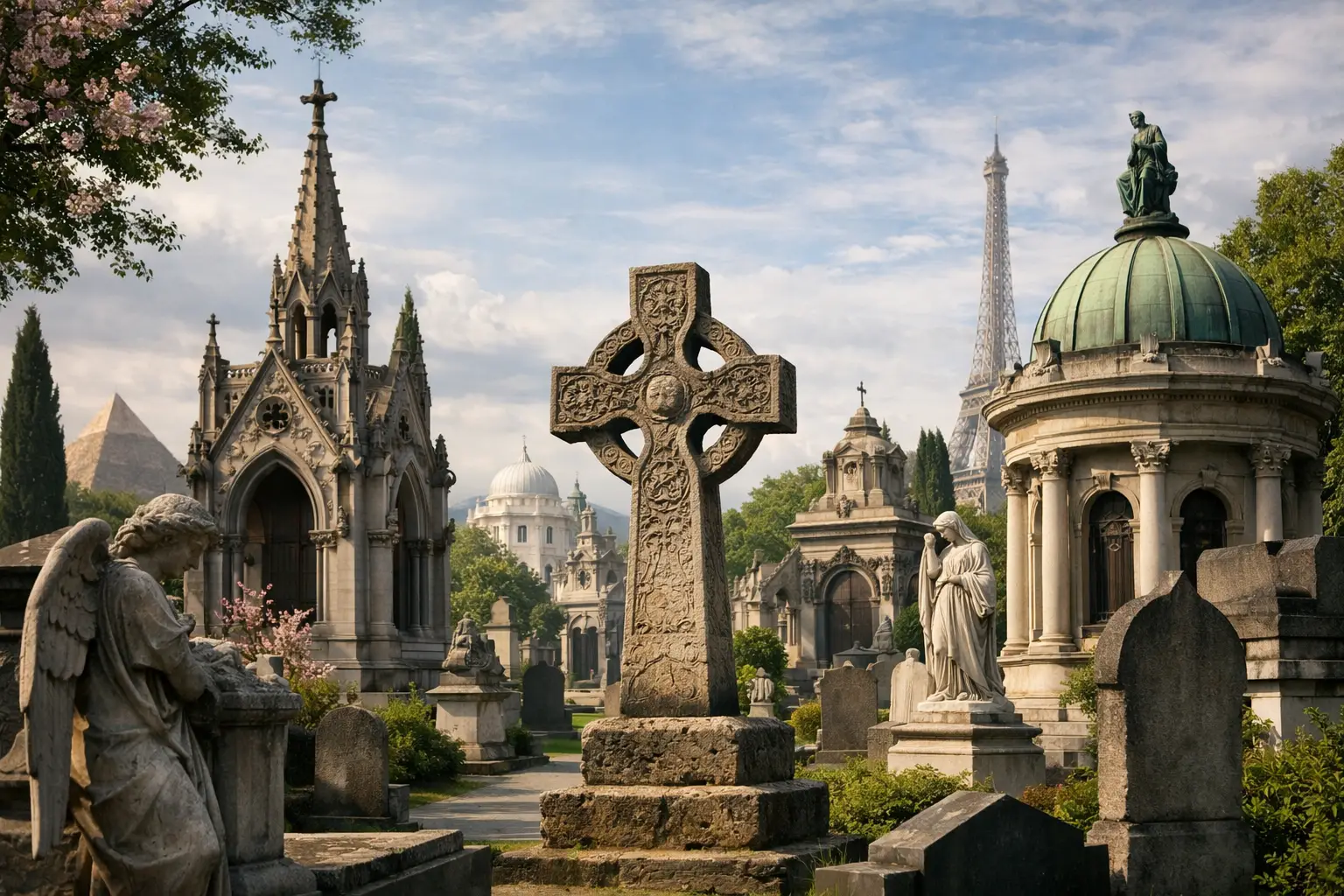
A cemetery can be one of the most revealing places in a city. Away from the busiest attractions, its paths tell stories about artists, political movements, migration, faith, wealth, and everyday local life. The most famous cemeteries worth visiting are not simply collections of graves. They are open-air museums, quiet parks, and unexpectedly moving stops that can add depth to a city break.
For independent travelers, they are also easy to enjoy at your own pace. Spend 30 minutes finding one famous memorial, or take a long, unhurried walk with an offline map and a few stories saved on your phone. Just remember that these are active places of remembrance, not movie sets. A little preparation and respect go a long way.
10 famous cemeteries worth visiting
1. Père Lachaise Cemetery, Paris
Père Lachaise is the cemetery most travelers picture when they imagine a grand European burial ground. Its cobbled lanes, towering trees, elaborate mausoleums, and weathered sculptures make it feel like a small city within Paris. Visitors come to see the graves of Oscar Wilde, Edith Piaf, Jim Morrison, Frédéric Chopin, and many others.
The challenge is its size. Without a plan, it is easy to spend an hour walking uphill in the wrong direction. Choose a few graves you genuinely want to find, then leave time for the quieter corners, where the architecture is often just as memorable as the famous names.
2. Recoleta Cemetery, Buenos Aires
Recoleta is famous for its dense network of mausoleums, built like miniature temples, chapels, and townhouses. The cemetery reflects the wealth and ambitions of Argentina’s nineteenth- and early twentieth-century elite, with marble angels, stained glass, and ornate ironwork around almost every turn.
Most visitors seek out Eva Perón’s family tomb, but the real pleasure is wandering slowly through the lanes. Go in daylight, wear comfortable shoes, and look up as often as you look down. Some of the finest details are high on the facades.
3. Highgate Cemetery, London
Highgate Cemetery has a wonderfully atmospheric, slightly wild character. Its Victorian monuments sit among ivy, mature trees, and winding paths, creating a setting that feels far removed from central London. Karl Marx’s grave is its best-known stop, while the Egyptian Avenue and Circle of Lebanon are among its most photographed features.
The cemetery is divided into East and West sections, and access rules differ between them. Check current entry arrangements before you go, especially if you want to see the more dramatic West Cemetery. This is a good destination for travelers who enjoy architecture, literary history, and a quieter side of London.
4. Cimitero Acattolico, Rome
Rome’s Non-Catholic Cemetery is smaller and calmer than many of the city’s headline sights, but it rewards visitors looking for a reflective pause. Near the Pyramid of Cestius, its leafy grounds contain the graves of English poets John Keats and Percy Bysshe Shelley, along with diplomats, artists, scholars, and expatriates from many countries.
The cemetery feels intimate rather than monumental. It is a particularly good choice after a busy morning around the Colosseum or Roman Forum, when you want history without crowds. Visitors should keep voices low and give the resident cats their space.
5. St. Louis Cemetery No. 1, New Orleans
New Orleans cemeteries are unlike most American burial grounds. Because of the high water table, many tombs are built above ground, creating rows of whitewashed vaults that have become one of the city’s most recognizable sights. St. Louis Cemetery No. 1 is the oldest surviving cemetery in New Orleans and is associated with figures including Marie Laveau, the famed Voodoo practitioner.
Access policies can change, and entry may require a licensed guide. That trade-off is worth it for many visitors: a good guide can explain local burial customs, Creole history, and why these striking tombs developed here. Do not treat the site as a place for ghost-hunting stunts or unauthorized markings.
6. Zentralfriedhof, Vienna
Vienna’s Central Cemetery is immense, with broad avenues and sections representing different faiths and communities. It is especially popular with classical music fans, who come to pay respects at memorials for Beethoven, Brahms, Schubert, and Strauss. Mozart also has a memorial here, though his actual burial site is elsewhere in Vienna.
Its scale can feel overwhelming, so it helps to use the cemetery’s internal transport or focus on the composers’ section. Plan this as a dedicated outing rather than squeezing it between nearby attractions. The reward is a fascinating look at Vienna’s musical identity and multicultural past.
7. Old Jewish Cemetery, Prague
Within Prague’s Jewish Quarter, the Old Jewish Cemetery is one of Europe’s most powerful historic sites. Tombstones stand closely together at uneven angles, shaped by centuries of limited burial space and repeated layers of graves. The effect is visually striking, but the history behind it is sobering.
This is not a place to rush through for photographs. Take time to read the interpretive information and understand the cemetery’s place within the wider history of Prague’s Jewish community. Dress and behave respectfully, and be prepared for security procedures around the Jewish Museum sites.
8. Hollywood Forever Cemetery, Los Angeles
Hollywood Forever offers a very different cemetery experience. It is the resting place of stars including Judy Garland, Cecil B. DeMille, and Johnny Ramone, and it remains connected to Los Angeles culture through film screenings, concerts, and seasonal events. Palm trees, lake views, and Art Deco monuments give the grounds a distinctly Southern California feel.
Visit during the day if your priority is film history and architecture. If you attend an event, expect a livelier atmosphere and check the rules on entry, seating, and photography. It is a reminder that a cemetery can honor the past while still being part of a city’s living cultural scene.
9. La Almudena Cemetery, Madrid
La Almudena Cemetery is one of the largest burial grounds in Western Europe and a compelling stop for travelers who want to see beyond Madrid’s royal palaces and major art museums. Its vast layout contains grand family monuments, military memorials, and modest graves that together reflect the city’s changing social history.
Because it is less familiar to international visitors than Père Lachaise or Recoleta, it can feel more local and less crowded. That also means you should arrive with a little research. Identify a section, person, or historical theme before setting out, rather than trying to cover the entire cemetery.
10. Glasnevin Cemetery, Dublin
Glasnevin is one of the best cemetery visits for travelers who enjoy clear storytelling. Many pivotal figures in Irish political and cultural history are buried here, including Daniel O’Connell, Michael Collins, and Maud Gonne. The cemetery’s memorials provide a direct route into Ireland’s long struggle for independence.
A guided visit is especially useful here because context changes everything. Names and monuments become much more meaningful when you understand the political divisions, rebellions, and social change behind them. If you prefer exploring independently, read up on a few key figures first and give yourself enough time to absorb the scale of the site.
How to visit famous cemeteries respectfully
Treat a cemetery as a place where mourning still happens. Keep conversations quiet, stay on marked paths, and do not sit on tombs, move objects, or pose in ways that make memorials into props. Photography is often allowed, but rules vary. Skip flash, drones, and photos of people attending funerals, and follow any signs that restrict images in particular areas.
Timing matters, too. Early morning is often the most peaceful time to visit, with cooler temperatures and fewer people. In large cemeteries, download a map before arriving and save the names or locations you want to find. Mobile data can be unreliable among high walls, dense trees, and old stone structures.
There is also no need to see every famous grave. A better visit usually combines one or two well-known names with time to notice the details around them: symbols carved into stone, family chapels, inscriptions in different languages, and the changing style of monuments across generations. That is where a cemetery becomes more than a checklist stop.
On your next city trip, leave room for one quiet detour. You may come for a celebrated writer, musician, or historical figure, then leave with a sharper sense of the city and the people who shaped it.