
No products in the cart.

Self Guided Mexico City Walking Tour Tips
Plan a self guided Mexico City walking tour with smart routes, safety tips, food stops, and timing advice for a flexible day on your schedule.
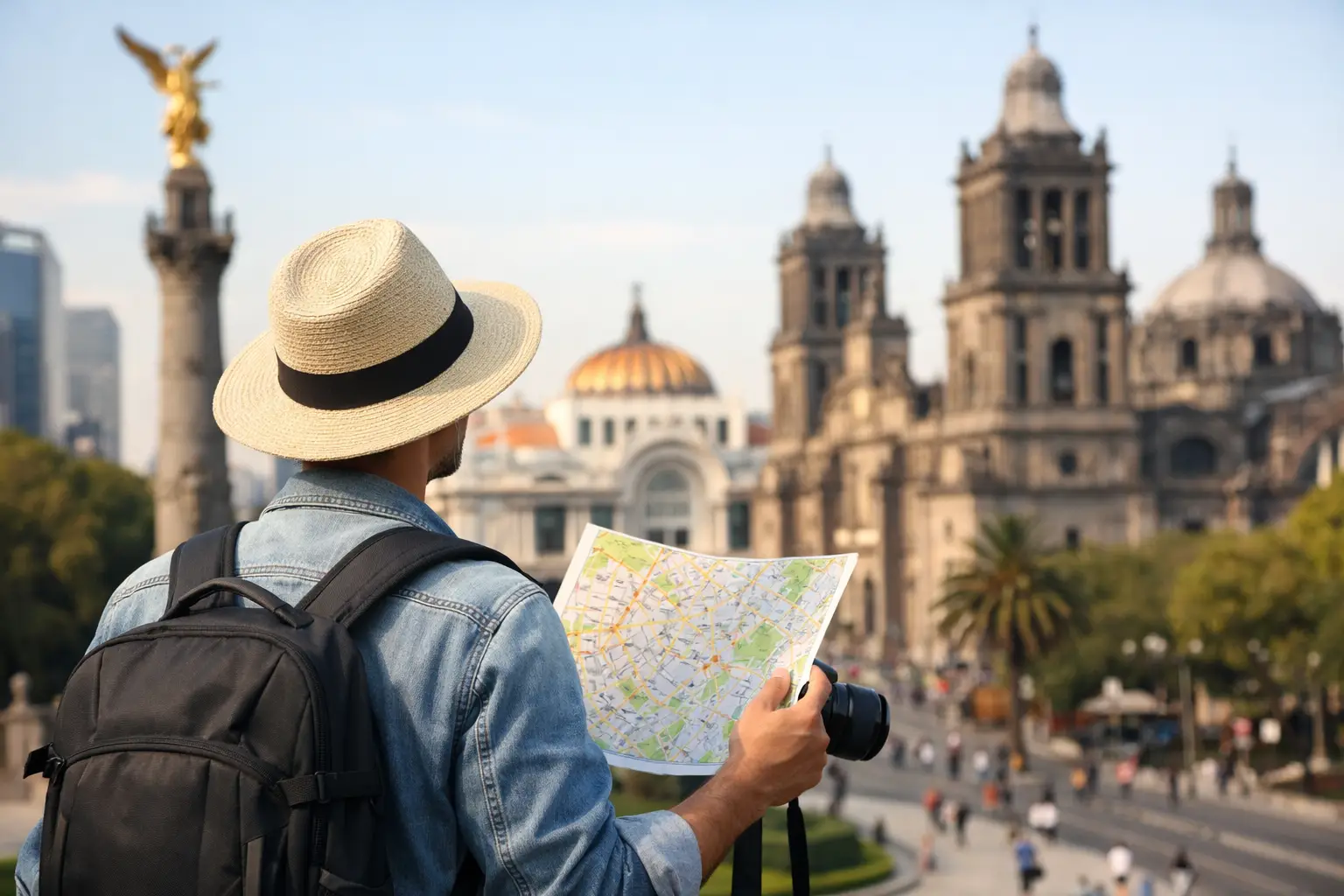
Mexico City rewards people who walk it. Not because every block is pretty or easy, but because the city reveals itself in layers – Aztec foundations, colonial plazas, Art Deco corners, street food smells, political murals, and leafy neighborhoods that feel worlds apart within the same afternoon.
A self guided Mexico City walking tour makes a lot of sense here. You can start early before the sidewalks fill up, stop for coffee when you want, spend 10 minutes or an hour in a museum, and adjust the day around your energy instead of a group schedule. In a city this big, that flexibility is not just convenient. It often makes the experience better.
Why a self guided Mexico City walking tour works so well
Mexico City is huge, but many of its best areas for sightseeing are surprisingly walkable once you stop thinking about the city as one giant destination. The historic center works best as a dense cluster of landmarks. Roma and Condesa are better for a slower neighborhood stroll. Coyoacan feels almost like a separate small town. Trying to cram them all into one continuous route usually leads to too much transit and not enough enjoyment.
That is why self-guided sightseeing tends to work better than rigid planning here. You can treat the city as a set of walkable zones and pick one for the morning and another for later if you still have the energy. You are free to linger in a market, step into a church, or skip a stop that does not interest you. If it starts raining, you can pivot into a museum. If lunch turns into a long lunch, that is fine too.
For many travelers, cost matters as much as flexibility. A self-guided route with audio commentary can give you the feel of a personal tour without the price of a private guide. That is especially appealing in a city where you may want to save room in the budget for museums, tacos, and one more bakery stop than originally planned.
Pick the right area instead of trying to see everything
The biggest mistake on a self guided Mexico City walking tour is ambition. The city can fool you into thinking major sights are all close enough to combine, but traffic, altitude, and sheer sensory overload can wear you down faster than expected.
If it is your first visit, Centro Historico is the easiest place to begin. It gives you immediate access to the Zocalo, the Metropolitan Cathedral, the National Palace area, Templo Mayor surroundings, grand old buildings, pedestrian streets, and a constant stream of city life. It is busy, intense, and full of history. That density is a strength if you want one satisfying walk without complicated logistics.
Roma and Condesa suit travelers who prefer a more relaxed pace. Here the pleasure is not only in major landmarks but in the atmosphere – tree-lined avenues, cafes, small parks, galleries, and architecture you notice when you are not hurrying. This part of the city is good for couples, solo travelers, and anyone who likes to combine sightseeing with food and people-watching.
Coyoacan is a strong choice if you want a slower, more local-feeling day. Cobblestone streets, plazas, markets, and museum options make it an easy area to explore on foot. The trade-off is that it sits farther from the central core, so it works best as a half-day or full-day neighborhood plan rather than something to squeeze in between downtown stops.
How to plan a route that feels easy, not exhausting
A good walking day in Mexico City usually starts with one question: what kind of experience do you want? If you want history, plan around Centro Historico. If you want neighborhoods and food, choose Roma or Condesa. If you want museums and a calmer rhythm, lean toward Coyoacan or Chapultepec.
Try to keep the walking route itself to a manageable size. On paper, four or five miles may not sound like much, but in practice you will be standing in plazas, crossing busy streets, browsing shops, and stopping often. Altitude also plays a role. Even travelers who are in decent shape can feel more tired than expected in Mexico City, especially in the first day or two.
It helps to build your route around anchor stops. Think of them as the places you really care about, with smaller discoveries in between. That keeps the day focused without making it feel overprogrammed. A simple plan might be one major square, one museum, one market or snack stop, and one scenic neighborhood stretch.
If you are using an audio guide, offline maps are especially useful here. Signal can be inconsistent in some interiors, and relying on constant mobile data adds friction you do not need. A route with GPS-triggered commentary can also help you avoid the usual travel problem of staring at your phone too much instead of looking around.
Timing matters more than you think
Start earlier than you think you need to. Morning is often the best time to walk in Mexico City, especially in busy central areas. Temperatures are usually more comfortable, the light is better for photos, and crowded places feel a little more manageable.
By midday, sidewalks and traffic can become more tiring, and museums or landmark zones may feel less relaxed. That does not mean you need a military-style itinerary. It just means the city often rewards an early start and a slower afternoon.
Weekdays and weekends create different experiences. A weekday walk can feel more functional and local, especially in business districts and central streets. Weekends often bring more leisure energy, more families, and more people in parks and plazas. Neither is better. It depends on whether you want everyday city rhythm or a more social atmosphere.
Safety and comfort on a self guided Mexico City walking tour
Most visitors do perfectly well walking in the city’s main tourist-friendly areas, but common sense matters. Keep your phone secure when not using it, avoid flashing valuables, and stay aware in crowded places like markets, transit hubs, and major squares.
The better question is not whether walking is safe in general, but where and when you are walking. Stick to neighborhoods known for tourism or regular foot traffic, especially if you are unfamiliar with the city. If a street suddenly feels empty, poorly lit, or off in a way that is hard to explain, trust that instinct and turn back.
Comfort is just as important as safety. Wear supportive shoes, carry water, and pace yourself. Mexico City’s altitude catches people off guard. So does the size of blocks in some neighborhoods, where a “quick walk” can become longer than expected. Sunscreen is worth carrying year-round, and a light layer helps because mornings and evenings can feel cooler than midday.
Food stops are part of the route, not a distraction
One reason self-guided walking works so well in Mexico City is that eating and sightseeing naturally belong together. This is not a city where you should rush from monument to monument and treat meals as an interruption.
A bakery stop in the morning, tacos in the middle of the day, coffee in a shaded plaza, or a market snack can reset your energy and make the route feel fun rather than demanding. The only trick is not to overplan every food stop in advance. Some of the best moments come from following a good smell or joining the line where locals are already waiting.
That said, flexibility has limits. If you are walking in a major tourist area at peak lunch hour and you know you get cranky when hungry, it is smart to have one reliable option in mind. Freedom is great. So is not wandering for 45 minutes looking for a table.
Should you use an audio guide?
If you like context but do not want to join a group, yes, usually. Mexico City is the kind of place where stories make the streets more meaningful. Without them, you may still enjoy the architecture and atmosphere, but it is easier to miss why a square matters, what stood there before, or how one neighborhood connects to another.
A good self-guided audio tour adds structure without taking away freedom. You still move in your pace, but you are not left guessing what is worth your time. That balance is why many travelers prefer it to piecing together random map pins and review snippets. TouringBee, for example, is built around that idea – practical routing, expert storytelling, and the ability to pause whenever the city tempts you off-script.
Make room for detours
The best self guided Mexico City walking tour is rarely the one that goes exactly as planned. It is the one that leaves enough room for a church you did not expect, a park bench that deserves 20 minutes, or a street musician who makes you stop walking altogether.
Mexico City can be intense, beautiful, chaotic, elegant, and ordinary within the same hour. If you give yourself a route with a little structure and a lot of breathing room, the city tends to do the rest. Walk one neighborhood well, stay curious, and let the day stretch naturally from there.