
No products in the cart.

Walking Tour of Dublin: Routes, Options and How to Choose
Planning a walking tour of Dublin? Compare free walking tours, guided group tours, private guides and self-guided audio tours — plus the classic route, timings and local tips.

A walking tour of Dublin is the best way to understand a city this compact and story-rich — but "walking tour" can mean four very different things, and the right one depends on how you like to travel. This guide is for first-time visitors weighing the options: free tip-based tours, guided group tours, private guides and self-guided audio tours. We'll compare them honestly, lay out the classic route they tend to follow, and give you the timings and tips to walk Dublin well.
The good news is that Dublin is made for walking. The historic core is small, flat and dense with landmarks — Trinity College, the medieval cathedrals, Dublin Castle and Temple Bar all sit within a tight loop south of the River Liffey. What varies between tour types is who's guiding you, how much you pay, and how much freedom you keep.
We walked and mapped this loop ourselves while building the TouringBee self-guided walking tour of Dublin, so the comparisons below come from having actually tested the route in Irish weather rather than from a brochure. Here's how to pick.
Quick answer: which walking tour is right for you?
| Tour type | Best for | Typical cost | Flexibility |
|---|---|---|---|
| Free walking tour | Budget travellers, a social vibe | Tips (€10–15 suggested) | Low — fixed time & route |
| Guided group tour | Themed walks (history, literary, pub) | €15–30+ | Low — fixed schedule |
| Private guide | Families, special interests | €120–250+ | High — but pricey |
| Self-guided audio tour | Independent travellers, own pace | Low (one app fee) | Very high — start anytime |
In short: pick a free or group tour if you want a live guide and don't mind a fixed schedule; a private guide if budget is no object; and a self-guided audio tour if you value freedom, pace and value. The rest of this article explains why.
Why Dublin is a great walking city
Some capitals fight you on foot. Dublin doesn't. The tourist core clusters tightly on the south side of the Liffey, rarely more than 10–15 minutes between major sights, and it's almost entirely flat — no hills, no sprawl. That means a walking tour here isn't a route march between distant landmarks; it's a continuous, story-rich stroll where the next stop is usually in view of the last.
Dublin also layers its history in plain sight: a Viking-founded cathedral, a medieval castle, a Georgian parliament, and a 1916 rebellion all within a short walk. That density is exactly why a guide — human or audio — adds so much value: without one, you walk past most of it without knowing what you're seeing. The city's stories hide behind ordinary facades, which is the whole point of walking it with commentary.

The classic Dublin walking route
Most walking tours — whatever the format — follow a similar spine through the centre, because the landmarks fall naturally into a loop. Expect some version of:
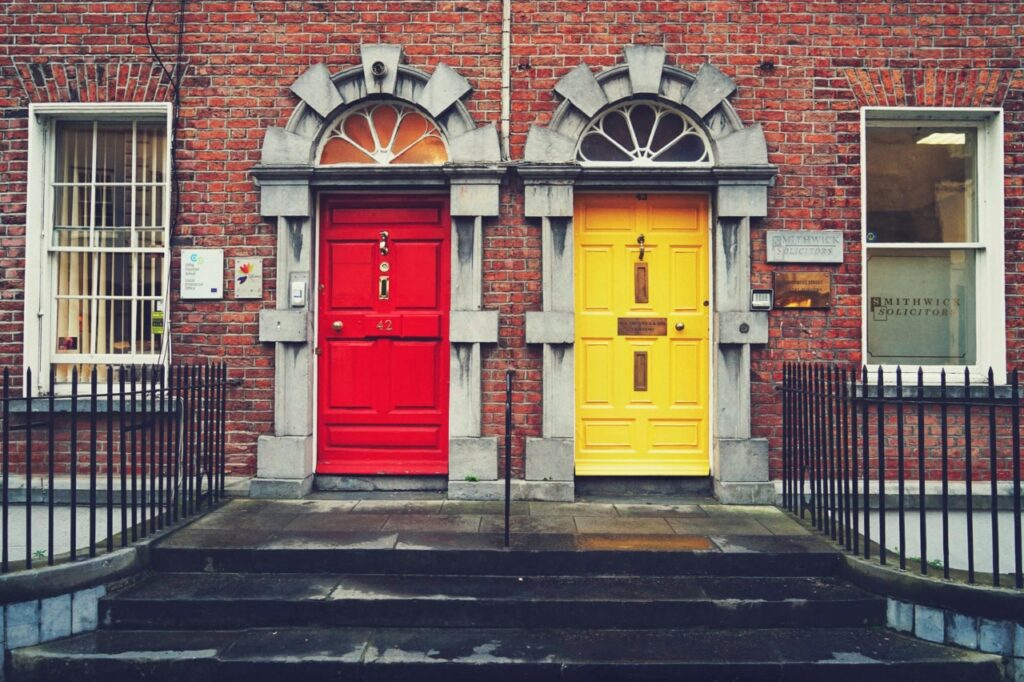
- Merrion Square & the Georgian doors — the colourful doors and Oscar Wilde's corner.
- Trinity College & the Book of Kells — the 1592 university and its famous manuscript.
- Grafton Street & St Stephen's Green — buskers, Bewley's Café and a Victorian park.
- Bank of Ireland (old parliament) — the world's first purpose-built two-chamber parliament house.
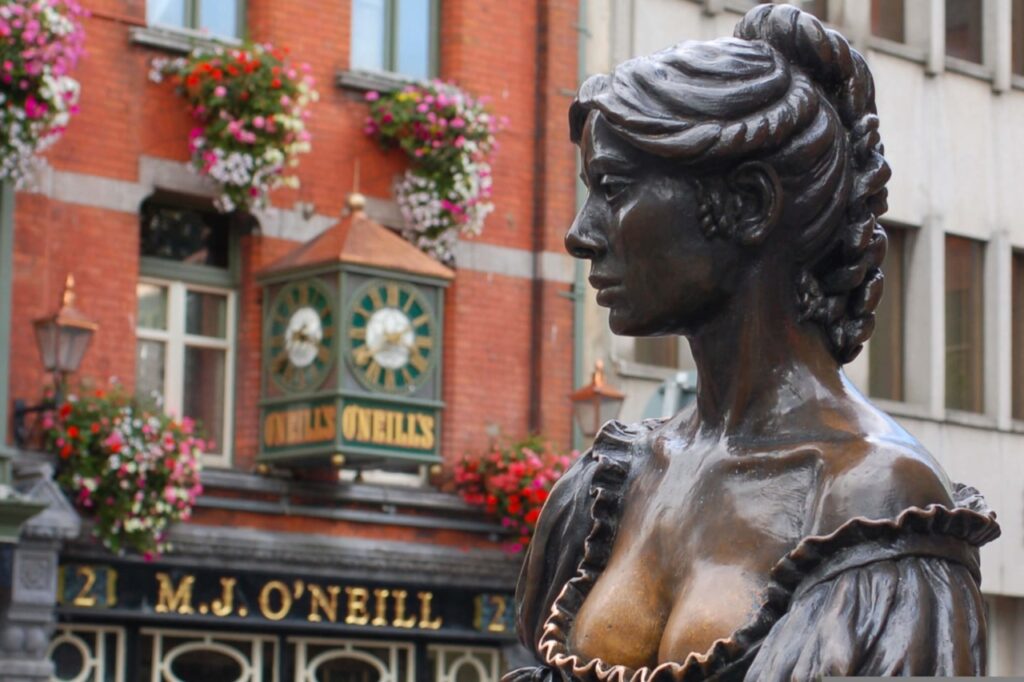
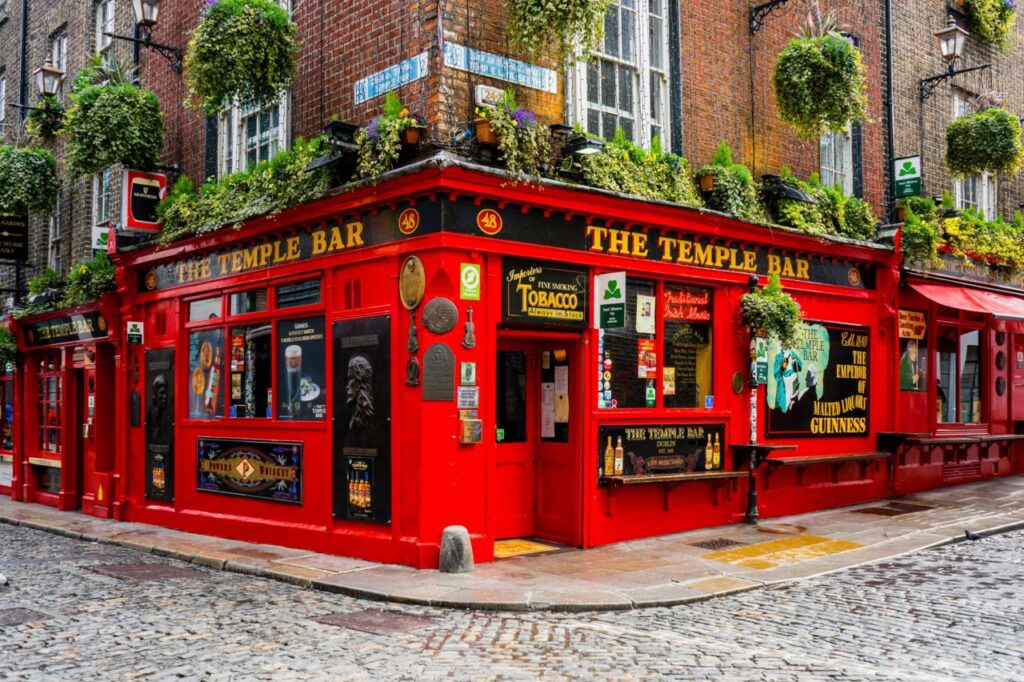
- Molly Malone & Temple Bar — the "Tart with the Cart" and the cultural quarter.
- Dublin Castle & the cathedrals — Christ Church, St Patrick's and 800 years of power.
- The Brazen Head — Ireland's oldest pub, pouring since 1198.
The difference between tours isn't really the where — it's the how: the depth of the stories, the pace, and whether you're tied to a group.
How long does a Dublin walking tour take?
The core historic route — Trinity through the old town to the cathedrals and Temple Bar — takes about 2 to 3 hours at a comfortable pace, not counting time inside ticketed attractions. Most guided tours run 2–2.5 hours; a self-guided audio tour can be stretched across a whole day with breaks for museums, lunch and a pint. Dublin's flatness and compactness mean the walking itself is easy — the time goes on stopping, looking and listening.
Free walking tours: the budget option
Tip-based "free" walking tours run daily in Dublin, usually starting near City Hall or Trinity. A local guide leads a group on a set route, and you pay what you feel it was worth at the end (€10–15 is normal).
The upside: cheap, sociable, and a good way to orient yourself on a first morning. The catch: fixed departure times, big groups (you're often straining to hear at the back), and quality that swings with whichever guide you get. There's also pressure to keep up rather than linger.
Guided group tours: themed and expert-led
Dublin has a strong tradition of themed paid tours, and this is where the city shines. Beyond the general history walk, you'll find:
| Theme | What it covers | Good for |
|---|---|---|
| Historical | Vikings, 1916 Rising, Dublin Castle | History buffs |
| Literary pub crawl | Joyce, Wilde, Beckett + pubs | Book lovers |
| Traditional music pub crawl | Live trad in multiple pubs | Music fans |
| Food tour | Chowder, boxty, cheese, whiskey | Foodies |
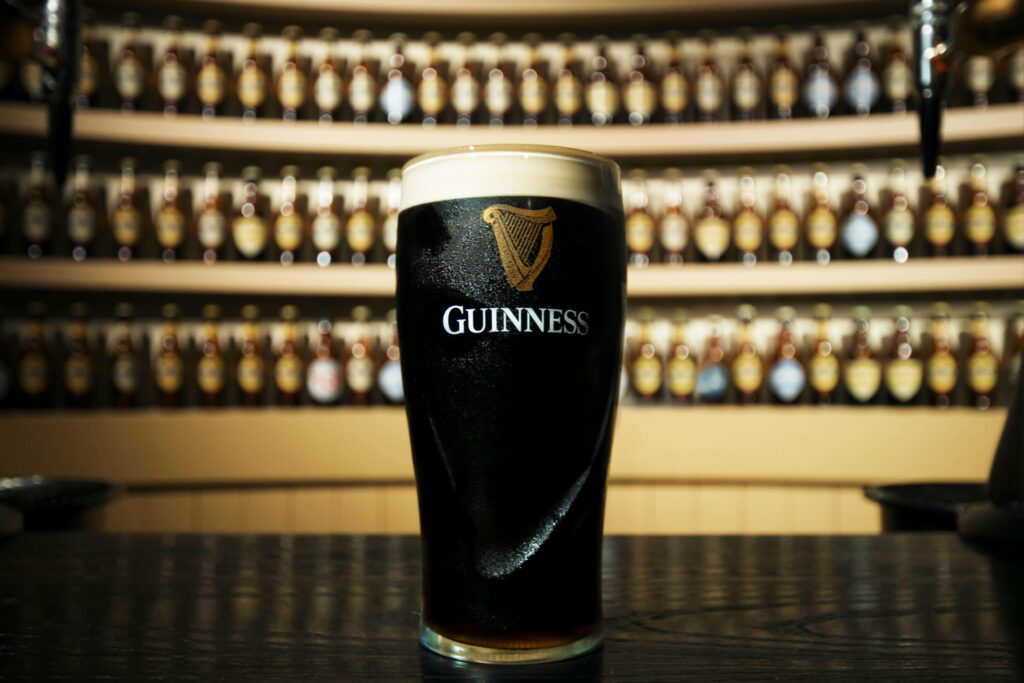
These are led by knowledgeable guides and often genuinely entertaining. Most are bookable in advance — the Guinness Storehouse experience with a pint at the top is the one visitors most often bolt onto a walking day. The trade-off is the usual one: fixed times, a set duration whether or not you're flagging, and moving at the group's pace.
Private guides: maximum depth, maximum cost
A private guide tailors everything — pace, interests, start time, language. For a family, a special-interest visitor, or someone who wants questions answered in depth, it's the richest option. The catch is simply price: a few hours with a licensed private guide typically runs €120–250 or more, which is hard to justify for many independent travellers on a city break.
Self-guided audio tours: freedom on your own clock
A self-guided audio tour flips the model: instead of meeting a guide, you follow a mapped route on your own phone while a narrator tells the stories at each stop. You start whenever you want, pause for a pint, linger where you like, and skip what doesn't interest you.
The upside: total flexibility, a low one-off cost, no group, and no fixed schedule — which fits how independent travellers actually move around a city like Dublin. The catch: there's no live human to field a spontaneous question, so it suits people comfortable exploring on their own.
This is the format that has grown fastest, precisely because it removes the two biggest frustrations of group tours — rigid timing and being herded. While researching our own Dublin audio walking tour, one thing stood out: the distances between landmarks are so short that the real value of a guide here isn't navigation at all — it's the stories. That's exactly what an audio tour delivers without tying you to a clock. If you want the wider case for the format, we've written about why self-guided city walking tours work.
Free vs guided vs self-guided: an honest comparison
| Factor | Free tour | Group tour | Private guide | Self-guided audio |
|---|---|---|---|---|
| Cost | Tips | €€ | €€€€ | € |
| Start any time | No | No | Sometimes | Yes |
| Own pace | No | No | Yes | Yes |
| Live questions | Yes | Yes | Yes | No |
| Works in the rain / indoor breaks | Hard | Hard | Flexible | Easy — pause anytime |
| Repeatable & offline | No | No | No | Yes |
What you'll learn on a good Dublin walk
The sights are only half of it — the stories are what stay with you, and Dublin has a bottomless supply. A strong walk goes past the surface into the odd, human details: why the city's Georgian doors are painted such bright colours (a quiet rebellion against British uniformity); why the old parliament building has almost no windows (an 18th-century window tax); how a bank became a bar and a church once moonlighted as a tavern; where the relics of St Valentine actually rest; and what the Iron Age "bog bodies" in the National Museum really are. A tour that only recites dates misses the point — the good ones, human or audio, turn an ordinary street into a story.

Which neighbourhoods will you walk through?
| Area | Character | On most walking tours? |
|---|---|---|
| Georgian Dublin (Merrion Sq) | Elegant townhouses, colourful doors | Usually the start |
| Trinity & Grafton Street | University, shopping, buskers | Always |
| Medieval Dublin (Castle, cathedrals) | The oldest core | Always |
| Temple Bar | Cobbles, pubs, culture | Almost always |
| Viking Dublin (Wood Quay, Dublinia) | The city's Norse origins | On history tours |

When to take a walking tour
Timing matters more than in most cities, because of the weather. Mornings are quietest and best for the big attractions; late afternoon suits the old town and sets you up for an evening in the pubs. Dublin rain is frequent but usually passes quickly, so a walking tour rarely gets truly rained off — but a self-guided option has the edge here, since you can duck into a museum, café or pub to wait out a shower and simply resume. Summer offers the longest days and liveliest streets; winter is cool, cosy and far less crowded. Whatever the season, bring a light rain jacket.
How much does a Dublin walking tour cost?
Price is often the deciding factor. A free walking tour costs only your tip (€10–15). A guided group tour runs roughly €15–30 per person, more for small-group or specialist themes like whiskey or literary pub crawls (which include tastings or entries). A private guide is charged per group — typically €120–250 for a half-day — which can make sense split between four but is steep for a couple. A self-guided audio tour is a single low app fee that covers everyone with you and can be reused across your whole stay, so the per-person cost drops the longer you use it. For two independent travellers, the self-guided option is usually the best value; a private guide only pays off for larger groups or very specific needs.
Who each tour type suits best
- Free tour — solo travellers and backpackers who enjoy meeting people and don't mind crowds or fixed times.
- Themed group tour — visitors with a clear interest (literary, music, history, food) who want a live expert and don't mind a set schedule.
- Private guide — families, accessibility needs, or special interests where tailoring is worth the premium.
- Self-guided audio tour — couples and independent travellers who value their own pace, low cost, and the freedom to pause for rain, a museum or a pint.
Walking Dublin in the rain
Rain is part of the deal in Dublin — the local joke is four seasons in one day — so it's worth planning for rather than fearing. Showers here tend to be short and sharp, so a compact umbrella and waterproof shoes usually see you through. The real advantage of a self-guided walk in Irish weather is flexibility: when a downpour hits, you can duck into a museum (many are free), a café or a pub, wait it out with a coffee or a pint, and pick the route back up exactly where you left off — something a fixed-time group tour simply can't offer. Build a couple of indoor stops into any walking plan and Dublin's weather stops being a problem and starts being an excuse for another pot of tea.
Don't forget the north side
Most walking tours — and most first-timers — stick to the south side of the Liffey, where Trinity, the castle and Temple Bar cluster. But crossing the river rewards you. The north side holds the General Post Office (GPO) on O'Connell Street, headquarters of the 1916 Easter Rising and one of the most important buildings in modern Irish history; the elegant 1816 Ha'penny Bridge; the Jameson Distillery in Smithfield; and the EPIC Irish Emigration Museum, repeatedly voted Europe's leading tourist attraction. A good walking route — or a self-guided one you control — lets you hop the river and back without feeling you've wandered off-script. If a tour never leaves the south side, you're getting only half the city.

Practical tips for any Dublin walking tour
- Wear comfortable, waterproof shoes — cobbles in Temple Bar, and rain any time.
- Carry a light rain jacket or compact umbrella whatever the forecast.
- Start in the morning to beat the crowds at Trinity and the cathedrals.
- Cover shoulders and knees if you plan to enter churches.
- Keep the walking tour and ticketed attractions separate — book Book of Kells and Guinness ahead.
- Learn one word — sláinte (cheers) — and you'll fit right in.
GetYourGuide
Skip the queue at the Book of Kells
Walking tours pass Trinity College — they don’t go inside. Fast-track entry to the Book of Kells plus a Dublin Castle tour keeps your walking day moving. Rated 4.6 from 2,150+ reviews.
Check tickets → Common mistakes when choosing a tour
- Booking a fixed-time tour on a tight layover. A self-guided option you can start the moment you arrive is safer.
- Assuming "free" means best value. Big groups and variable guides can make a paid or self-guided tour the better experience.
- Expecting to enter attractions on the walk. Most tours pass the Book of Kells and Guinness; you visit those separately.
- Overpaying for a private guide when a good audio tour covers your interests at a fraction of the price.
- Not planning for rain. A fixed group tour in a downpour is miserable; flexibility helps.
Our pick for independent travellers
If you like a live human and a social vibe, a small themed group tour — literary, trad music or history — is a fine choice and one of Dublin's real strengths. But for most independent travellers, who want to start when they like, move at their own pace, pause for the rain and not pay private-guide prices, a self-guided audio tour is the sweet spot.
That's the thinking behind the TouringBee self-guided walking tour of Dublin. It follows a route we optimised to flow without backtracking — from the Georgian doors of Merrion Square through Trinity, Grafton Street, the castle and cathedrals to the oldest pub in the city — works offline with GPS on your own phone, and is narrated by a local storyteller. There's no fixed schedule and no group: press play when you're ready, pause for a pint, and pick it back up. Instead of a blank facade, you get the story behind it — the window-tax parliament, the church-turned-tavern, St Valentine's relics. And if your trip extends beyond the city, the same app's Ireland road-trip audio tour carries the storytelling out onto the open road.

Guided tours and tickets worth booking ahead
A walking tour and a ticketed attraction are two different purchases — these are the ones most visitors pair with a day on foot:
- Guinness Storehouse entry with a pint at the Gravity Bar — 4.7 from 25,000+ reviews.
- Fast-track Book of Kells ticket & Dublin Castle tour — the two big interiors on the classic route.
- 48-hour hop-on hop-off bus — useful for Kilmainham and the Guinness end of town, which are a long walk out.
Frequently asked questions
Are there free walking tours in Dublin?
Yes — tip-based free walking tours run daily, usually starting near Trinity College or City Hall. You pay what you think the tour was worth, typically €10–15.
What's the best walking tour of Dublin?
It depends on your style: a themed group tour (literary, music, history) for a live expert, a private guide for depth, or a self-guided audio tour for flexibility and value. Independent travellers usually prefer the self-guided option.
How long is a Dublin walking tour?
The core historic route takes about 2–3 hours on foot, not counting time inside attractions. A self-guided tour can be spread across a full day.
Can I do a walking tour of Dublin on my own?
Easily. The centre is compact, flat and safe by day. A self-guided audio tour gives you the route and the stories without a live guide.
Is Dublin a walkable city?
Yes — one of the most walkable capitals in Europe. The main sights sit within a compact, flat core south of the Liffey, mostly 10–15 minutes apart.
What's the best area to start a walking tour?
Trinity College or Merrion Square make natural starting points — central, easy to find, and the logical head of the classic route.
Continue exploring Dublin
- One Day in Dublin — a ready-made itinerary that follows the classic route.
- Self-guided city walking tours that work — what separates a good self-guided route from a bad one.
- Museum audio guides: are they worth it? — the same question, indoors.
- Heading beyond the city? The Ireland road-trip audio guide picks up where Dublin ends.
Final thought
Whatever format you choose, walking is how Dublin gives itself up — street by street, pint by pint, story by story. Match the tour to how you like to travel: budget and social, expert-led and themed, private and bespoke, or free and self-paced. If you value your own clock and want the stories without the queue, download the TouringBee Dublin audio tour, start it whenever you're ready, and let the city unfold at your pace — rain, craic and all.
Disclosure: some links in this article are affiliate links (GetYourGuide). The price is the same for you, but a small commission helps keep TouringBee going.