
No products in the cart.

One Day in Dublin: The Perfect Itinerary for First-Timers
Only have one day in Dublin? An hour-by-hour itinerary covering Trinity College, Dublin Castle, the cathedrals and Temple Bar — with realistic timings, walking distances and local tips.
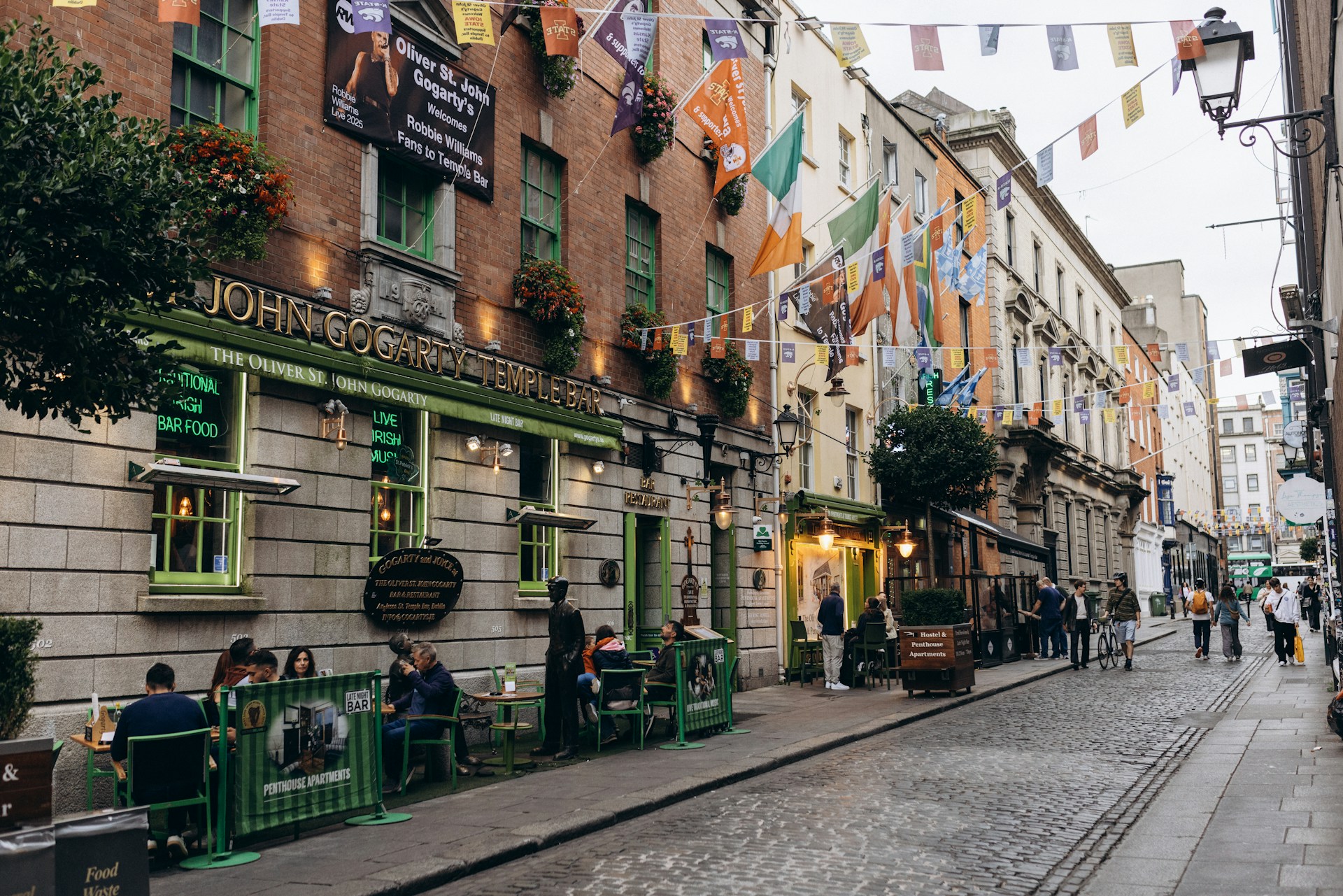
If you have just one day in Dublin, this itinerary is built to make it count. It’s written for first-time visitors — people on a layover, a weekend break, or the opening day of an Ireland trip — who want to see the best of the city on foot without rushing or doubling back. Dublin is compact, walkable and packed with stories, so a single well-planned day genuinely delivers a lot.
The trap is treating Dublin as a checklist and sprinting between ticketed attractions. That’s how you end up queuing more than exploring. This plan does the opposite: it strings the essentials into one logical route through the city centre — Trinity College, the old town, Dublin Castle, the cathedrals and Temple Bar — with the timing, walking distances and local know-how that make the difference between a frantic day and a great one.
We walked and timed this loop ourselves while building the TouringBee self-guided audio tour of Dublin, so the order below is the one that flows best on the ground. Bring a light rain jacket whatever the forecast; this is Dublin.

Quick answer: your one-day Dublin plan
Here’s the day at a glance, morning to night:
| Time | What you’re doing | Roughly how long |
|---|---|---|
| 9:00–10:30 | Trinity College & the Book of Kells (book ahead) | 1.5 hrs |
| 10:30–11:15 | Grafton Street & St Stephen’s Green | 45 min |
| 11:15–12:30 | Georgian Dublin: Merrion Square doors & a museum | 1.25 hrs |
| 12:30–13:30 | Lunch in the city centre | 1 hr |
| 13:30–15:30 | Dublin Castle, Chester Beatty & the cathedrals | 2 hrs |
| 15:30–17:00 | Guinness Storehouse or Irish Whiskey Museum | 1.5 hrs |
| 17:00–late | Temple Bar, dinner & a pint with live music | evening |
It’s a full day, but not a forced march — almost everything sits within a 20-minute walk, so you spend your time seeing the city, not commuting across it. Now the detail.
Morning: Trinity College and the Book of Kells
Start the day at Trinity College, the oldest university in Ireland, founded in 1592 by Queen Elizabeth I. Arrive for opening (around 9:00) to beat the queues — and book your Book of Kells ticket online in advance, because this is the single most popular attraction in the city and walk-up lines get long fast.
The draw is twofold. First, the Book of Kells itself: a dazzlingly illuminated manuscript of the four Gospels, created by Celtic monks around 800 AD and often called the finest surviving work of early medieval art. Second, the Long Room of the Old Library above it — a 65-metre barrel-vaulted hall lined with 200,000 of the library’s oldest books, and one of the most photographed interiors in Europe. Also inside is one of the oldest surviving Gaelic harps, the model for the symbol of Ireland (and, yes, the one on the Guinness label).
Local tip: the first entry slot of the day is the calmest. Give yourself 60–90 minutes and don’t rush the Long Room — it’s the moment most people remember.
Late morning: Grafton Street, St Stephen’s Green and Georgian Dublin
Step out of Trinity onto Grafton Street, Dublin’s buzzing pedestrian shopping street. It’s all buskers, flower stalls and the historic Bewley’s Café — a Dublin institution since 1927, once frequented by James Joyce and Samuel Beckett. Even a quick stroll captures the city’s energy. (Bono of U2 has been known to busk here on Christmas Eve, so the buskers are in good company.)
At the top of Grafton Street lies St Stephen’s Green, a Victorian park gifted to the city by Sir Arthur Guinness in 1877. It’s the perfect spot to slow down for ten minutes — feed the ducks, find the monument to Easter Rising leader Countess Markievicz, and note that the park was itself a battleground during the 1916 Rising (both sides reportedly paused the fighting daily to let the groundskeeper feed those same ducks).
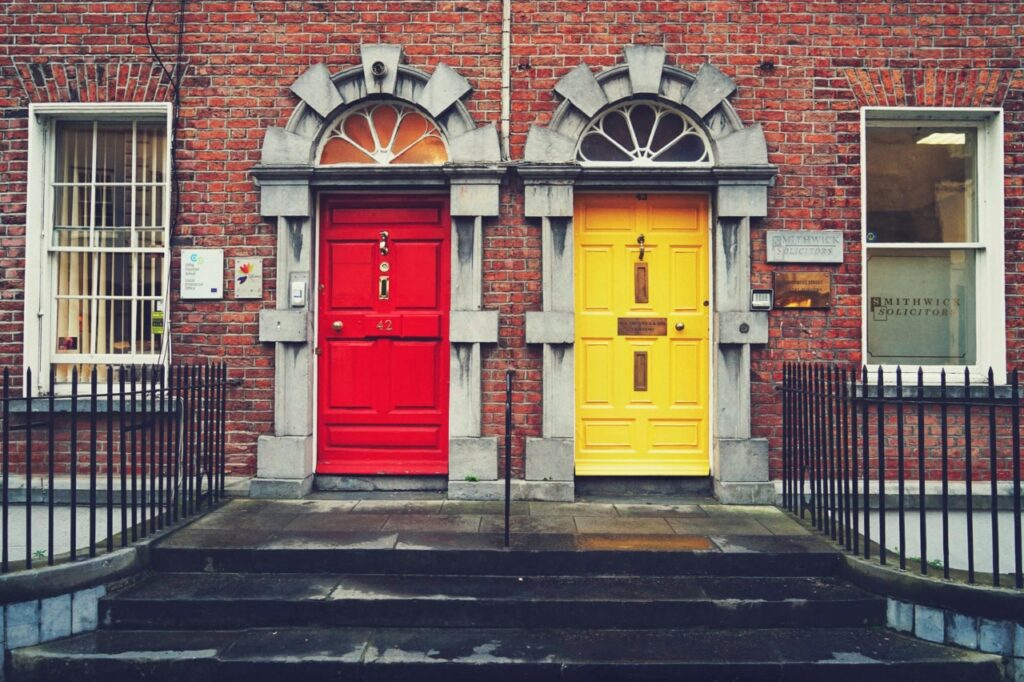
From here, detour east into Georgian Dublin around Merrion Square. This is where you’ll see the famous Dublin doors — rows of identical Georgian townhouses whose owners, forbidden from altering the sombre facades, rebelled by painting their front doors in vivid reds, blues, greens and yellows. The colourful reclining statue of Oscar Wilde sits in the corner of the square, opposite his childhood home.
Which museum should you pick?
You won’t have time for all of Dublin’s museums in a day, and the good news is that many are free. Pick one for the late morning:
| Museum | Best for | Cost |
|---|---|---|
| National Museum of Ireland (Archaeology) | Bog bodies, Celtic gold, Viking finds | Free |
| National Gallery of Ireland | Caravaggio, Vermeer, Jack B. Yeats | Free |
| Chester Beatty Library | World manuscripts & sacred texts | Free |
For a one-day visit, the National Museum (Archaeology) is the most “Irish” choice — the Iron Age bog bodies and Celtic gold are unforgettable and it’s free.
Lunch: where to eat in the city centre
You’ve earned a break. A few realistic options depending on appetite and budget:
| If you want… | Try | Note |
|---|---|---|
| A classic Irish dish | Seafood chowder with brown bread | “A hug in a bowl” on a grey day |
| A quick, local bite | A toastie or coddle in a pub | Most pubs serve food from noon |
| Something lively | The George’s Street Arcade food stalls | Covered Victorian market |
Local tip: a proper Dublin pub lunch is both cheap and atmospheric — and it sets you up nicely for the castle-and-cathedrals stretch that follows.
Afternoon: Dublin Castle, Chester Beatty and the cathedrals
Walk west into the medieval heart of the city. Dublin Castle, founded in 1204 by King John of England, was for centuries the seat of British rule in Ireland — look for the statue of Justice above the gate, famously turned with her back to the city. The State Apartments are worth a look if you have time; the courtyards are free to wander.

Tucked behind the castle is the Chester Beatty Library (free), a genuinely world-class collection of manuscripts, sacred texts and art from across the globe — regularly rated one of the best museums in Europe, and far quieter than Trinity.
A short walk away stand Dublin’s two medieval cathedrals. Christ Church Cathedral, founded around 1030 by the Viking king Sitric Silkenbeard, holds a vast crypt and the mummified “Tom and Jerry” cat and rat found in an organ pipe. St Patrick’s Cathedral, the largest in Ireland (built from 1191), is where Jonathan Swift, author of Gulliver’s Travels, served as dean. Pick one to go inside if time is tight; both exteriors are striking.


Late afternoon: Guinness or whiskey?
No day in Dublin is complete without a nod to its most famous exports. Choose the one that appeals:
| Guinness Storehouse | Irish Whiskey Museum / Jameson | |
|---|---|---|
| Best for | The story of the black stuff + rooftop views | Whiskey history & tastings |
| Highlight | Gravity Bar panorama over the city | Guided tasting of Irish whiskeys |
| Note | Very popular — book ahead | Smaller, central, quicker |
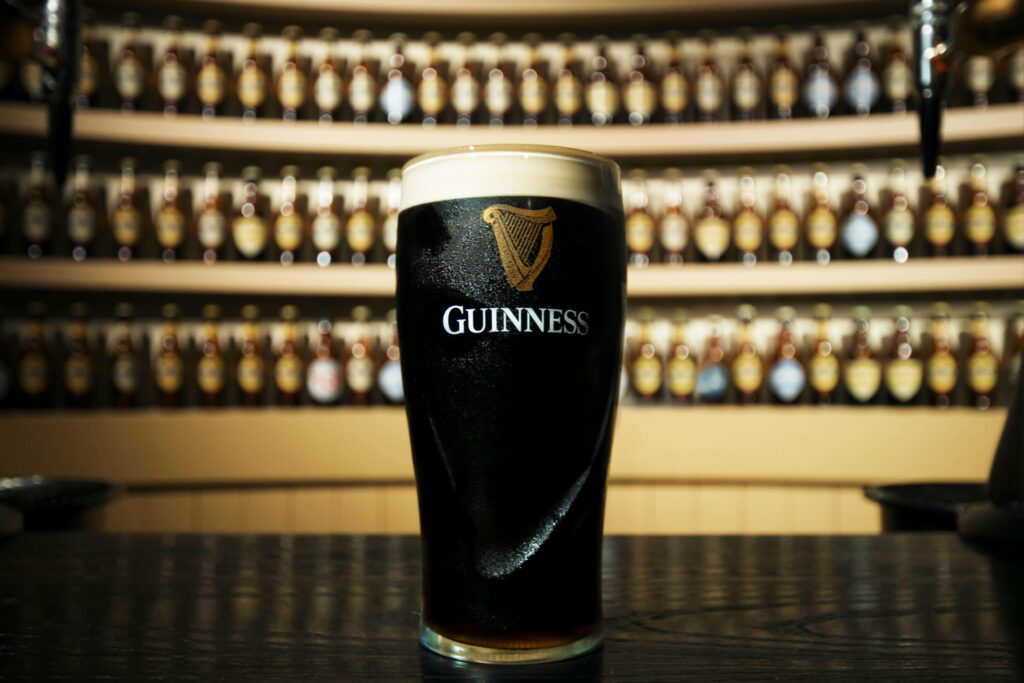
The Guinness Storehouse is the big-hitter — its rooftop Gravity Bar gives you the best 360-degree view in Dublin with a complimentary pint — but it’s a 15-minute walk west and takes 1.5–2 hours. It also sells out on busy afternoons, so it’s worth booking a timed Guinness Storehouse entry ticket before you leave the hotel. If you’d rather stay central and short on time, the Irish Whiskey Museum near Trinity is a tidy alternative. Irish whiskey, incidentally, is typically triple-distilled for a smoother finish than Scotch — and the word comes from the Gaelic uisce beatha, “water of life.”
Evening: Temple Bar, dinner and live music
As the light fades, head to Temple Bar — the cobblestoned cultural quarter on the south bank of the Liffey. Yes, it’s touristy and the pints are pricey, but on a first one-day visit it delivers exactly what you came for: colourful lanes, traditional music spilling out of every doorway, and craic (that’s Irish for good fun). Its name, incidentally, has nothing to do with pubs — it comes from Sir William Temple, a 17th-century diplomat.
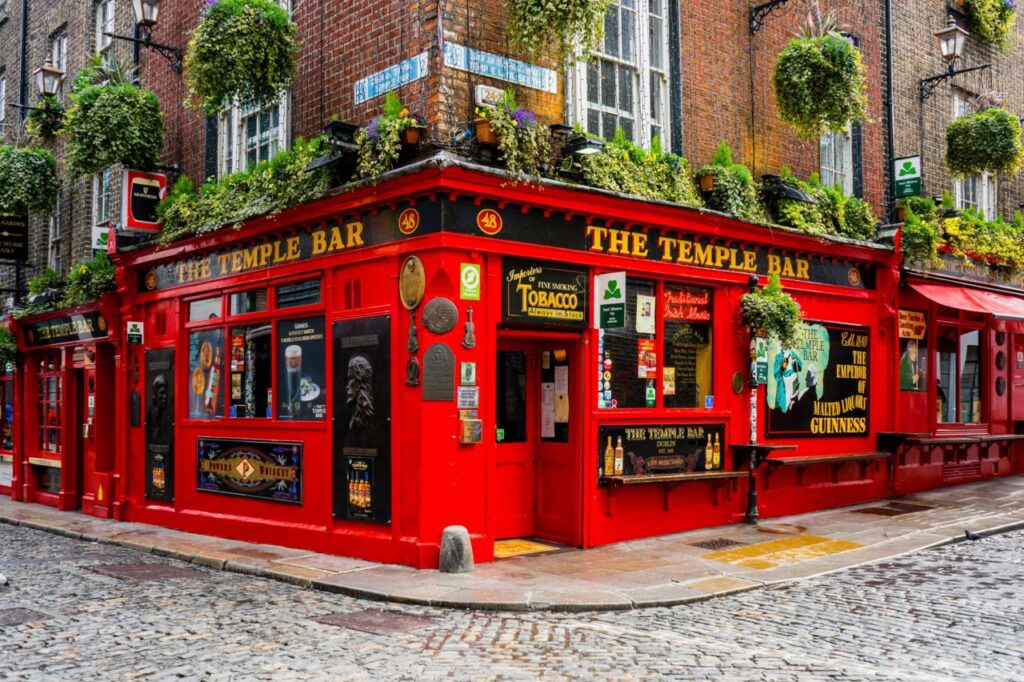
For dinner, eat just outside the Temple Bar core for better value, then dip into a pub for a seisiún (an informal traditional music session with fiddles, flutes and a bodhrán drum). Finish with a pint at The Brazen Head, Ireland’s oldest pub, pouring since 1198 — older than the Magna Carta.
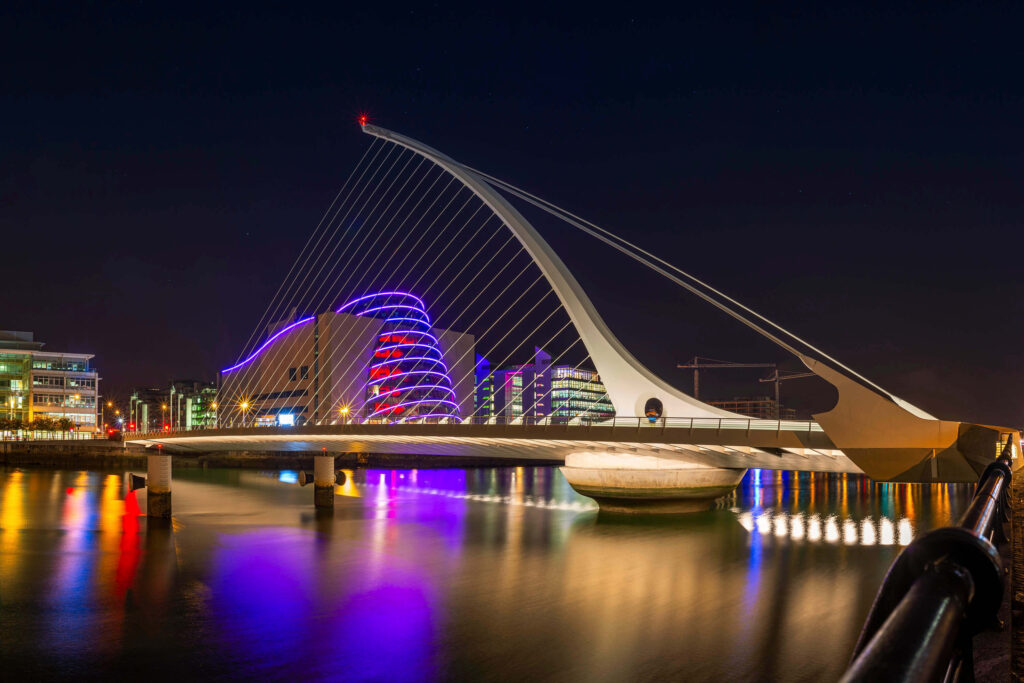
Local tip: for live trad music without the markup, walk a few streets out of Temple Bar to pubs around Camden Street or Stoneybatter, where locals actually drink. If you still have energy, the walk east along the quays to the Samuel Beckett Bridge is the city’s best night-time view.
How to get around in a single day
The best news for a one-day visit: central Dublin is small and flat, so you’ll walk almost everywhere. Most stops on this route are 5–20 minutes apart on foot.
| Leg | Best way |
|---|---|
| Trinity → Grafton St → St Stephen’s Green | On foot (flat, central) |
| Merrion Square → Dublin Castle | On foot (~12 min) |
| City centre → Guinness Storehouse | On foot (~15 min) or tram/bus |
| Longer hops / from the airport | Airlink bus, Luas tram, or DART train |
Skip taxis and rental cars in the centre — walking is faster and you’ll see more. A Leap Card is handy if you plan to use the Luas tram or buses.
Arriving by plane, ferry or on a layover
Where you start shapes the day:
| You arrive by… | How to reach the centre | Note |
|---|---|---|
| Dublin Airport | Airlink 747 or Aircoach bus (~30–40 min) | No rail link to the airport yet |
| Ferry (Dublin Port) | Short bus or taxi to the centre | Handy if arriving from the UK |
| Layover | Store bags at the airport, bus in | You need ~6 hours to make it worth it |
If your one day turns into an overnight — and it often does once the music starts — staying inside the canals puts you within walking distance of everything in this itinerary; central Dublin hotels and guesthouses around Trinity, Temple Bar and St Stephen’s Green book out fastest at weekends.
When to visit for a one-day trip
Dublin works year-round, but a single day is more pleasant in some seasons than others.
| Season | What to expect |
|---|---|
| May–Sep | Mildest, longest days, busiest — ideal for walking |
| Mar (St Patrick’s) | Huge festival atmosphere but packed and pricey |
| Oct–Apr | Cool, wet, cosy pubs; fewer crowds, shorter days |
Whatever the month, expect rain at some point — the local saying is that you get four seasons in one day. A compact umbrella and waterproof shoes beat a ruined afternoon.
Practical tips for one day in Dublin
- Book the Book of Kells (and Guinness Storehouse) online in advance — they sell out.
- Start at Trinity at opening to beat the crowds.
- Carry a light rain jacket and wear comfortable, waterproof shoes.
- Lean on Dublin’s free museums to keep costs down.
- Cover shoulders and knees if you plan to enter the cathedrals.
- Get a Leap Card if you’ll use the tram or bus.
- Pace the pints — you want to finish the day, not lose it in a bar.
Common mistakes to avoid
- Not pre-booking the Book of Kells. Walk-up queues can swallow an hour.
- Only eating and drinking in Temple Bar. Step one street out for better food and cheaper pints.
- Trying to do every museum. Pick one; they deserve time.
- Renting a car for the city. Parking and one-way streets make it pointless.
- Ignoring the weather. No rain gear is the classic first-timer error.
A more relaxed version of the day
Not everyone wants to power through every landmark, and Dublin is small enough to enjoy at half-speed. If you’d rather do less and soak up more, trim the day to four unhurried blocks:
| Block | Do this | Skip |
|---|---|---|
| Morning | Book of Kells, then a slow wander of Grafton St & St Stephen’s Green | Rushing multiple museums |
| Lunch | A long pub lunch with chowder | Eating on the move |
| Afternoon | Dublin Castle courtyards & one cathedral | The Guinness trek if you’re tired |
| Evening | Temple Bar, dinner and a trad session | Cramming in a second neighbourhood |
This version sees fewer “sights” but leaves you with what most people actually remember: the Long Room, a cosy pub, a medieval cathedral and a proper night of music. Sometimes that’s the better trade.
A taste of the stories behind the sights
What lifts a single day from “nice buildings” to something you talk about later is the layer of stories underneath. A few you’ll walk straight past without knowing: the grand building on College Green that looks like a bank but was the world’s first purpose-built two-chamber parliament (and has almost no windows, thanks to an 18th-century window tax); the ordinary-looking church that holds the relics of St Valentine; the Iron Age “bog bodies” in the National Museum, ritually sacrificed over 2,000 years ago and preserved to the fingerprints. Knowing they exist changes how you look at an unremarkable street corner — and that’s exactly the gap a good guide fills on a short visit, when you don’t have days to read up on everything.
Make one day feel effortless
The hardest part of a single day isn’t what to see — it’s the low-level admin of stitching it together: which way to turn, what you’re actually looking at, and which stories you’re walking straight past. Dublin is dense with them, from the window-tax bank that used to be a parliament to the church that once moonlighted as a tavern.
While mapping our own route through the city, we ordered the stops to flow without backtracking — and that’s the sequence the TouringBee self-guided audio tour of Dublin follows, from the Georgian doors of Merrion Square through Trinity, the castle and the cathedrals to the oldest pub in the city. It runs offline with GPS on your own phone, so you keep your eyes on the streets, and a local narrator tells the stories as you reach each stop — why Dublin’s doors are so colourful, how St Valentine ended up buried here, what the bog bodies really are. On a tight schedule, having the route and the storytelling handled for you is what buys back your time.
Guided tours and tickets worth booking ahead
If you’d rather have a live guide for part of the day, or simply want to skip a queue, these are the ones that fit a single-day route:
- Fast-Track Book of Kells Ticket & Dublin Castle Tour — covers the two must-sees of the morning and afternoon in one guided block.
- Guinness Storehouse entry ticket — timed entry plus the Gravity Bar pint.
- Hop-on hop-off bus (48 hours) — useful only if you’re short on walking legs or heading out to Kilmainham.
GetYourGuide
Guinness Storehouse: skip the afternoon queue
Timed entry to Dublin’s most-visited attraction, seven floors of brewing history and a pint at the rooftop Gravity Bar. Rated 4.7 by 25,000+ travellers.
Frequently asked questions
Is one day enough for Dublin?
One day is enough to see the highlights — Trinity College and the Book of Kells, Dublin Castle, the cathedrals, and Temple Bar — and get a real feel for the city. Two days lets you add the Guinness Storehouse, more museums and a relaxed pace.
What should I not miss with only one day in Dublin?
Trinity College and the Book of Kells, a wander down Grafton Street, Dublin Castle, one of the medieval cathedrals, and an evening in Temple Bar with live music.
Is Dublin walkable in a day?
Very. The city centre is compact and flat, with most sights 5–20 minutes apart on foot. You barely need public transport except to reach the airport.
Do I need to book anything in advance?
Yes — the Book of Kells at Trinity and the Guinness Storehouse both sell timed tickets that regularly sell out. Book online before you go.
How much does a day in Dublin cost?
It can be cheap: many top museums are free. Your main costs are the Book of Kells and Guinness Storehouse tickets, a pub lunch, and evening pints (which add up in Temple Bar).
Guinness Storehouse or Jameson — which for one day?
Guinness for the rooftop views and the bigger experience (book ahead); the Irish Whiskey Museum or Jameson if you want something quicker and more central.
Continue exploring
- Self-guided city walking tours that work — how to plan a route you’ll actually enjoy walking.
- Museum audio guides: are they worth it? — when a guide earns its keep and when it doesn’t.
- Extending the trip beyond the city? Our Ireland road trip audio guide picks up where Dublin leaves off, from the Wicklow Mountains to the west coast.
Final thought
One day in Dublin won’t show you everything — but done in the right order, it shows you the soul of the place: the illuminated pages of the Book of Kells, the colourful Georgian doors, a medieval castle and cathedral, and a pint pulled slowly in a pub older than most countries. Follow the loop, book the big two ahead, and leave room for a proper evening. When you’re ready to walk it for real, start the Dublin audio tour and let the city’s stories carry you from morning coffee to last orders. Sláinte.
Some links in this article are affiliate links (GetYourGuide, Booking.com). The price is the same for you, but they help support TouringBee.