
No products in the cart.

How to Get Around Edinburgh: Walking, Trams, Buses and Airport Transfers
Most of central Edinburgh is walkable. The transport decisions that actually matter are the airport run, the outer neighbourhoods, and how you handle the hills.
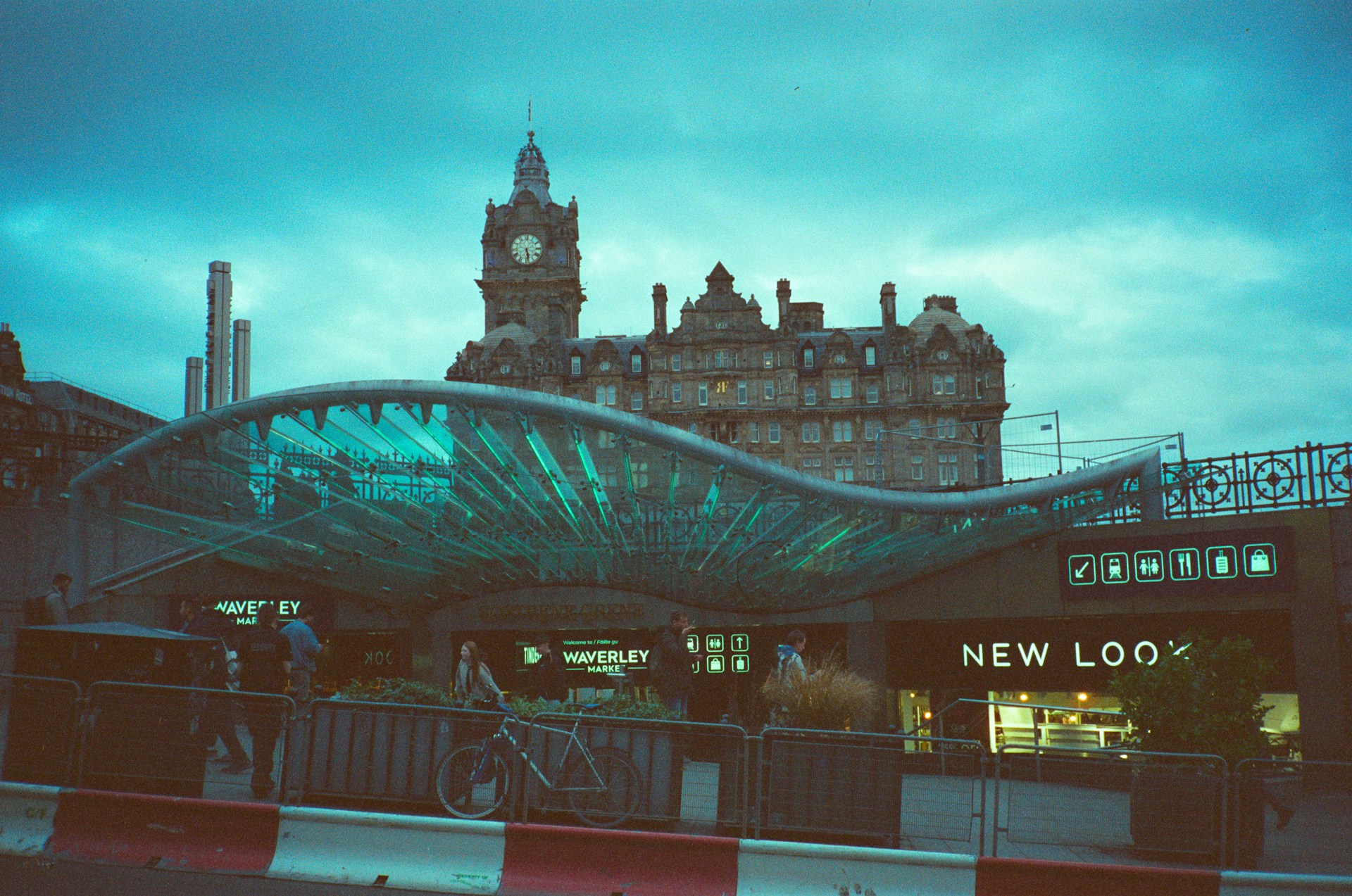
Most of central Edinburgh is walkable — the transport questions that actually matter are the airport, the outer neighbourhoods, and how you handle hills.
Edinburgh’s centre rewards walking more than it rewards buying a transport pass. Old Town and New Town sit close enough together that a bus often saves little time once you count the walk to the stop, the wait, and the journey itself. The decisions that actually matter are the ones at the edges: getting in from the airport, reaching neighbourhoods like Leith or Portobello, and knowing when a taxi is worth it rather than a point of pride to avoid.
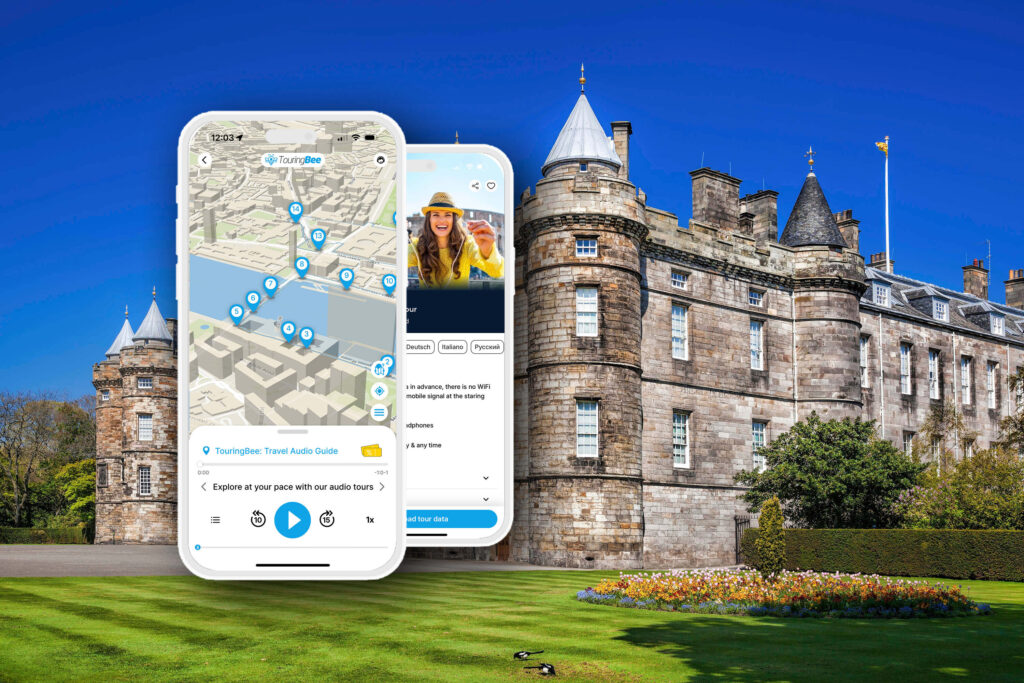
If your central plans include the Royal Mile, TouringBee’s audio guide covers that walk on foot at your own pace — no transport decisions involved, just good shoes. This guide covers everything around it: trams, buses, the airport run, and the districts a short ride from the centre.
Quick answer
- Old Town and New Town: walk. Over these distances it’s usually simpler and just as fast as a bus, terrain and mobility needs permitting.
- Airport to city centre: the tram or the Airlink 100 bus, both around 25–35 minutes. A taxi costs more but can be faster, and may be the better call with heavy luggage or some mobility needs.
- Bus or tram within the city zone: a single fare is £2.40; the contactless daily cap is £5.70; a standalone City DAY ticket is £6. Airport tram fares are separate and higher.
- Leith: a short tram or bus ride. Portobello and Craigmillar: bus only — no tram line reaches either.
- A car: rarely worth it inside the city; more useful if a wider Scotland trip follows.
When to walk, and when transport actually helps
For short hops between Old Town and New Town, walking is usually the simplest option. Use transport when the destination is genuinely outside the central walking core — or when hills, weather, luggage, or mobility make walking the worse choice. Distance is rarely the problem in Edinburgh; gradient is. The climb from Waverley up to the Royal Mile, or the steps and cobbles between the two towns, will tire you faster than the map suggests.
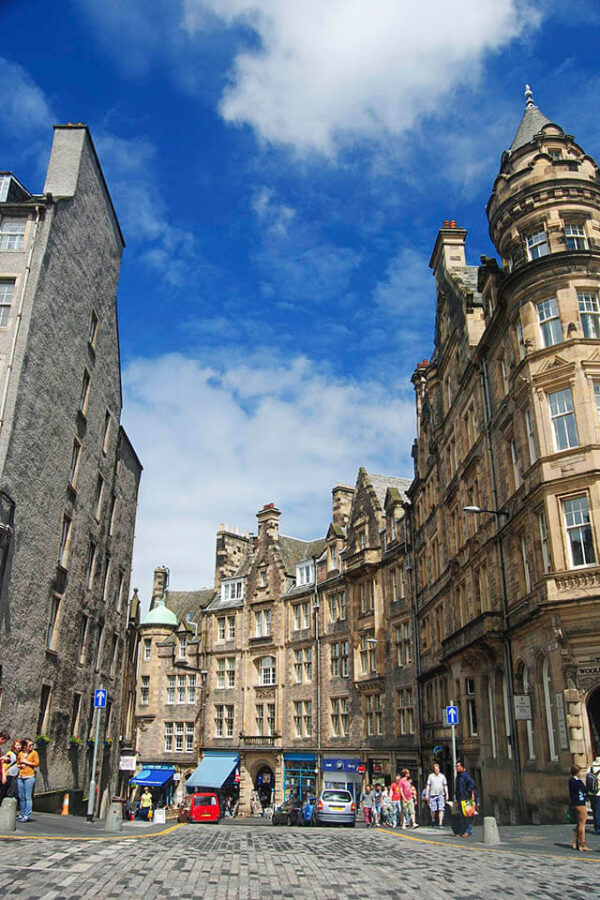
Trams and buses
Where the tram is useful, and how to pay
The tram runs a single line connecting the airport, Haymarket, Princes Street, and on through the city centre to Leith, Ocean Terminal, and Newhaven — genuinely useful for that specific corridor rather than for general movement around the centre. Paying by contactless card or phone means tapping on at the platform before boarding and tapping off after you get off; skipping the tap-off charges the higher airport-zone fare by default, whether or not you actually travelled that far. Tickets bought through the ET app or the Bus & Tram app need activating before you board. A single city-zone fare is about £2.40, with a separate, higher fare for journeys crossing into the airport zone.
Buses: paying and daily caps
Lothian Buses covers the rest of the city with a dense network, and paying is simpler here than on the tram — tap a contactless card or phone once when you board, with no tap-off needed. The system automatically caps what you’re charged across a day, currently £5.70 with contactless, or £6.00 for a City DAY ticket. The cap only works if you use the same card or device all day; switching between a physical card and a phone wallet, for instance, resets it. For casual use there’s no need to buy a physical ticket ahead of time.
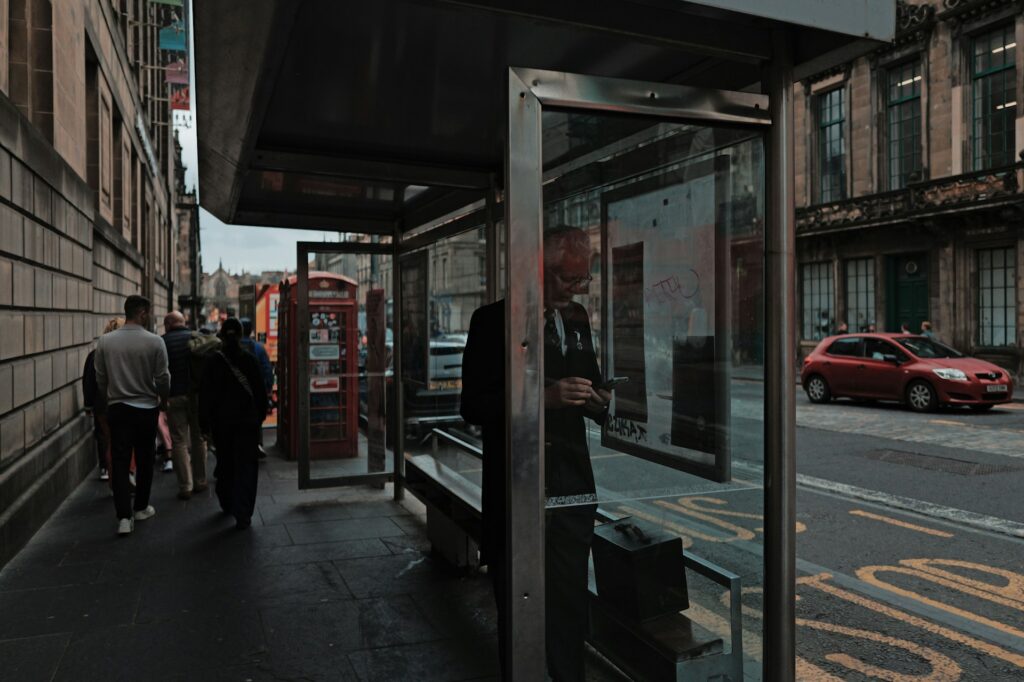
Do you need a travel pass?
For a short visit spent mostly in the centre, pay-as-you-go contactless is usually enough: walk most journeys, tap in when you need a bus or tram, and let the daily cap limit the cost if you end up riding more than expected. A City DAY ticket makes more sense when you already know you’ll be using public transport repeatedly that day.
Hop-on hop-off buses: when they make sense
The sightseeing buses that circle the Old Town are a different product from public transport — you’re paying for the commentary and the route, not for getting from A to B efficiently. They earn their keep on a tight schedule, in bad weather, or when hills are a genuine obstacle, since they cover the climb between the Castle and Holyrood without you walking it. For a visitor who intends to walk the centre anyway, they usually duplicate what your feet were going to do for free.
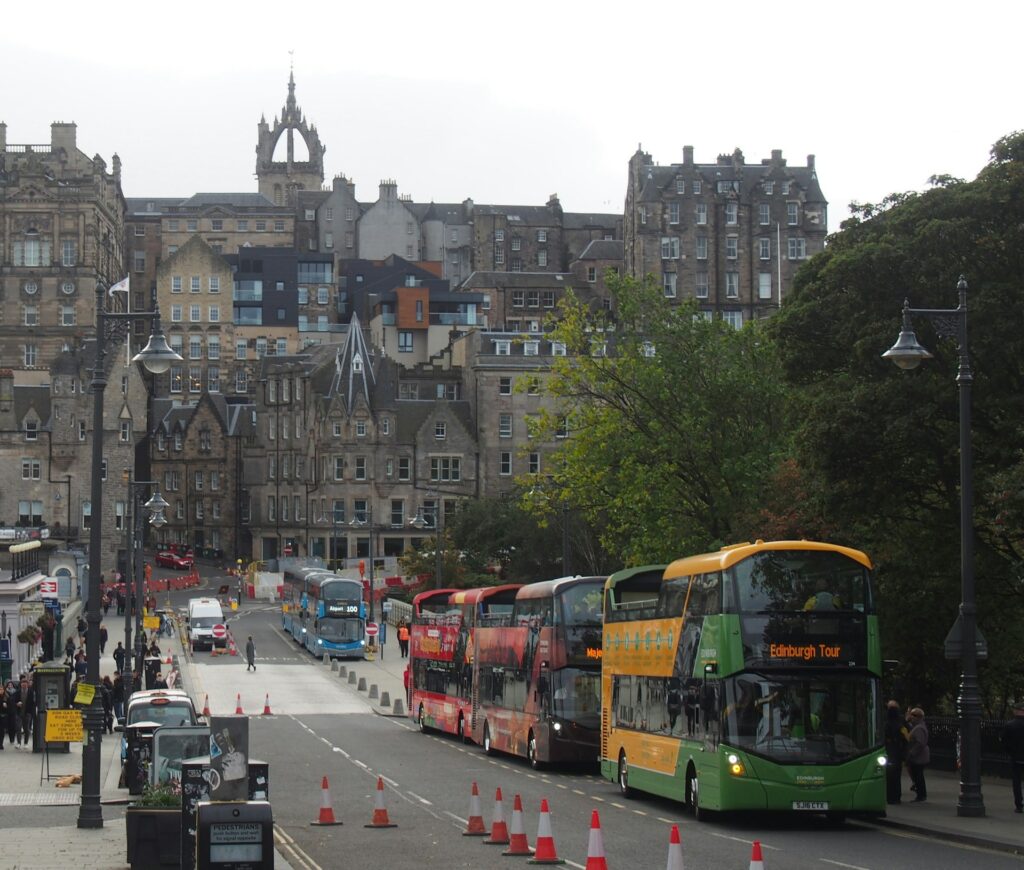
GetYourGuide
Hop-on hop-off bus pass — 24 or 48 hours
Three routes across the city, with one ticket valid for a full day or two. Worth considering if the hills are a problem, the weather has turned, or you want the Castle-to-Holyrood climb done for you.
Check availability →Getting from the airport to the centre
| Option | Journey time | Roughly | Best for |
|---|---|---|---|
| Tram | About 30–35 minutes to Princes Street | About £7.90 one-way (airport zone fare) | Reaching New Town, Haymarket, or Leith directly |
| Airlink 100 bus | About 25–30 minutes to Waverley Bridge, running 24/7 | About £6 one-way | Old Town, the Royal Mile and the Waverley area, including very early or late arrivals |
| Taxi | About 20–30 minutes, more in heavy traffic | A metered fare, typically higher than either public option | Heavy luggage, mobility needs, or a direct door-to-door trip |
The tram doesn’t stop directly at Waverley Station — the nearest stop is a short walk away — while the Airlink bus terminates right above it, which matters if you’re catching an onward train. Both run frequently through the day, and the Airlink’s round-the-clock schedule makes it reliable even for a very early or very late flight. Exact fares are revised periodically, so it’s worth a quick check before travel if the numbers matter to your budget.
Waverley, Haymarket, taxis and driving
Which station you need
Edinburgh Waverley sits in the historic centre, a short walk from the Royal Mile and Old Town, and is usually the more convenient station for a centre-focused stay. Haymarket, farther west, is often better placed for West End and Haymarket accommodation and also serves a range of onward rail connections.

When a taxi is worth it
A taxi can justify its cost with heavy luggage, some mobility needs, or simply when door-to-door convenience matters more than the fare. It can be faster than public transport, though traffic makes that far from guaranteed. A late arrival doesn’t necessarily call for one — the Airlink bus runs around the clock. And for short hops within the walkable centre, a taxi rarely beats walking once you count finding one and the ride itself.
Why a car often gets in the way
A rental car adds very little to a centre-focused visit. Parking is limited and expensive, many Old Town streets are narrow or restricted, and everything you’re likely to see is easier to reach on foot or by tram and bus. Edinburgh’s city-centre Low Emission Zone also operates around the clock, with fines for non-compliant vehicles, so check your car meets the requirements before driving into the central zone. A car becomes genuinely useful only once the plan extends beyond the city — and if that’s the appeal, a Highlands day tour from Edinburgh covers the driving for you without a hire car for the rest of the trip.
Reaching the districts beyond the centre
Leith is a short tram or bus ride from central Edinburgh, generally under 20 minutes. Portobello and Craigmillar are both bus-only — no tram line reaches either. Portobello sits a little further out, roughly 20–30 minutes by bus, while Craigmillar, being less central, benefits most from checking a specific route before setting out rather than assuming a direct line.
Late evenings, festivals and other exceptions
Night buses cover the main routes after the regular day service winds down, worth knowing about if an evening runs later than planned. During August’s festival season, road closures and heavier foot traffic around the Royal Mile and Castle can slow both buses and walking through the busiest stretches — building in extra time during peak festival hours is worth more than trying to out-plan the crowds with a clever route.
FAQ
Do I need a transport pass for a short Edinburgh trip? Usually not. If you’re mostly walking in the centre, pay-as-you-go contactless is generally enough — the daily cap limits the cost if you end up making several rides, while a City DAY ticket makes more sense when you already know you’ll be using public transport repeatedly.
What’s the cheapest way from the airport to the city centre? The Airlink 100 bus is typically the least expensive direct option to Waverley Bridge. The tram costs a bit more but reaches New Town and Leith directly.
Is Edinburgh walkable? Largely, yes, for the historic centre. The bigger factor is terrain rather than distance, with hills and cobblestones between Old Town and its surroundings.
Do I need a car in Edinburgh? Not for the city itself — parking and narrow streets make a car more of an obstacle than a help. It becomes useful only if day trips or travel further into Scotland are part of the plan.
Continue exploring Edinburgh
For a first orientation, see Edinburgh for First-Time Visitors. For day planning, see One Day in Edinburgh and Two Days in Edinburgh. For choosing a base — which does more to cut your transport costs than any pass — see Where to Stay in Edinburgh.
If you’d rather have some of the logistics handled for you:
- Royal Edinburgh Ticket — sightseeing bus travel bundled with the Castle, Holyroodhouse and Britannia
- City Sightseeing hop-on hop-off, 24 hours — a single-day alternative on the main loop
- Loch Ness, Glencoe and the Highlands day tour — the long drive done without a hire car
Once the airport transfer and any outer-neighbourhood trips are sorted, transport becomes an occasional tool rather than the organising principle of a short central Edinburgh visit.
Disclosure: this article contains affiliate links to TouringBee audio guides and to GetYourGuide. If you buy through them, we may earn a small commission at no extra cost to you.