
No products in the cart.

Edinburgh for First-Time Visitors: What to See, How Many Days & Practical Tips
Planning a first trip to Edinburgh? How many days you need, how the city is laid out, what to book ahead, where to stay and what to pack — without the checklist.

A first trip to Edinburgh works better once you stop planning it like a checklist.
Edinburgh looks manageable on a map — a compact center, a castle at one end, a palace at the other. That impression tends to fall apart on foot. Streets that look flat on a phone screen turn out to run along a ridge, closes duck between buildings without warning, and a fifteen-minute walk can quietly become thirty once a staircase or an unplanned detour gets involved.

What actually helps is understanding the shape of the place before arriving, rather than memorizing a list of attractions. For planning purposes, Edinburgh’s center is easiest to understand as two contrasting historic districts: the Old Town, shaped by a medieval street pattern along the ridge between the Castle and Holyrood, and the Georgian New Town spreading out below it in straight, orderly lines. The contrast between them is arguably the city’s defining feature, and it shapes almost every planning decision that follows — where to stay, how to split the days, what to prioritize.
The Royal Mile, running the length of Old Town, is where most first visits begin, and it deserves a proper block of time rather than being squeezed between other stops. If you’d rather walk it independently and understand more of what you’re looking at along the way, TouringBee’s Royal Mile audio guide covers that stretch as a self-guided walk you can pause and resume as you like.
Quick Answer
- Two full days work well for most first-time visitors — one for the historic center, one for something different.
- One day is enough for a tightly planned visit built around a single major attraction plus the Royal Mile.
- Three or more days start to make sense once a slower pace or a day trip enters the picture.
- Book Edinburgh Castle and accommodation during festival season ahead of time. Museums and outdoor walks can usually stay flexible.
How many days does Edinburgh actually need?
| Time in Edinburgh | What realistically fits | Works best for |
|---|---|---|
| 1 day | One major attraction, a proper Royal Mile walk, plus a museum, New Town, or a viewpoint | A short stop or a tightly planned first visit |
| 2 days | The historic center on one day, a different neighborhood or outdoor area on the second | Most first-time visitors |
| 3+ days | The main sights without rushing, plus another district, a longer walk, or a day trip | Travelers who’d rather not race through it |
With a single day
A single day rewards restraint more than ambition. Pick one big ticketed attraction — not three — and pair it with a real look at the Royal Mile and one contrasting stop: New Town, a museum, or a viewpoint. Distances on a map are misleading here. Hills, stairs, an interesting close, and an unplanned coffee stop all add time that a straight line on a phone doesn’t account for.

With two days
Two days change the shape of the trip more than they simply double it. The second day works best when it doesn’t repeat the first — Holyrood paired with a walk up Arthur’s Seat, New Town flowing into Stockbridge and Dean Village, or a morning museum followed by an afternoon in Leith. Any of these gives the second day its own identity instead of more Old Town streets.
When does a day trip make sense?
With one or two days on the ground, that time is usually better spent in Edinburgh itself — the Highlands, St Andrews, and Scotland’s castles aren’t going anywhere. Three or more days is where a day trip starts to earn its place. The exception is a longer Scotland itinerary where Edinburgh is only one stop among several; in that case, the usual calculation doesn’t really apply.
How the city is laid out — and what’s worth your time
Edinburgh’s Old and New Towns were named a UNESCO World Heritage Site in 1995, largely because of how cleanly the contrast between them survives. Roughly 4,500 buildings sit inside the World Heritage boundary, and about 75% are listed for their architectural or historic interest — an unusually high concentration.
Old Town, New Town, and what’s around them
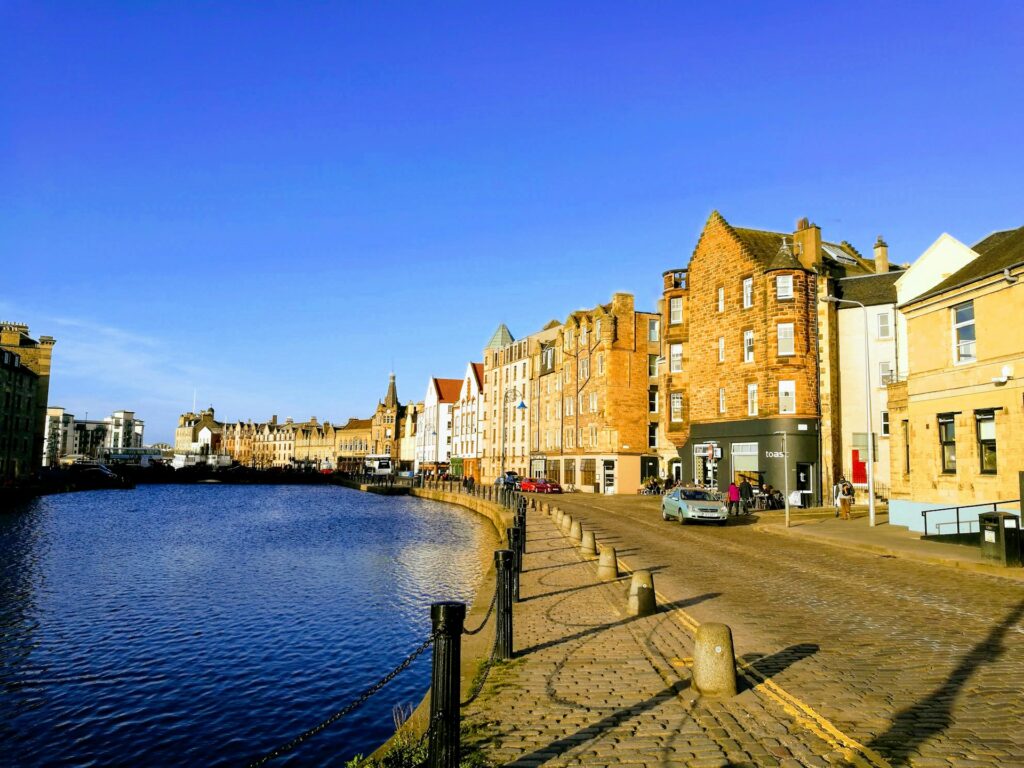
Old Town is the city most visitors picture before they arrive: narrow closes, stone buildings stacked at odd angles, the Royal Mile running along the ridge, and the Castle above it all. New Town, laid out from the 1760s onward, feels like a different place entirely — wide streets, Georgian façades, formal squares, a much calmer sense of order. Beyond these two, Stockbridge and Dean Village slow the pace further, Leith adds a waterfront and a different kind of evening, and Portobello brings a stretch of beach into the mix.

You don’t need to care about urban planning history to feel the shift. Walking from one part of the center to the other changes the scale of the streets, the light, and the pace almost immediately.
What’s worth building the trip around
- History — Edinburgh Castle, the Royal Mile, and Holyrood are the clearest historic anchors for a first visit.
- Architecture — the contrast between Old and New Town, plus the closes and layered streets of the historic center.
- Views — one good viewpoint or hill goes a long way; there’s no need to climb everything on offer.
- Museums — pick one that genuinely interests you, and let it double as a rainy-day option.
- Food — leave room for cafés, pubs, Scottish dishes, and a neighborhood like Leith that isn’t built primarily for sightseeing.
- Festivals — August can be extraordinary if that’s part of why you’re coming, or a reason to pick another month if it isn’t.
For a first visit, that adds up to a simple sequence: get a feel for Old Town, notice how different New Town feels by comparison, decide whether the Castle deserves a real block of your day, then add one experience that changes the pace — a museum, a hill, Stockbridge, Dean Village, or Leith. The Royal Mile is the spine of Old Town. It isn’t the whole city.
A note on Harry Potter
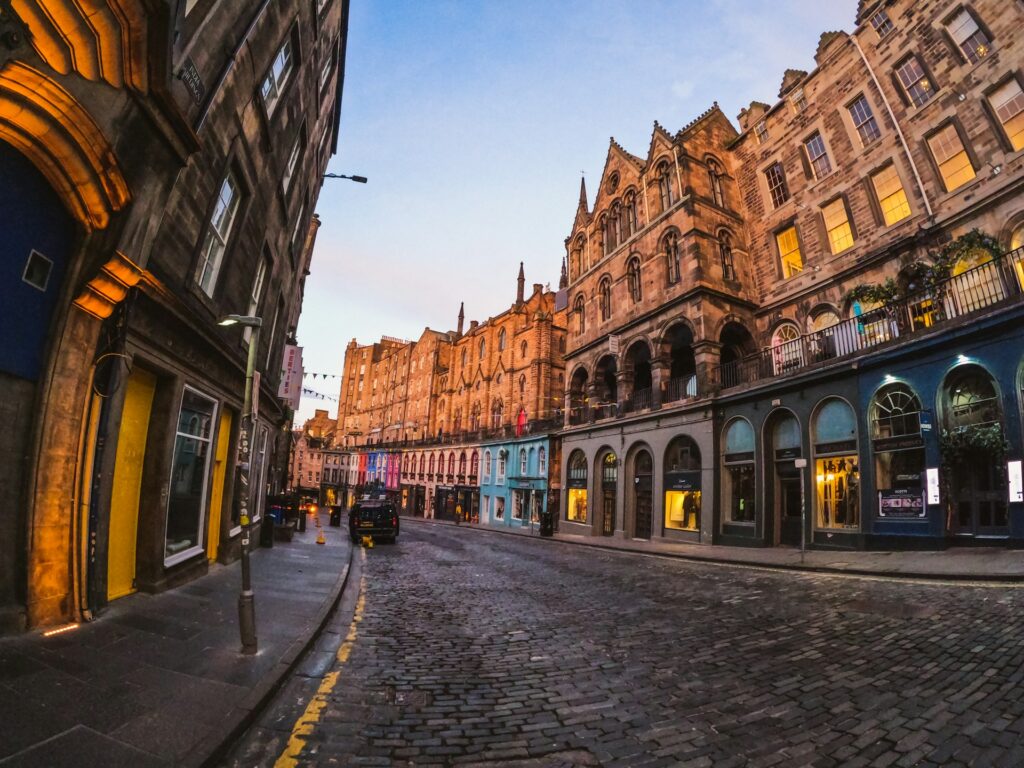
Edinburgh has genuine ties to J.K. Rowling and the writing of the books, but some of the stories told to visitors are on shakier ground. Victoria Street, for instance, is often presented as the direct model for Diagon Alley — Rowling herself has said that no real street inspired it and that she hadn’t seen Victoria Street when she created the scene. It’s worth seeking out if that’s one of your reasons for coming, just kept apart from the parts that are actually documented. Our dedicated Harry Potter guide goes into this in more depth.
What’s worth booking ahead
| What | Book ahead? | Why |
|---|---|---|
| Edinburgh Castle | Yes | Tickets regularly sell out, especially during the summer and festival season — once they’re gone online, none are held back for walk-ups |
| Other timed or specialty attractions | Usually | The same seasonal pattern applies to popular ticketed experiences |
| Accommodation | Yes | Choice narrows quickly around festivals and other major events |
| Museums and general Old Town walking | Usually not | Keeping these unplanned gives the day room to breathe |
| Hills and outdoor walks | No | Weather matters more here than availability |
Treat Edinburgh Castle as its own decision
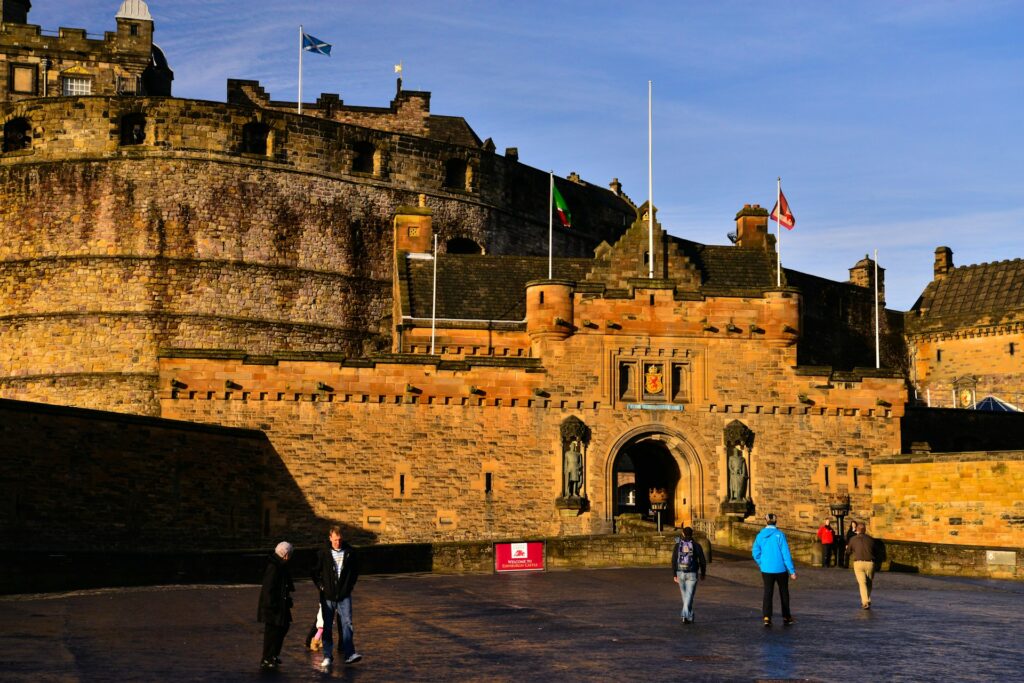
The Castle isn’t a single building with a quick loop through it — it’s a complex of royal rooms, the Great Hall, St Margaret’s Chapel, military collections, and several distinct fortress spaces. If it’s part of the plan, book online rather than assuming a ticket will be waiting on arrival. During busy stretches, tickets can sell out days or weeks ahead, and once they’re gone, the castle doesn’t sell more at the gate. If the official site shows no availability for your dates, a guided Castle tour with entry included is often the practical fallback — the ticket comes bundled with the tour.
What can stay open-ended
Most free museums, parks, and public viewpoints don’t need a slot on the calendar before you land. That flexibility earns its keep in Edinburgh specifically — if low cloud wipes out a view in the morning, a museum can move up; if the sky clears without warning, that’s the moment for a hill or an outdoor walk instead.
Where to stay, what to budget, and whether you need transportation
| Area | Main appeal | Trade-off | Good fit if you want… |
|---|---|---|---|
| Old Town | Historic sights right outside the door | Hills, cobblestones, and steady foot traffic | Maximum sightseeing on foot |
| New Town | Central, spacious, close to shops and restaurants | Less of that Old Town atmosphere | A calmer central base |
| West End / Haymarket | Strong rail and airport connections | A short walk or tram ride from central Old Town | Easy transport over atmosphere |
| Stockbridge | Cafés and a residential feel | Not everything is on your doorstep | A neighborhood pace, not a tourist one |
| Leith | Food, bars, and the waterfront | Outside the historic core | Evenings that matter as much as sightseeing |
There’s no single neighborhood that suits every trip — the right one is whichever removes friction from the visit you’re actually planning. We compare these areas in more depth in our separate guide to where to stay in Edinburgh.
Booking.com
Compare Edinburgh stays by neighborhood
Prices in Edinburgh swing hard around August and Hogmanay. Check your actual dates early, filter by Old Town, New Town, Stockbridge or Leith, and keep free cancellation on until the plan is fixed.
Check availability →Edinburgh uses British pounds (£). On budget, a single “Edinburgh per day” figure tends to mislead more than it helps, since a day built around walking, viewpoints, and museums can cost a fraction of a day filled with ticketed attractions and organized experiences. Build the number in order instead: the actual accommodation price for your dates, the paid attractions you genuinely want, food at your normal travel style, and transportation only where you’ll need it. Our separate cost guide walks through a few realistic versions of the same day rather than labeling the city cheap or expensive.
As for transportation — Old Town and New Town are largely walkable, and the real obstacle is terrain rather than distance. A route that looks short can still involve stairs or a steep climb. Transportation earns its place for the airport, for Leith and neighborhoods further out, in poor weather, with luggage, or with mobility needs. A rental car rarely makes central sightseeing easier; it’s a different question if rural Scotland is next on the itinerary.
What to pack
The real question isn’t whether the outfit photographs well against a castle backdrop — it’s whether you can walk comfortably for hours on uneven stone while the weather shifts underneath you.
- Shoes you’ve already broken in — cobblestones and stairs are unforgiving on new ones
- A waterproof outer layer
- Layers you can add or remove as the wind changes
- A small power bank
- A light day bag
- A refillable bottle
That last one is worth a note: Edinburgh has free Top Up Taps scattered through the center, including taps on the Royal Mile and at Grassmarket, so there’s no need to keep buying water over the course of a walking day.
Mist and low cloud, for what it’s worth, tend to suit Edinburgh’s stone streets rather well. The more useful strategy is dressing for change and keeping the day’s order loose enough to move around it.
Who Edinburgh suits — and who might want to adjust expectations
Edinburgh rewards travelers who enjoy walking, visible layers of history, dramatic architecture, museums, pubs, and neighborhoods that feel distinctly different from each other within a fairly small area.
It asks more of visitors who strongly dislike hills and uneven streets, who want quiet in late August, or who prefer a schedule where every attraction has its own fixed slot. None of that rules out a visit — it just changes how the days should be built.
Common Mistakes
A few patterns come up again and again on a first trip here, usually from being a little too optimistic about how much a day can hold:
- Trying to see too much. A short walk on the map routinely becomes twice as long once a hill, a photo stop, and an unplanned close get added in.
- Spending the whole visit on the Royal Mile. It’s essential for understanding Old Town, but New Town, the museums, Stockbridge, Dean Village, Leith, and the city’s hills are what make Edinburgh feel complete.
- Leaving too quickly for a day trip. Scotland offers plenty of reasons to travel beyond the capital — they don’t have to use up your only spare day here.
- Following a must-see list too literally. If architecture interests you more than royal history, give New Town the extra hour instead of the Castle. Skip the museum that doesn’t interest you, even if it’s on every list.

FAQ
How many days do I need in Edinburgh? Two full days work well for most first-time visitors. One day is enough for a focused visit around a single major attraction; three or more suits a slower pace or a day trip.
Is Edinburgh walkable? Largely, yes — the historic center is compact enough to cover on foot. The bigger factor is terrain rather than distance: expect hills, stairs, and cobbled streets, especially in Old Town.
Do I need to book Edinburgh Castle in advance? Yes, if it’s part of your plans. Tickets can sell out, particularly during the summer and festival season, and none are held back for people arriving without one.
Is Edinburgh expensive? It depends heavily on your dates and the way you travel. Accommodation can vary sharply, especially around major events, while daytime costs depend on how many paid attractions and organized experiences you add. Our separate cost guide breaks this down in detail.
Tickets worth sorting before you land
- Edinburgh Castle: guided history tour with entry ticket — the reliable way in when standard tickets are gone.
- Palace of Holyroodhouse entry ticket — the natural pairing with Arthur’s Seat on a second day.
- Royal Yacht Britannia ticket — the reason to build an afternoon around Leith.
Continue exploring Edinburgh
For a realistic single-day plan, see One Day in Edinburgh: A Realistic First-Time Itinerary. For neighborhoods, see Where to Stay in Edinburgh: Best Areas for First-Time Visitors. For getting around, see How to Get Around Edinburgh: Walking, Trams, Buses and Airport Transfers. For a full cost breakdown, see How Much Does Edinburgh Cost? Three Ways to Plan the Same Day. For choosing a season, see Best Time to Visit Edinburgh: Seasons, Crowds, Weather and Prices. And for what lies beyond the Royal Mile, see Edinburgh Old Town: What to See Beyond the Royal Mile.
If you’re weighing how to explore on foot, Self-Guided City Walking Tours That Actually Work and Museum Audio Guides: Are They Worth It? cover the practical side. And if London is the next stop, the Harry Potter locations walking tour picks up where the Victoria Street myth leaves off.
A first trip to Edinburgh comes together less from seeing everything than from deciding, early, what you’re genuinely happy to leave for next time.
Disclosure: this article contains affiliate links to GetYourGuide and Booking.com, and links to TouringBee’s own audio guides. If you book through them, we may earn a small commission at no extra cost to you.