
No products in the cart.

Best Time to Visit Hallstatt
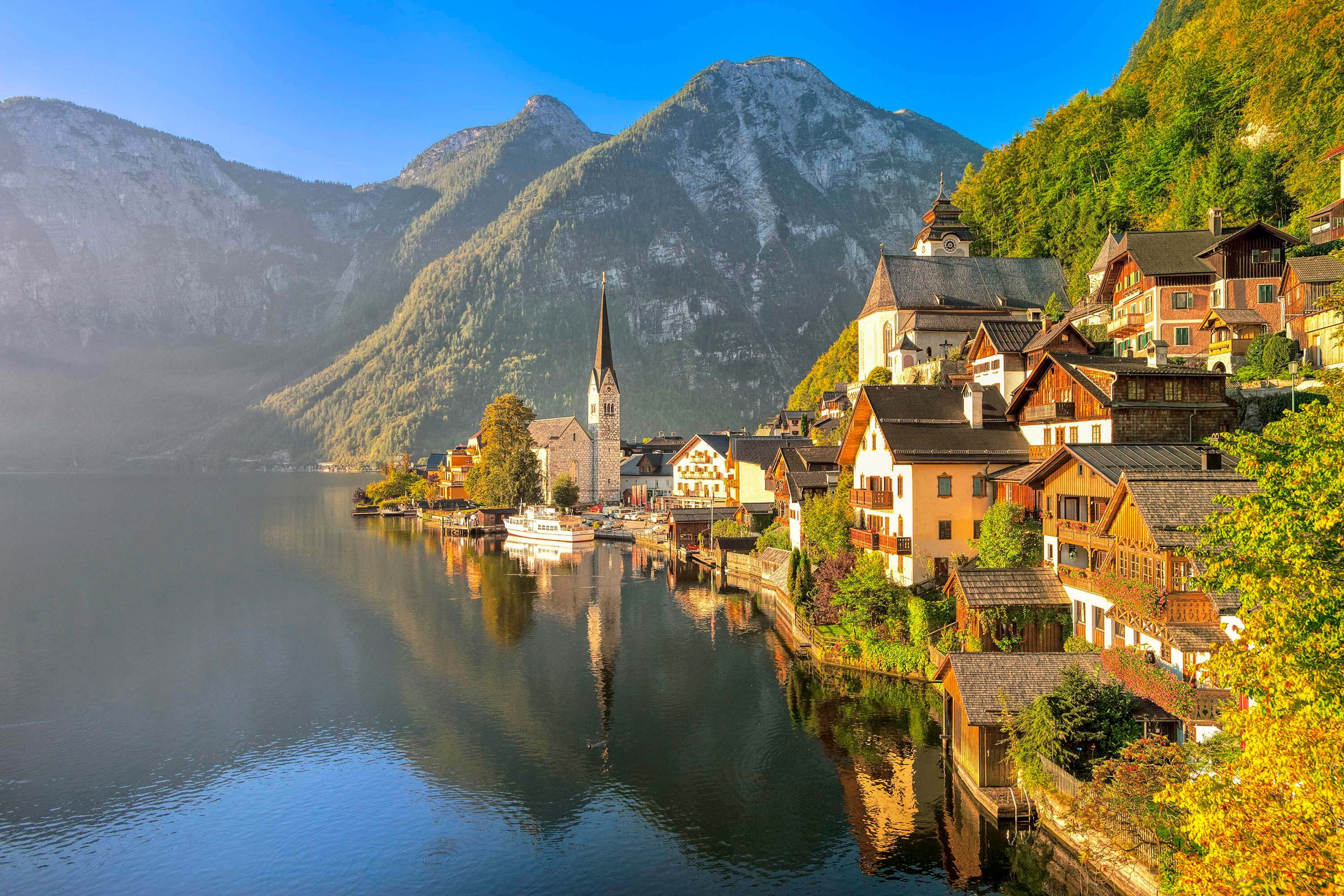
There’s no bad season here — but each one gives you a different village, and half the attractions run on their own calendar.
The honest answer to “when should I go” depends less on weather than on what you want to be able to do. Hallstatt at lake level is walkable in any month. Most ticketed mountain attractions — the salt mine, the Dachstein caves, the cable cars — follow their own operating calendars, and those don’t all line up.
So this article does two things: it describes what each season actually gives you, and it lays out which parts of the trip are switched on when. If you have fixed dates, skip to the month-by-month table and work backward from what’s open.
One thing that doesn’t change is the village itself: the same kilometer of street, the same two churches, the same lake in front of it, in January as in July. That is why a self-guided audio walk of Hallstatt works in any month — nothing about it depends on a season being open.
Quick answer
| Season | What you get | What’s usually not running |
|---|---|---|
| Spring (Apr–May) | Green valleys, strong waterfalls | Dachstein’s summer operation starts in May; lake still cold |
| Summer (Jun–Aug) | The broadest overlap of seasonal operations: swimming, boats, caves, long days | Dachstein’s third cable car section opens in early June |
| Fall (Sep–Oct) | Fall color, comfortable walking | Schedules shorten during September; Dachstein’s summer operation ends at the start of November |
| Winter (Nov–Mar) | Advent; possible snow at village level; Krippenstein winter operation from shortly before Christmas | Caves, sightseeing boats, most rentals; November is the thinnest stretch |
The operating season
What’s knowable in advance is when things run, not how many people will be there. Seasonal services cluster between spring and fall, but their start and end dates differ: boat rental, scheduled lake cruises, cable car sections and cave tours each run their own calendar.
The village and the station ferry run all year. Many of the mountain and lake activities are seasonal, so low season isn’t simply the same trip on a shorter timetable — the set of available activities changes.
The thinnest stretch is November: once Dachstein’s summer season ends at the start of the month, its winter operation hasn’t begun yet, and the scheduled lake boats have stopped. The village, the museum, the Bone House and the salt mine keep their own calendars through it, and the first Advent weekend can fall at the end of the month.
Spring
April and May are when the valley turns green, and snowmelt can make the waterfalls behind the village particularly strong. Spring can be very good for lower-valley walking — the lower Echerntal routes generally come into season earlier than the higher ones — while anything above them stays condition-dependent well into the season.
The lake is still cold. Dachstein’s summer operation starts in May, and its sections and caves open on their own dates rather than all at once, so if the caves or 5fingers are the point of your trip, April is too early.
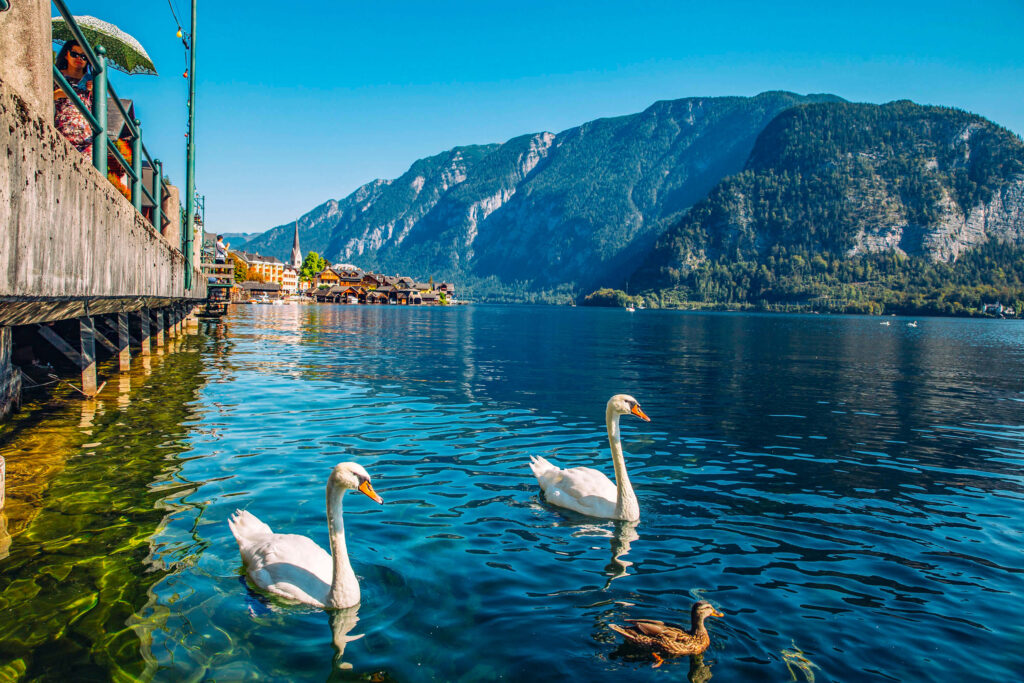
The Corpus Christi lake procession
One event worth planning around — and the reason to check the calendar before fixing spring dates. Corpus Christi is a movable feast, the second Thursday after Pentecost, so the date changes every year, and Hallstatt marks it on the water.
It runs to a shape: a mass in the Catholic parish church in the morning, then a procession that leaves the shore in traditional flat-bottomed boats decorated with flowers and greenery, with four blessing stations along the route. Traditional ceremonial shooting begins early in the morning and accompanies the procession. The tradition is documented from the 1620s, and it takes this form because the village had no room for a procession on land.
Practical points: you can watch from the shore for nothing, or from a spectator cruise when one is offered — booking arrangements change, so check the current operator’s terms rather than assuming tickets on the day. Visitors can’t join the procession boats themselves.
Summer
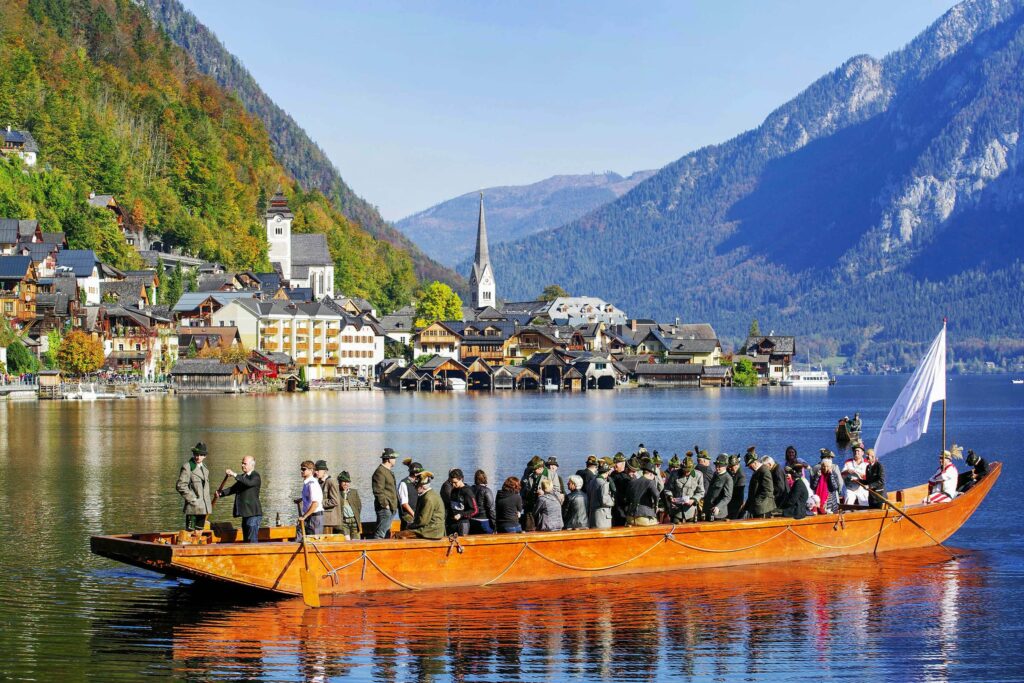
June through August has the broadest overlap of seasonal operations. Most Dachstein sections are running — the third opens in early June — the upper caves are open, the boats are out, and swimming is a realistic proposition, with the water at its warmest in July and August. It’s an Alpine lake, so “warmest” is relative.
Day visitors can’t reserve P1 or P2 in any month, and beds in and around the village are limited in every season, so book accommodation as far ahead as you can. Summer here is not reliably dry: rain and thunderstorms stay part of the planning, so build a rain option into any summer plan.
Fall
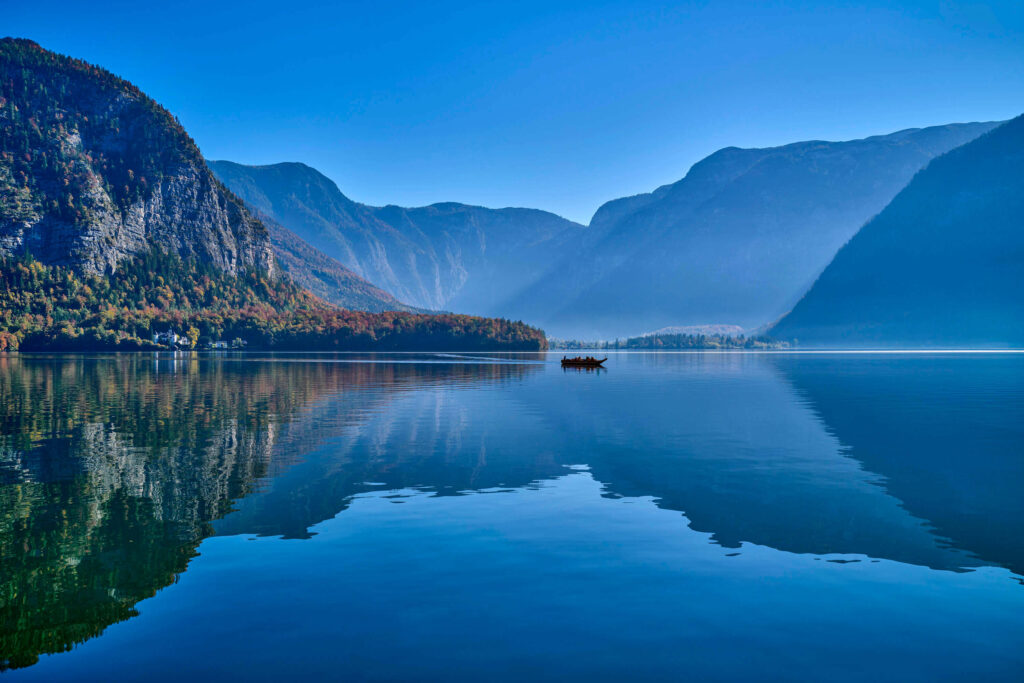
September is a strong compromise if you want much of the summer operating calendar with cooler walking weather. Early in the month the water can still be swimmable in a warm year, and the main attractions are running.
Then things start to close, and they start during September rather than after it: Dachstein shortens its operating day partway through the month, the Koppenbrüller cave finishes its season in late September, and the scheduled lake boats run to the end of it. Dachstein’s summer operation finishes at the beginning of November, and the salt mine moves to shorter hours in late October. Early October and late October are noticeably different trips.
Winter, briefly
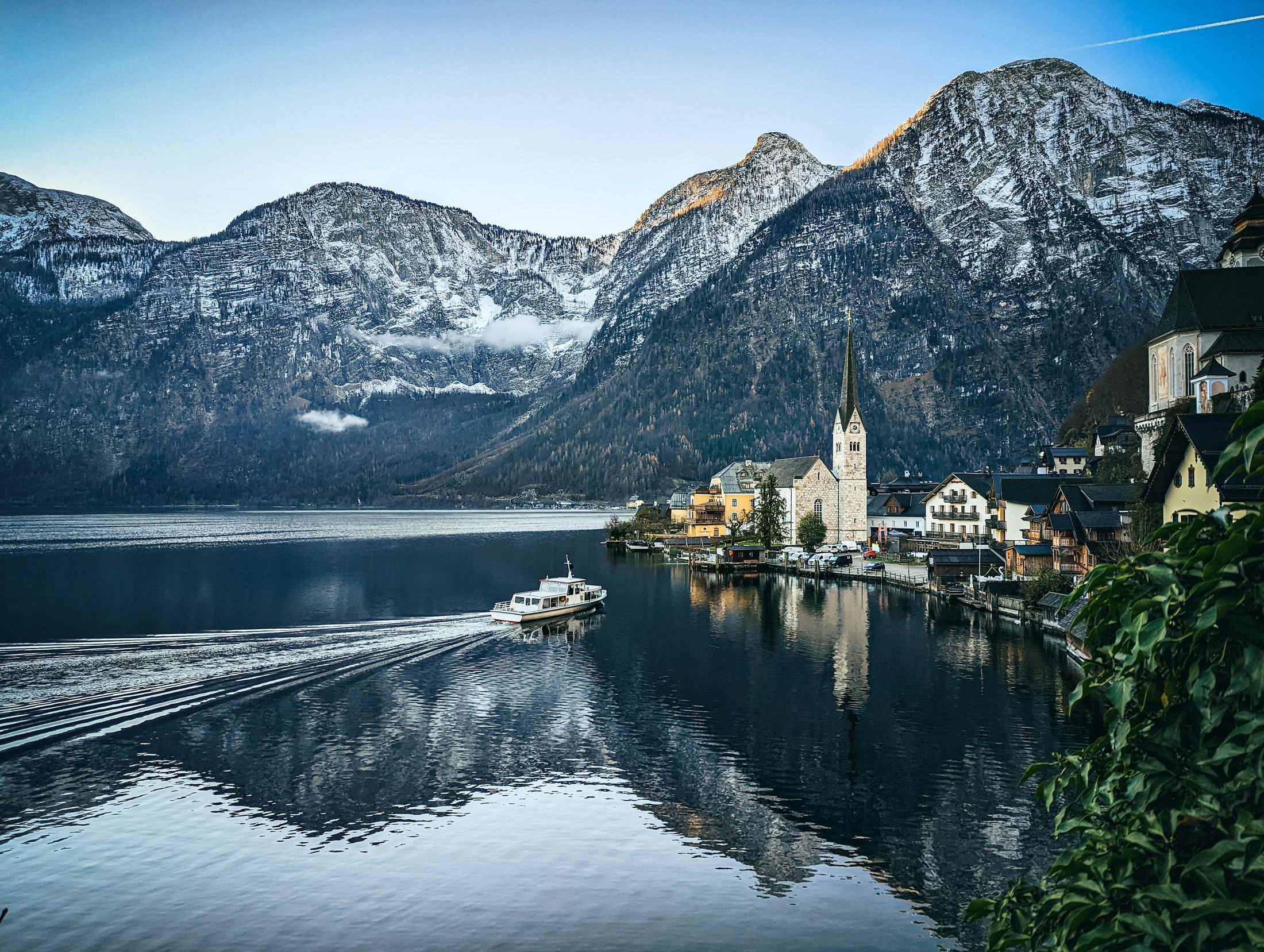
Winter is a real option and it has its own article: see Hallstatt in Winter. The short version: the village and the station ferry work all year, Salzwelten publishes its own winter and shoulder-season calendar, Krippenstein switches to winter operation shortly before Christmas, and the caves are closed. Daylight is the binding constraint rather than snow.
Month by month
| Month | Village | Mountain and lake | Notes |
|---|---|---|---|
| January | Open | Krippenstein winter operation; caves closed | Short days; snow possible at village level, not guaranteed |
| February | Open | Winter operation continues | Cold, short days |
| March | Open | Winter operation runs to around Easter | Thaw, variable conditions |
| April | Open | Some Hallstatt boat rentals begin operating; Dachstein still between seasons | Snowmelt can make the waterfalls strong |
| May | Open | Dachstein summer operation starts; upper cave tours begin | Corpus Christi can fall this month; check the year’s date |
| June | Open | Third cable car section opens in early June | Corpus Christi can also fall this month; long days, changeable Alpine weather |
| July | Open | Broadest overlap of summer operations | Warmest water; thunderstorms common |
| August | Open | Broadest overlap of summer operations | As July; book beds early |
| September | Open | Most operations running; some shorten or finish during the month | A strong compromise month |
| October | Open | Winding down through the month | Fall color, timing varies by year and elevation; mine hours shorten late in the month |
| November | Open | Summer operation over, winter not yet started | The thinnest stretch for seasonal mountain and lake operations |
| December | Open | Krippenstein winter operation starts before Christmas | Advent events; the market is a single day |
Choosing by what you want
| If you want… | Go |
|---|---|
| To swim in the lake | July or August; early September can work in a warm year |
| Waterfalls and green valleys | April to early June |
| Hiking in comfortable temperatures | May–June or September–early October |
| Fall color | Often October; timing varies by year and elevation |
| Advent | December |
| Skiing, and more reliable mountain snow | Krippenstein’s winter season, late December to late March, snow permitting |
| 5fingers and the upper caves | May to the start of November; the Koppenbrüller cave finishes in late September |
| A narrower but simpler menu | Spring or late fall, when fewer things are running |
| The lake procession | On Corpus Christi — the date varies from late May into June |
Weather, and what it actually changes
The pattern is Alpine and lake-influenced: warm summers with a real chance of afternoon storms, mild and colorful falls, cold winters where snow at village level is likely in any given season but not guaranteed in any given week, and springs that arrive in the valley well before they arrive on the plateau.
What matters for planning is less the temperature than the consequences. Ordinary rain leaves several strong indoor options — the museum, the excavation cellar under the Janu shop when accessible, and the salt mine when it’s operating — while trail and lake plans become more condition-dependent. Snow and ice slow the streets down, which are cobbled and stepped. And in winter the limiting factor is how early it gets dark.
Events worth moving your dates for
- Corpus Christi lake procession — movable, from late May into June.
- The Christmas market — a single day; in 2026 it falls on 8 December, an Austrian public holiday. Check the current year’s calendar.
- Krampus runs — around 5 December, with a children’s version and an evening one.
- Advent in the wider Salzkammergut — markets in Bad Ischl, Bad Goisern, Gosau and Bad Aussee, on their own dates through December.
Everything on that list has its own annual calendar. Confirm the dates before you book flights around them.
Common mistakes
- Assuming that if the village is open, everything is. Many ticketed mountain attractions run on their own seasonal calendars.
- Booking November without checking what operates. It’s the thinnest stretch for seasonal mountain and lake activities.
- Expecting reliably warm swimming conditions outside high summer. It’s an Alpine lake.
- Planning a Dachstein day at the edges of the season. Sections and caves start and stop on published dates.
- Treating a Christmas trip as a market trip. The market is one day; Advent is a month.
- Assuming summer means dry. It’s not reliably so.
GetYourGuide
Salt mine tours in Hallstatt
The salt mine keeps its own seasonal hours and shortens them in late October. Check the dates for your visit and book ahead.
See salt mine tickets →FAQ
What is the best month to visit Hallstatt? September, if you want one answer: much of the summer calendar is still available and the walking weather is cooler, though some schedules shorten during the month. June is the equivalent at the other end of the season.
When is the lake warm enough to swim? July and August are the safest bet, and even then it’s cool by most standards. Early September can still work in a warm year — check the current lake temperature.
Is Hallstatt worth visiting in winter? Yes, with the caveat that several major seasonal attractions are closed. It’s covered in our winter article.
Which month has the least running? November. Dachstein’s summer operation has ended, its winter operation hasn’t started, and the scheduled boats have stopped. The village, the museum, the Bone House and the salt mine keep their own calendars through it.
When is the Christmas market? In 2026, on 8 December, for a single day on the Market Square. Check the current year’s calendar before booking around it.
When is the Corpus Christi procession? The second Thursday after Pentecost, so the date changes each year.
Does it snow in Hallstatt? Usually at some point in winter, though snow at village level isn’t guaranteed in any given week. The mountains above hold it far more reliably.
Continue exploring
- Hallstatt in Winter — what’s actually open.
- Why Hallstatt Is Famous — salt, the Hallstatt culture and the Chinese copy.
- Where to Stay in Hallstatt — village, Obertraun or Bad Ischl.
- Our self-guided audio walk of the historic center, which runs on no season at all.
Picking your dates
Work from the calendar of whatever you most want to do, not from the weather forecast. Dachstein’s main summer attractions cluster from May into fall, but each cave and cable car section has its own dates. If it’s Advent, December; if it’s mountain snow, work from Krippenstein’s winter calendar. If it’s the procession, one movable Thursday in late spring. And if what you want is the village itself — the streets, the lakeshore, the view across the water — any month will do.
Disclosure: this article contains affiliate links to the TouringBee audio guide (a product of the company behind this site) and to GetYourGuide. If you buy through these links we may earn a commission at no extra cost to you.