
No products in the cart.

Hallstatt in Winter
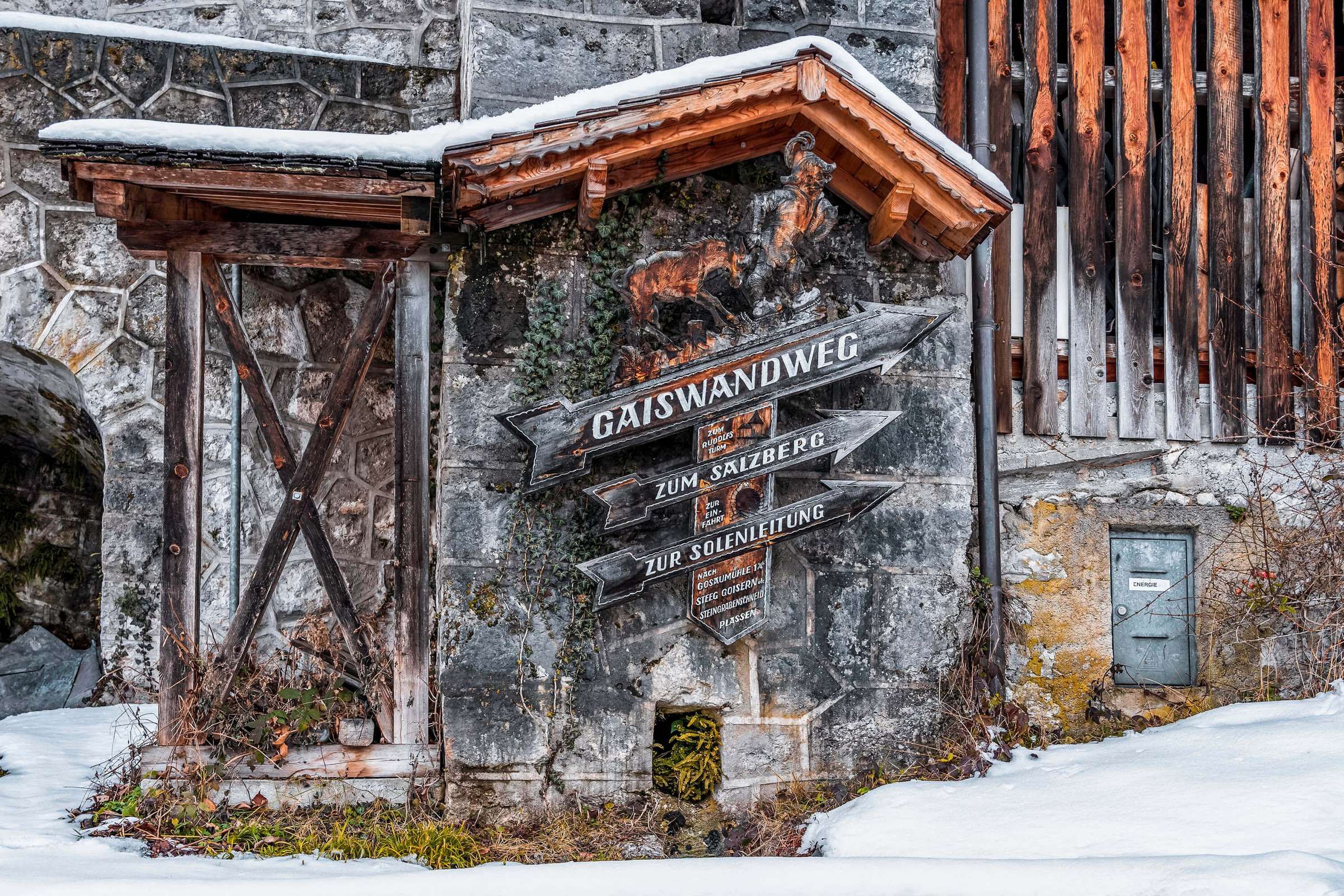
The village works differently between November and March — and that’s not worse, as long as you know what’s shut.
Winter is easy to mis-plan, because the year-round village and the seasonal attractions around it run on very different calendars. The images that circulate are of snow on the roofs and mist on the water, which is a real thing that happens here; what they don’t show is that the cave tours have stopped, the seasonal sightseeing boats and rentals are finished, and the daylight is short.
None of that rules out a winter trip. It changes what the trip is. Instead of a village plus a summer mountain excursion, you get a village, a salt mine running its own winter calendar, long dark evenings, and — later in the season — a mountain that switches to winter operation, reachable by regional bus via Obertraun.
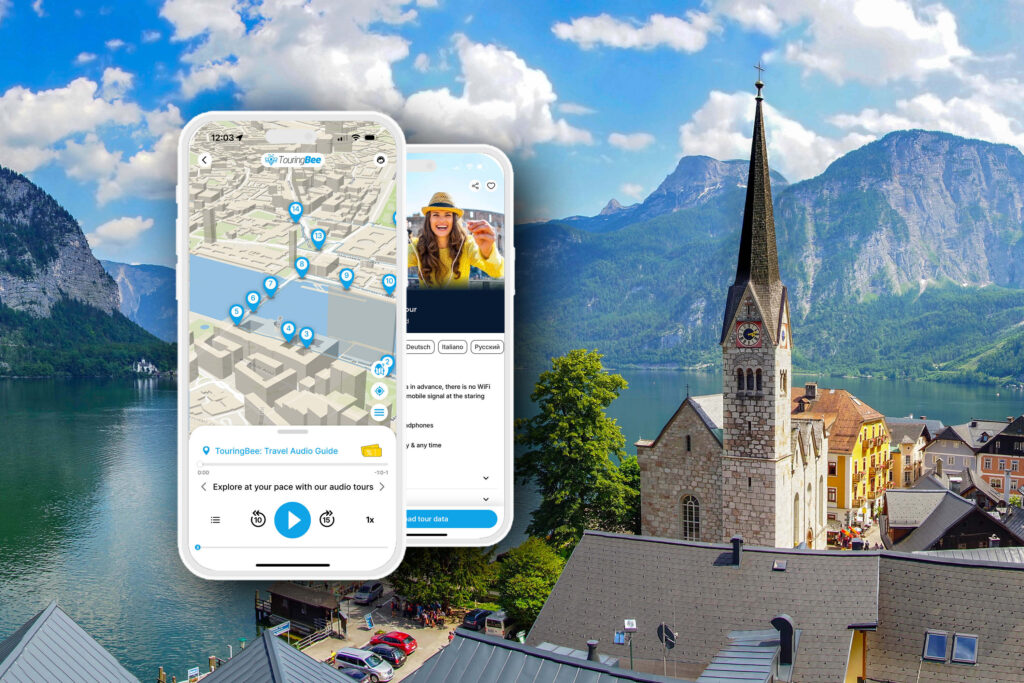
This article covers what’s open, what isn’t, how the transport behaves, and what to wear. If your dates land in December, the Advent events have their own article; here we’re dealing with the season rather than the calendar. The village walk is the part that doesn’t depend on an attraction season or a fixed start time, which is why a self-guided audio walk of Hallstatt is a reasonable anchor for a short winter day.
Quick answer
- The village and the station ferry run all year. The ferry is a 365-day service.
- Salzwelten runs on its own winter and shoulder-season calendar. The currently published schedule extends into early January; check your exact date.
- Krippenstein switches to winter operation shortly before Christmas — skiing plus marked winter hiking and snowshoe routes. The caves are closed.
- Sightseeing boats and rentals stop.
- Daylight is the real constraint. Plan on being finished outdoors by late afternoon.
- Snow at village level is likely at some point in the season, but not in any given week.
What winter here actually looks like
Hallstatt sits at around 500 meters, low by Alpine standards, on a lake that doesn’t reliably freeze solid, though partial ice can form. Snow, rain, slush and ice are all normal at village level, and snow cover isn’t guaranteed for any particular week. The mountains above hold it far more reliably, which is why Krippenstein can be in winter operation while the market square is wet.
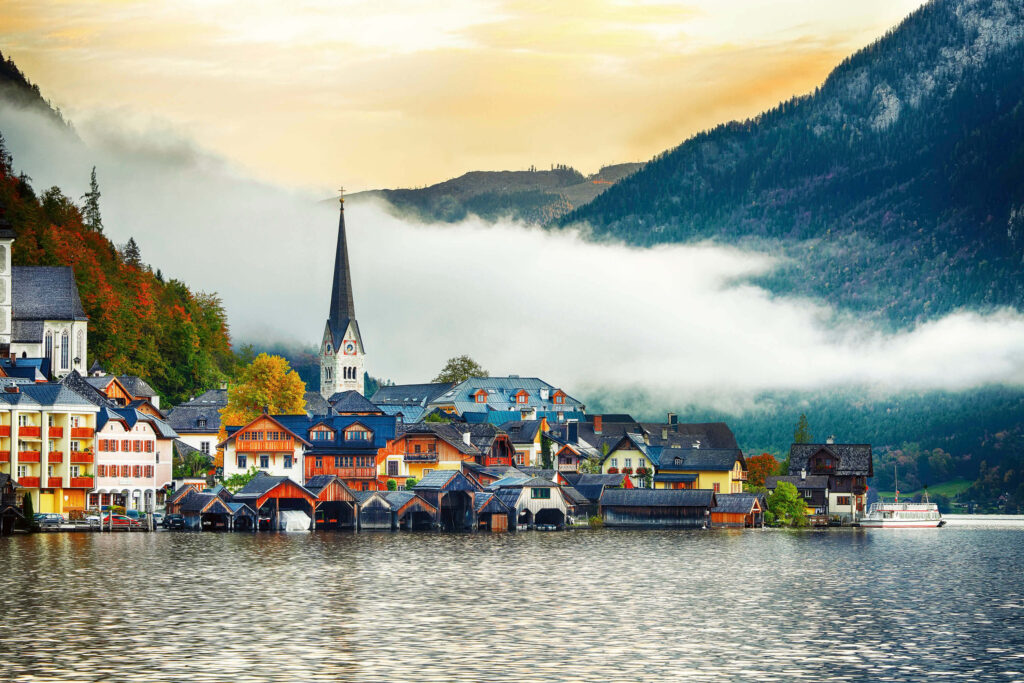
The lake is the thing that changes most: winter can bring still water, low cloud or mist, and early evening light, with the far shore coming and going. The village lights up early because it has to.
A specific consequence of the terrain: in early winter the Dachstein massif can block direct sun from parts of the village, and on some days those areas get no direct sunlight at all. That’s separate from daylight, which behaves normally — it’s the ridge, not the hour.
What’s open and what’s closed
| Winter status | |
|---|---|
| Village streets | Year-round |
| The two churches | Working parishes; access subject to services |
| Station ferry | Runs all year on a timetable coordinated with the trains |
| Salt mine and Skywalk | Its own winter calendar; check your date |
| Funicular | Follows the Salzwelten calendar, with its own operating hours |
| Hallstatt Museum | Winter hours; check the current calendar |
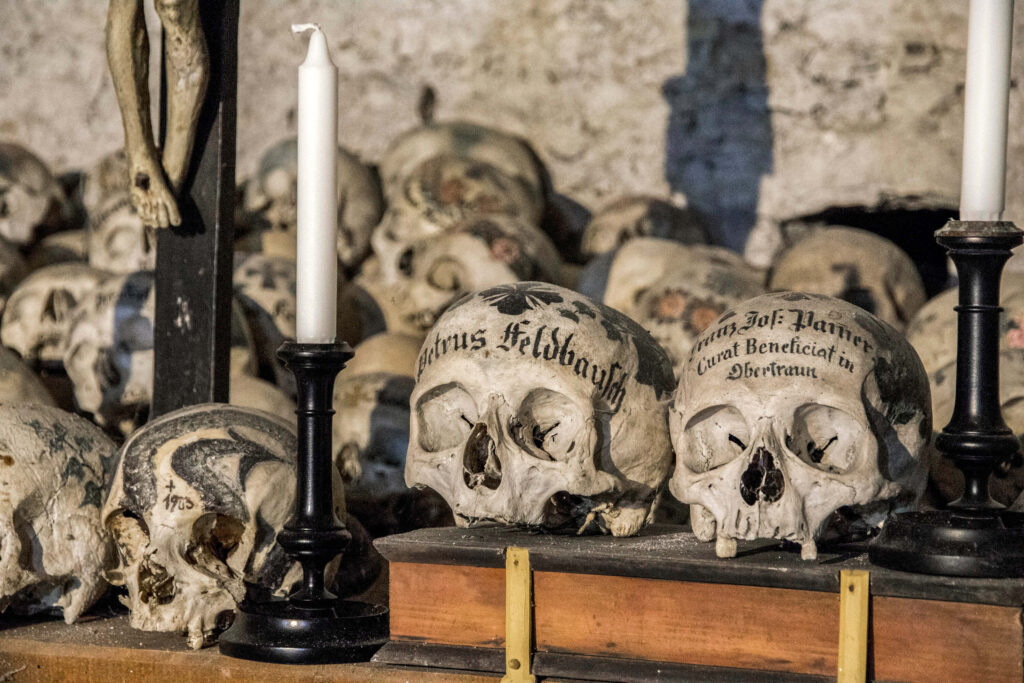
| Bone House | Winter schedule, on reduced days; check the current calendar |
| Excavation cellar under the Janu shop | Accessible during shop hours; subject to change |
| Dachstein Giant Ice Cave and Mammoth Cave | Closed for the season |
| Koppenbrüller cave | Closed for the season |
| Krippenstein cable car | Winter operation from shortly before Christmas to around Easter: skiing, winter hiking, snowshoe routes |
| Sightseeing boats, boat rentals | Stopped |
Two practical consequences. First, the salt mine is a substantial indoor block when it’s operating — allow at least three hours — so check its calendar and book it. Second, if the ice cave was the reason for your trip, move the trip — it’s a summer attraction and no amount of planning changes that.
Weather, snow and the short day
Expect cold rather than extreme cold: the village is low-lying. Snow, rain, slush and ice are all normal at street level, and conditions on the mountain above are considerably more wintry.
Daylight is what shapes the day. Around the solstice the sun is up for roughly eight hours, and the ridge can take direct sun off parts of the village earlier still. In practice, put light-dependent outdoor plans before late afternoon, and check the last return crossing for your exact date, especially for an evening plan.
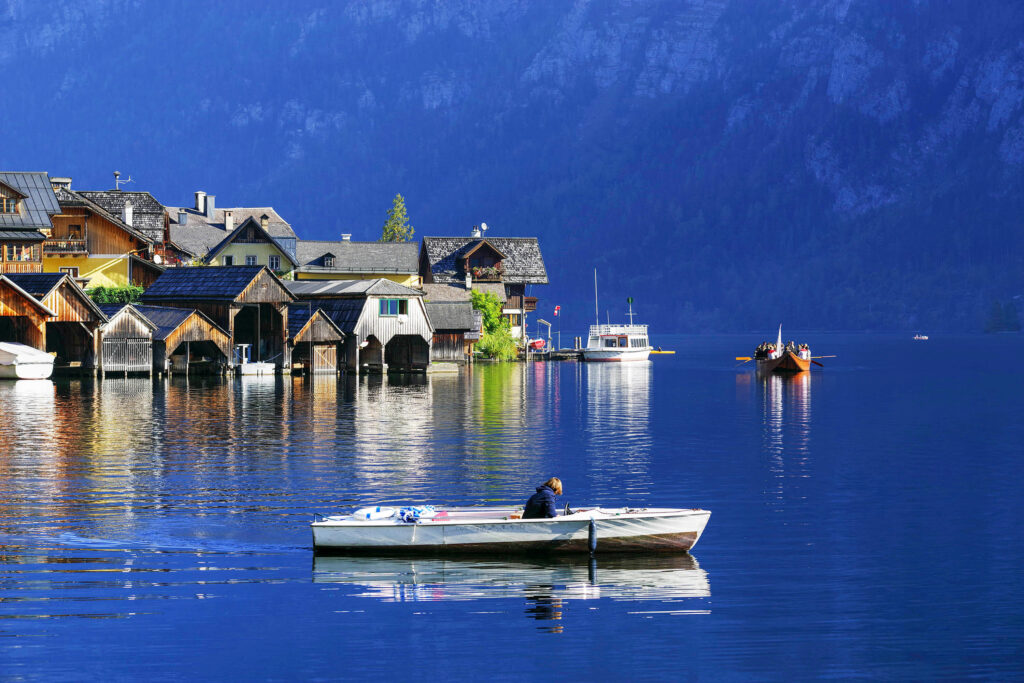
The streets are cobbled, stepped in places, and get slick. The climb to the Catholic church and the ossuary is the part where that matters most.
Transport in winter
Trains run all year on the Salzkammergut line, and the station ferry runs year-round on a timetable coordinated with them. The standard train-plus-ferry approach stays available year-round, though frequencies and timings shift.
The ferry is a 365-day service, cash only, on a timetable coordinated with the trains. Check the last return crossing for your exact date, especially if you plan to stay into the evening.
Buses run through the year, and the same route continues on toward the Dachstein cable car and Obertraun, which is how you reach the ski area without a car.
Driving brings one extra requirement: winter tires are required for vehicles up to 3.5 metric tons from 1 November to 15 April whenever conditions are wintry. The traffic restriction is unchanged year-round, but winter parking availability isn’t identical — P1 is the lot that runs all year — so follow the current electronic signs.
Dachstein in winter
The mountain doesn’t shut — it changes function. Krippenstein switches to winter operation shortly before Christmas and runs to around Easter, reachable from Hallstatt by bus through Obertraun. Skiing and freeriding depend on suitable snow, which the operator says explicitly.
The caves are closed for the season. For non-skiers, the winter options include the cable car itself, marked winter hiking and snowshoe routes on the plateau — including one out to the 5fingers platform — and guided snowshoe tours.
So Dachstein in winter is a real excursion whether or not you ski. It’s simply a different one from the summer cave-and-viewpoint day, and both operating status and conditions decide it, so check them before you go up.
What to wear
- Footwear with grip. It matters on cobblestones, steps and slush.
- Layers. The mine stays around 8 °C in any month.
- Waterproof outer layer. Winter at village level can bring rain, wet snow and slush as well as settled snow.
- Hat and gloves for exposed lakeside sections.
- A power bank if you’re relying on your phone — cold drains batteries, and you’ll be using it for the ferry timetable.
Winter with children
Available village-level options include the funicular and the salt mine when they’re operating — children are admitted from age 4, and younger ones can ride the funicular and go out on the Skywalk — plus the museum, and the ferry crossing, which is a small boat trip in its own right.
What’s missing is the summer program: no seasonal boat rentals or cave tours, and lake swimming isn’t a normal winter activity. Days are short, so build in warm indoor breaks if you’re spending time outside with children.
Christmas and Advent
December is a different proposition from January, and it has its own article. In short: the village is decorated for Advent, the Christmas market runs for a single day — 8 December in 2026 — and there are Krampus events in the first week of the month. Check the current year’s dates, and if your winter trip is a Christmas trip, plan it by date.
Is it worth going in winter?
Yes, if the village is the point and you accept a narrower menu. You get the streets without the summer schedule around them, a mountain in winter operation later in the season, evenings that start early enough to be part of the day, and — depending on the day — mist on the water.
No, if your list has the caves, a sightseeing boat trip or swimming on it. Those are summer things, and winter isn’t a discount version of them.
Common mistakes
- Booking a winter trip around the ice cave. It’s closed. So is the Mammoth Cave.
- Forgetting the ridge. Parts of the village can lose direct sun well before sunset.
- Arriving in city shoes. The upper lanes and the steps to the Catholic church can be slippery in snow or ice.
- Assuming snow. It’s likely at some point over the season and not guaranteed in your week.
- Forgetting cash for the ferry. Unchanged in winter.
- Expecting summer opening hours. The mine, the museum and the Bone House each keep their own winter schedule, and some run reduced days.
FAQ
Is Hallstatt worth visiting in winter? Yes, if you want the village and the landscape. Less so if your plan depends on the cave tours, seasonal sightseeing cruises or rentals, or warm-weather lake activities.
Does the ferry run in winter? Yes — the station ferry is a 365-day service on a timetable coordinated with the trains. The sightseeing boats are the seasonal ones.
Is the salt mine open in winter? Salzwelten publishes its own winter and shoulder-season calendar; the current one extends into early January. Check your exact date and book ahead.
Are the Dachstein ice caves open in winter? No — the Giant Ice Cave and the Mammoth Cave are summer attractions. Krippenstein switches to winter operation from shortly before Christmas to around Easter, with skiing plus winter hiking and snowshoe routes, including one out to 5fingers.
Does it snow in Hallstatt? Usually at some point in the winter. The village is at about 500 meters, so snow comes and goes; the mountains above hold it much more reliably.
How cold does it get? Hallstatt is low-lying by Alpine standards, but freezing, wet and icy conditions all occur. Snow, rain, slush and ice are all normal at street level.
What is there to do in Hallstatt in winter? The village on foot, the salt mine when it’s operating, the museum and the Bone House on their winter hours, the excavation cellar, the ferry crossing, and Krippenstein in winter operation, for skiing or for the snowshoe and winter hiking routes.
Continue exploring
- Christmas, Advent and the Krampus runs, planned by date.
- When to visit, month by month, if your dates are still open.
- What there is to see here, and what each thing takes.
- The salt mine and Skywalk, with their own winter operating calendar.
- How to get here — trains, ferry, buses and parking.
- Our self-guided audio walk of the historic center, which runs on no season at all.
Deciding
Winter here rewards people who came for the place rather than for the list of attractions. Check the mine’s calendar and book it, check the ferry’s last crossing for your date, bring boots with grip, and put light-dependent outdoor plans before late afternoon. A January afternoon here can feel completely different from July: the same one-kilometer village walk, with short daylight, winter surfaces and a different mountain calendar around it.
Disclosure: this article contains an affiliate link to the TouringBee audio guide, a product of the site’s own company; we may earn a commission on purchases made through it.