
No products in the cart.

Why Hallstatt Is Famous: Salt, the Hallstatt Culture and the Chinese Copy
Four separate kinds of fame, arriving in the wrong order: salt, an Iron Age culture, UNESCO status and a global image. What each means for a visit to Hallstatt.
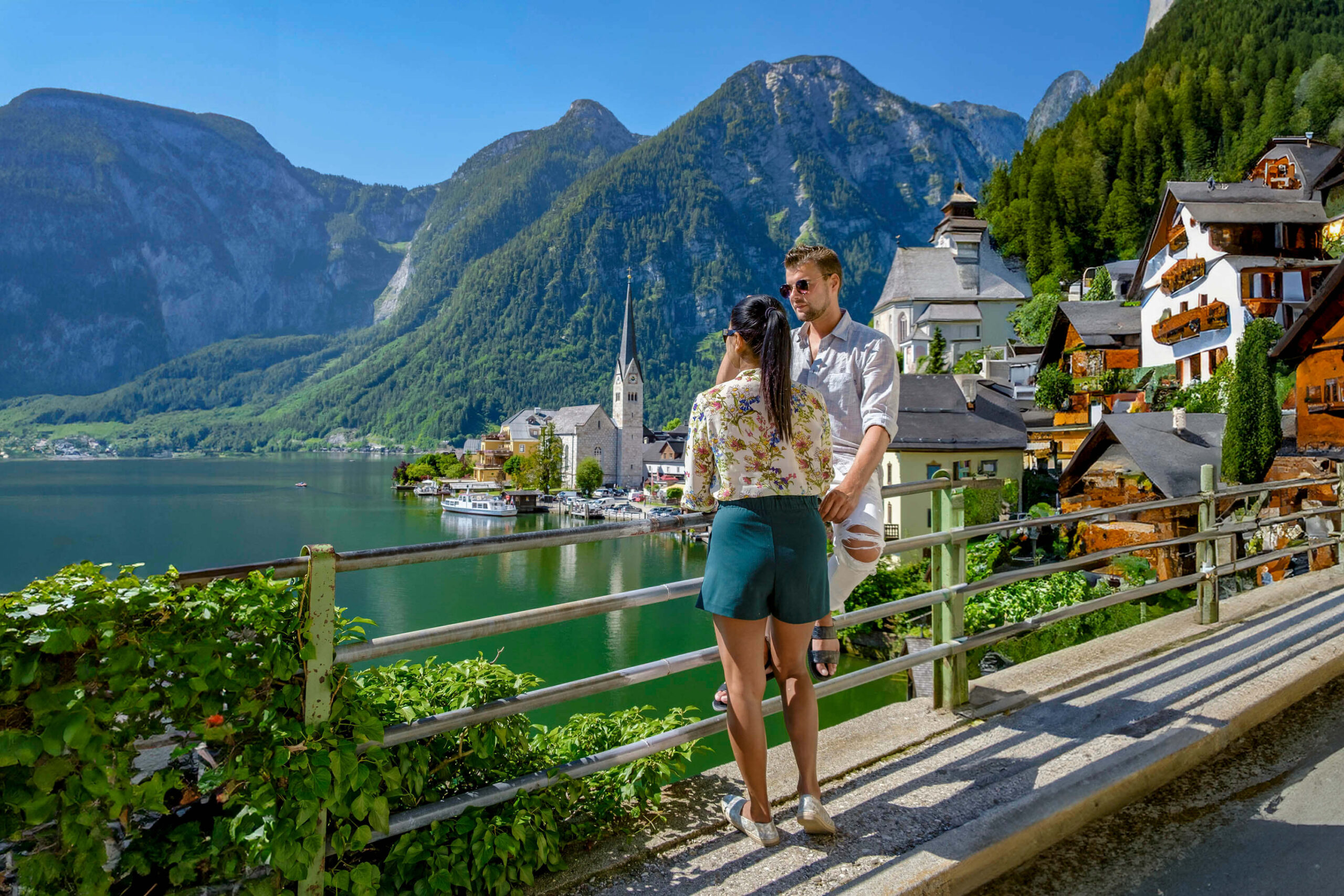
Four separate kinds of fame, arriving in the wrong order — and what they mean for a visit.
Hallstatt often reaches people first as an image: houses stacked on a shelf of land, a spire, a lake, a wall of rock behind. The image travels well, and it’s the newest of the reasons this village is known.
Underneath it are three older reasons, and they don’t cancel each other out. This article sorts them, because which version of Hallstatt you came for shapes what you’ll make of the place. Once you know why the place matters, the village stops reading as a film set, and that shift is what our self-guided audio walk through Hallstatt is for: the same kilometre of street, with the reasons attached.
Quick answer
| The reason | Since when | What you’ll see of it today |
|---|---|---|
| Salt | About 7,000 years of salt-production history | The mine, the Salzberg, the whole reason a village is here |
| The Hallstatt culture | Named after the village in the 1800s | The high valley burial ground, the museum |
| UNESCO World Heritage | 1997 | The listed cultural landscape as a whole |
| The global image | 21st-century mass tourism | The visitor numbers, and a copy in China |
Salt, and about 7,000 years of it
The village exists because of what’s inside the mountain above it. Salt has been produced on the Salzberg for about 7,000 years — not continuously, since the work stopped and resumed more than once — and large-scale underground mining is securely documented from the Bronze Age onward. Hallstatt is regarded as the world’s oldest known salt mine.
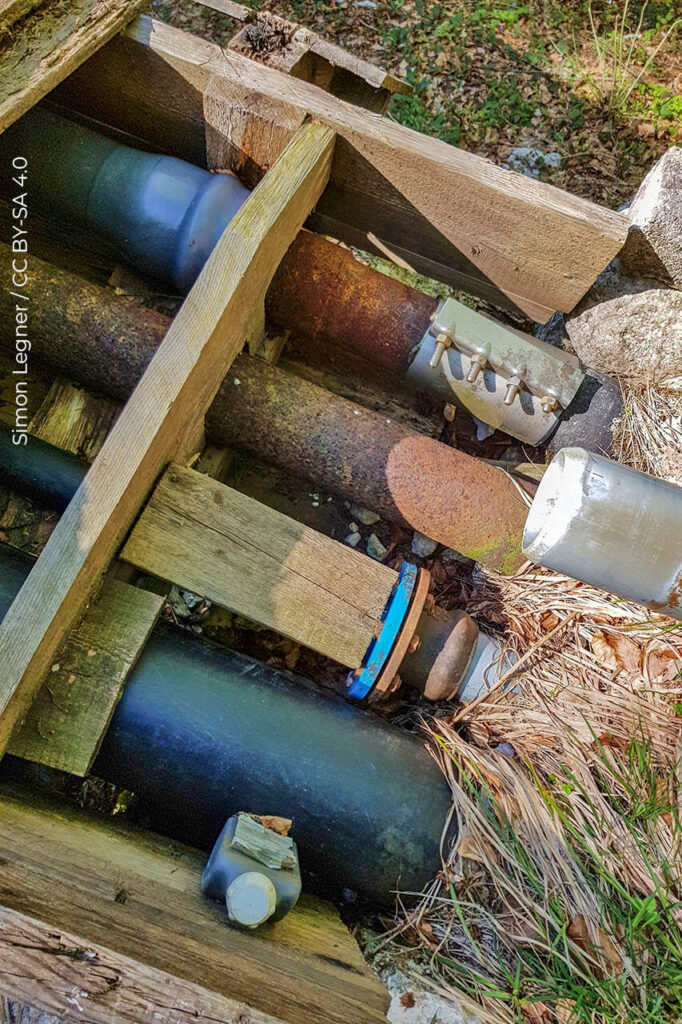
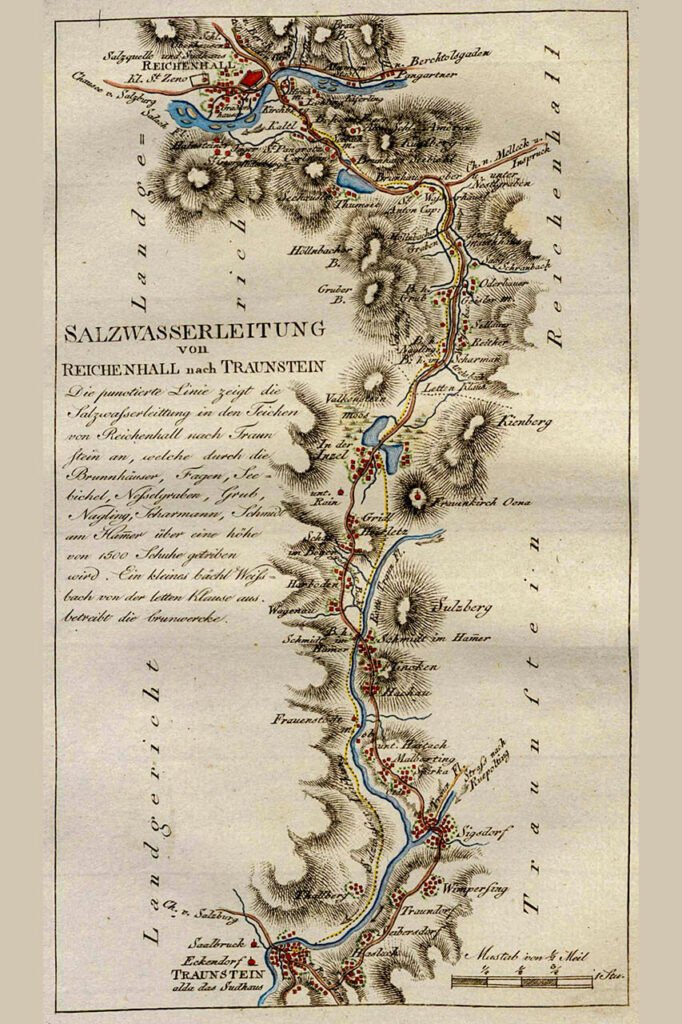
That’s not a museum claim. Industrial extraction continues here today: water dissolves the salt in the rock and the brine is piped away for processing. What visitors go into is the historical workings, interpreted for them (salt mine tours from Hallstatt on GetYourGuide are the easiest way to compare options), rather than the industrial operation.
The scale of the past becomes concrete in one object: a wooden staircase found in the mine, built in 1344 BC, the oldest surviving wooden staircase in Europe. People were carrying salt down that mountain before the Trojan War.
The salt itself is older than any of it. It formed in a shallow sea around 255 million years ago; when the Alps were pushed up, the salt-bearing layers came up with them. That’s why a major salt deposit sits in a high valley a few hundred metres above the lake, and why a village had a reason to exist somewhere this impractical.
The Hallstatt culture
In the nineteenth century, excavation of the burial ground in the high valley above the village produced graves so rich and so distinctive that archaeologists ended up naming an entire European period after the place. The Hallstatt culture, roughly 800 to 450 BC, is the Early Iron Age across a large part of central Europe — and the type site is the cemetery above this village.
Johann Georg Ramsauer, a mine official, began systematic excavation of the cemetery in 1846.
Around 1,500 graves have been excavated so far, out of an estimated 5,000 to 6,000 burials in the high valley. The grave goods include material from across Europe and ivory that probably came from Africa, which shows how far Hallstatt’s salt-driven trade connections reached.
This is the reason Hallstatt appears in archaeology textbooks in countries that have no idea what the village looks like. The finds are on show at the Hallstatt Museum; tickets and tours that include the museum are listed on GetYourGuide.
UNESCO World Heritage since 1997
The Hallstatt–Dachstein / Salzkammergut Cultural Landscape was inscribed on the World Heritage List in 1997. The World Heritage property covers a much wider cultural landscape around Hallstatt and the Dachstein, not just the village centre — a place where human activity and the mountains have been bound together for millennia.
Two things worth being clear about. The designation is about that long relationship between salt, terrain and settlement, not about any particular building being beautiful. And it doesn’t mean the village is frozen: Hallstatt is a working municipality, and the houses are lived in.
The global image
The fourth kind of fame is recent, and the image is often how modern visitors first encounter Hallstatt. Hallstatt’s mayor estimated around 1.2 million day visitors in 2025, against fewer than 800 residents, concentrated on a centre about a kilometre long.

The effect is easy to see on the ground: a small settlement on a very narrow strip between the lake and the slope, absorbing a flow on an entirely different scale.
The copy in China
In 2012, Minmetals Land opened Hallstatt See, a Hallstatt-inspired residential development in Boluo County, in the Huizhou area of Guangdong province, with a square, a spire and a lakefront borrowed from the original. It was reported at the time as a project of roughly 940 million dollars.
The buildings are real and were built as housing, and the Austrian village wasn’t consulted in advance. Hallstatt’s mayor attended the opening and signed a cultural exchange agreement.
The Frozen question
Disney has not identified Hallstatt as a source for Arendelle, and the studio’s own material points to Norway and other northern references. The association came later, out of visual resemblance.
Film and television
Hallstatt has also served as a filming location. The action film Ballerina shot here in February 2023, and Nine Perfect Strangers filmed in the area in February 2024.
What fame means for a visit today
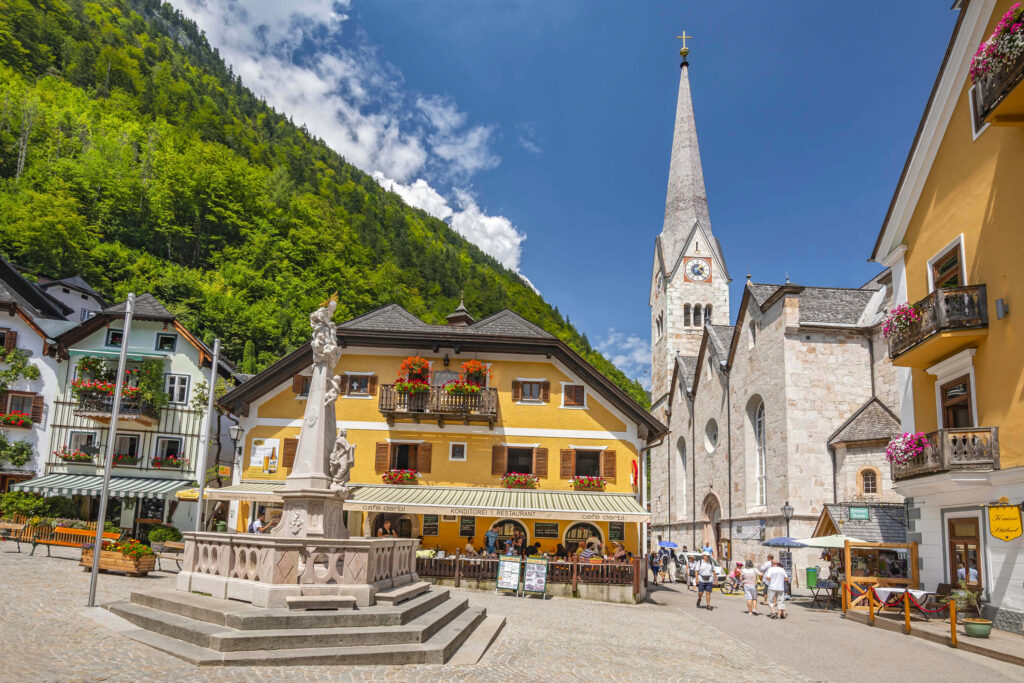
What you’ll actually encounter: the historic centre is closed to visitor cars, day-visitor parking sits outside the restricted centre, coaches use pre-booked slots, and some of the best-known street-level viewpoints are in residential lanes with people living behind the windows. Traffic management here is shaped by the same narrow terrain that leaves very little room for roads and parking in the first place.
So is it worth going?
Yes, with one condition: know which Hallstatt you came for.
If you came only for the image, the viewpoint is a short part of a visit. If the salt, the archaeology and the cultural landscape interest you, there’s a substantial reason to come here rather than only to be photographed here. How long to give it, and what to combine it with, is a separate question.
The village is small. The reasons behind it are not.
Common mistakes
- Treating the postcard view as the whole reason Hallstatt matters.
- Treating the World Heritage listing as an architecture prize. It’s about the salt landscape as a whole.
- Assuming a Frozen connection. There isn’t a documented one.
- Treating the Chinese copy as an official Hallstatt project. It was a commercial residential development, not a reproduction commissioned by the village.
- Expecting a museum village. People live here, and industrial salt extraction still continues on the mountain.
GetYourGuide
Go inside the salt mountain
The salt is the oldest reason Hallstatt matters, and the mine is where it becomes tangible. Compare salt mine tours, with or without the Skywalk, for your dates.
See salt mine tours →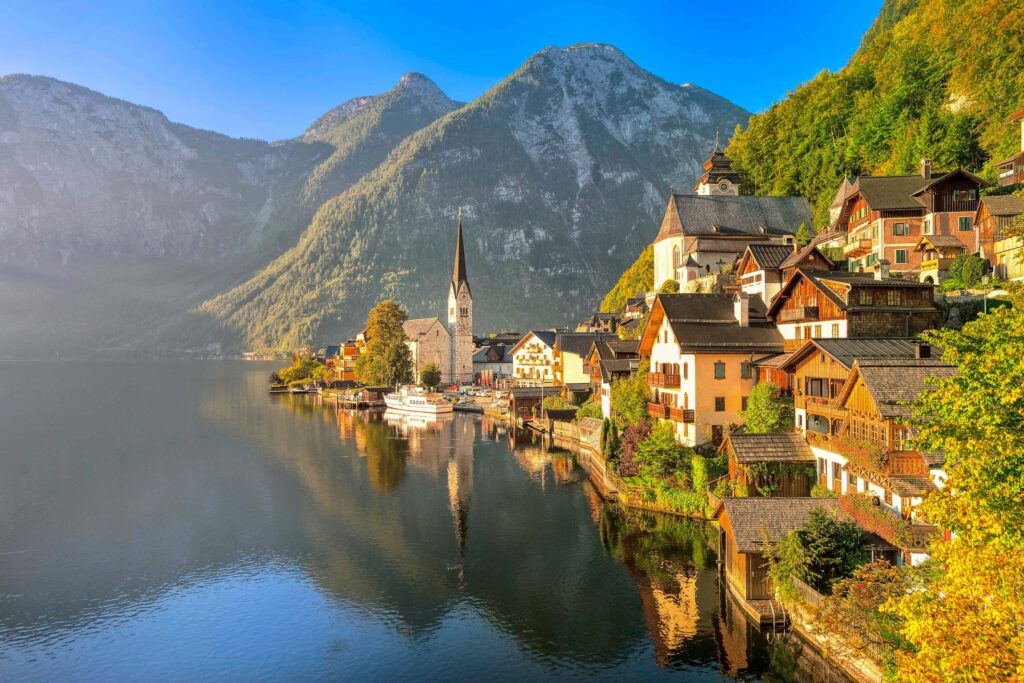
FAQ
Why is Hallstatt so famous?
Four reasons, in the order they happened: about 7,000 years of salt production, an Iron Age culture named after the village, UNESCO World Heritage status since 1997, and, most recently, a photograph that travelled around the world.
What is the Hallstatt culture?
The Early Iron Age culture of much of central Europe, roughly 800 to 450 BC, named after the burial ground in the high valley above the village.
Is Hallstatt really the oldest salt mine in the world?
Salt working on the Salzberg reaches back about 7,000 years, and large-scale underground mining is securely documented from the Bronze Age onward. The mine is still in operation today.
Is Hallstatt the inspiration for Frozen?
Disney has not identified Hallstatt as a source, and the studio’s own material points to Norway and other northern references.
Is there really a copy of Hallstatt in China?
Yes — Hallstatt See, a residential development opened in 2012 in Boluo County, Guangdong, by Minmetals Land.
Why is Hallstatt a UNESCO site?
It was inscribed in 1997 as the Hallstatt–Dachstein / Salzkammergut Cultural Landscape, for the long relationship between salt, the mountains and human settlement.
Is Hallstatt worth visiting?
If you want more than the photograph, yes — the salt mountain, the archaeology and the landscape all give you a reason to be here. How long to stay is covered separately.
Continue exploring
- Hallstatt in Winter — what’s open and what isn’t between November and March.
- Our self-guided audio walk through the historic centre, if you’d rather arrive with the reasons already attached.
Tickets for the salt and the finds: salt mine tours and the Hallstatt Museum on GetYourGuide.
The short version
Hallstatt had three older claims to fame before its image became a global calling card, and those older reasons are the ones still holding the place up. Salt built it, an Iron Age cemetery named a period of European history after it, and a World Heritage listing recognized the whole landscape in 1997. The image came last, as the newest layer of its fame — and the layer a village of fewer than 800 people now has to manage.
Disclosure: this article contains affiliate links to TouringBee’s own audio guide and to GetYourGuide. If you buy through them, we may earn a commission at no extra cost to you.