
No products in the cart.
Rome Sightseeing Tour: See More at Your Pace
Plan a Rome sightseeing tour that fits your day, with smart routes, flexible timing, and stories that make ancient landmarks feel truly memorable for you.
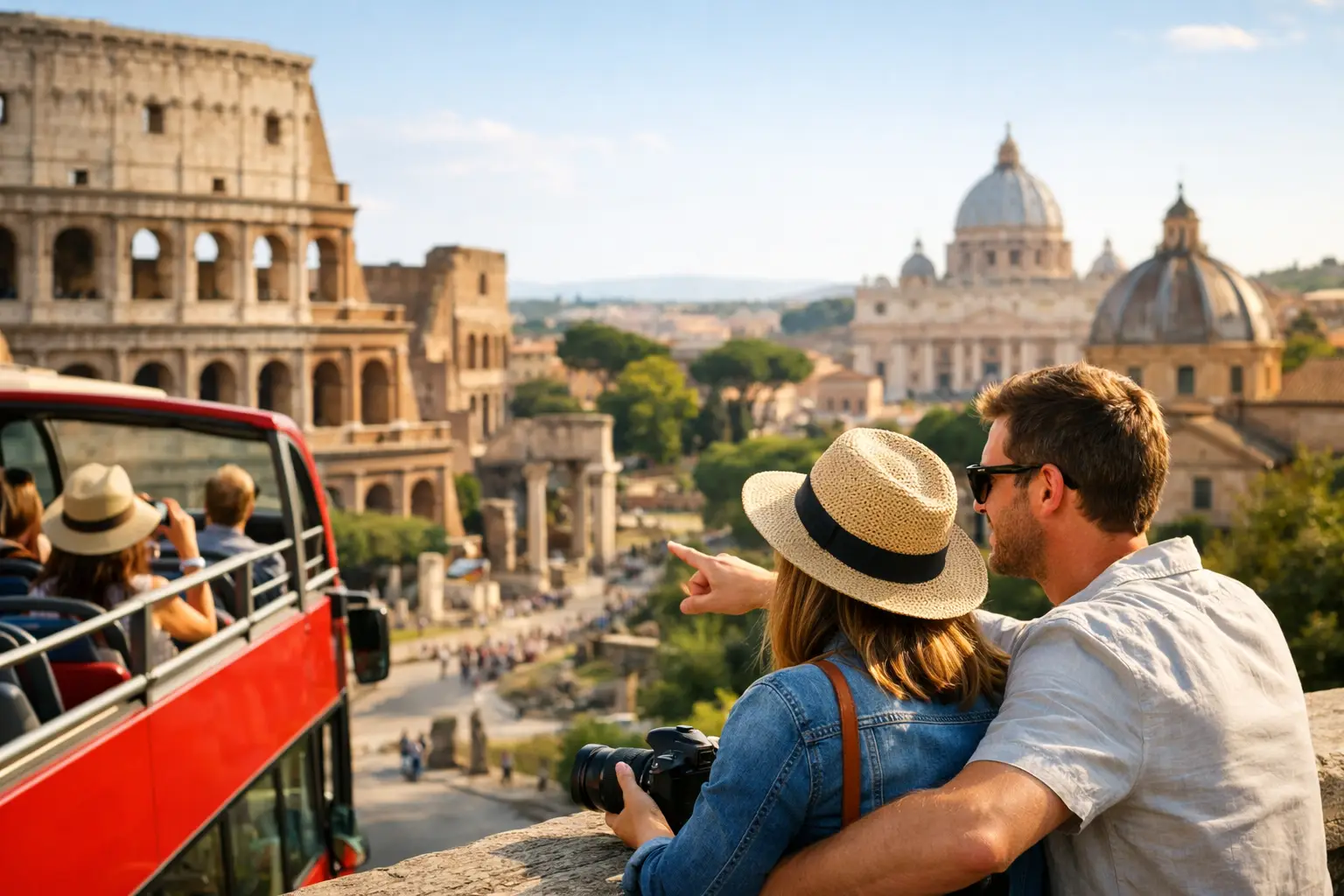
Rome is not a city that rewards rushing. The moment you turn off a major avenue, you may find a quiet piazza, a marble fountain, or the remains of an ancient wall that never appeared on your original plan. A well-planned Rome sightseeing tour gives you structure without taking away that sense of discovery.
The best approach depends on how much time you have, where you are staying, and whether you want to spend more time inside museums or out in the streets. For many independent travelers, a self-paced route is the easiest way to connect Rome’s biggest landmarks while leaving room for a long lunch, an espresso break, or an unexpected detour.
Start with the Rome landmarks that matter most
Rome’s central sights are closer together than they look on a map, but the city can feel demanding under the summer sun or on its famously uneven cobblestones. Rather than trying to see every famous place in one day, choose a route with a clear geographic flow.
A classic first-day route often begins near the Colosseum. From there, you can continue through the Roman Forum and Palatine Hill, then walk toward Piazza Venezia and the Capitoline area. This is Rome at its most ancient and monumental: emperors, triumphal arches, temples, and political life all packed into a relatively compact area.
The trade-off is that the Forum and Palatine Hill deserve time. If you plan to enter both, avoid scheduling too many other ticketed attractions that day. You will get more from the ruins when you can pause, look across the landscape, and understand what stood where, rather than treating the visit as a race between photo stops.
For a different side of the city, build a walking route around the Pantheon, Piazza Navona, Trevi Fountain, and the Spanish Steps. These landmarks are easier to visit from the outside and work well for travelers who want a flexible day with plenty of time for cafés, shopping, and wandering. They are also especially beautiful in the early morning and evening, when the busiest tour groups are gone.
Choose a Rome sightseeing tour style that suits you
There is no single right way to tour Rome. The experience changes dramatically depending on whether you join a group, book a private guide, or use an audio guide on your phone.
A live group tour can be a good choice when you want direct access to a guide and a fixed plan. It is useful for major attractions with complicated entrances or for travelers who prefer not to make any decisions on the day. The downside is the schedule. If the group moves on, you move on too, even if you would rather stay at the Trevi Fountain for another ten minutes or stop for gelato.
A private guide offers more personal attention, but it can be a significant expense, especially for solo travelers and couples. It makes sense for a special occasion, a family group, or visitors with very specific interests.
For travelers who want expert context with more freedom, a self-guided audio tour is often the sweet spot. You follow a planned route, hear the stories behind the landmarks, and navigate with GPS, but you are still in charge of the day. TouringBee audio guides are designed for exactly this kind of visit, with offline maps and location-based narration that let you explore in your own pace without using mobile data.
Make time work in your favor
Rome is crowded for much of the year, but timing changes everything. An early start can turn an overwhelming landmark into a much calmer experience. Trevi Fountain, for example, is far more enjoyable before breakfast than at midday, when visitors gather shoulder to shoulder around its edge.
If the Colosseum is on your list, book an entry time in advance whenever possible. Arrive early enough to find the entrance, pass security, and get oriented. The same principle applies to the Vatican Museums, where long lines can consume a surprising part of the day.
Try not to schedule the Vatican and the Colosseum on the same day unless your visit is very short and you are comfortable with a fast pace. They sit on opposite sides of the historic center, both involve substantial walking, and both deserve your attention. Splitting them across two days leaves more room to enjoy Rome between the major sights.
Afternoons are ideal for neighborhoods rather than a packed checklist. Walk through Trastevere for ivy-covered streets and lively restaurants, cross the Tiber to the Jewish Ghetto for a quieter historical atmosphere, or climb toward the Aventine Hill for peaceful gardens and broad views. These places offer a welcome reset after the scale and noise of central Rome.
Plan your route around energy, not just distance
On a map, a Rome sightseeing tour can look simple. In real life, heat, steps, crowds, and uneven streets affect how much you will enjoy it. A route of two or three miles may take most of a day once you include stops, museum entrances, photos, lunch, and the natural tendency to linger.
Wear comfortable shoes with grip. Rome’s cobblestones are charming, but they are not kind to thin soles or brand-new sandals. Carry water, particularly from late spring through early fall, and refill at Rome’s public drinking fountains, known as nasoni. The water is generally cold, drinkable, and a practical way to avoid buying bottle after bottle.
Build in a real break around midday. A quick sandwich eaten while walking may save time, but a sit-down lunch can make the rest of the day better. Rome is a city to experience, not merely complete. Give yourself permission to pause in a piazza, order a coffee at the bar, and watch local life move around you.
It is also smart to keep one attraction optional. If you are energized, add a museum, viewpoint, or neighborhood walk. If you are tired, skip it without feeling that the day has failed. Flexible plans are usually the ones travelers remember most fondly.
Go beyond the postcard views
The headline sights are essential, especially on a first visit, but Rome becomes more personal when you pair them with places that reveal another layer of the city.
Near the Colosseum, the Basilica of San Clemente offers an extraordinary journey through different centuries beneath one church. Around Campo de’ Fiori, narrow streets lead to small squares that feel removed from the major tourist flow. On the Aventine Hill, you can look through the famous keyhole at St. Peter’s dome, then continue to the Orange Garden for one of Rome’s most peaceful city views.
These stops are not necessarily better than the Colosseum or Pantheon. They simply offer contrast. A great day in Rome mixes the famous places you hoped to see with a few discoveries you did not expect.
A simple one-day route for first-time visitors
If you have just one full day, start near the Colosseum and walk through the ancient center in the morning. Continue past the Roman Forum viewpoint and Piazza Venezia, then head toward the Pantheon for lunch nearby. In the afternoon, walk to Piazza Navona and the Trevi Fountain, finishing at the Spanish Steps or in the nearby streets for dinner.
This route is ambitious but manageable if you do not try to enter every monument. If visiting the Colosseum interior is your priority, reduce the afternoon plan and focus on the Pantheon, Piazza Navona, and one other landmark. Fewer stops with more understanding will always feel better than a day spent checking your phone to see what you missed.
Rome rewards curiosity, but it also rewards a little preparation. Pick a route that makes sense, download what you need before leaving your hotel, and leave open space in the schedule. The city’s best moments often happen between the famous stops, when you are free to take the next street simply because it looks interesting.