
No products in the cart.
Louvre Audioguide: Is It Worth Using?
Planning a Louvre visit? This guide explains how the Louvre Audioguide works, what it covers, and when it’s worth using for your trip.
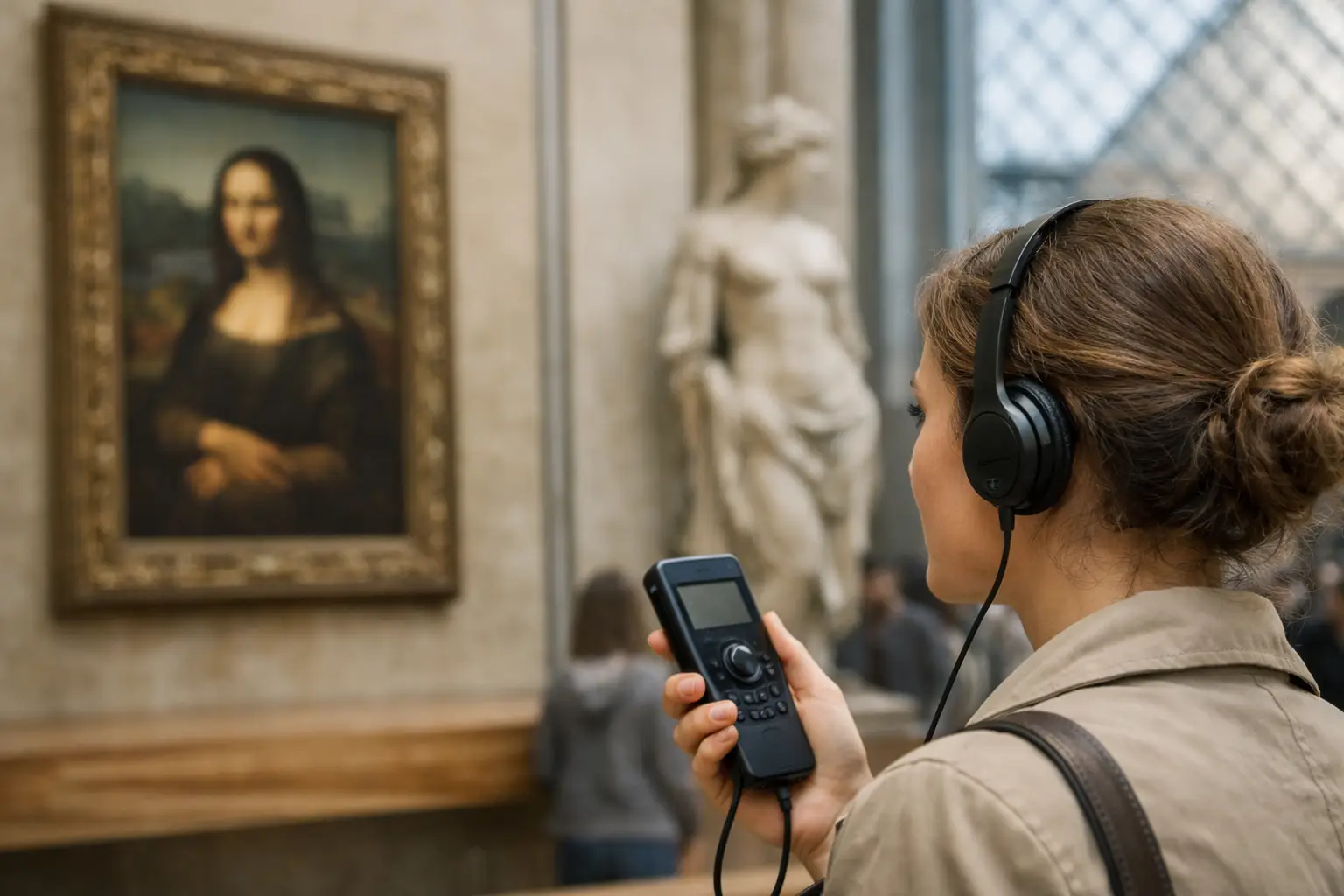
You can lose an hour at the Louvre without seeing anything famous. One wrong turn and you are suddenly staring at a decorative arts room, wondering how you missed the Mona Lisa signs. That is exactly why the Louvre Audioguide matters. In a museum this large, the real challenge is not finding something beautiful. It is finding the right pace, the right route, and enough context to make the visit feel memorable instead of overwhelming.
What the Louvre Audioguide actually does
The Louvre is not the kind of museum where most people casually wander and still feel satisfied. It is massive, crowded, and full of works that deserve more than a quick photo and a glance at the label. The Louvre Audioguide helps turn that chaos into something more manageable.
At its simplest, it gives you commentary on major artworks and sections of the museum. Depending on the current setup at the museum, it may also include route support, highlight tours, and multilingual content. For many visitors, that means less time spent looking confused in a corridor and more time understanding why a sculpture, painting, or ancient object matters.
That said, an audio guide is not magic. It will not make the Louvre feel small, and it will not remove crowds from the Denon Wing. What it can do is give your visit structure.
Who benefits most from a Louvre Audioguide
If you already studied art history, mapped your route, and know exactly which galleries matter most to you, you may not need much help. But that is not how most people visit the Louvre.
A Louvre Audioguide is especially useful for first-time visitors, travelers with limited time, and anyone who wants a more independent visit without joining a group. It works well for couples who want to move at their own pace, solo travelers who like having a personal tour in their ear, and families trying to keep everyone focused on the highlights.
It is also a practical choice for international travelers. Museums this large can feel tiring when every decision takes extra effort, especially in a foreign city. Having guidance in your language removes friction fast.
The trade-off is simple. If you prefer drifting through museums with no plan, stopping only when something catches your eye, an audio guide may feel too directed. Some travelers love that freedom. Others leave feeling like they missed half the point.
What to expect from the experience
The best way to think about the Louvre Audioguide is as a museum companion, not a lecture. Good audio should do three things at once: explain what you are looking at, help you decide where to go next, and keep the experience moving.
That matters because attention drops quickly in big museums. You may start your visit full of energy, then hit a wall after the Winged Victory of Samothrace, the Venus de Milo, and a few packed rooms of Italian painting. A guide that gives short, focused commentary is often better than one that tries to say everything.
Expect the strongest coverage around the museum’s headline works and key collections. You will likely get useful context on famous pieces, a bit of historical background, and enough storytelling to make names and dates feel less abstract. What you usually will not get is deep academic analysis of every room.
For most travelers, that is a good thing. The Louvre is already a lot. Dense information can make it feel heavier.
The biggest advantage: pace
Group tours are efficient, but they are not always relaxing. You move when the guide moves. You stop where the guide stops. If a room is too crowded or you want ten extra minutes with a painting, tough luck.
That is where an audio guide has a clear edge. You can pause, sit down, skip ahead, repeat a section, or spend half your visit in one department if that is what you want. This flexibility is often the difference between checking off the Louvre and actually enjoying it.
For independent travelers, that freedom is the whole point. A personal tour on your phone or device feels lighter than following a flag through crowded galleries. You still get expert context, but the day remains yours.
This is also why self-guided audio has become such a practical option across major cities and museums. Companies like TouringBee build this kind of experience around traveler comfort – simple playback, easy pacing, and enough structure to help without taking control away.
Where the Louvre Audioguide may fall short
No guide works perfectly for everyone, and it is worth being realistic before your visit.
First, museum audio guides usually focus on selected highlights. If you are passionate about a niche area such as Near Eastern antiquities or French decorative arts, the commentary may feel limited compared with a specialist book or a guided tour tailored to that subject.
Second, device-based systems can feel a little transactional. Pick up the unit, enter numbers, listen, move on. Some visitors do not mind that. Others prefer the convenience of using their own smartphone with familiar controls, offline access, and a format that feels more natural.
Third, the Louvre itself can interrupt any plan. Temporary closures, gallery congestion, security routes, and visitor flow can all affect how smoothly your route works. Even the best audio experience has to adapt to the museum on a busy day.
So yes, the guide helps. But it still helps to arrive with realistic expectations and a short list of priorities.
How to use a Louvre Audioguide well
The smartest Louvre visitors do not try to see everything. They decide what kind of visit they want and let the guide support that plan.
Start by choosing your must-sees. For many people, that means the Mona Lisa, the Venus de Milo, the Winged Victory, and a handful of major painting galleries. If you only have two or three hours, this is plenty. An audio guide is most useful when it helps you focus, not when it encourages you to collect masterpieces like errands.
It also helps to build in breaks. The Louvre is physically demanding. There is a lot of walking, a lot of standing, and often a lot of crowd navigation. If your audio guide lets you pause and resume easily, use that feature. Sit down. Have water. Reset your attention.
Another useful trick is to mix guided listening with unguided wandering. Listen carefully in the rooms you care about most, then allow yourself to drift a little in between. That balance keeps the visit from feeling too programmed.
Should you use the museum’s own guide or a self-guided app?
This depends on what kind of traveler you are.
The museum’s official option is usually the simplest if you want something fully integrated into the visit. It is made specifically for the Louvre, generally easy to understand, and designed around the museum’s collection. For many visitors, that is enough.
A self-guided app can be a better fit if you value phone-based convenience and travel flexibility. If you are already using your smartphone for maps, tickets, and planning, listening there may feel more natural than carrying a separate device. Some travelers also prefer downloading content ahead of time, using offline access, and keeping their sightseeing tools in one place.
The trade-off is that not every app is equally strong inside a museum setting. Some are better for city walking routes than gallery navigation. Others are built more thoughtfully for cultural sites. The best choice depends on whether you want official museum commentary, broader travel convenience, or a combination of both during your Paris trip.
Is the Louvre Audioguide worth it?
For most first-time visitors, yes. The Louvre Audioguide is worth it because it reduces decision fatigue in a museum that can otherwise feel too big, too crowded, and too famous for its own good. It helps you understand more, miss less, and move in your pace.
But worth depends on your style. If your ideal museum day is spontaneous, quiet, and label-led, you may be happy without it. If you want a convenient, low-stress visit with clear commentary and room to explore on your own schedule, it is money well spent.
The Louvre does not need help being impressive. What most visitors need is help making sense of it. A good audio guide does exactly that, then gets out of your way so the art can do the rest.
If you are planning your visit, give yourself less pressure to conquer the whole museum and more permission to enjoy a few great rooms properly. That is usually when the Louvre feels less like a checklist and more like the trip memory you actually wanted.