
No products in the cart.
Seville Cathedral Audioguide: Is It Worth It?
Seville Cathedral Audioguide explained: what it covers, who it suits, and how to get more from your visit at your own pace without overspending.
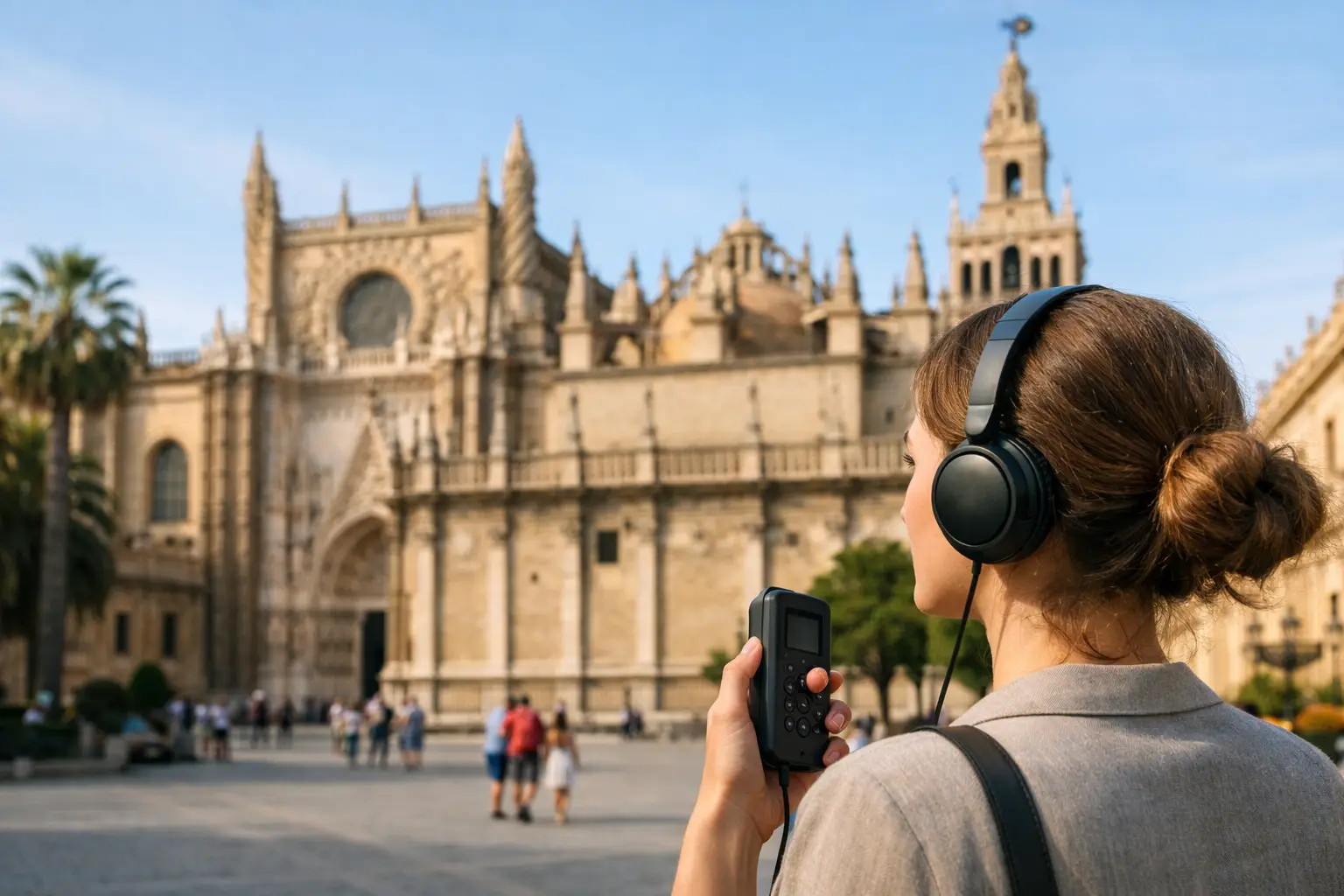
You feel the scale of Seville Cathedral before you understand it. The soaring nave, the tomb of Columbus, the side chapels, the treasury, the climb up La Giralda – it is a lot to take in, and that is exactly why a Seville Cathedral Audioguide can make such a difference. Instead of wandering through one of Spain’s most important landmarks half-informed and half-lost, you get context in your ear and the freedom to move in your pace.
Why a Seville Cathedral Audioguide works so well
Seville Cathedral is not the kind of place that reveals itself in a quick lap. It is visually overwhelming at first, and that can be both exciting and frustrating. Many visitors step inside, admire the vaulted ceilings, snap photos, and leave without really understanding what they just saw.
An audio guide fixes that without forcing you into a group schedule. It gives you the backstory behind the building’s size, the reason this cathedral matters in Spanish history, and the details that are easy to miss when you are distracted by the sheer scale of the interior. That matters here more than at smaller churches, because Seville Cathedral is layered. It is Gothic grandeur, royal ambition, religious symbolism, and civic pride all packed into one monument.
The best part is simple: you stay independent. You can pause in front of an altarpiece longer than planned, skip ahead if your feet are tired, or spend extra time on La Giralda without worrying about losing a guide or holding up a group.
What you actually learn with an audio guide
A good Seville Cathedral Audioguide does more than name objects. It turns the building into a story that makes sense from room to room.
You usually start with the cathedral’s origins, including how it rose on the site of a former mosque. That one fact changes how you see the whole place. Suddenly La Giralda is not just a bell tower with great views. It becomes evidence of Seville’s layered past, where Islamic and Christian histories are physically built into the same skyline.
Inside, the audio guide helps sort out what deserves attention. Without guidance, many visitors know they are looking at something important, but not why. The main altarpiece, for example, is one of those moments. It is massive, dazzling, and easy to admire in a general way. A smart narration explains what the scenes represent, why the workmanship matters, and how this kind of visual storytelling functioned for worshippers.
Then there is the tomb traditionally associated with Christopher Columbus. Even travelers who are not especially interested in royal or colonial history usually stop here. The right audio commentary gives the moment weight without turning it into a lecture. It also adds some nuance – because with Columbus, history is never as simple as a heroic travel tale.
Chapels, choir stalls, sacristies, and treasury rooms also become more rewarding when you know what you are looking at. In a place this large, context saves energy. Instead of reading every label and trying to piece things together on the spot, you follow a clear thread.
Audio guide or live tour?
It depends on how you like to travel.
If you love asking questions in real time and you enjoy the social energy of a group, a live guide still has advantages. A strong human guide can adjust to the group, emphasize what people find most interesting, and bring extra personality to the visit.
But live tours come with trade-offs. They run at fixed times, they can feel rushed in crowded areas, and they do not leave much room for detours. If you want to sit quietly in a chapel for five minutes or spend longer at the top of La Giralda, that freedom usually disappears.
That is where an audio guide often wins. It is practical, affordable, and much easier to fit into a real travel day. You can visit in the morning, break for coffee, and continue later. You can move quickly through sections that do not interest you much and slow down where the place really grabs you.
For couples and solo travelers especially, that flexibility is hard to beat.
Who gets the most value from a Seville Cathedral Audioguide
This format suits travelers who want more than a photo stop but less than a formal tour. If that sounds like you, it is probably the right choice.
Independent travelers tend to get the most from it because they already prefer setting their own pace. Budget-conscious visitors also usually appreciate it, since an audio guide is often far cheaper than a private guide while still adding real substance to the visit.
It is also a great fit for international visitors. Listening in your own language is simply easier than trying to absorb architecture, history, and signage in a second or third language while standing in a crowded cathedral.
Families can benefit too, although this depends on the age of the kids. Older children and teens often engage better with short, well-paced stories than with static information panels. Younger kids may still find parts of the visit long, no matter how good the narration is.
What to look for in a good guide
Not every audio guide improves the experience. Some are too dry, some are too long, and some assume you already know the basics of Spanish religious history.
The most useful version is one that combines storytelling with orientation. You want clear directions on where to go next, enough historical context to make the site meaningful, and narration that respects your attention span. A cathedral visit should feel enriched, not turned into homework.
Offline access is another practical detail that matters more than people expect. Thick stone walls and crowded tourist areas are not ideal for mobile data. If your guide works fully after download, you remove one more point of friction from the day.
The same goes for location-based playback. When the commentary starts at the right moment instead of making you scroll and guess, the whole experience feels easier. That is one reason mobile self-guided formats have become so popular with travelers who want a personal tour without the usual logistics.
How to use it without feeling glued to your phone
There is a simple trick to getting the most out of any cathedral audio guide: let it lead, but not dominate.
Start by following the main route so you get the essential story in the intended order. That usually gives you the strongest sense of the cathedral as a whole. After that, give yourself permission to drift. If one chapel catches your eye, stop there. If the view from La Giralda is the highlight for you, spend more time up top.
Headphones help, but keep the volume low enough that the cathedral still feels like a real place rather than a soundtrack. Part of the experience is the atmosphere – footsteps on stone, shifting light, the quiet murmur of visitors. Good travel is not about absorbing every fact available. It is about understanding enough to see more clearly.
A few honest trade-offs
An audio guide is convenient, but it is not magic. If the cathedral is extremely crowded, moving at your own pace may still be tricky. You may need to wait for space near major highlights, and that can interrupt the flow.
Battery life matters too. If you are relying on your phone for navigation, tickets, photos, and an audio guide all day, bring a portable charger or start fully powered.
And while audio guides are great for structured understanding, some travelers still miss the spontaneity of a live guide telling stories in the moment. If you want a deeply interactive experience, self-guided will feel different. Not worse – just different.
Making the visit feel lighter, not heavier
The smartest reason to use a Seville Cathedral Audioguide is not that it adds more information. It is that it removes confusion.
When you know where to go, what you are seeing, and why it matters, the visit becomes less tiring. You stop second-guessing whether you missed something important. You stop rushing past major works because the labels are crowded or unclear. You get a calmer, more confident experience inside one of the biggest and most historically rich churches in Europe.
That is the real appeal of a self-guided format, and it is why travelers increasingly choose mobile options from companies like TouringBee. For roughly the price of a light meal, you get the feeling of having a knowledgeable companion in your ear, without giving up your freedom.
If Seville Cathedral is on your itinerary, do not treat it as a place to simply enter and exit. Give yourself a better way to understand it, then leave room to wander a little once the story starts making sense.