
No products in the cart.
A Practical Guide to Self-Guided Audio Tours
Use this guide to self-guided audio tours to choose a route, download it offline, and enjoy a flexible, story-rich city day at your own pace.
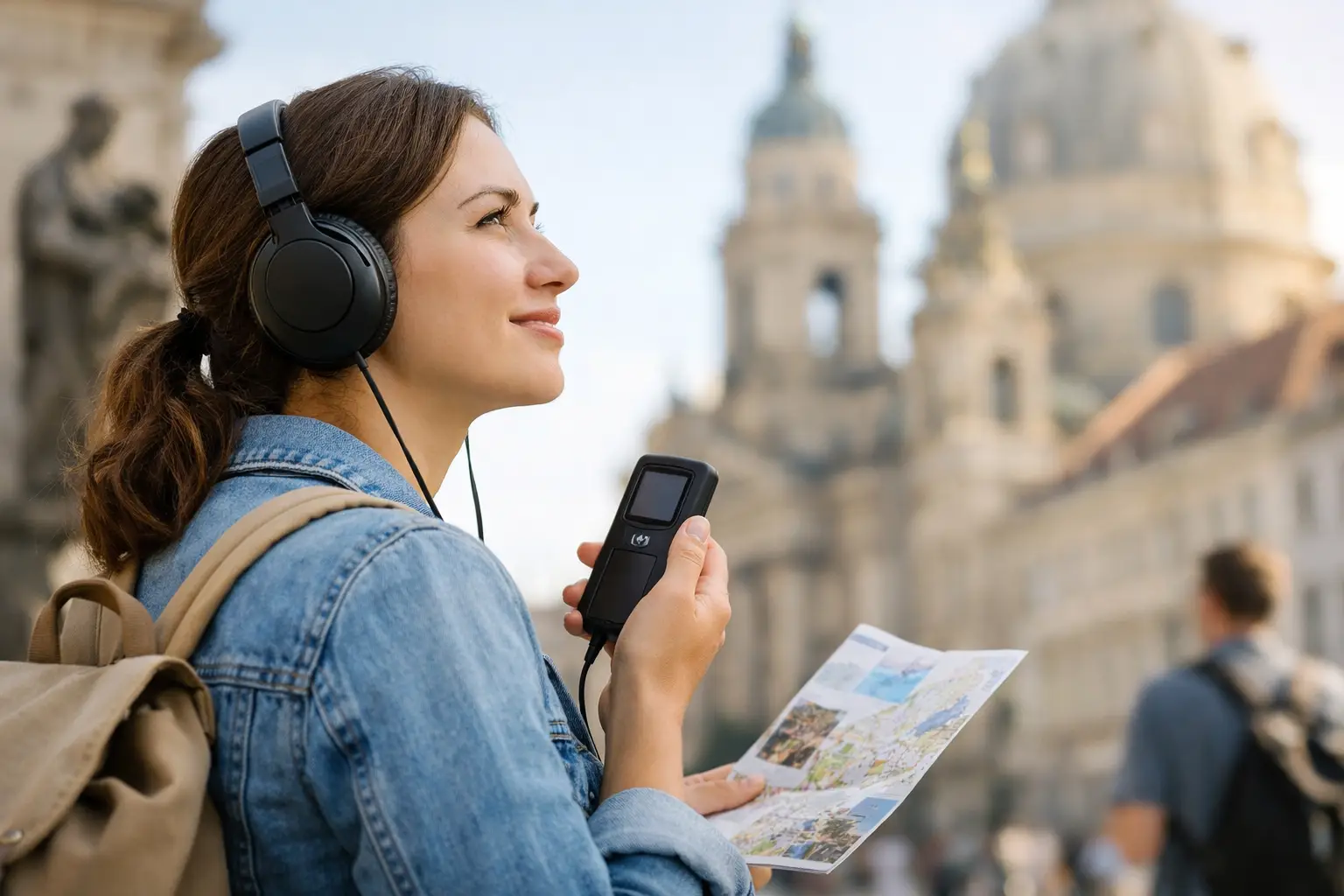
A city can look very different when you know why a narrow lane bends where it does, which building survived a fire, or where locals once came to trade, protest, and celebrate. This guide to self-guided audio tours explains how to turn a walk with your phone into a personal tour – without rushing to meet a group or paying for a private guide.
A self-guided audio tour gives you stories and directions as you explore. You choose the starting time, walk at your own pace, stop when something catches your eye, and continue when you are ready. For independent travelers, that freedom is often the difference between seeing a city and actually enjoying it.
What Is a Self-Guided Audio Tour?
A self-guided audio tour is a route and collection of narrated stops played through your smartphone. Most tours combine a map, written directions, photos or landmarks to look for, and audio stories about the places along the way. Some use GPS to play content as you arrive near a stop; others let you choose each stop manually.
Think of it as having a knowledgeable guide in your pocket. You still get context that can be hard to find on your own, but the schedule belongs to you. Want to spend 40 minutes in a museum, stop for coffee, or take a detour through a market? Pause the tour and pick it up later.
This format works especially well for city walks, historic districts, museums, waterfronts, and neighborhoods with layers of local stories. A well-made tour does more than point out famous sights. It explains what happened there, why it matters, and how the place connects to the city around it.
Why Travelers Choose Audio Tours Over Group Tours
A guided group tour can be a great choice when you want to ask questions in real time or visit a place with complicated access rules. But fixed departure times, large groups, and a pace that does not match your own can make sightseeing feel more like an appointment than a vacation.
Self-guided audio tours offer a different kind of value. You can start early before crowds arrive, take an afternoon break, or explore after sunset if the route is appropriate. Solo travelers avoid the awkwardness of joining a group, while couples and families can talk, take photos, and adjust the day as they go.
Cost matters, too. Many audio guides cost around the price of a light meal or cup of coffee, yet provide several hours of curated commentary and navigation. That makes them a practical way to add depth to a trip without building every day around expensive excursions.
The trade-off is simple: there is no live guide to answer an unexpected question or reorganize the route for you. The best experience comes from choosing a tour with clear directions, reliable offline access, and storytelling written by people who know the destination.
How to Choose the Right Self-Guided Audio Tour
Not every audio tour fits every trip. Before buying or downloading one, look at the route rather than just the destination name. A central city walk may be ideal for your first day, while a museum guide is better when you have a rainy afternoon or limited time.
Check the route length and number of stops
Start with the walking distance, estimated duration, and number of points of interest. A two-hour route can easily become a half-day outing once you add photos, café stops, shopping, and museum visits. If you only have a few hours, choose a compact route with the landmarks you care about most.
Also consider the terrain. Historic centers often mean cobblestones, hills, stairs, or uneven sidewalks. A route that looks short on a map may feel demanding after a long travel day. Comfortable shoes and realistic timing will improve the experience more than trying to squeeze in one extra attraction.
Make sure the content matches your interests
Some travelers want a broad introduction to a city. Others care more about art, architecture, food history, royal residences, religious landmarks, or hidden local corners. Read the tour description for the type of stories it promises.
A strong tour balances major sights with details that give them meaning. It should tell you more than dates and names. Look for guides created with input from experienced local guides, historians, or destination experts, especially in places where the story is as valuable as the view.
Prioritize offline maps and playback
International data can be costly, and signal can be unreliable in old streets, underground areas, or thick-walled museums. Download the tour, map, and audio before leaving your hotel or connecting to public Wi-Fi.
Offline access also reduces small travel stresses. You will not need to watch your data use, hunt for a signal at every stop, or worry that a map will fail just as a route becomes confusing. TouringBee audio tours are designed to work offline after download, which is particularly helpful when you are exploring a new city for the first time.
Confirm language and device details
Choose a language that lets you relax and enjoy the story rather than translate it in your head. If you are traveling with someone who prefers another language, check whether the same route is available in both.
Before you leave, make sure your phone has enough battery life and storage. Update the app if needed, allow location access if the tour uses GPS, and open the route once while you still have a connection. These small checks take minutes and can save a sightseeing day.
How to Prepare for Your Audio Tour
The best preparation is simple. Download everything in advance, charge your phone, and bring headphones if you like using them. One earbud is often a smart choice in busy streets because it lets you hear traffic, bicycles, announcements, and the people around you.
A compact power bank is useful for longer routes, especially if you are also taking photos and using your camera. Carry water in warm weather, and check the forecast before you commit to a route with long outdoor sections. In museums and sacred spaces, switch to headphones and keep your volume low.
Do not over-plan the day around the estimated tour duration. Audio tours are made for flexibility. Give yourself room for a bakery you notice along the route, an unexpected viewpoint, or a building you want to revisit after hearing its story.
How to Use a Self-Guided Audio Tour Well
Start by listening to the introduction. It often explains where the route begins, how navigation works, and whether you should follow stops in order. Beginning at the intended starting point usually makes the route easier and the storytelling more coherent.
As you walk, let the map guide you but keep looking up. Your phone is there to help you notice the city, not replace it. Pause the audio when a scene needs your full attention, whether that is a lively square, a moving memorial, or a quiet church interior.
If you fall behind or take a detour, do not treat it as a mistake. Check the map, choose the next stop that makes sense, and continue. Most self-guided tours are forgiving by design. The goal is not to complete every minute of audio. The goal is to have a richer, less stressful day.
For a museum audio guide, avoid trying to hear every stop simply because it is available. Pick the galleries that interest you most, listen closely there, and leave time to look. Art, artifacts, and historic rooms deserve a few quiet moments after the narration ends.
Common Mistakes to Avoid
The most common mistake is downloading a tour at the last minute, when mobile service is weak or a battery is already low. Another is choosing a route that is too long for the time, weather, or energy you have that day. A shorter tour enjoyed slowly is almost always better than a long one raced through.
It also helps to avoid treating the audio as background noise. Good narration gives you a reason to look in a certain direction, notice a small detail, or understand what once stood where a modern building now sits. Give each stop a little attention, then let the city take over.
Finally, remember that a route is a suggestion, not a test. If a museum is closed, your feet are tired, or a restaurant patio is too inviting to pass by, adapt. Independence is the point.
Make the Tour Part of the Day, Not the Whole Day
A self-guided audio tour is at its best when it creates a rhythm for your trip. Use one on your first morning to get oriented, then return later to the places that felt most interesting. Or save a neighborhood tour for an afternoon when you want structure without a fixed commitment.
Leave room for your own discoveries. The stories in your headphones can show you where to look, but the memory you bring home may be the music drifting from a side street, the view from a bridge, or the café where you paused the tour for an hour. That is the pleasure of exploring at your own pace.