
No products in the cart.
City Audio Tours That Let You Sightsee Freely
City audio tours put expert stories, maps, and flexible routes on your phone, so you can see more, spend less, and explore at your own pace while away.
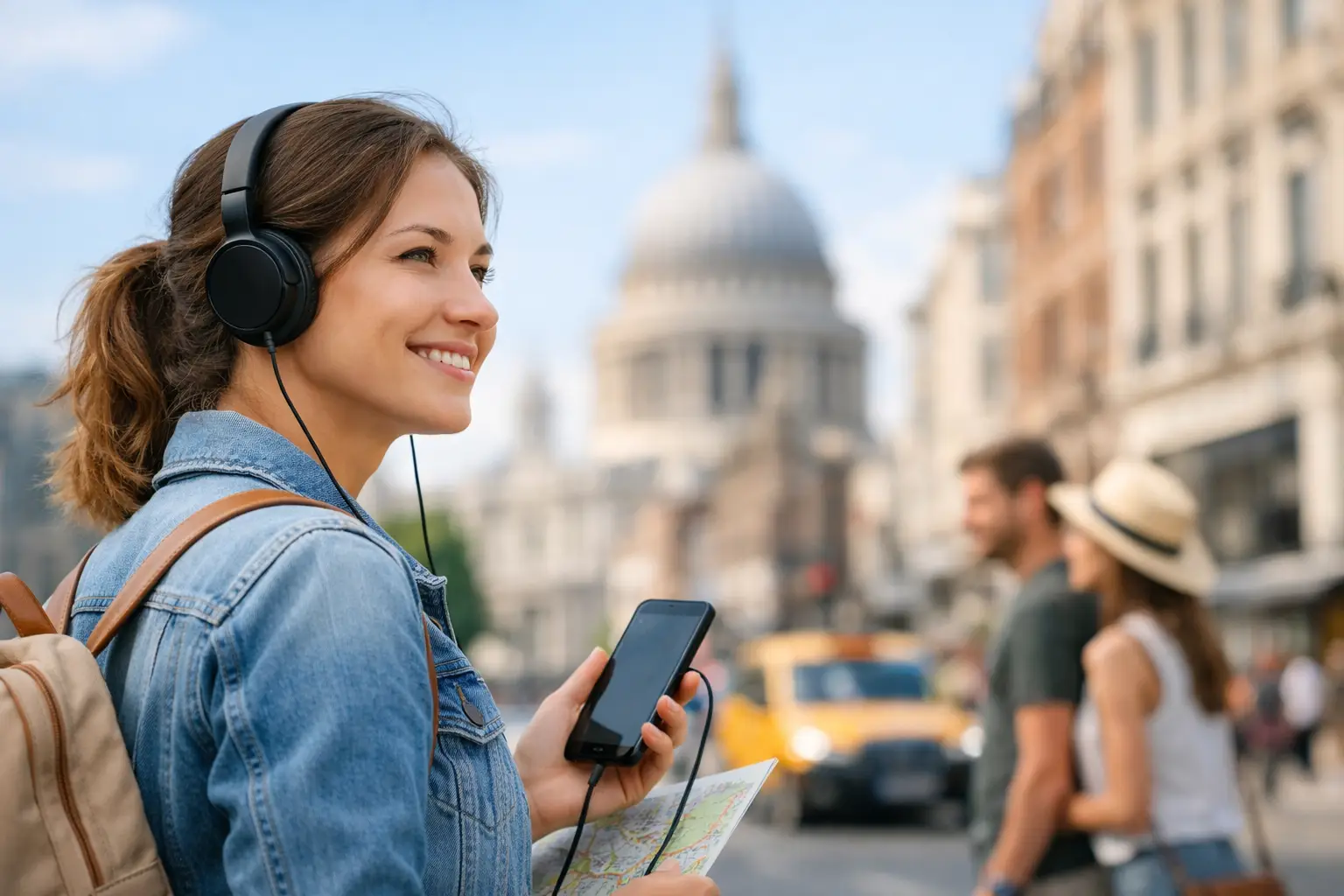
A city can look simple on a map and feel completely different once you arrive. One turn leads to a hidden courtyard, another to a long museum line, and suddenly your carefully planned afternoon is gone. City audio tours give you a practical middle ground: the stories and direction of a guided experience, without having to keep up with a flag, a timetable, or a group of strangers.
For independent travelers, that freedom matters. You can begin when you are ready, stop when something catches your eye, and spend more time in the places that genuinely interest you. Your phone becomes a personal guide that knows where you are and has plenty to say about what is around you.
What city audio tours actually do
A good audio tour is more than a recording played through headphones. It combines a planned walking route with clear navigation, location-based commentary, and stories that explain why a square, church, bridge, or neighborhood is worth your time.
As you walk, the app guides you from point to point and plays narration when you reach a featured location. Depending on the tour, you may hear about famous landmarks, overlooked details in the architecture, local legends, historical events, food traditions, or the people who shaped the city.
The best part is that you set the pace. Want to take photos for ten minutes? Pause. Found a café with an open table? Stop for lunch. See a museum you had not planned to visit? Take the detour and return to the route later. You are not paying for a guide to wait while you make decisions.
Why self-guided audio tours work so well
Traditional group tours are a great choice when you want to ask a guide questions in real time or meet fellow travelers. But they also ask you to give up some control. You need to arrive at a fixed meeting point, follow the group’s timing, and move on when the guide moves on.
City audio tours suit a different kind of day. They are especially helpful when you have only a few hours in a destination, when your travel plans are still flexible, or when you prefer quiet sightseeing over a crowded tour group. Solo travelers can explore with more confidence, while couples and families can avoid the usual debate about whether they are walking too fast or too slowly.
They can also be much easier on the budget. A professionally prepared audio guide often costs about the price of a light meal, yet can provide several hours of routes, navigation, and storytelling. That leaves more room in your travel budget for local food, museum tickets, and the occasional unplanned treat.
The phone in your pocket is enough
There is no need to rent special equipment or carry a paper map that folds itself into an impossible shape. Download the tour to your phone, bring headphones if you prefer them, and make sure your battery is charged before leaving your hotel.
Offline access is particularly useful for international travelers. Mobile data can be expensive, unreliable, or simply unnecessary when your map and audio content are already downloaded. You can walk through narrow streets, travel underground on a subway, or cross into an area with weak service without losing your route.
How to choose the right city audio tour
Not every audio tour offers the same experience. Some focus on major sights, while others are designed around a specific museum, historic district, or local theme. The right choice depends on how much time you have and what you want from the day.
Start with the route length and estimated duration. A two-hour walk can fit neatly before dinner, while a four-hour route may be better for a full morning or afternoon. Remember that the listed time usually reflects walking and listening, not every photo stop, coffee break, or museum visit. If you enjoy taking your time, allow extra room in your plan.
Then look at the number and type of stops. A tour with fewer points is not automatically less interesting. It may offer deeper stories and a more relaxed walk. A route with many stops can be ideal if you want a broad introduction to the city’s highlights. Think about your energy level too. Cobblestones, hills, summer heat, and busy streets can make a short distance feel longer than it looks.
Language options matter as well. Listening in your strongest language lets you focus on the place itself instead of translating in your head. For families or travel companions with different language preferences, multilingual tours can make the experience easier for everyone.
Finally, choose content created by people who know the destination. Experienced guides, historians, and local experts can turn a beautiful building into a memorable story. They also know which details deserve attention and which ones can be skipped so you can keep walking.
Get more from your route with a little preparation
You do not need to plan every minute, but five minutes of preparation can make your walk much smoother. Download the tour and offline map over Wi-Fi before you leave. Check your battery, pack a small power bank if you have one, and wear shoes that can handle the route rather than just look good in photos.
It also helps to choose a sensible starting time. Early morning works well for popular old towns and landmark areas, especially in high season. Late afternoon can be more comfortable in warm weather and may give you better light for photos. If you are visiting a museum-based route, check opening hours before you start. Audio tours give you flexibility, but closed doors are still closed doors.
Do not feel obliged to complete every stop. The route is there to help, not to test you. If a square is crowded, move ahead and return later. If a neighborhood feels especially inviting, put the phone away for a few minutes and wander. A good self-guided tour should create structure without taking away spontaneity.
When an audio tour may not be the best fit
There are times when a live guide is the better choice. If you want to ask detailed questions, need personalized accessibility support, or are visiting a place where entry rules and timing change constantly, a small guided group can offer extra reassurance.
A live tour can also be more social. If meeting other visitors is part of your travel goal, a group experience may be worth the higher cost and fixed schedule. City audio tours are strongest when independence is the priority and you are comfortable using your phone for directions.
For many trips, the best approach is to mix both. Take a guided tour for a complex site or a special-interest experience, then use an audio tour to explore the rest of the city without rushing. You get expert context where it matters most and breathing room everywhere else.
A more personal way to see a city
The real value of an audio tour is not just convenience. It changes how you move through a place. Instead of checking off landmarks because a schedule says you should, you can follow your curiosity. You might spend longer listening beside a cathedral, skip a stop you have already seen, or linger in a neighborhood that was not even on your original list.
TouringBee audio guides are built for that kind of travel: clear routes, professionally told stories, offline maps, and the freedom to pause whenever real life gets in the way. It is a simple way to add context to a city without turning your vacation into a timed appointment.
Choose a route that fits your day, keep your plans loose, and let the next interesting street earn a few extra minutes.